

Will David and Goliath meet in Waterloo?
A look at what’s happening now as Russia’s war against Ukraine falters
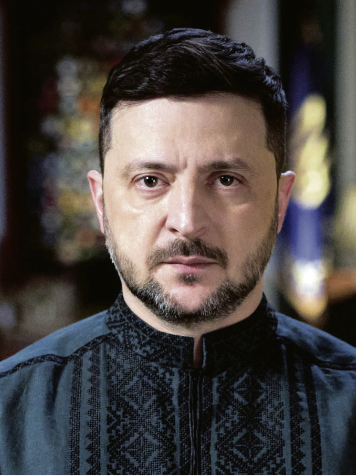
There are so many metaphors to describe Russia’s war in Ukraine, our analyst, Alexander Smukler of Montclair, said.
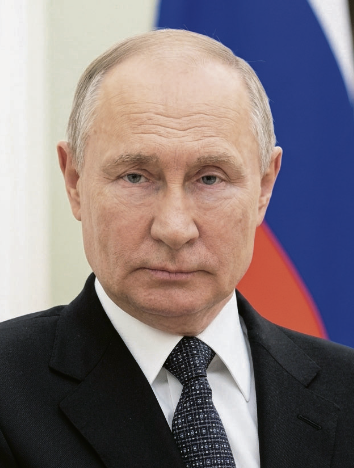
There’s David and Goliath. That one’s obvious, right? David is Ukraine and its President Volodymyr Zelensky, small, plucky, up against a giant. Doomed to lose. Goliath is Russia and its strongman leader, Vladimir Putin; Ukraine is a fairly big country, but Russia is the largest country in the world, and its leader, as an autocrat, has nearly unlimited power.
But wait. In the end, David won. Zelensky losing would void the analogy. So what are you saying, Mr. Smukler?
Well, it’s not entirely clear yet. Let’s go to another analogy. Waterloo.
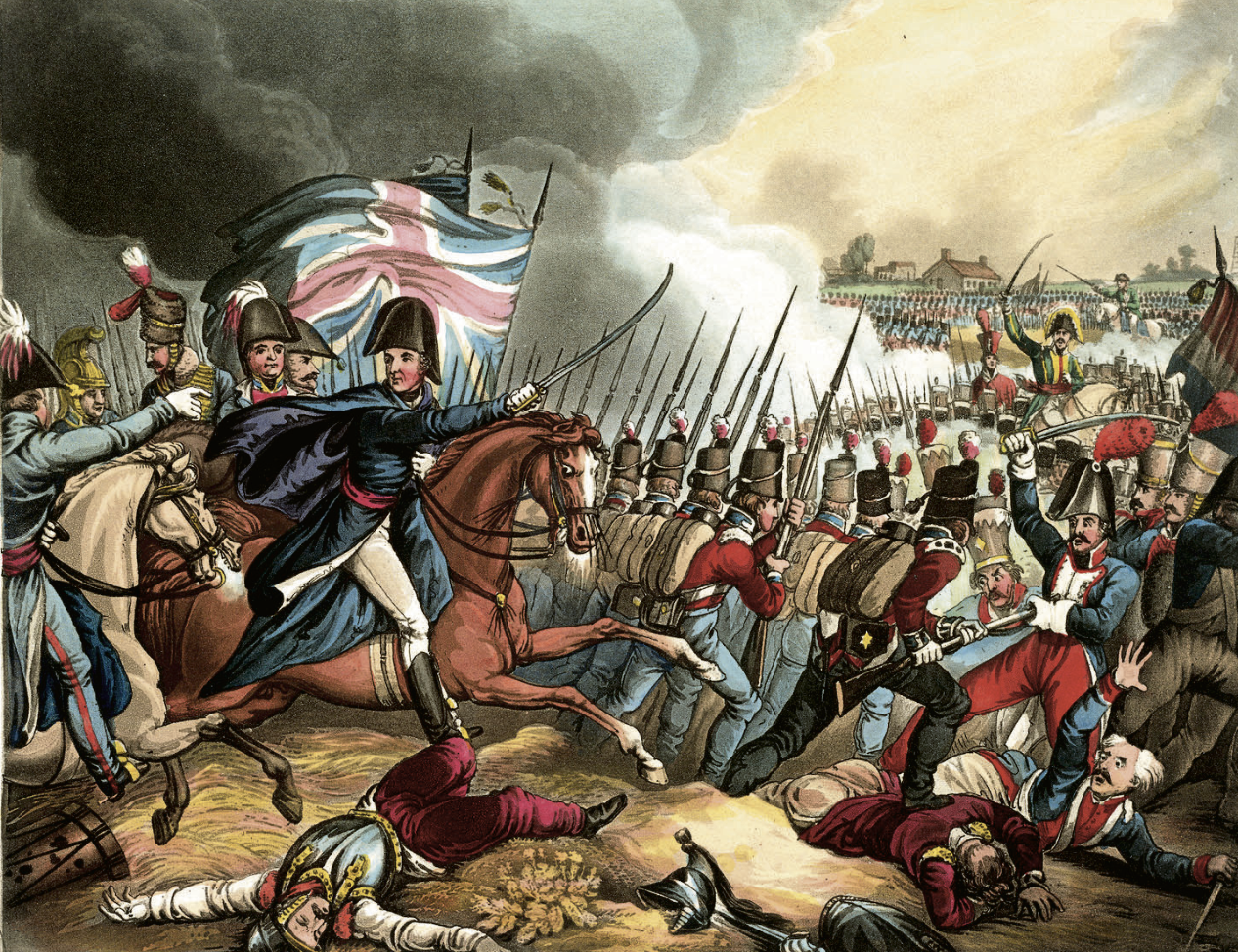
That was the decisive battle, in 1815, that finished off Napoleon, the short, extraordinary Corsican-born soldier who became emperor of France, instituted many reforms — some of which helped France’s Jews, others of which did great, long-lasting harm — lost his throne, was exiled — “Able was I ere I saw Elba,” as the apocryphal palindrome goes — came back much weaker, and then lost decisively at Waterloo.
But what would Waterloo be? Who would win it? And would Putin or Zelensky be the winner, a modern-day Duke of Wellington, leaving the other in the far less enviable role of Napoleon.
“We are getting close to Waterloo,” Mr. Smukler said. “This summer and fall will be the most critical moments of the Russia-Ukraine war. I think that the war is coming to an end” — even if it doesn’t end formally but merely goes dormant, “the hot period, the active, most bloody part of it, will be over by the end of this year.
“But before the end comes, we will witness the critical part, when both sides will try to defeat the other, and the other side has to defend itself.” That would be Russia trying to defeat Ukraine, and Ukraine having to defend itself. Still, “this could be Waterloo for Putin, because if he loses the battle, he can lose his power. Russian society has been poisoned by his imperialistic propaganda and will not forgive the leadership if they lose the war, which Putin started almost five years ago for no practical reason.
“They will request an investigation, and that somebody be held responsible for the millions of lives that were sacrificed.”
How could Ukraine end up winning?
Over the last year or so, “we have been talking about the dragon war,” Mr. Smukler said. “That’s the new kind of war that’s now taking place between Russia and Ukraine, because the Ukrainians are trying to minimize casualties on their side by using many different kinds of drones to eliminate the cannon fodder” — the unfortunate Russian soldiers who were bribed or coerced into fighting — “thrown into the fire on the front lines because of the Russians’ need to advance and take over the territories.”
Mr. Smukler has a wide network of sources and resources that give him the information he needs to see the situation clearly. That network includes friends and business associates, as well as online news sites. One of those sites, Deep State UA, compiles geographic information on deepstatemap.live; it provides an up-to-date, detailed view of the situation.
“Deep State gives people like me daily reports on how the front line changes,” Mr. Smukler said. “It just recently reported that during May, Russia advanced and occupied only 14 square kilometers of Ukrainian territory. “That’s the slowest advance during the war. That’s because the Ukrainians have been able to create an enormously effective kill zone.” That’s the no-man’s land between the two sides’ front lines. It’s policed by drones, which kill anything that moves. “A few months ago, the kill zone was 10 to 20 kilometers,” Mr. Smukler said. “It was extended up to 50 kilometers in some places. And now, in some very critical parts of the front line, the kill zone is as wide as 100 kilometers.
“The front line is more than 1,200 kilometers long. That’s almost 1,000 miles.” So imagine a wide, bleak, rubble-strewn road, with drones overhead, ready to swoop in for the kill. Imagine Cary Grant outrunning the crop duster in Hitchcock’s “North by Northwest,” except there are many crop dusters — there are thousands of drones — and the Grant stand-in dies.
It’s a dystopic science-fiction vision, but it’s real. “Nobody can survive in the kill zone,” Mr. Smukler said. “The nature of the war is changing, and it is changing so rapidly.”
At the beginning of the war, America’s unwillingness to send tanks was controversial; now, “they’re not using tanks anymore,” Mr. Smukler said. “They’re not using fighter jets, because they can be shot down by missiles. Today the war is operated by robots — drones flying robots — and every month we learn about new kinds of drones.
“Both sides are using new technology, but the Ukrainians are changing much faster than the Russians. They’re better at technology, particularly AI, that allows them to control the territories, using technology, not people.
“You can’t occupy territory with drones — you need people to do that — but in order to move forward, the people will fight against drones and other robots.
“Ukrainians today are much more advanced in producing and implementing drones than the Russians are. That means that the Ukrainians are able to defend their territories with far fewer casualties. If the Russians are going to meet the goal that Putin set out for them — that they will ‘liberate,’ that is, occupy, the Donbas region — they will have to sacrifice hundreds of thousands of lives that will be taken by drones.
“The Ukrainians are not going to go on the offensive because they have an incredible shortage of manpower. But they also now are producing tens of thousands of drones every month. They’re so sophisticated that they can easily protect their territories. Russia will have to pay an enormous price in terms of the soldiers’ lives to occupy more territory.
“That’s why the Russian offensive, which started in early April, as soon as the weather allowed, was so slow. Today, thousands and thousands and thousands of drones control every square meter of the territory. When they plan, Ukrainians calculate that they need two to three drones for each Russian life.” Mr. Smukler then told a very dark joke that he said a member of the Ukrainian parliament offered up. “He was joking that when the Russians bring hundreds of new soldiers to the front lines, the Ukrainians bring in two trucks of drones. That’s enough to eliminate all of the soldiers.
“So Waterloo in the 21st century will be without the cavalry or the artillery of 200 years ago, but it will be a major battle between drones, AI robots, and cannon fodder — the human beings who will sacrifice their lives just because Putin wants to take another small part of the Donbas.
“Most people are not following what’s going on in Russia and Ukraine today, because their attention is on Israel and Iran, but there was an interesting development last week,” Mr. Smukler continued. “Remember that Zelensky was joking when he signed a decree allowing Putin to conduct his military parade on May 9.” That parade was much shorter and less impressive than most Victory Day parades. Usually, they show off Russia’s military equipment. But this year Putin was afraid that Ukraine would attack Russia during the parade, so he asked President Donald Trump to ask Zelensky to hold off. Trump made the call, and Zelensky “jokingly signed a special presidential decree that allowed the parade to continue.”
Dictators don’t like being the butt of jokes.
“Just two weeks later, Russia conducted the Saint Petersburg Economic Forum,” Mr. Smukler said. “We used to call it the Russian Davos. Before the war, it was a major event. Russian political leaders met with investors, and big companies competed to send representatives. Everyone wanted to go, because Russia was considered one of the world’s most attractive emerging markets.
“I attended the economic forum a few times, from 2005 to 2012,” he continued. “Leaders of major corporations spoke about the future. There always was a high-level American delegation. I remember how difficult it was to get an invitation. When you were there, you could meet with top executives from the Western world and talk with them, in a very informative atmosphere.”
That started to change after 2014, when Russia invaded and annexed Crimea and the United States instituted sanctions. But now, “it is completely different,” Mr. Smukler said. “It is a joke. A sham. It was absolutely pathetic.” The guests included the far-right — indeed lunatic fringe — podcaster Candace Owens. The most prominent U.S. official was Rodney Mims Cook Jr, who chairs the U.S. Commission of Fine Arts, which is in charge of Trump’s ballroom being built on the rubble that used to be the White House East Wing. Andrew and Tristan Tate, the brothers who have been hiding out in Romania because they’re wanted in the U.K. and the U.S. for human trafficking and rape, among other offenses, were in Saint Petersburg creating content, although they do not seem to have gone to the forum. Elon Musk’s father, Errol, was there as well.
“Many of the other guests were from Africa, from Brazil, from Saudi Arabia, from the Arab countries, from North Korea, from Iran,” Mr. Smukler continued. “The largest delegation was from China. Russian anti-Putin commentators said the Chinese were there as the representative of the hegemon visiting their colonies.”
Russia is dependent on China for almost everything, including the parts for its drones.
But let’s get back to the relationship between Putin and Zelensky. It’s a duel, Mr. Smukler said. (Maybe an even better analogy would be between Alexander Hamilton and Aaron Burr, although we’d hope for a better outcome than history provided.)
“On the day that the forum opened, the Ukrainians conducted massive bombardments,” Mr. Smukler said. “Hundreds and hundreds of drones attacked Saint Petersburg. Although most of them were intercepted by Russia’s antimissile and antiaircraft systems, a few reached their targets. One of those targets was Russia’s largest oil refinery. The refinery started to burn, and the airport in Saint Petersburg was closed for hours.
“So when very important members of the Russian parliament and government were supposed to arrive, they couldn’t. And even those who were able to arrive by car, bus, or train saw an enormous fire and black smoke.
“That night, Ukraine also hit the shipyard in Saint Petersburg. It’s the oldest and most famous shipyard in Russia. Peter the Great built it in 1704, and it’s the largest and most important one on the Baltic Sea.
“Basically, Ukraine sent a greeting card to the Russians. It was painful and shameful for Putin to see how the Ukrainians greeted the guests at this forum.”
Putin used to give a major address at the forum. This year, he didn’t show up until two days into it. Before he appeared, Zelensky published an open letter to him.
The letter “was published everywhere, by every major news station and major media platform in the world,” Mr. Smukler said. “Many experts say it’s controversial. I see it as very important. It’s playing an incredible role in the military conflict, and it explains a lot.”
In the letter, Zelensky said he’d be open to peace talks, but his tone was less conciliatory than mocking. He mentions Putin’s age. “When you came to power in Russia more than 26 years ago, many people in Ukraine viewed you positively,” the letter opens. “That is how it was. But that is now in the past.”
Later, “You cannot fail to notice it,” Zelensky writes. “After 26 years in power, age is beginning to take its toll. And with time, the fatigue with you will only grow.”
In short sentences lodged in short paragraphs, Zelensky is blunt about Russia’s losses of people, of resources, of standing in the world.
“We receive support,” he wrote. “You receive sanctions. And this will continue until there is justice for Ukraine — the justice we seek and the justice that can be achieved.”
Really, read the whole thing. It’s all over the internet.
“Basically, Zelensky said that you will never reach your target,” Mr. Smukler said. “Nobody knows the purpose of the war. Zelensky calls it ‘your war.’ You have to finish it. You are losing more than 40,000 people every month,” Zelensky tells Putin.
“I think that between the lines, Zelensky is saying that we are both exhausted,” Mr. Smukler said. “We have to stop sacrificing lives. He is saying that he is ready to stop or freeze the conflict on the front line. He is not saying that Russia has to de-occupy Ukrainian territory, or we are taking it back.
“He is saying we want to stop the war. You cannot take more territory. We are ready to give up the territory you have.
“Remember that the Russians have 22 percent of Ukraine’s territory,” Mr. Smukler said. “Zelensky is saying that he’s willing to give it up to stop the war.
“Many Western commentators say that this is not a call for peace. It’s written to irritate Putin. Zelensky is poking at Putin. And based on Putin’s psychology, he will not stop the war, but instead he will be more aggressive.
“And that is why I predict that instead of wrapping up the war, Putin will attack Ukraine much more aggressively than it ever has before. And not only on the front lines. Putin will also bomb Ukrainian cities and civilian infrastructure. There will be an enormous escalation.
“Zelensky clearly sent a message to the whole world saying that Ukraine is ready for peace,” Mr. Smukler said. “But at the same time, the letter is extremely provocative. Putin grew up as a member of a street gang, and he cannot accept the tone in this letter.” He would lose face, and it would stay lost forever. He would be humiliated, were he to be seen giving anything to Zelensky, who had insulted him so deeply and publicly. “Putin will do everything possible to push Zelensky to sign a capitulation.
“This letter will never stop the war.
“And after the letter, Putin gave a press conference and made it clear that he will not stop the war right now. We will see aggressive actions from the Russians in the nearest future. So it might be a duel between David and Goliath, and it might end in a Waterloo.
“Keep in mind that Putin might lose in Waterloo.” (Certainly, he positions himself as a Napoleon.)
His rhetoric has changed, Mr. Smukler said. “He doesn’t talk about denazification or demilitarization anymore. It seems to me that Putin can’t explain even to himself why Russia is fighting. I watched the press conference he gave, and I suddenly realized that this old man can’t explain the reason for the war because he doesn’t understand it himself. When I read the open letter, I suddenly realized that now it is a duel between two people, Putin and Zelensky. One of them is shockingly strong and smart. He was able to sustain the fight against Goliath for almost five years now. And the other one is a stubborn lunatic who comes from a street gang.”
There are many complications; too many to detail here.
In brief, Ukraine is able to use Starlink, which helps it immensely. Russia tried to bootleg versions of it, but that didn’t work, and now it is stuck with less useful communications applications.
Russia is benefiting from Trump’s war with Iran, because the U.S. president temporarily lifted the sanctions against Russian oil. That’s to help undo the effects of Iran’s entirely predictable and in fact predicted, but not by the president, closure of the Strait of Hormuz.
Ukraine is producing more and more better and better drones, as Anne Applebaum described in the Atlantic this week. Drones are being equipped with AI, which makes them even more lethal.
Mr. Smukler is angry about how the world seems to have lost interest in Ukraine. Even before everyone switched focus to the Middle East — an area that he agrees is vitally important — they seemed not terribly interested in what Putin and his war were doing to Ukrainian civilians, even as they suffered and died for their country. Ukrainians and Israelis are alike in that, he said; their deaths matter less to many observers.
But not to him, and not to the network of people sharing resources, and now sharing hope.
Because in the end, Napoleon goes off to St. Helena, and David wins.