

From the Old City to a newsboy — photos from Jerusalem pre- and just-post statehood
To mark Jerusalem Day — this year, from Thursday evening, May 14, to sunset on Friday, — Keren Kayemeth LeIsrael (that’s the Jewish National Fund, aka KKL-JNF) has unearthed historical images from its archives that show the city between the 1930s to the 1950s.
The photographs of Jerusalem during the British Mandate and into the first years of the new state of Israel present an exceptional mosaic of a multifaceted city, blending ancient tradition with a changing reality. They chronicle the market alleys of the Old City, through the construction boom of new neighborhoods during the period, to a Jerusalem boy selling newspapers in the city center.

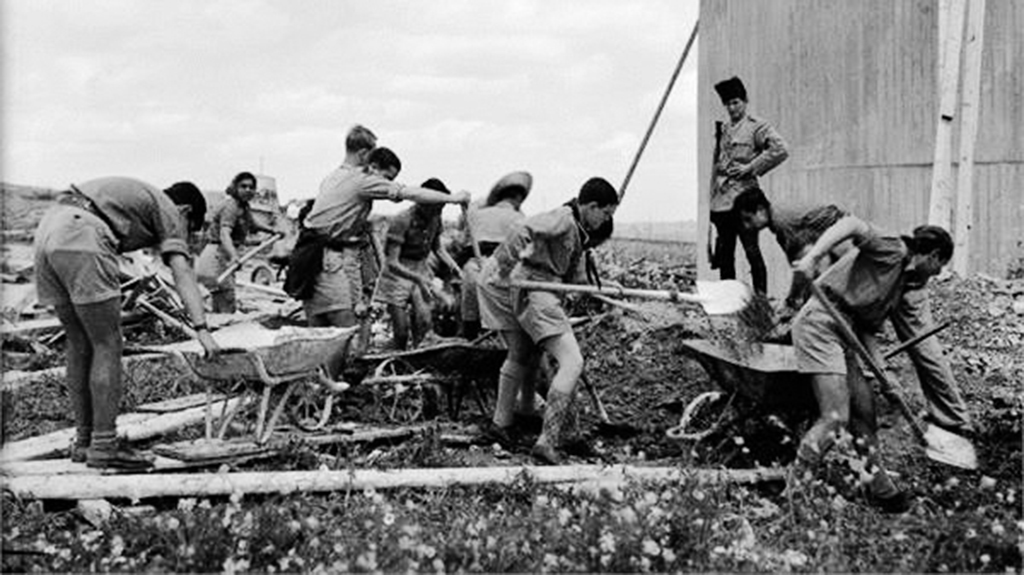
Through these documentations, Jerusalem emerges as a city of striking contrasts. A 1931 photograph of the Old City’s bustling markets captures a way of life seemingly frozen within its ancient walls, while other images reveal the new Hebrew city expanding into the surrounding hills. One photograph shows the Yeshurun Synagogue about two years after construction began, blending architectural modernism with traditional Jerusalem stone cladding. Another depicts the city’s youth building infrastructure in the Talpiot neighborhood in 1938, reflecting the pioneering spirit that shaped these new communities.
Perhaps most intriguing photograph in the collection is an image of a child newspaper vendor, photographed by KKL-JNF photographer Yaakov Rosner on June 1, 1950. The image carries particular significance, as the newspaper headline refers to an upcoming discussion at the United Nations regarding the future status of Jerusalem, scheduled to take place the following day. It provides a glimpse into how news was consumed in Jerusalem at the time—an era when street newspaper vendors were a vital information channel for the public, which lived by the printed editions and eagerly awaited every report.
KKL-JNF