

Retire the word ‘Zionist’
The time has come to retire the word “Zionist.”
Not because the dream of Jewish return to the ancestral homeland has failed. Quite the opposite. It succeeded beyond the wildest dreams of generations of Jews who prayed through blood, exile, pogroms, expulsions, and crematoria for the rebirth of Jewish sovereignty.
The State of Israel exists. It is thriving. It is powerful. It is miraculous. But the word “Zionist” has become a trap.
Get The Jewish Standard Newsletter by email and never miss our top stories Free Sign Up
It has become a linguistic weapon used by antisemites, extremists, radical academics, Islamist propagandists, and even self-hating Jews like the execrable Neturei Karta morons to isolate the Jewish state from the Jewish people. It allows Jew-haters to hide behind semantic games. They can now scream “Death to Zionists” on Western campuses while pretending they are not antisemitic.
That lie has become one of the great frauds of modern political discourse. It is time to end the fraud.
We should stop calling ourselves “Zionists” and instead proudly call ourselves what we actually are: Israel-lovers.
The irony is profound. The actual name of the land is not Zion. The name of the country is Israel. The people are called Israel. The nation is called Israel. The covenant is with Israel. Indeed, the word “Zion” barely appears in the Five Books of Moses at all.
Genesis, Exodus, Leviticus, Numbers, and Deuteronomy never mention “Zion.” The Torah overwhelmingly speaks instead of the Land of Israel, the Children of Israel, and the God of Israel. The word “Zion” emerges later, especially in Psalms and the Prophets, often poetically referring to Jerusalem or the spiritual yearning for redemption. According to traditional concordances, “Zion” appears roughly 150 times throughout the Hebrew Bible, concentrated largely in Isaiah, Jeremiah, Psalms, and Lamentations.
But “Israel” appears thousands of times. That distinction matters.
Because Judaism was never fundamentally about an abstract ideology called “Zionism.” Judaism is about a covenantal people called Israel connected eternally to a land called Israel under the sovereignty of the God of Israel.
Even our prayers reflect this. Take the Amidah, the Shemona Esrei, the central prayer Jews recite three times daily for nearly two thousand years. The prayers repeatedly invoke Israel, Jerusalem, and the restoration of God’s presence among His people.
“Gather us from the four corners of the earth.” “Restore the judges of Israel.” “Rebuild Jerusalem.” “Cause the offspring of David to flourish.”
Yes, we also pray for “our eyes witnessing the return to Zion.” But it pales besides our prayers to return to the Land of Israel.
Yes, the prophets and Psalms use Zion as a reference to Jerusalem. But “Zionism” in our time has been co-opted as a political statement by enemies of our people to disguise their real intentions for Jews: a Second Holocaust. What remains is something far deeper and more enduring: love of Israel.
Jews prayed facing Jerusalem not because of ideology, but because of identity.
The modern political term “Zionism” arose largely in the late 19th century through great figures like Theodor Herzl. It was necessary at the time because Jews needed a political liberation movement amid savage European antisemitism. And thank God for it.
Without Zionism, there may never have been a Jewish state reborn after two millennia of exile. Without Zionism, millions of Holocaust survivors would have had nowhere to go. Without Zionism, Soviet Jewry might never have been rescued. Without Zionism, the Jewish people may not have survived the 20th century.
But movements evolve. Language evolves. And sometimes language outlives its usefulness. Today, the word “Zionist” no longer clarifies. It obscures.
It allows enemies of the Jews to create an artificial distinction between Jews and Israel. They insist they “don’t hate Jews,” only “Zionists.” This is absurd.
More than 90 percent of Jews worldwide support Israel’s right to exist. Israel is home to nearly half the world’s Jewish population. Jewish prayer, history, scripture, and identity are inseparable from the Land of Israel. So when mobs chant “Globalize the Intifada” and “Kill the Zionists,” they know perfectly well whom they mean.
They mean Jews. They mean gas chambers. They mean mass graves. They mean mounds of dead Jews.
The semantic trick has become painfully obvious since October 7.
After Hamas terrorists butchered, burned, raped, kidnapped, and mutilated Israeli civilians, the world witnessed supposedly sophisticated intellectuals rush not to condemn the murderers but to condemn “Zionism.” Babies were murdered in the name of “anti-Zionism.” Women were raped in the name of “anti-Zionism.” Hostages were dragged into tunnels in the name of “anti-Zionism.”
And then, on campuses from Columbia to Cambridge, students screamed that “Zionists” deserved it. Imagine if someone said, “I don’t hate Italians, only people who believe Italy should exist.” Or: “I don’t hate Japanese people, only those who support Japan.” The absurdity would be instantly obvious.
Only the Jewish state is treated as uniquely illegitimate. Only Jewish national existence requires a special ideological defense. And that is precisely why the term “anti-Zionism” has become the respectable tuxedo of antisemitism.
Worse still, the word gives cover to extremist Jewish sects like Neturei Karta, deranged sickos, who march with Holocaust deniers and Islamist fanatics while claiming they oppose only Zionism, not Jews. This too is profoundly deceptive.
Because the overwhelming majority of Jews understand that Israel is not merely a political project. It is the center of Jewish civilization. It is the fulfillment of ancient longing. It is the only Jewish state on earth.
To oppose the existence of the Jewish state while claiming not to oppose Jews is like claiming to love someone while advocating the destruction of their home, identity, and collective future. And the term “Zionist” enables that deception because it sounds ideological rather than inhuman.
“Israel-lover” changes the equation entirely, because now the antisemite must say openly what he means.
“I hate Israel-lovers.” “I oppose people who love Israel.” “I want to exclude Israel-lovers from campus.” Suddenly the hatred becomes naked. Suddenly the bigotry becomes harder to disguise. The euphemism collapses.
The phrase ‘Israel-lover’ forces the antisemite to reveal himself honestly.
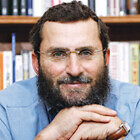
Rabbi Shmuley Boteach of Englewood is the author of 30 books. Follow him on Instagram and Twitter @RabbiShmuley.