

Hope is courage
Looking back on inflection points, forward toward aliyah
There is a teaching in Pirkei Avot that has been at the forefront of my mind these past months: “Lo alecha hamlacha ligmor, v’lo ata ben chorin l’hibatel mimena.” “You are not obligated to finish the work, but neither are you free to walk away from it.”
As I prepare to step away from the daily responsibilities of the rabbinate after 34 years, I find myself returning to those words again and again. Because none of us ever really finishes the work. We simply carry it for a while… and then, with humility and gratitude, place it into the hands of those who come after us.
And when I think about these past decades in congregational life, there are three moments in particular that capture what Jewish community is ultimately about — and what this moment demands from us.
The first was 9/11 and the days that followed.
Like so many Americans, I remember the fear, the uncertainty, the disorientation. But what I remember most clearly was what happened afterward. When synagogues and churches opened their doors the next night, people came out in droves. Not because there was an obligation to attend. Not because there was a program. People came because they needed to know where they belonged. People knew where they wanted to be. People knew where they needed to be. They needed to know there was still a place where they would be held, where they would not be alone.
And I remember thinking at the time that one of my professors had been exactly right when he taught us: “You can only be a universalist from a particularistic vantage point.” The stronger and healthier we are in our own identity and community, the more capable we become of caring for the world beyond ourselves.
What became clear to me then, and has only become truer over time, is this: A synagogue is not the building. It is not the address. It is not even the programs or the budget.
A synagogue is its people.
It is the quiet acts of kindness nobody sees. The meals delivered. The hospital visits. The rides given. The phone calls made simply because someone sensed another person might need to hear a caring voice.
That is covenantal community.
And over these decades, I have stood with people in moments of extraordinary joy: weddings, births, b’nai mitzvah celebrations that filled sanctuaries with laughter and possibility. And I have stood with people in moments of heartbreak, when words felt inadequate and presence itself became the holiest thing we could offer one another.
Which brings me to the second moment. Actually, two moments. One of the happiest days of my life — and one of the saddest. The night before I was married — and the week my father died.
By that point, I had spent years standing with others through their most emotional moments, officiating at weddings, funerals, baby namings, hospital visits, moments of loss and moments of profound joy.
And then suddenly, I found myself on the other side. Suddenly I was the one being held. And I realized something essential about Jewish community at its best: it is not transactional. It is relational. It is covenantal. It is people choosing, over and over again, to show up for one another.
And that matters now more than ever.
Because we are living through a difficult and fragile moment for the Jewish people, for Israel, and frankly for America itself.
The rise in antisemitism is real. It is measurable. It is accelerating. And we need one another now more than ever.
Years ago, when I was a rabbinical student in California, I served as a teaching assistant for a university course on ethics and the Holocaust. During one discussion, a student asked me: “Do you think something like this could ever happen here in America?”
Without hesitation, I answered: “No.” I believed America was fundamentally different. I believed this nation’s democratic ideals were strong enough to resist the tribalism and hatred that devastated Europe.
Today, I am not sure I could answer with that same certainty.
I’m not suggesting this current rise in Jew-hatred is going to turn into something of such horrific magnitude. God forbid. But when I answered that question so many years ago, I could never have imagined we would be where we are in this moment.
And that brings me to the third moment. October 7 and the days since.
When reports of the attack began to come in, I remember saying three things almost immediately.
First, I said: “We have about 72 hours before the world forgets what happened and finds a way to blame Israel and the Jews.” As it turned out, we got maybe 12.
The inverted use of the charge of genocide against Israel began almost immediately. Well-coordinated demonstrations and propaganda began flowing before Israel had even fully begun to respond. It wasn’t an accident. It was a well-scripted defamation campaign against Israel and the Jewish people.
Then I said: “Everything just changed. I don’t yet know how, but this is our generation’s Jewish inflection point.”
And finally, I said: “The Jewish community is going to realign between those for whom Jewish peoplehood is central, and those for whom Judaism is primarily a set of religious beliefs disconnected from collective Jewish identity.” Over these past months, I have watched that rift grow at precisely the moment when we need one another most.
Now let me be clear: both are ways of expressing a person’s Jewish identity. Moreover, Judaism has never demanded uniformity of thought. The Talmud is built upon argument, dissent, and passionate disagreement. But what made those arguments sacred was that the rabbis continued seeing one another as part of the same covenantal community after the debate ended.
That is the challenge of this moment. Can we disagree without dehumanizing? Can we maintain relationships when we see the world differently? Can we hold complexity without retreating into slogans or tribal certainty?
Because once we lose that capacity, communities fracture. Families fracture. Countries fracture. And eventually the Jewish people fracture as well.
I always knew such a fracture was possible. But I never dreamed the fracture in the Jewish community would center around Israel — the home of half the world’s Jews.
Look, I believe deeply in Israel and its people. Not because it is perfect. It is not. But because it is a miracle.
Like all human endeavors, it is imperfect. But there is beauty there beyond words. There is creativity. There is resilience. There is human warmth. There is extraordinary diversity. And there is a sense of history and possibility intertwined in ways unlike anywhere else on earth. And yes, there are also difficult realities. Political tensions. Religious tensions. Questions about power, democracy, justice, and coexistence that must be confronted honestly and thoughtfully.
But ignorance about the reality of the country and its challenges — and blind acceptance of charges levied by individuals and organizations with long histories of antagonism toward Israel — is not the answer.
As anyone who has actually spent meaningful time there knows, the reality of Israel shares little in common with the caricature being drawn by so many today. The next generation of Jews needs to know Israel not through hashtags or headlines, but through lived experience. They need to see the beauty and the complexity. The extraordinary and the imperfect. The inspiring and the troubling. They need to wrestle honestly with all of it.
We need Jews who know the truth because they have seen the truth, walked the streets, spoken to the people, experienced the fear, the hope, the contradictions, and the miracles for themselves. And the only real way to achieve that is to go.
History has taught us what the world looks like when the Jewish people do not have sovereignty, power, or refuge.
If you care about the future of the Jewish people, then this is the moment to double down on investing in Jewish life. Send your children and grandchildren to Jewish camps. Encourage them to spend time in Israel. Support synagogues, schools, and Jewish institutions. Show up. Participate. Build community.
Because the answer to extremism is more knowledge and deeper engagement.
As I step away from the daily responsibilities of congregational leadership and prepare to make aliyah, I do so with profound hope. And hope, in Jewish tradition, is not naïveté. Hope is courage.
For thousands of years Jews hoped when there was every reason not to. They built communities in uncertain times. They invested in Jewish life when the future was anything but guaranteed. We are the beneficiaries of their stubborn, holy optimism.
Now it is our turn.
The story of the Jewish people has always been one of carrying what we love forward: from generation to generation, from community to community, and sometimes from one home to another.
My hope is that we continue to build a Judaism that is intellectually honest, morally serious, emotionally open, deeply Zionist, deeply democratic, and deeply committed to the sacred dignity of every human being.
Moses, when preparing to leave leadership, did not offer the Israelites a strategic plan. He offered them a blessing: “Chazak v’ematz.” Be strong and courageous. Not because the road ahead would be easy. But because it would be meaningful.
Ken yehi ratzon — May it be God’s will that the work we began together continues to grow, deepen, and bring blessing to the Jewish people, to Israel, and to generations still to come.
Amen.
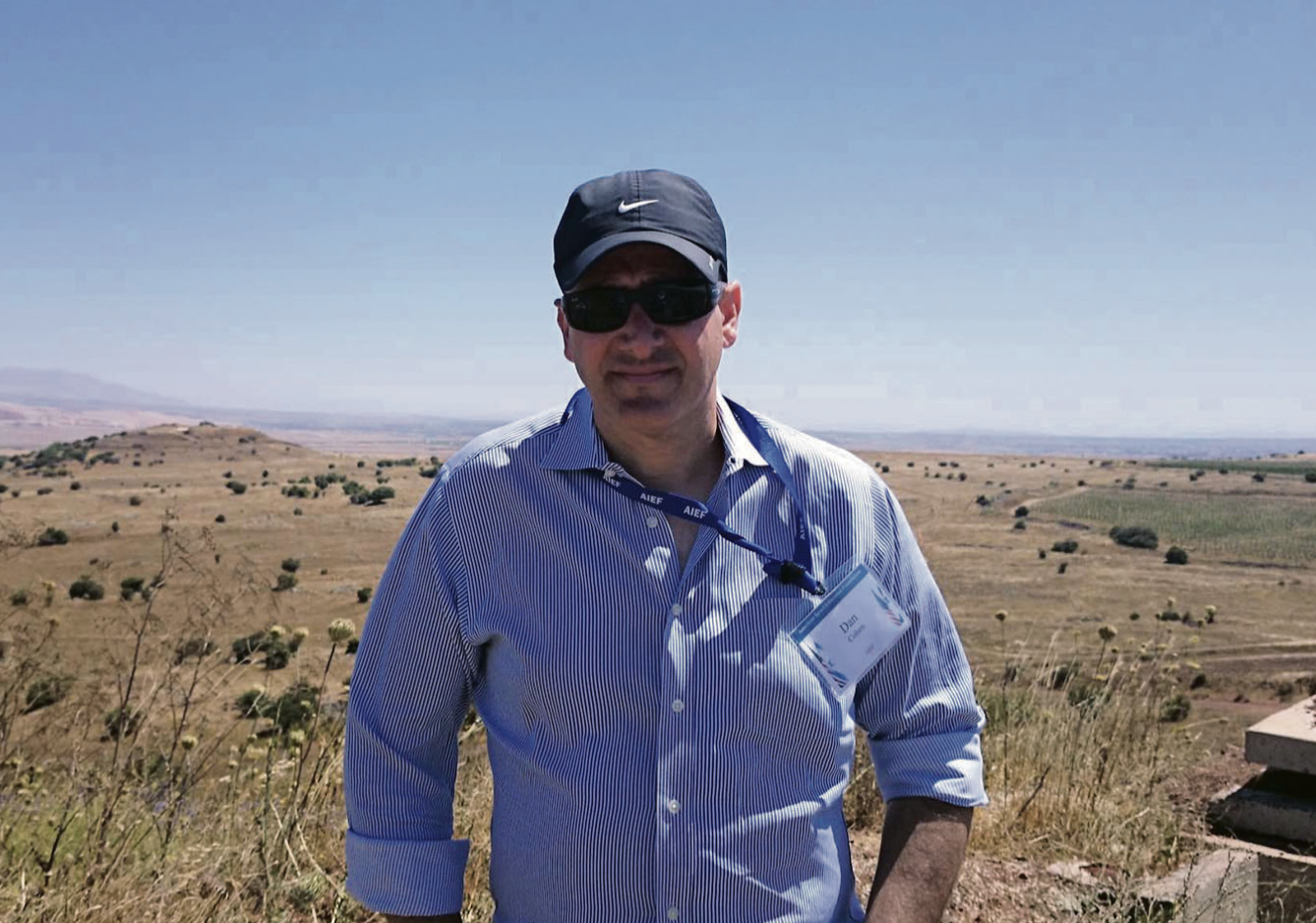
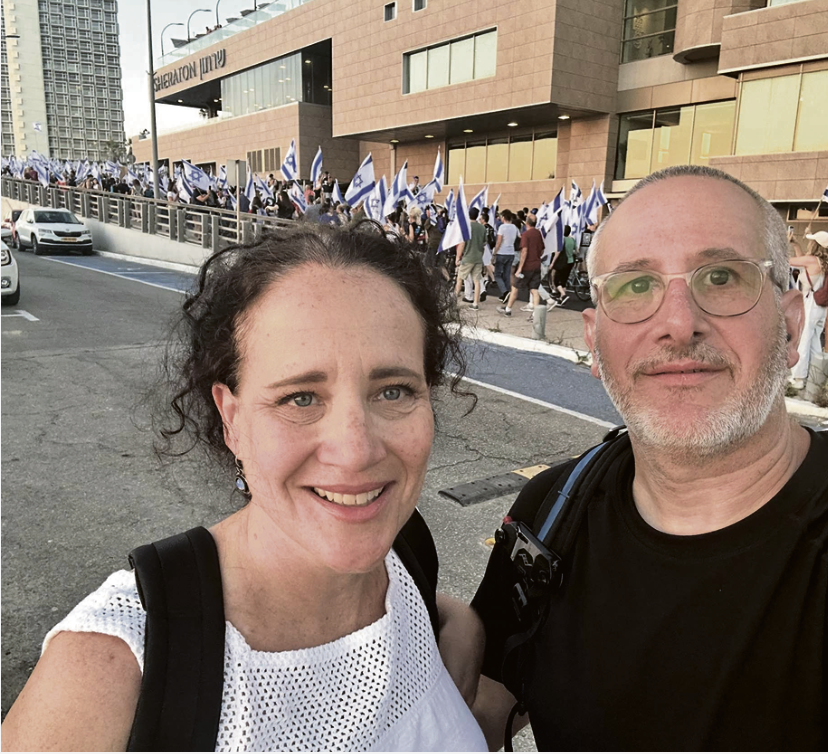
Rabbi Daniel Cohen has been at Temple Sharey Tefilo-Israel in South Orange for 34 years; he’s been senior rabbi there for the last 25. On June 30 he will retire, and then he, his wife, Raina, and their two goldendoodles, Nava and Emmet, will make aliyah and live in Tel Aviv.