

Heroines of October 7
JFNNJ displays images of women who fought back
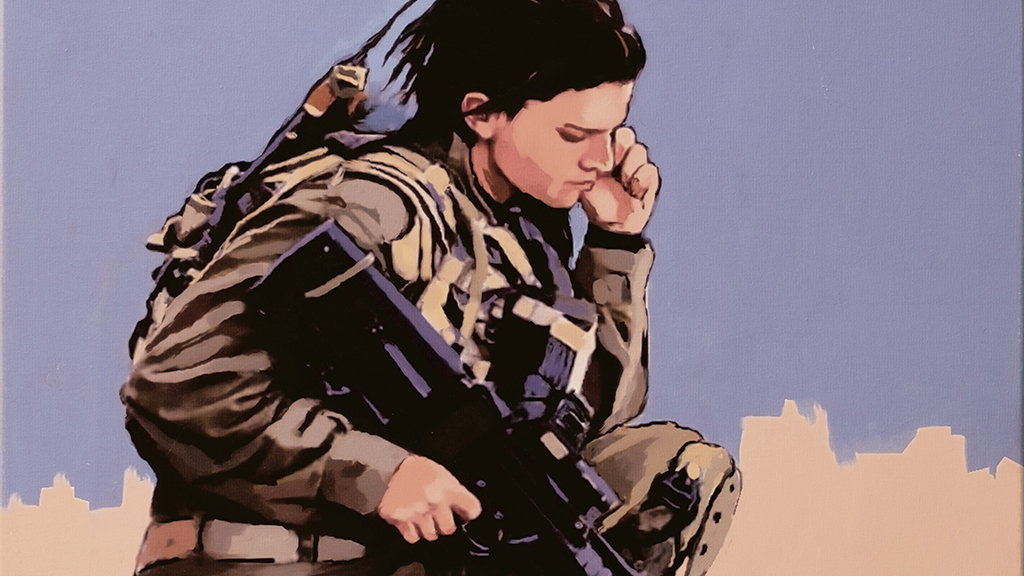
Her name was Adar Ben Simon. She was a 20-year-old platoon leader in the Israeli Home Front Command platoon. Killed in a 50-minute battle while defending her base from infiltration by Hamas terrorists on October 7, 2023, Lt. Ben Simon is buried in the military cemetery in Nahariya, the partner city of the Jewish Federation of Northern New Jersey.
Her mother, Zehava, wants you to know about Adar and remember her.
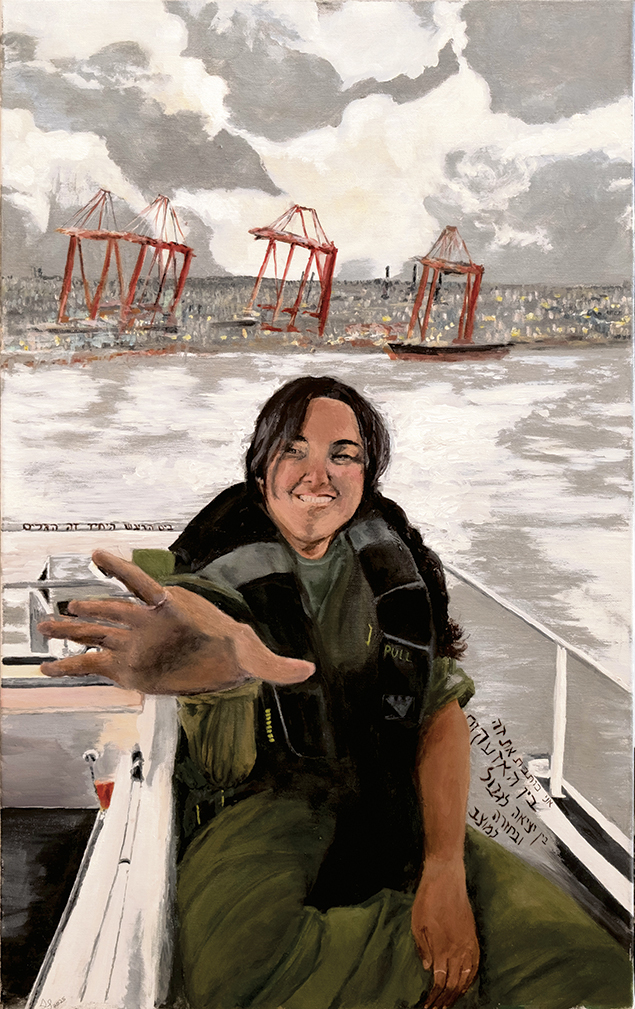
That’s why Ms. Ben Simon and Adar’s twin brother, Aviv, are flying to New Jersey for the opening of “Heroines of October 7,” an art exhibition the federation is displaying in its Paramus headquarters from May 18 to May 29. (See box.)
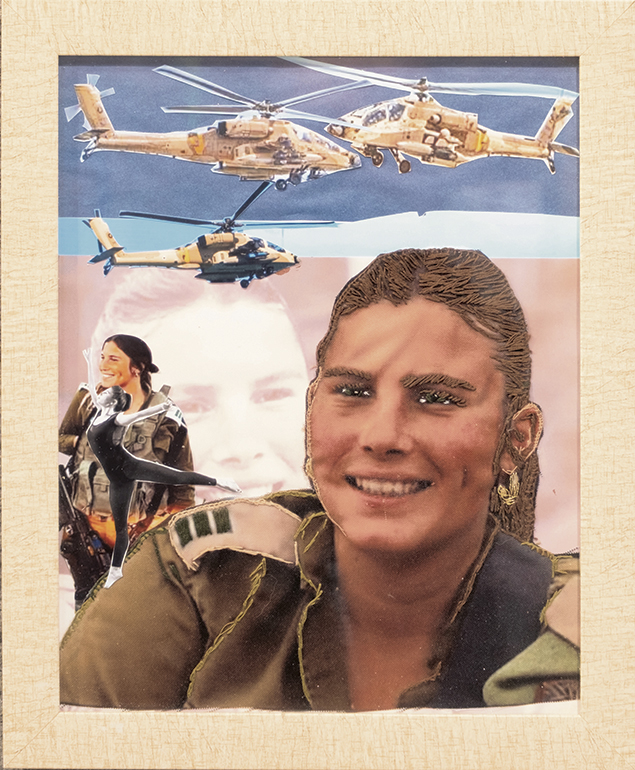
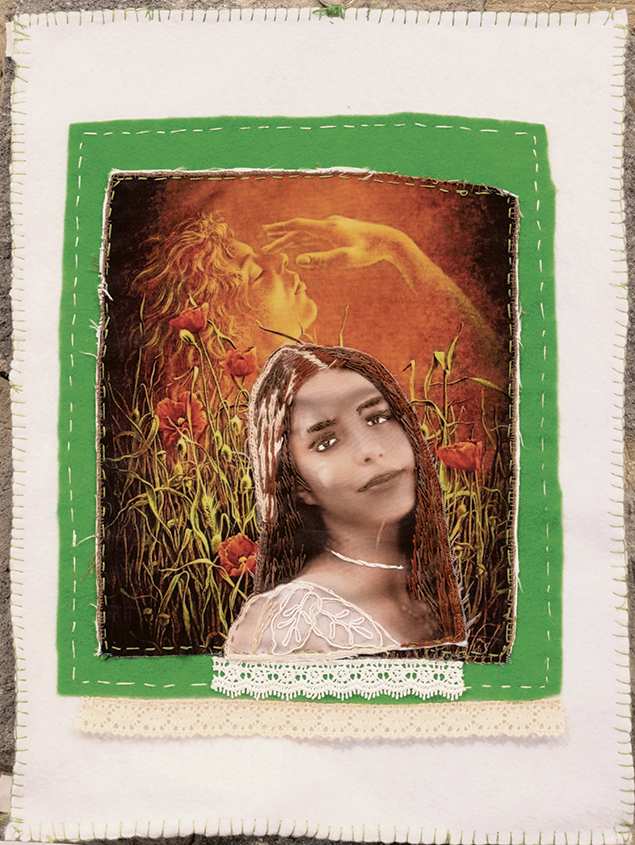
Images of Adar and about 50 other female soldiers, police officers, first responders, and civilians who acted with extraordinary courage on that infamous day were chosen from a larger exhibition conceived and organized by noted Israeli curator Yael Nitzan.
Some of the women depicted survived; most, like Adar Ben Simon, did not.
“Seeing Adar in the exhibition brings me both deep pain and great pride,” Ms. Ben Simon said. “After losing my daughter — a girl who was full of life, full of light and joy — the exhibition allows me to feel that Adar continues to be present, that she’s not just a private memory for me and my family but part of a larger story of heroism and values.
“Adar was not just a soldier; she was a young woman with a big heart, sensitive to others, with an ability to see the good even in simple things,” her mother continued. “As a platoon commander at the Zikim Base, she chose to take responsibility and leadership for 120 soldiers under attack. In the moment of truth, she acted with courage and dedication to save her soldiers.
“Her story is not just a war story. It is a story of her love for people.”
This will be the American debut of “Heroines of October 7,” previously displayed in Nahariya and in other Israeli cities.
“The ‘Heroines of October 7’ exhibit is a powerful tribute to the extraordinary courage of women whose contributions are so often overlooked,” Jason Shames, JFNNJ’S executive officer, said. “These women stood on the frontlines of danger — protecting others, safeguarding Israel, and in some cases making the ultimate sacrifice. We are deeply honored to bring this moving and meaningful exhibit to our community, ensuring their stories are seen, recognized, and never forgotten.”
Speaking from her home in Nahariya, JFNNJ’s Israel director, Ravit Steinmetz-Shemla, said, “The community in New Jersey is waiting to give a big hug to Zehava and Aviv, because ever since October 7 the community has been there for us, supporting us, and asking about our welfare, especially in Nahariya. They know Adar’s face and story; it’s on a big plaque hanging in the federation’s office.”
The genesis of the exhibition predated October 7, but just barely.
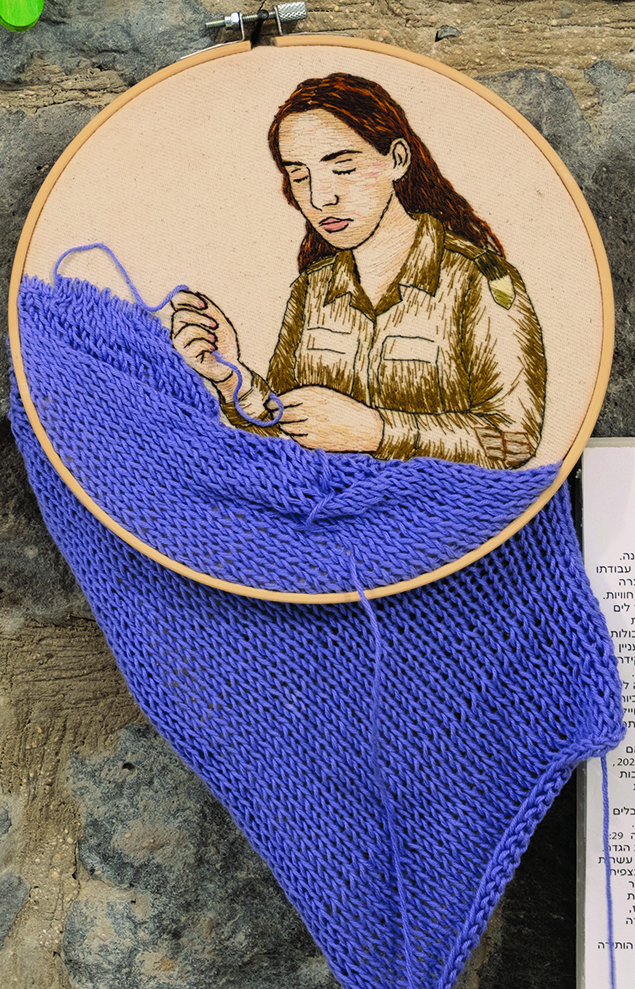
In September 2023, the Hannah Senesh Museum at Kibbutz Sdot Yam commissioned Ms. Nitzan to create an exhibition for the yahrzeit of Ms. Senesh, an émigré from Hungary who joined a group of Jewish paratroopers from pre-state Israel on a rescue mission in Europe during World War II. She was captured while crossing the Hungarian border, tortured, and executed in November 1944 at the age of 23.
Ms. Nitzan proposed an exhibition of embroidered portraits of 17 historic heroines of Israel – including, among others, Zahara Levitov, one of the first women to fly for the newly established Israel Air Force during the 1948 War of Independence.
“We had two or three made already, and then October 7 happened,” Ms. Nitzan said. “Very quickly, we understood that we have many new heroines, and we started gathering every name we could find.
“Today, we have about 70 heroines, the 17 original ones and the newer ones. About 15 percent of them are alive.”
Among the survivors of October 7 included in the exhibition are Lt. Col. Orr Ben Yehuda, the first woman to command an infantry battalion in the IDF Border Defense Corps; Lt. Col. Yarden Shukrun, commander of the Shachar Battalion of the Search and Rescue Division; Inbal Rabin-Lieberman, security coordinator of Kibbutz Nir Am; and Rachel Edri, the grandmother whose cookies and conversation kept five Hamas terrorists who broke into her home placated for many tense hours until special forces arrived.
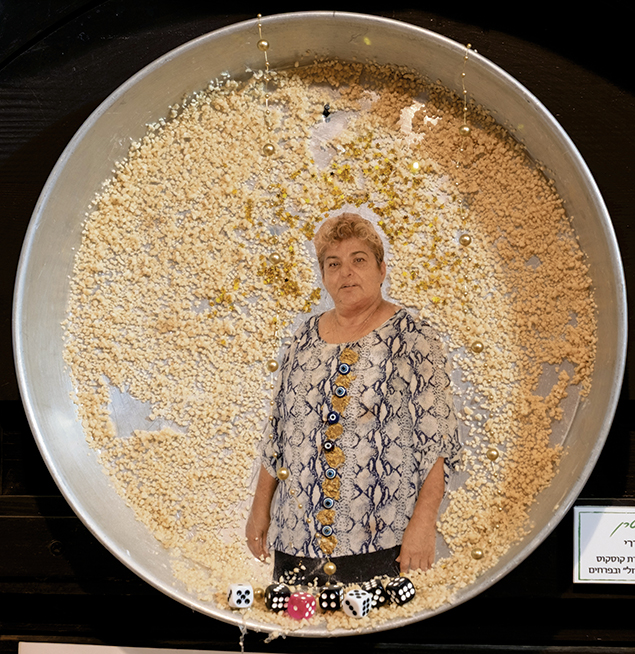
The work of about 30 painters and sculptors is represented in the exhibition, running the gamut from international street artist and muralist Benzi Brofman to textile artist Daniella Amit.
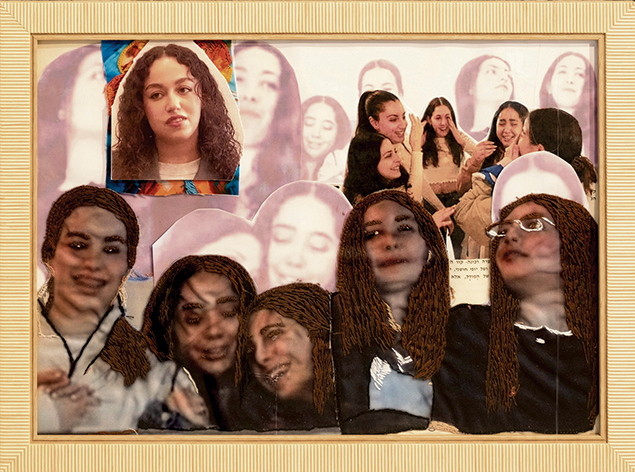
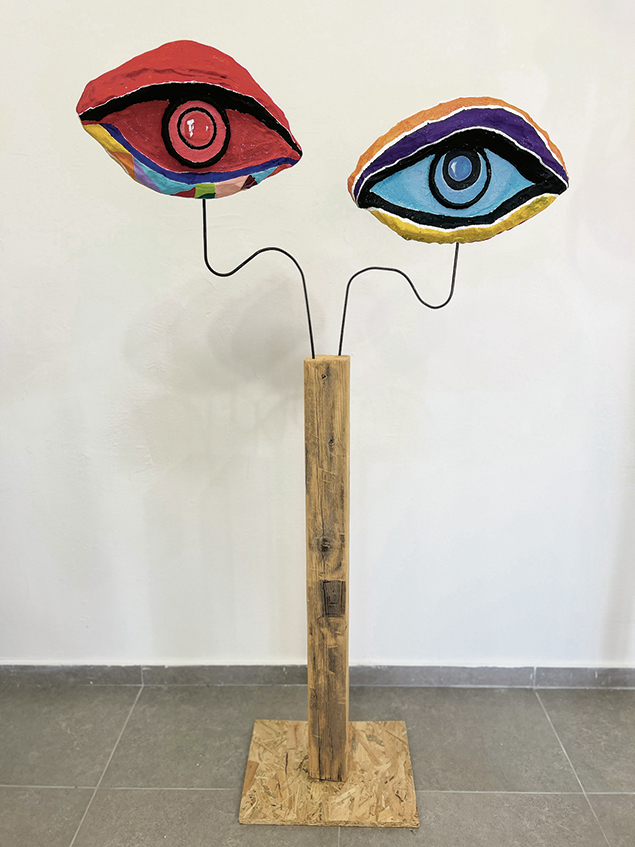
“We have portraits and statues made from embroidery, metal, and wood,” Ms. Nitzan said. “One artist, Oded Houbara, made very striking sculptures of eyes to portray the ‘tatzpitaniyot,’ the unarmed female field observers who were killed or kidnapped on the morning of October 7 on the IDF base in Nahal Oz. These young women had warned about the probability of an attack and were ignored. When it happened, they had no weapons to protect themselves.”
One of the pieces portrays six of the kidnapped tatzpitaniyot — Ori Magidish, Carina Araiev, Naama Levi, Daniela Gilboa, Liri Albag, and Agam Berger; a seventh, Noa Marciano, was killed and is depicted in a separate artwork.
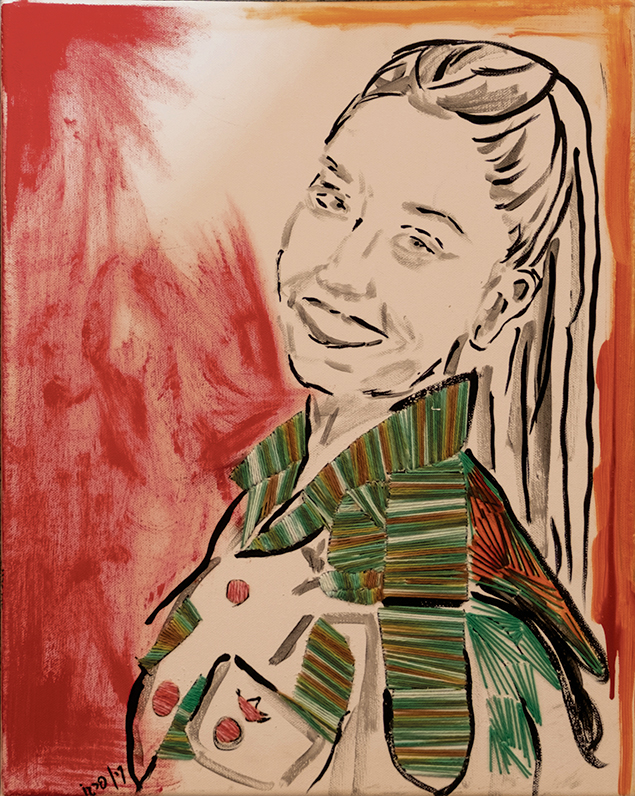
When Zehava and Erez Ben Simon received Adar’s personal effects, they found a note she’d written to her parents and three siblings in case she died.
“The note told us how to go on,” Ms. Ben Simon said. “If we thought before, ‘How will we live without Adar — without her laugh, her hugs and kisses?’ — we found out the answer from her: ‘Live life, enjoy every moment, and always look at the glass as half full.’ This is how she lived her life and this is her will for us. This is what I want everybody to know.”
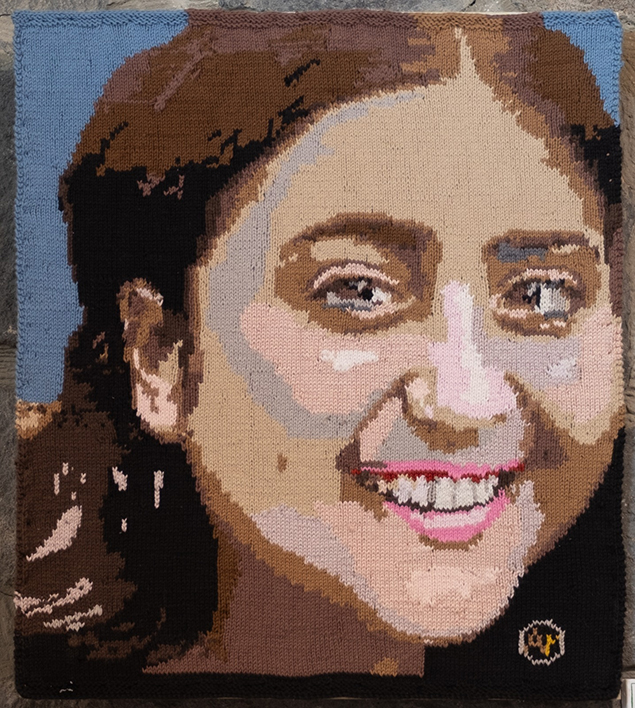
She came to see it as her obligation to tell people about her hero daughter at every opportunity, Ms. Ben Simon continued. Until now she hadn’t had the opportunity to do so on an international level. She and Ms. Nitzan hope the traveling exhibition will be shown in other cities across North America.
“This exhibition that Yael curated is like a miracle,” she said. “It helps me to speak about Adar.
“I’m coming to New Jersey to give Adar a voice beyond Israel, so she can continue to touch people and inspire them and connect hearts, and to remind us that these women’s heroism is not just a story from the past but a light that continues to illuminate today.”
What: “Heroines of October 7” exhibition
Where: At JFNNJ headquarters in Paramus
When: May 18-29
How: All tickets must be bought in advance for a reserved time entry at this link: JFNNJ.org/Exhibit