

‘It nourished my soul’
Trip to Israel focuses on intensive service learning
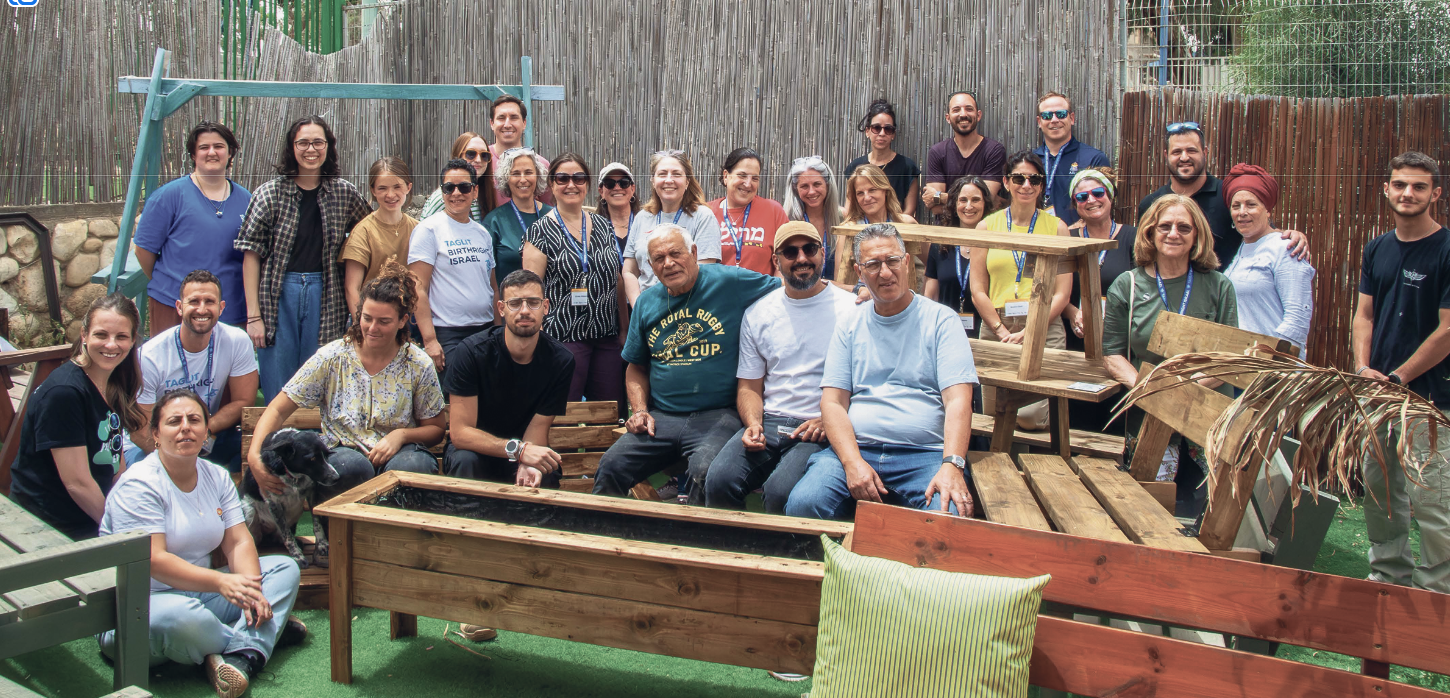
When Deann Forman of Teaneck went to Israel earlier this month, she “rolled up her sleeves and spent the week doing some really intensive volunteer work,” she said.
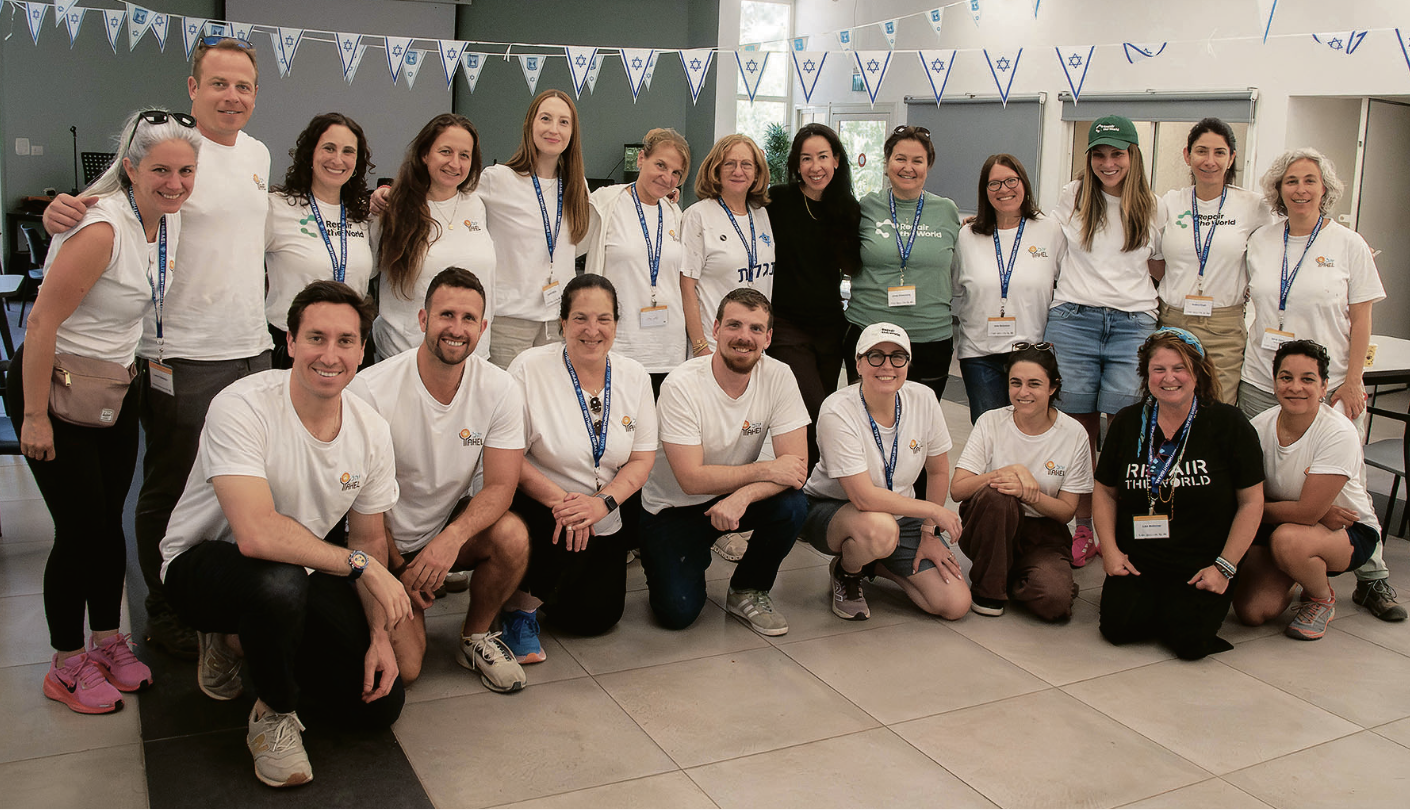
Ms. Forman is the executive director of the Center for Innovation and Impact at the JCC Association of North America. She was participating in the Jewish Service Alliance Israel Service Seminar, a trip for organizational leaders from across the Jewish community in the United States organized by Repair the World, in collaboration with Taglit-Birthright Israel and Jewish Federations of North America.
Repair the World, “the Jewish service movement,” according to its website, werepair.org, “connects Jewish young adults to service and learning rooted in Jewish values — meeting urgent needs like food insecurity, housing, and education while building identity, community and belonging.” Yahel, an Israeli organization that does similar work, partnered with Repair the World on the program.
Both Repair the World and Yahel offer “Jewish service learning,” Melissa Levine, Repair the World’s senior director of field activation, said. “We both believe in service as a meaningful expression of, and connection to, Judaism.
“Young American Jews are looking for ways to connect with Israel and looking for meaning and for purpose right now,” Ms. Levine continued. “And Jewish service has been proven to be the answer to that.”
The seminar “was not a typical trip,” Ms. Forman said. “There was no sightseeing; we didn’t go to any of the typical places a group would normally visit.” The focus was on “engaging in very meaningful service learning on a very deep level, at a very hyper-local level, in sort of invisible pockets of need throughout Israel.”
The group spent time volunteering in communities and learning about initiatives that address a variety of needs.
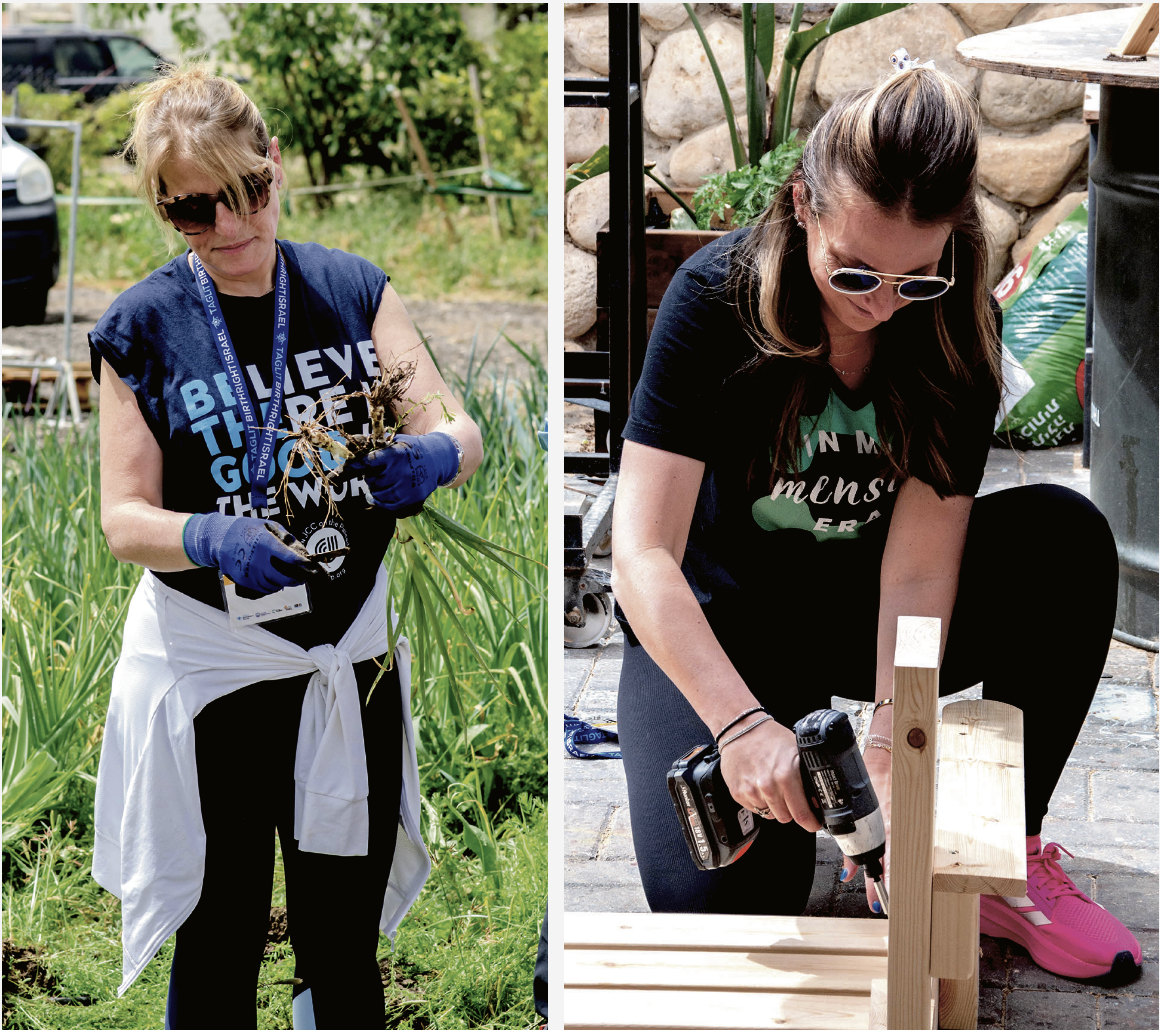
“We volunteered on a working farm that uses the agricultural environment as part of a resiliency program,” Ms. Forman said. It supports Israeli veterans living with PTSD through agriculture and community, so “working on the farm is part of the therapeutic program. We spent a day harvesting leeks and learning about the work that they do. It was really pretty amazing.”
Trip participants also spent time with an organization that works with high-risk teens. The members of that group “just start hanging around in a neighborhood,” Ms. Forman said. They might “build a bonfire and wait for kids to approach and ask what they’re doing there. Then they’ll say, ‘We’ve heard there are people in this community who need help and we’re looking for some special teens who would be willing to help us identify the people and help us provide support for them secretly, so that they don’t know who’s helping them.’
“And then these kids, one by one, start joining together and working with the organization to identify some of the families in town that can use support and to create food packages. Then it’s like the most wholesome version of ‘ding-dong-ditch’; they ring the bell and leave the package on the doorstep, and hide in the bushes and wait to make sure that the package is picked up. If it’s not picked up, they take it back and come another time so that the neighbors never see that this is a family that is getting help. They don’t want to make anyone uncomfortable.”
One of the volunteers talked about approaching a door and hearing a child inside asking, “‘Abba, when are the angels going to come and leave us the food?’” Ms. Forman continued. “Really amazing stuff.
“Teens get together a couple of times a week to do this community service work. These programs reduce bullying in the community, they provide support.”
An adult volunteer told the group that she is “a huge supporter because her son participated as a teen and it was so meaningful to him.” A different volunteer said she had been a beneficiary at one point.
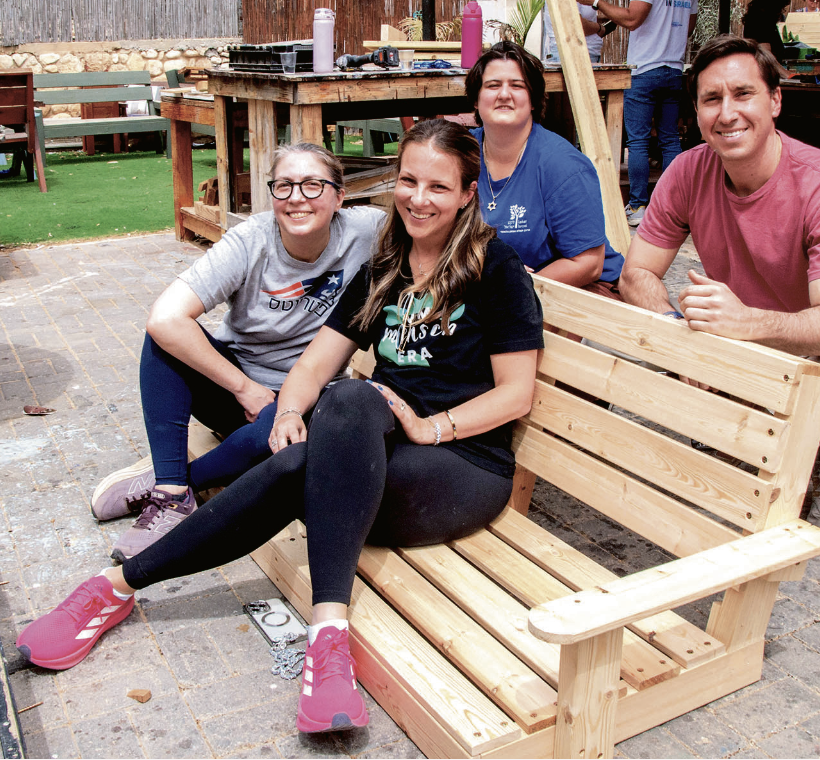
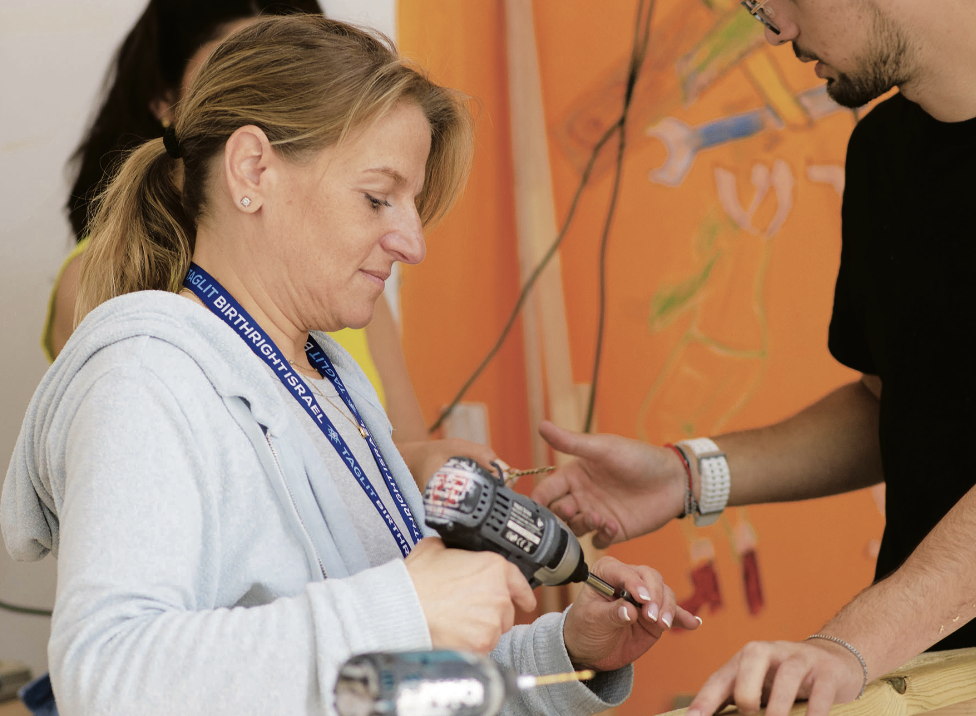
Another project involved building furniture for a future home for lone soldiers. And participants met with members of the Bedouin community and heard about “the real struggles of loving and supporting Israel while not necessarily having the same rights and benefits as other citizens, of not really feeling like they totally belong but still having a love for the land and the people.
“We came away with a better sense of the many different communities within Israel and the different areas of need.
“It wasn’t just the work that we did,” Ms. Forman continued. “It was hearing the stories, the very real personal stories, of the people we were helping and the needs they have,” and understanding “how the work that we were doing is going to make a big difference in the lives of those people.”
A lot of the work “is sort of invisible to most people,” Ms. Forman added. “If you didn’t know it was there, you’d never know such a thing exists. Of course, everyone knows there are hungry people, but you probably didn’t know that there is an organization that’s helping at- risk youth create an incredible community and develop a love of community service. Instead of hanging out on the streets, they’re hanging out helping people and supporting each other.
“The unifying factor of the experiences we had is that they are inspirational initiatives started by change-makers who identified a need and decided to do something about it. A goal is for each of us to be able to go back to our own communities and pay more attention to the needs all around us and take action, to become change-makers in our own communities.” The initiatives also highlighted “the role that service can play in rehabilitating communities, in rehabilitating people who are suffering.”
The trip underlines how impactful education through service can be, Ms. Levine said. “One of the ripple effects we hope to see is [each participant] thinking through what their organization offers and how to embed more service into their offerings.”
The goal is for community organizations to feature more “holistic service learning,” Ms. Levine continued. “It’s not just hands-on work; that’s the first piece.” The second piece is learning about issues specific to the area — “understanding the need that you’re meeting, the why. So if you’re packing at a local food pantry, you’re understanding food insecurity in the area that you are volunteering in.”
The third component is exploring the “Jewish values connected to it, our Jewish texts, a piece of Jewish wisdom. And then afterwards we reflect: What does this mean? What did I learn that I didn’t know previously? How am I bringing this home? What resonates?”
The trip offered another key benefit, Ms. Levine added. “One of the biggest pieces of feedback we got was that our participants are so inspired to bring more people to Israel, understanding that service trips are not just about seeing Israel for the tourist experience that we know and love, but about diving deep into Israeli culture, viewed through the lens of need, and understanding its complexities. This type of trip allows for that and helps build bridges amongst ourselves — amongst different types of Jews — as we work together.”
Repair the World ran a similar trip last year, and some of the participating leaders already have worked within their own organizations to begin offering Israel service trips, Ms. Levine said. “Another thing we’ve seen since last year’s trip is more conversation around how relationships and volunteerism are addressed in Israel and about bringing that back home. What can we learn from the natural feeling of giving back in Israel and the type of relationships that we experience when we’re volunteering there — how community members just show up in times of need? How does it translate back to the U.S.?”
Judi Nahary, the chief impact officer at the Kaplen JCC on the Palisades in Tenafly, was one of the leaders on the trip. Like Ms. Forman, she was inspired by the innovative ways she saw service being used as a therapeutic tool and as a means to engage with young people at risk. “There’s a healing quality in helping others, and Israel really leans into that,” Ms. Nahary said.
Ms. Nahary also found the volunteer work the group did to leave a deep impression. “We were really left with a very solid understanding of the impact that [our volunteering] was making on the community it was intended for,” she said. “So if it was building furniture for a lone soldiers’ home, we got to see the home and what the furniture looked like at the end, inside that housing, and to hear from soldiers who benefit from these types of homes.” The program was structured in a way that “allowed us to understand the impact that we were making. That really helps light the fire and makes people want to come back and do more service work. That was something that I couldn’t get enough of as a participant.”
She found that the educational piece of the program also played a critical role. “The way [trip organizers] framed the volunteer work, and the reflecting that we got to do as a group, made the experience very meaningful,” she said. “They painted the picture of what the issues were beforehand and helped us really understand what we were doing and why we were doing it” going into each project. Hearing from people involved with each of the initiatives about why they got involved was also very moving, Ms. Nahary added. “Their stories were remarkable.
“I haven’t been able to stop thinking about my experience because it affected me so deeply,” she concluded. “I believe I just nourished my soul and came home a better person.”