

Never again?
Experiencing Holocaust Remembrance Day in Warsaw
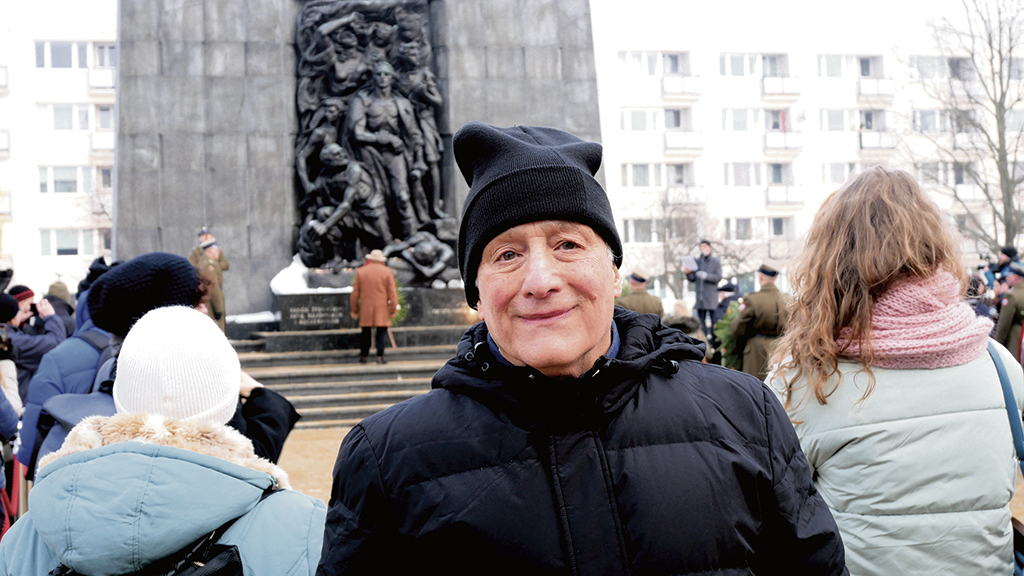
It was International Holocaust Remembrance Day this year on January 27, and I was standing at the same spot on earth where my grandmother, Lola Rabinovitz, stood more than 80 years ago as the Nazis rounded up the Jews of the Warsaw Ghetto.
The Nazis selected who would stay and live, at least for a while, and who would be deported to the Treblinka death camp. My grandmother was deported to Treblinka, never to be seen alive again. Her niece, Eva, survived and lived into her 90s to tell the story of our lost family.
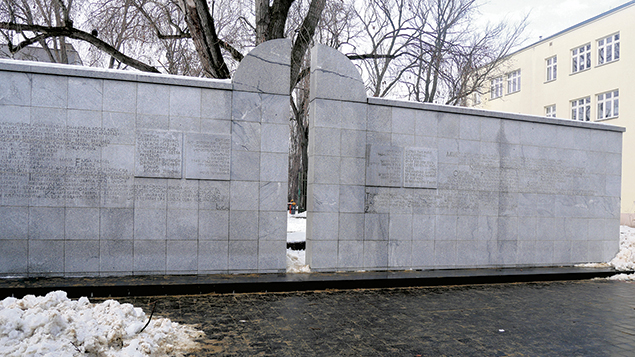
Where there had once been a train platform, there now stands a monument, a marble wall. It’s the Umschlagplatz Monument; the Umschlagplatz was the place where the Jews were gathered before they were sent off to their deaths. Next to it there is another marble structure, vaguely resembling a freight train.
The street was cold and snow-covered and very quiet. My guide and I were the only two humans in sight, but I felt transported in time to the commotion, cruelty, and desperation of the 1940s, as depicted in a small photograph that hangs in the Umschlagplatz Memorial.
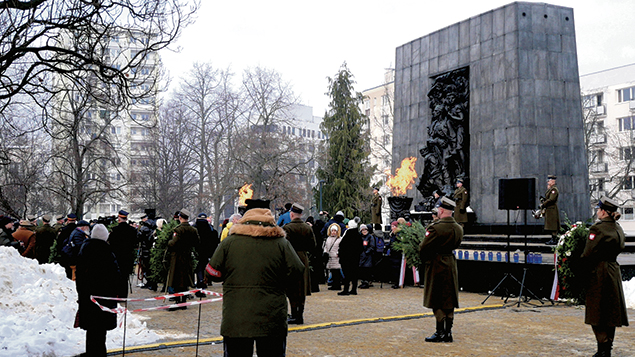
I had the same feeling of time-traveling to the 1940s as I stood near the monument for the Ghetto heroes, where a somber ceremony was taking place. Polish soldiers marched in lockstep. Memorial flames in large menorahs fluttered in the light wind, and survivors and dignitaries from Poland, Germany, Israel, and other countries drew forward, laying a wreath at the foot of the monument. Loudspeakers announced their names and titles, but the ceremony was subdued and rather small. TV crews and police almost outnumbered the attendees, but the gray skies and the bare winter trees seemed to be just the appropriate setting. One of the plaques in the former Warsaw Ghetto area shows that in its heyday the sprawling area covered a large part of the city. Now you can find quite a few remnants, monuments, and commemorating plaques in various streets and squares, which in my mind transformed the modern city back into the Ghetto where my grandmother had spent her last days.
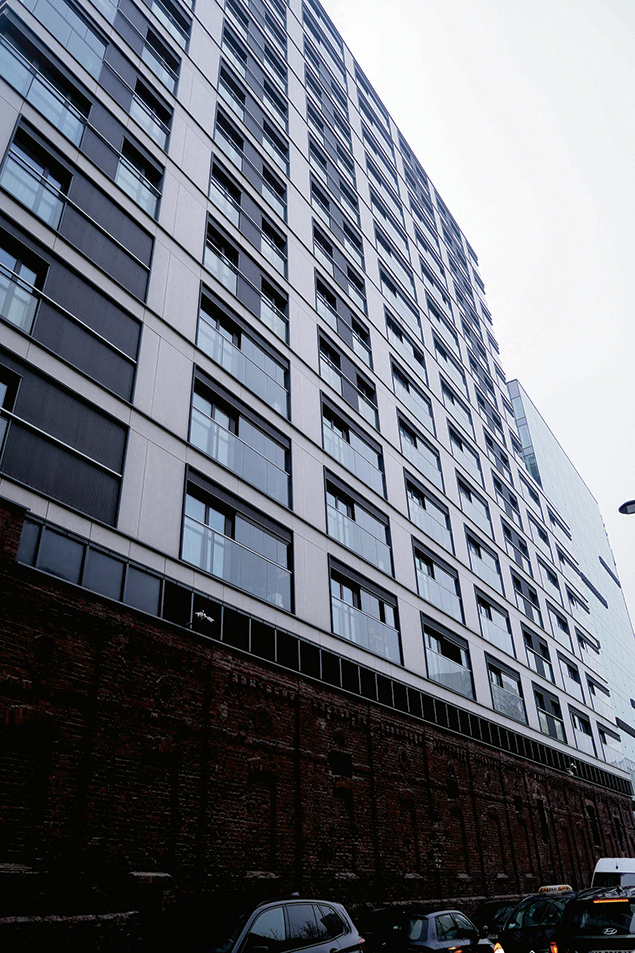
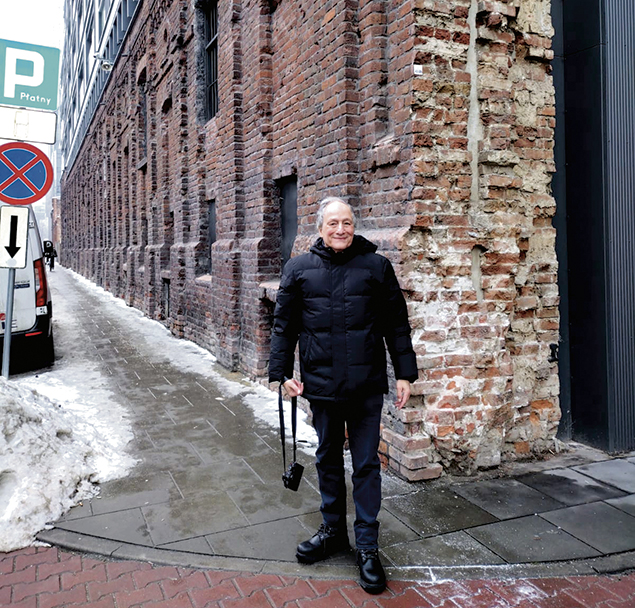
One of the most striking mementos to the dark past is a wall of heavy deep-red bricks aligning a narrow street, looking like fortifications. This was part of the Ghetto wall. Incongruously, it is now essentially the ground floor of a gleaming glass and steel high-rise. Across the street there are boarded-up buildings. My guide said that the city government kept them that way until the “legal Jewish owners” could be found.
Our experience with property that my murdered family owned has been much more mixed.
My father was in England during the war, so he was spared, but his entire nuclear family as well as many other relatives died on this very land. The local lawyer we hired to try and recover our property was very professional and helpful. When we asked her why she was so dedicated to the task, she said that had the Nazis not broken up our family, all the doctors, lawyers, professors, and businesspeople who were on the list of heirs would have been helping Poland thrive.
With her help, our family was able to take possession of the home we had owned for generations, but the family-owned land and factory seem lost. When the lawyer filed a claim for the land in 2018 — so far it has been unsuccessful — some of the comments on the article reporting the lawsuit in the local paper were blatantly antisemitic.
My guide, a gentle, smiling man who took me to see the hidden gems in the city, kept reminding me that Poles did fight the Germans, and he seemed genuinely to be grieving every time I mentioned in conversation a family member who had been murdered on this soil.
And I am thankful to him. When I planned this layover in Warsaw, on my way back from Israel to the United States, I did not remember that it would be on Holocaust Remembrance Day. The guide came to me as I was walking in the old city and offered his services to show me Warsaw and its Jewish past, and inadvertently he took me on this deeply emotional journey.
Or perhaps he was sent by my lost family to immerse me in their lives and deaths in the city of Warsaw.
On the way to the airport, the cloudy, snowy landscape, with the sides of the road dotted with old buildings, was reminiscent of the photos from the days of the Nazi occupation. Same weather, same land as in the 1940s, and they tolerated the Nazi horrors.
Never again?
Dr. S. Abraham Ravid of Leonia is the Sy Syms Professor at the Sy Syms School of Business at Yeshiva University; this year, he also has a research appointment at NYU. Before receiving his Ph.D. at Cornell, Dr. Ravid worked as a radio journalist and served in the IDF, including during the Yom Kippur War.