

Welcome to Club Z
Group for Jewish teens focuses on identity and pride
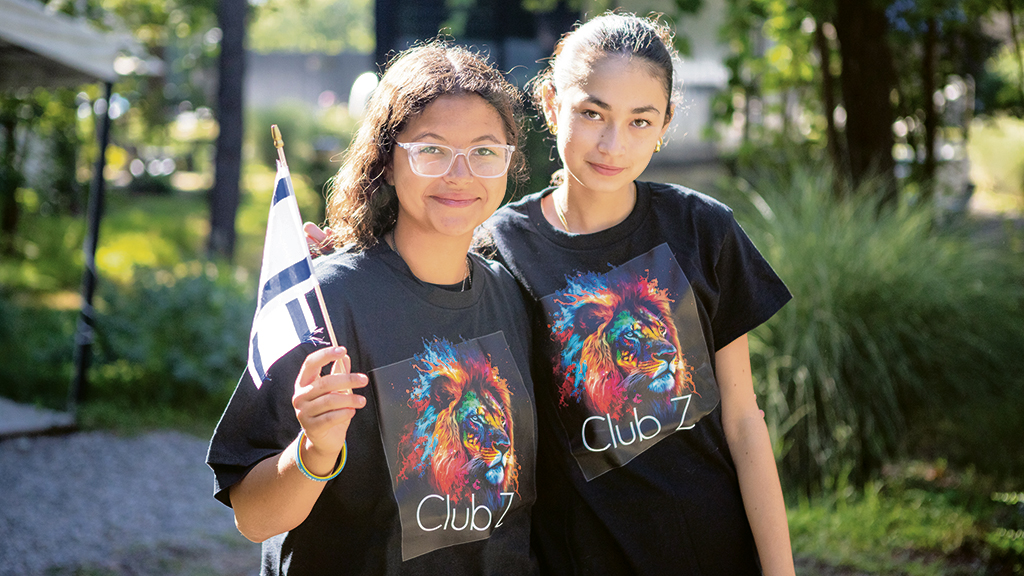
This can be a confusing time to be a Jewish teenager.
Cultural assumptions and expectations are changing rapidly in some places; it can be hard for Jewish tweens or teens to figure out their identity. It’s almost a perfect storm for some kids — please note that this is far from true for all kids, and in fact might be completely untrue for those ensconced in deeply Jewish communities — as they try to figure it out.
On the one side, they don’t know that much about what it means to be Jewish; it’s not necessarily a highly defining condition for their parents either.
On another side, to some people Israel has gone from being the plucky little nation that could, the refuge for all Jews, to being a pariah state, guilty of horrendous sins. And all Jews are conflated with Israel, even the ones who can’t find the Jewish state on a map without very big labels.
It can be hard to a kid to sort all that out.
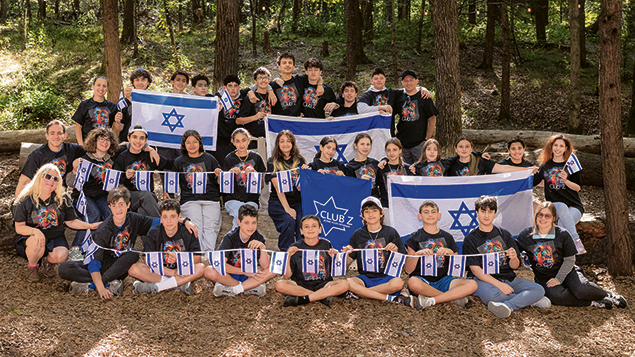
Club Z is a “nonprofit building Jewish identity and Zionist grounding in teens across the United States,” Inna Yelisevich of Livingston said.
Ms. Yelisevich leads the Livingston-based chapter of the organization. It’s three years old, and it’s the biggest on the East Coast. So far it’s the only one in New Jersey, although with hard work (guaranteed) and luck (never as easy to count on), another will open soon in Bergen County. Because Ms. Yelisevich was born in the Soviet Union, immigrating here in 1991, at 9, with no English but sky-high hope, she knows what it feels like not to know basic information about yourself.
Club Z was founded in 2011, in the California Bay area, before the world changed. Its founder, Masha Merkulova, “didn’t know she was Jewish until she was about 15 years old,” Ms. Yelisevich said as she explained Club Z a few months ago. She found out when she went to get a passport — the document that all Soviet citizens had to have, although almost none of them were allowed to travel. Instead, it tied them closely to the identities they were not permitted to explore. What did being a Jew in the Soviet Union mean? Unclear, but nothing good. Ms. Merkulova had a Russian-sounding name, and no idea about her background.
So when she immigrated to the United States, she learned, and then she taught it to others. Club Z was the result of that effort.
Club Z has local chapters, regional retreats, and an annual conference. This year the conference — the group’s 11th — will be in central Florida over Labor Day weekend. (See below.) It’s called the Rising.
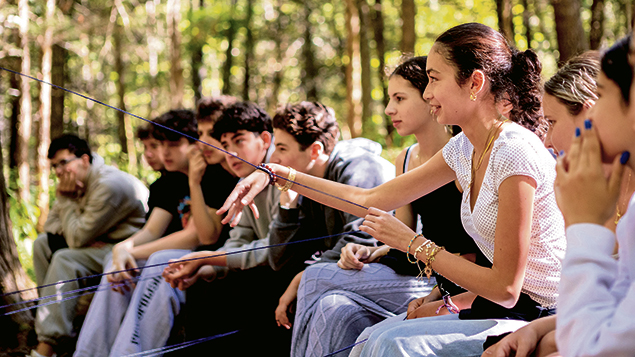
Club Z has three pillars, Ms. Yelisevich said. The first is identity; “that’s the root that the other two grow from.” The other two are Zionism and leadership. And the Rising has its own tagline: Find your people. Come home stronger.
The organization teaches teens how to advocate, but it doesn’t assume that everyone will want to advocate, or that everyone has to. “First they have to learn who they are,” Ms. Yelisevich said. “We focus primarily on identity and confidence building. That can turn into advocacy, but it doesn’t have to. Sometimes people don’t realize that they have the ability to advocate, but even if they don’t want to do that, they will have the knowledge to understand misinformation and fight it, at least for themselves. When you see something false, even if you don’t respond to it publicly, it gives you the background and the internal strength to recognize what you’re seeing.”
Other teens do go on to become outspoken advocates — even teens who never thought they had it in them — and then they can become the community’s next generation of leaders.
The regional retreats are fairly small and intimate; they meet at campgrounds, and they’re not highly structured, Ms. Yelisevich said. The most recent one in this area, for New Jersey and New York, was in upstate New York. The annual conference is bigger and far more structured. It’s for rising high-school freshmen through rising college freshmen. “It is open to any Jewish teen from anywhere in North America,” Ms. Yelisevich said. “Club Z membership is not required.”
At the Rising, the teens are divided into groups of 15, and each one is named for a Jewish hero, across time and space and paying no attention to gender; names include Moses, Yael, Judah the Maccabee, Golda Meir,
Menachem Begin, and Natan Sharansky. “We have at least five speakers,” Ms. Yelisevich said. Not all are confirmed yet, but she knows that one of them will be Col. Richard Kemp. Mr. Kemp, who’s retired from the British army, commanded British forces in Afghanistan, is a counterterrorism expert and an outspoken supporter of Israel; he heads the UK Friends of the Association for the Wellbeing of Israel’s Soldiers. He’s not Jewish. “He’s very involved with Club Z, and he never misses the conferences,” Ms. Yelisevich said.
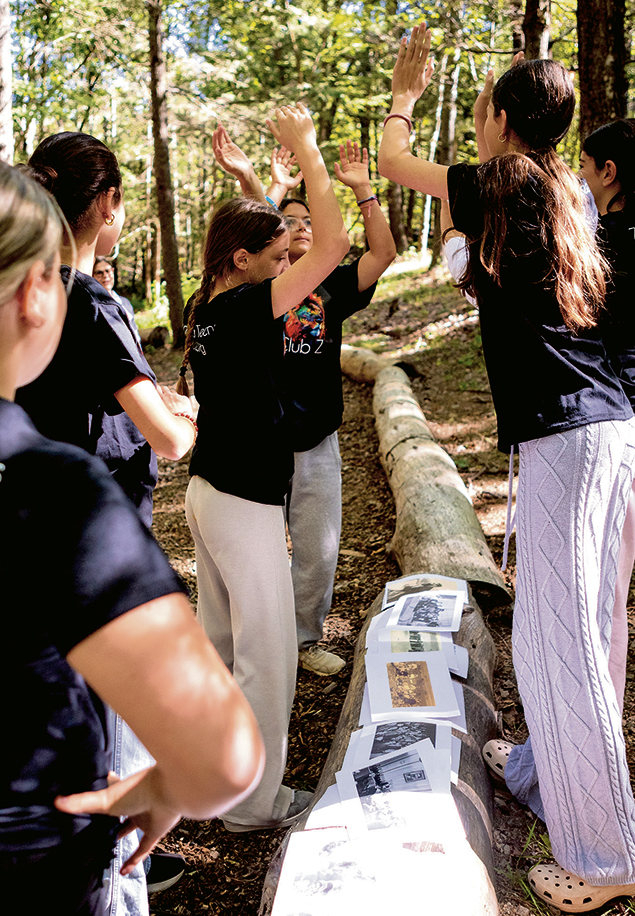 Some of the other speakers, like Mr. Kemp, are not Jewish; they share a belief in Zionism not as the dirty word much of the outside world wants to make it, but as a shining, inspirational concept. It’s not only theoretical, however; they also talk about their real-world experiences, because both they and the students live in the real world.
The speakers don’t just lecture and run, she continued. “They are embedded through the whole weekend. They stay there. They are part of the experience.” They join the kids in their activities and they sit with them at mealtimes; the students can develop real relationships with them. They come from across the ideological spectrum, and address, among other issues, how to identify and combat disinformation and propaganda.
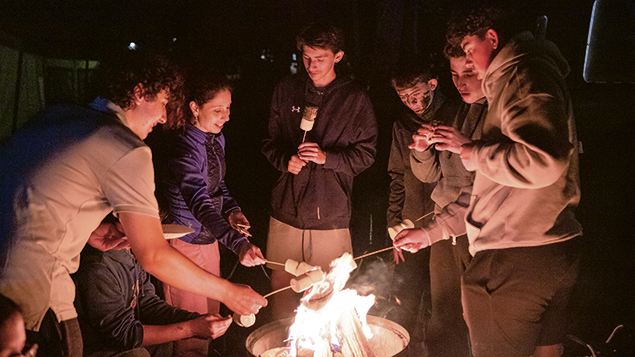
The program includes structured talks and unstructured time for deeper conversations, Krav Maga, evening bonfires, sports, time in the lake, and of course Shabbat.
“It’s a really special experience,” Ms. Yelisevich said. “I have taken my kids on the last few retreats.” She has six children; some of them are the right age for Club Z, and others will grow into it. “They love it because they connect with like-minded kids, and the connection’s on a deeper level. It’s not just small talk.” They’re normal kids, so they do normal kid stuff, but they also “have the opportunity for deeper conversations.
“And they stay connected after the conference,” she continued. “They wouldn’t normally have the chance to connect with kids from California or North Carolina, like they did last year. And they stay connected, and Club Z stays in touch with them. It never goes away.”
She tells the story of a young Club Z alumna who used what she’d learned there. “A mom reached out to me from Colorado, and said that her daughter was at Montclair State,” she said. “I met her, and she’s a tiny person. Like four foot 10. And she would stand up to these big, tall police officers, who were antisemitic.”

Wait. There are antisemitic police officers at Montclair State?” “Unfortunately, yes,” Ms. Yelisevich said. “After October 7, a lot of college campuses showed their true colors. It was ugly. Actually, it was really disgusting. You don’t think that it can happen that close to home, but it does.
“I went there when they were planning some event to welcome Hamas supporters,” Ms. Yelisevich said. “She spoke against it. She was on her own. Nobody would stand with her.” But this young woman had the strength to do it anyway.
“There was no expectation that she could do that,” Ms. Yelisevich continued. “She would compete in ice skating, so she missed a ton of Club Z meetings. Nobody expected it from her.”
After this young woman graduated, Ms. Yelisevich invited her to speak at a Club Z meeting. “She was so happy to come and speak. She felt inspired by speaking to the kids, and the kids were inspired by her.” Ms. Yelisevich was struck by the contrast between the young woman’s size and her presence. “Most of the teens there were taller than she was,” she said. “And she stood up by herself.”
The kind of self-knowledge and the ability to advocate “is why I am so passionate about Club Z,” Ms. Yelisevich said. She has a day job — she is a real estate agent — and is the mother of six children, all still living at home, so she doesn’t have huge amounts of free time hanging heavily on her hands. But she finds the time to devote to Club Z, because she owes it to her children and the children of the community.
“Coming from the Soviet Union, I didn’t know enough about my identity,” she said. “That’s why I feel that it is important for my kids to know it. I want them to learn from educators who are well-versed in everything Jewish, in Israel, in the diaspora, in our people, in everything to do with our culture, our traditions, our history, how we are indigenous to Israel, and some Jewish people don’t even acknowledge that.
“I wanted my kids to have the background, the knowledge, the confidence, the pride in their identity that I never had growing up. And I see the impact of Club Z on them. I see the impact on other kids too, and I hear about it from other parents.
“I heard from a parent who said, ‘Hey, I just want to thank you personally, because my daughter met her best friend at Club Z. and they are inseparable. They just have so much in common, and they feel stronger when they’re together.
“I love hearing these stories,” she continued. “That’s what motivates me. That’s what inspires me to keep going and continuing to advocate and to continue to connect our teens.
“The main point is that these teens are our future, and I feel that not enough organizations are focused on that. Their focus is all on adults, maybe on aging adults. But if we don’t focus on teens, particularly in the current climate, we will lose more of them.
“We will lose people, and we can’t afford to do that. There aren’t enough of us to begin with.”
On the other hand, these teenagers, and the tweens who follow them, will provide the next generations of Jewish leaders. “Obviously, not everybody will become a leader. Not everybody can become a leader. But if you cultivate them, if you create an environment where they can learn leadership, then you are going to increase the chances of somebody becoming a leader who otherwise wouldn’t have thought of doing it in a million years.”
Who: Club Z
What: Will have a conference, called the Rising
When: On Labor Day weekend, September 4-7
Where: In central Florida
How: Details, including location and (heavily subsidized) price, are clubz.org/the-rising
To register: Go to clubz.org/the-rising