

Why Judaism must resist the normalization of cosmetic alteration
There is a quiet revolution underway in segments of the Jewish community. It does not announce itself with banners or proclamations. It comes wrapped in glossy testimonials, filtered selfies, and the language of empowerment. It is described as self-care, confidence-building, even preparation for marriage.
But let us call it what it often is: The normalization of elective cosmetic surgery as a cultural expectation. And that is a betrayal of Jewish values.
Judaism sanctifies the body. It does not market its modification.
Get The Jewish Standard Newsletter by email and never miss our top stories Free Sign Up
I write as a father of daughters. I write as someone who has spent decades teaching that intimacy, attraction, and erotic power flow from dignity and confidence, not conformity. And I write as a rabbi who believes with absolute clarity that teaching young Jewish women to surgically alter themselves in order to be chosen is a spiritual failure. Not modernity. Failure.
In recent years, we have witnessed a troubling development: young Orthodox and Modern Orthodox women undergoing rhinoplasty and other cosmetic procedures before they even begin shidduch dating. Parents accompany them. Surgeons reassure them. Influencers normalize it. The message is subtle but unmistakable: improve your face before you present yourself for marriage.
Sit with that.
Shidduch dating was meant to elevate character, middot, faith, and kindness. It was designed to protect dignity, not to turn Jewish daughters into products entering a competitive marketplace. When surgery becomes preparation for marriage, we have replaced covenant with commerce.
No one is holding a gun to anyone’s head. That is not how cultural coercion works. It works through normalization. Through repetition. Through the quiet fear of being the only one who didn’t “fix” herself. Once enough girls do it, it stops feeling optional.
Let us speak plainly about rhinoplasty in particular.
For centuries, the “Jewish nose” was caricatured in antisemitic propaganda, from medieval Europe to Nazi Germany. It was mocked, exaggerated, weaponized. It became shorthand for Jewish otherness.
Now imagine a Jewish community that quietly internalizes the idea that certain Jewish features must be softened, narrowed, reshaped — especially before entering the marriage market.
What are we teaching?
If a Jewish girl learns she must fix what looks Jewish in order to be chosen, we are laundering antisemitic beauty standards through Orthodox respectability. That is not empowerment. That is internalized shame.
The Torah teaches that the human being is created b’tzelem Elokim — in the image of God. That is not metaphorical poetry. It is a radical theological claim. The body is not an accident. It is not a mistake. It is not a draft version awaiting cosmetic revision. It is a sacred creation.
To surgically alter the body for purely aesthetic conformity — especially under communal pressure — flirts with something Judaism has always resisted: the idea that external appearance determines value.
Let us move from theology to psychology.
When influencers glamorize cosmetic procedures, especially within a tight-knit religious culture, they are not merely documenting personal journeys. They are shaping norms. They are defining what “normal” Jewish womanhood looks like. Influence is power.
When you normalize surgery as a rite of passage, you don’t empower women — you pressure them. Young girls are watching. They are absorbing. They are calculating.
If the admired women in their community present surgical alteration as aspirational, how long before it becomes expected? How long before a girl who likes her nose suddenly feels naïve for not correcting it?
This is not self-care. This is manufactured dissatisfaction. And dissatisfaction is profitable. But it is spiritually corrosive.
Judaism’s concept of modesty — tzniut — is widely misunderstood. It is not about repression. It is not about erasing beauty. It is about depth. What is sacred is protected. What is intimate is not performed.
The pagan world reduced women to surfaces. Jewish ethics resisted that. Rome worshipped the body; Israel sanctified it. Pagan culture said a woman’s power lay in her compliance with aesthetic ideals. Judaism said her power lay in her soul. Real erotic power comes from confidence, not cosmetic conformity.
I wrote “Kosher Sex” to argue that Jewish sexuality is not prudish but passionate, rooted in reverence, not performance. Attraction deepens through emotional intimacy, mutual respect, and spiritual alignment. None of that requires a scalpel.
A woman at peace with her body radiates something no surgeon can fabricate. A woman trained to view herself as defective will never feel whole, no matter how many procedures she undergoes.
And let us not pretend that cosmetic surgery often stops at one procedure. History is littered with cautionary tales of celebrities who could not stop adjusting, refining, correcting — until their original selves were barely visible. This is not liberation. It is addiction dressed as self-improvement.
There is another troubling dimension. Reports have noted that while some parents eagerly support cosmetic procedures for daughters before dating, husbands are often less enthusiastic about similar procedures later in marriage. That contrast is revealing.
It suggests that the pressure peaks when a woman’s “market value” is being assessed. If parents escort daughters to a surgeon before shidduch dating, we have replaced Torah values with marketplace values.
Marriage in Judaism is a covenant — brit — not a bidding war. A husband is commanded to honor his wife. Not to evaluate her symmetry. Not to assess her market readiness. When surgery becomes strategy — alteration as advantage — we have drifted far from covenantal love.
Let me be precise. Judaism is not hostile to medicine. Reconstructive surgery after trauma? Of course. Procedures that alleviate genuine psychological suffering in extreme cases? There are of course rabbinic authorities who permit such interventions. Health — both mental and physical — comes first. But that is not what we are discussing. We are discussing elective, aesthetic-driven alteration normalized as preparation for romantic eligibility. That is a different category entirely.
The natural body is not a flaw to be corrected. It is a divine gift to be cherished. When surgery becomes common enough that girls feel abnormal for declining it, it ceases to be a private choice. It becomes cultural pressure. And Jewish law has always been wary of mutilation for vanity’s sake. The body is entrusted to us. We are guardians, not owners in the modern libertarian sense. Autonomy exists within covenant.
Social media has changed the equation. In earlier generations, cosmetic surgery was private. Now it is content. It is documented. Monetized. Endorsed. That visibility multiplies influence.
Marriage is not content. A woman’s body is not a branding exercise. When surgical journeys are packaged as aspirational narratives within a religious framework, they do not stay personal. They become prescriptive. Young women begin to ask: Is this what I must do to compete? To belong? To be chosen?
That is not freedom. That is fear of exclusion.
I am the father of six daughters. I want them — and every Jewish girl — to wake up with Modeh Ani on their lips: gratitude for breath, life, embodiment, and inner and outer beauty. I want them to see their faces as expressions of divine image, not obstacles to love. A Jewish girl should grow up loving her body, not negotiating with it.
If we teach our daughters that their God-given features require correction before they are eligible for affection, we are not modernizing Judaism. We are betraying it.
Judaism has survived empires, inquisitions, pogroms, and genocide because it insisted that Jewish identity is sacred, embodied, and unapologetic. We did not survive by sanding down our differences to fit prevailing beauty standards. Why would we be dumb or shallow enough to start now?
There is a broader cultural pattern at work. The obsession with youth. The terror of aging. The belief that desirability is tied to perpetual modification.
But Judaism honors aging. Sarah’s beauty is mentioned in Torah at 127. Abraham and Sarah are described as advanced in years — and blessed. The covenant was not signed in a dermatologist’s office. Judaism does not demand that its daughters disappear in order to be chosen.
If cosmetic surgery becomes normalized in religious communities, it will not stop with rhinoplasty. Standards escalate. What was once exceptional becomes ordinary. What was once optional becomes assumed. And the girls who opt out will quietly feel inferior. That is the real violence.
This is not about condemning individuals. It is about challenging a trend. It is about asking whether we want Jewish womanhood defined by surgical enhancement or spiritual depth.
We need communal courage. Rabbis must speak. Parents must reflect. Influencers must consider the weight of their platforms. Surgeons must examine whether profit is blinding them to cultural harm.
Judaism sanctifies the body. Misogyny monetizes its destruction. If we truly believe that every human being is created in God’s image, then that belief must shape our communal norms — not just our sermons. Let there be room for compassion where surgery addresses genuine suffering. But let us not normalize insecurity and call it empowerment. The Jewish future depends on daughters who know they are enough. Not improved. Not edited. Enough. And that is not a sentimental slogan. It is a theological imperative.
The body is sacred. The face is sacred. The Jewish face is sacred. Let us defend it — not market its modification.
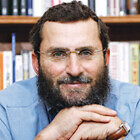
Rabbi Shmuley Boteach of Englewood is the author of 30 books. Follow him on Instagram and Twitter @RabbiShmuley.