

Decisions — based on knowledge or numbers?
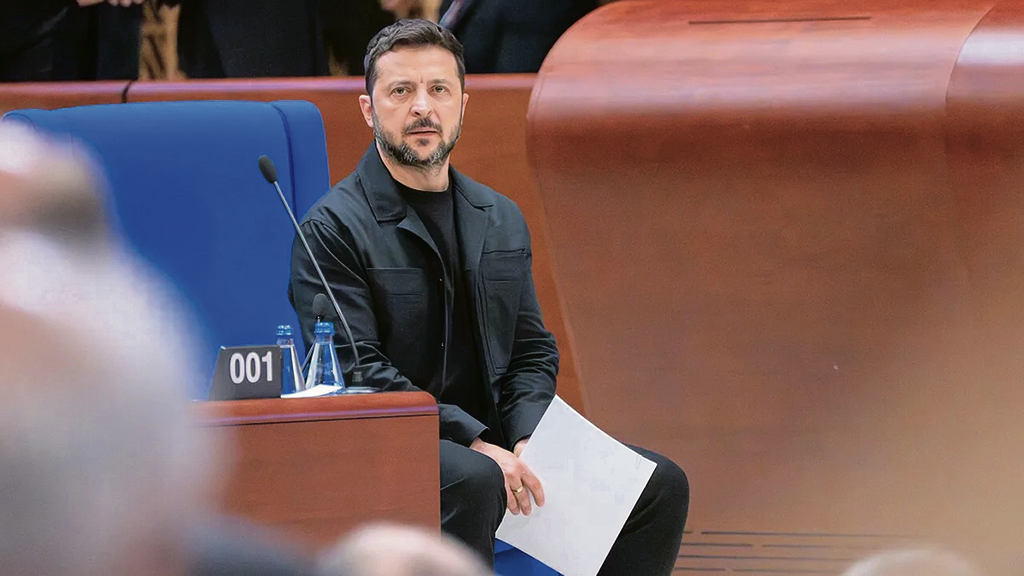
Steve Witkoff and Jared Kushner visited Russia and Ukraine last week.
Both went at the behest of President Donald Trump, Witkoff’s friend and colleague in the New York development world and Kushner’s father-in-law. Witkoff is the United States special envoy to the Middle East — an unpaid, unconfirmed position — and an extremely wealthy businessman; Kushner is Trump’s son-in-law and an extremely wealthy businessman. Neither has any training in diplomacy.
“Their most recent trip to Moscow and Kyiv was an example of totally unprofessional, disgusting diplomacy,” Alexander Smukler of Montclair, who analyzes the war in Ukraine and the broader Global Game of Thrones for us, said.
“This was I think Witkoff’s eighth meeting with Putin, and this time Kushner went with him. The meeting continued for two to three hours.” They usually do. “That means that Putin has spent almost 24 hours with Witkoff. Not many people, certainly not many foreigners, can say they’ve spent so much time with him.”
As for the visit to Kyiv that followed — it was Witkoff’s first.
There is a video that’s all over the internet showing Witkoff and Kushner sitting across from Putin around a table — there are other men there as well, including a translator — in a room so packed to the ceiling with red and gold that the men’s dark suits look out of place. In the video, Witkoff addresses Putin.
“When we retire, we’ll have all these incredible stories and incredible memories, and yours will be right at the top of it all,” Witkoff says, as Kushner sits next to him, looking as animated as Madame Tussaud could have made him, while Putin seems to allow himself a faint smirk.
After the meeting, Witkoff gave a press conference. English-speaking media sources reported his words as he spoke them, but Russian propaganda sources translated them in a way that tied them to Russian folklore, Mr. Smukler said. In a typical Russian-style vignette, Witkoff is cast as a grandfather telling his grandchildren stories as he puts them to bed. In this story, he’s telling them about how wonderful it was to have met the czar of all the Russias, Vladimir Putin, and how Putin is protecting them by fighting against evil.
“That made me sick to my stomach,” Mr. Smukler said. “I thought about the high-ranking American diplomats I’ve met — and trust me, I’ve met many, especially when I was involved in the Soviet Jewry and underground Jewish movements.” (Mr. Smukler, possibly the youngest of refuseniks, left the Soviet Union with his family in 1991, just months before it fell. He continued to be active in the push to help Jews from the former FSU once he came to America.) “They were all U.S. ambassadors to Russia, they were all different from each other, and they were all amazing. Alexander Vershbow, Bill Burns, John Beyrle, Michael McFaul. John Teft. Jon Huntsman. They had been appointed by different administrations. Meeting with them was always a lesson in diplomacy. All of them were widely educated. Their knowledge of Russia, and whatever other countries they served, was at the highest level, and so was their professionalism. I can name many others in the State Department with whom I met, who also were at the highest level of professionalism.
“And I never thought that I’d ever hear America’s highest-ranking diplomat, the envoy for every possible problem in the world, now saying that he wants to tell stories about incredible memories meeting with a person who is officially recognized as a war criminal.”
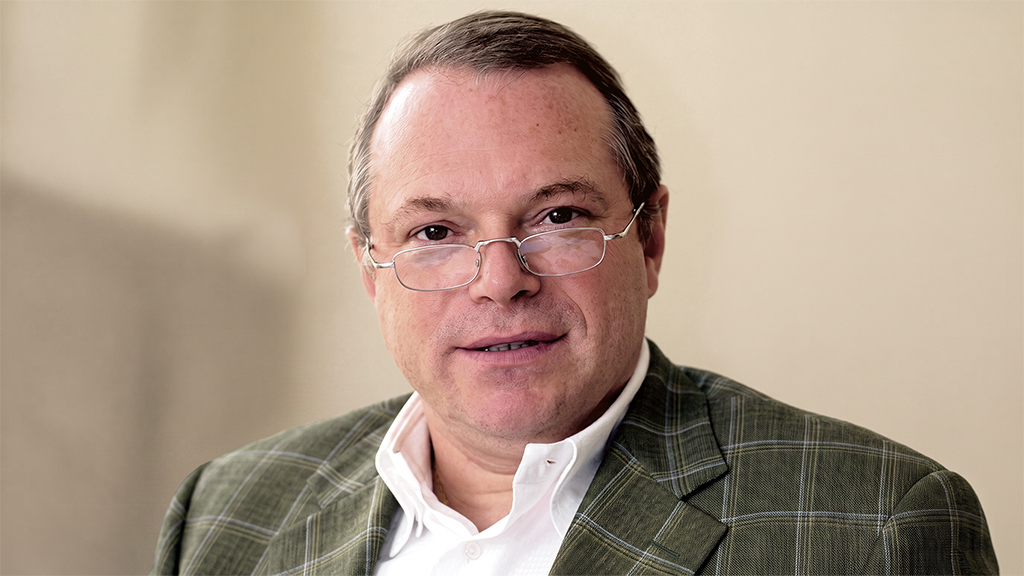
Of course, Mr. Smukler said, that war criminal status comes from the International Criminal Court, which neither the United States nor Israel recognizes. The court, in the Hague, has put out an arrest warrant for Putin, for the crime of stealing Ukrainian children and giving them to Russians. That’s a war crime. “Witkoff, his supporters, and people who think that I am wrong will say that the U.S. doesn’t recognize the court. That’s true. I can’t deny it. I am not a fan of this corrupt, one-sided organization. But it was constituted by the U.N., and if someone is under arrest as a war criminal, even by that court, do you say at press conference that you will tell your grandchildren that you spent unforgettable hours with that person, who gives orders to kill civilians, including children, every day?”
What about the ICC’s warrant against Benjamin Netanyahu, also for war crimes? Mr. Smukler cites New York City’s Mayor Zohran Mamdani, whom he loathes, as saying that he’d have Netanyahu arrested should he try to set foot in the city. Yes, Mamdani walked that back; yes, Bibi will be in New York this month, for the U.N.’s General Assembly, but still, Mr. Smukler said, how is it possible for an elected official to take the ICC seriously but a special envoy to the president to ignore it completely?
“This brings us to Plato’s famous statement that a good decision is based on knowledge, not numbers,” Mr. Smukler said. On wisdom, some of which is gathered from experience, combined with learned intuition and understanding of context, instead of simply on raw data. “When Witkoff and Kushner go to Moscow, they discuss numbers without knowledge. Numbers like how much oil can be sold or what kind of business projects could be started after the war, when the sanctions against Russia all are lifted. Who will receive all the benefits of a reset relationship with Russia?
“Witkoff has no training,” Mr. Smukler said. “No background.” No nothing. Neither does Kushner, he added. “It’s been about two years since Trump promised us that he would end the war within 24 hours of his taking office. We’ve all witnessed Witkoff’s diplomacy. He goes to Moscow, enjoys the best restaurants and red-carpet service, but we’ve all seen that his shuttle diplomacy did not bring any results except escalating the war. No results on any front — not in Gaza, not in the debacle with Iran, and now it’s the same thing with Russia and Ukraine. He is spending so much time, but he cannot offer any solution.”
To make a bad situation worse, Witkoff is bringing disinformation back home. “His interpretation of the information that he gets at the Kremlin and delivers to the White House is not accurate. That’s not because Witkoff is lying to his boss, the president of the United States, but simply because his knowledge of the Russians and of the angry dwarf” — Mr. Smukler’s dismissive nickname for Vladimir Putin — “and what the angry dwarf will do when he is cornered, fighting, and struggling for his power, and Witkoff’s lack of knowledge of the so-called Russian character, make him absolutely worthless as a diplomat.
“Here’s a funny proof of the worthless mission to Moscow. Trump made a comment about high diesel and oil prices in the United States, blaming it on Ukraine. Diesel is now $6 a gallon, for the first time in American history, and Trump said it’s because Ukraine is hitting Russian oil refineries. I understand that the midterm elections are coming, and Trump, as the leader of the GOP and MAGA, has to find someone to blame it on.”
So he blamed everything on Ukraine. “We understand that the price of oil is up, and that affects the price of everything else. But first of all, even if Russian oil production weren’t under sanctions, even when Russia was selling diesel fuel on the world market, its contribution of that product to the world market is less than 2 percent. So even if Ukraine could completely end the supply of Russian diesel to the world market, this small percent wouldn’t affect prices here. And second, Trump was involved in implementing incredibly tight sanctions on Russian oil.”
It sounded like Trump was telling the Ukrainians that they could not hit Russian oil refiners, but any other target was okay, Mr. Smukler said. Civilian targets would be acceptable — in fact, Russia goes after civilian targets by choice, because its goal is to increase human misery. But Ukrainian targets include oil refineries, which have very few people working there, particularly at night, when the strikes happen. The Ukrainians’ goal to to bring the war home to Russians, but not to kill them, Mr. Smukler said. “It is to tell them ‘Wake up! This is what your government is doing. Wake up!’
“People have been on gas lines for six to nine hours in certain cities. If you go on Russian Telegram channels, you see the tension and hate that ordinary Russians feel for the government, and especially the president, is increasing every day. The Ukrainians destroyed Wildberries,” basically Russia’s Amazon, “and now it’s destroying major oil refineries. On September 13, it hit a refinery 3,000 miles away from its border with Russia. Every day Ukraine hits Russian objects. It just hit a refinery in the city of Surgut, in the heart of Siberia.
“There have never been any countries that could bomb Russian objects so far away in Siberia,” he continued. The Japanese could bomb from the east and the Europeans from the west, but western Siberia, tucked away behind the Ural Mountains and far from the Pacific, always was safe. Until now.
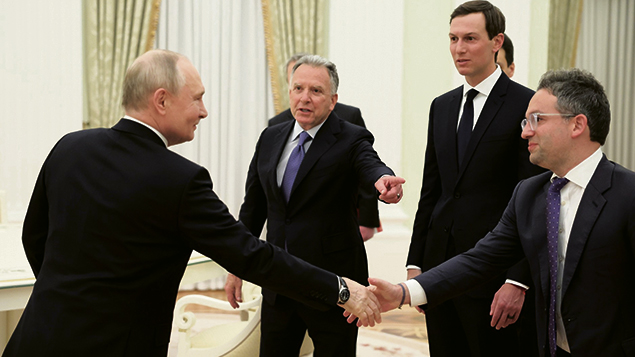
“Ukraine’s new technology puts Russia in danger,” Mr. Smukler said. “And right after that happened, the American president blamed Zelensky and Ukraine, saying that they created the crisis on the world oil market.
“And that’s another example of the absurd world we live in. We all know that the real reason for higher gas prices is the problem with Iran, and with the Houthis, who now control the Bab el-Mandeb Strait. The Houthis are controlling what Saudi Arabia is supposed to control, but they are not moving even a finger to help themselves. They are waiting for the United States.
“This is the reason why a barrel of oil is $105 now. So everything now is in complete limbo.
“We see that the Strait of Hormuz is partially open, and even with the U.S. fleet trying to help vessels pass through it, it’s still extremely dangerous. And it’s really affecting the war between Russia and Ukraine because suddenly the situation in the Global Games of Thrones has changed.
“Putin suddenly got a huge bump in his oil and gas income. It gave him an enormous economic opportunity to continue the war, and that’s really affecting his decision not to stop it.
Four or five months ago, the price of oil was about $80 per barrel, and Putin was selling his oil to India for rupees and to China for yuan, Mr. Smukler said. China got a 50 percent discount, and India got a 30 percent discount. And the Russians also were able to sell the oil on the world market, with a cap of no more than $66 per barrel.
But now, with the sanctions against Russian oil lifted temporarily and Middle Eastern oil much more expensive because so little of it can trickle out from Hormuz, and because it costs a lot to protect that trickle and the ships that cart it out, Putin “is enjoying an incredible surplus in their budget,” Mr. Smukler said. “And because of that, during that last few weeks we see signs that Putin has had an enormous boost in his economy. Billions and billions of dollars.
“And all this money is just fuel for the flames of war. It is all burned on the Russia/Ukraine front.”
Now that he can, Putin has switched the chessboard in the Global Game of Thrones, Mr. Smukler said. He has moved it around so that he can see it from another angle, and that angle tells him that if he keeps going, if he can use money to keep buying mercenary soldiers who will throw themselves into the meat grinder that is the front lines, in the end he might wait Ukraine out and win.
So “he is not in a hurry to finish the war,” Mr. Smukler said. “Why would he stop the war when he is getting an enormous injection of money, the U.S. is stuck in the swamp of the Strait of Hormuz, and the election in the U.S. is coming, and that probably will change the whole situation in the U.S. and make Trump a lame duck.
“At the same time, we have elections in Europe and especially in Germany, where the right-wing, pro-Russian, pro-Putin party had such an important victory, and the election in France is coming, and Marine LePen and her party are polling so well. So Putin realized that it is not a good time for him to get out of the war. If he sits and waits, he will have the advantage.”
Putin, Trump, and China’s President Xi Jinping are likely going to meet in Shenzhen, China, during the Asia-Pacific Economic Cooperation summit in November. “That will be the first time the three of them will meet together,” Mr. Smukler said. “I call it pre-Yalta 2. So Putin decided that it was worth it for him to continue the war.”
Mr. Smukler looked back at his earlier certainty that the war will end either at the end of this year or the beginning of next year. He stands by that belief. “I am still saying that the hot phase of the war will lend after the winter, if Ukraine survives, but I didn’t say how it would end. It could be Ukraine capitulating, or it could be some kind of peace agreement or deal similar to the one between North and South Korea.”
As Putin continues the war, secure in the personal relationship he has with Trump, buttressed by his relationships with Kushner and particularly Witkoff, because of the changes in Europe, because of the oil benefits (as we outlined in “Iranian Uranium” on September 4), he is also encouraged by what he sees going on in Ukraine.
“Tensions are growing in Ukraine,” Mr. Smukler said. “It has become a danger for Zelensky. The Ukrainian people are tired.” The Russians aim at civilian targets; the fear and stress are hard to live with. And there is corruption. “There is a very serious crack in internal politics in Ukraine. A lot of scandals. Those internal tensions make Putin believe that Zelensky might not survive as a leader through the winter.”
Meanwhile, tensions continue to increase in Russia as well. Putin is paying mercenaries, yes, but he will have to institute some kind of draft anyway, Mr. Smukler said. He is no longer importing cannon fodder from North Korea. He can no longer recruit from prisons because by now the prisons are empty. He can still find mercenaries, for bigger and bigger sums of money, for them if they survive or more realistically for their families because most of them will not survive. When Putin starts the draft, Mr. Smukler said, he’s likely to offer money, to make it look as if the draftee is enlisting, but in fact he will have been mobilized.
Because the war continues to take a terrible toll. In Ukraine, it’s on civilians, because that’s how Russia fights, and Ukraine lacks the equipment to intercept Russian missiles. There are few Ukrainian deaths on the front lines, because the war there is conducted almost entirely by drones. There are no soldiers there to get hurt.
Russia, on the other hand, sends in wave after wave of soldiers, most of whom are mowed down. The online, well resourced and trusted platform Deep State says that in August, 42,800 soldiers died, disappeared, or were so badly wounded that they cannot possibly return to the armed forces. “In the previous months, the estimate was 30,000 to 35,000,” Mr. Smukler said. “Deep State says that in September, they are expecting that number to be between 45,000 and 50,000. That would be about 600,000 people this year.”
Soldiers on a chess board are pieces of wood or ivory. In the “Game of Thrones,” soldiers were TV actors. But in the Global Game of Thrones, they are real people, and they are dying. They are not helped by real estate developers playing diplomats.