

Why it was hard to finish this story
I didn’t want to write about Sari Bashi — but I couldn’t ignore her
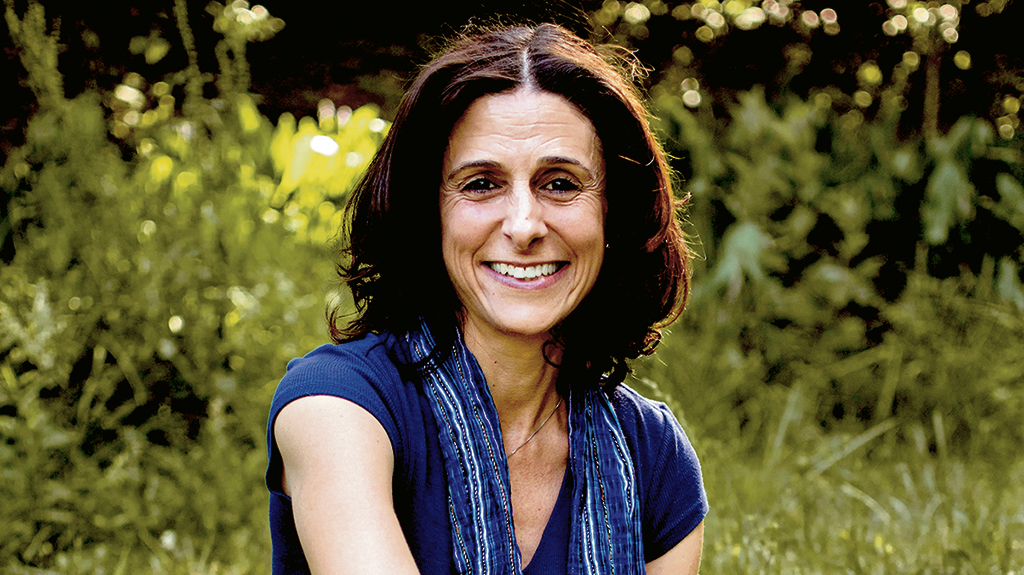
This is a story I almost didn’t write.
Twice.
Twice.
Until my grandparents interceded.
The problems started before my first interview with Sari Bashi, the author of “Upside Down Love.”
Ms. Bashi grew up in East Brunswick and Teaneck, went to Jewish day school, graduated from Teaneck High School, and earned both a B.A. and a law degree from Yale University.
Her father — she prefers not to mention his name — is Iraqi, forced out of the country with his family shortly after the establishment of the State of Israel. He was just 9 years old when they migrated to the Holy Land, where he grew up. He served in the IDF during the 1967 war; later, he moved to the United States.
Over the years Ms. Bashi periodically visited family in Israel, eventually settling there in the early 2000s. She clerked for an Israeli Supreme Court judge and then co-founded Gisha, a legal aid group that provides counsel to Palestinians.
It was through this work that she met Osama, who eventually became her husband and co-author of “Upside Down Love.” The book is about their relationship, told in alternating chapters, and was the reason I scheduled a Zoom with her that became the first time that the story almost didn’t happen.
I was at my computer at the appointed time, but Ms. Bashi was not. Turns out, appropriately, that she was stuck at an Israeli checkpoint without internet access.
We were able to reconnect a day or so later, and I told her I thought the book read like a romcom, one written by Mel Brooks but directed by Martin Scorsese. The couple breaks up. They get together. She wants children. He doesn’t. He regrets their parting and agrees to have children. She gets pregnant and he has second thoughts. As with any romcom worth its salt, there is a happy ending, but the entire romance happens under a cloud.
Osama was born in Gaza but lives illegally in the West Bank. The couple met through Gisha when he sought help navigating the complex rules governing Palestinians so he could visit his ailing mother and travel to get a degree in England. All was fraught with danger and the distinct possibility he would be forced to return to Gaza, where he was legally restricted to stay.
It is an interesting story as the couple thread their way through the minefield that makes up their lives. But it is also troubling, because she refers to the country as Israel Palestine. She writes: “In 1948, as the British withdrew from historical Palestine, or the biblical land of Israel, the Zionist movement declared the establishment of the State of Israel.” Was it the Zionist movement or the U.N.? She goes on to say that 700,000 Arabs fled or “were forced out of their homes.”
She doesn’t mention the invasion by every Arab neighbor on the day of Independence. Or the Yom Kippur War. Or even October 7. So when we spoke, I asked about her feelings about Israel while she was growing up in the Staes:
“What we were told and learned was about a long history of antisemitism,” she said. “You know, the inquisitors tried to kill the Jews. The Nazis tried to kill the Jews. And now the Arabs were trying to kill the Jews. I really didn’t question it.
“I grew up in an environment that was Zionistic by default. It was just the air that I breathed. But when I came to Israel, I was troubled by the abuses I saw.”
She does not see the need for a Jewish state. “I see a need for a state that is democratic and respects everybody irrespective of what their religion or ethnicity is,” she said.
Couldn’t that be a Jewish state, I ask.
“There could be, but the way this Jewish state came about was by taking land away from the people who were living there. If there could have been a way to do it. If there had been different choices made, maybe that would be okay.
“But to build a state by kicking out the people who were there first, it’s not a great way to do it. So under the circumstances I would prefer to have a democratic state where everybody who lives there has equal rights.”
What she wants is a country on “the land from the Jordan River to the Mediterranean Sea, including the 1949 armistice lines of the recognized state of Israel, Gaza, and the West Bank.” In other words, from the river to the sea, just like Hamas wants.
She expects that a population evenly divided between Muslim and Jew in this democratic state will live in peace and harmony.
And I want to win the Mega Millions and Powerball lotteries in the same week.
This was the second time the story wasn’t going to happen. I did not want to spread her point of view — until my grandparents interceded.
I am the son of survivors. My parents managed to escape from Vienna after the Anschluss and make their way to Switzerland, where I was born. My uncle was a camp survivor, but my grandparents didn’t make it. To my everlasting shame and regret, I never asked them about their experiences, and they never volunteered much information. But I do recall one story they told.
When they were in Switzerland, they’d raised money to hire a smuggler to get their parents over the border. But my grandparents refused. “We’re old,” they said. “The Nazis won’t bother us.”
My grandparents saw what was going on around them and ignored it. We can’t afford to make the same mistake. So I felt it necessary to tell this story.
Ms. Bashi is not alone in her beliefs.
But truth be told, there is some merit to her complaints. Is Israel really a Jewish state? Not by my Tikkun Olam sense of Judaism.
Hillel the Elder might even agree with me. He said: “That which is hateful to you, do not do to your fellow. That is the whole Torah. The rest is the explanation; go and learn.”
If you follow Israeli media, the chances are that you, too, see almost daily reports of charedim attacking police who are trying to arrest religious draft dodgers. Or of West Bank settlers uprooting Arab-owned 100-year-old olive trees and killing their livestock.
Some might say I live here, in New Jersey, and so I have no business meddling in Israeli affairs. But besides the moral issue of standing up for what is right, Israeli actions are impacting me locally. And likely you, too. Do you feel squeamish wearing a kippah in public? Or anything that identifies you as Jewish?
As millions of people discovered, ignoring the problem is not a solution.
Curt Schleier of River Vale is a freelance writer. For the last 53 years, he has been an EMT and a member of the local ambulance corps.