

Looking at art with an artist
Tobi Kahn leads tours of galleries in Chelsea for the Kaplen JCC
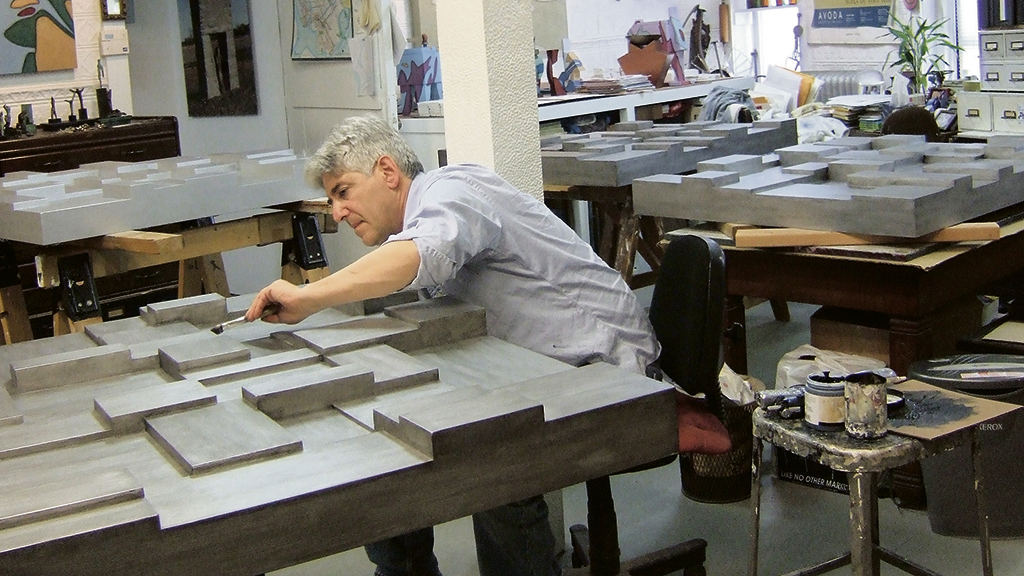
As he has done since 1980, Tobi Kahn, the painter and sculptor whose art has been shown in exhibitions across the country, will lead tours of artists’ studios in Manhattan for the Kaplen JCC on the Palisades in Tenafly. (See below.)
He generally teaches two classes. One is on Zoom — it gets people from around the world — and the other, which will start on October 8 and meet for five consecutive Thursdays, goes to the city — mainly but not only to Chelsea — to look at new art, and to hear Mr. Kahn help them see what they’re looking at.
Most of Mr. Kahn’s choices are based on aesthetics and broadly defined themes. “Sometimes I look for younger artists,” he said. “Sometimes I look for established artists, sometimes I look for abstraction. It really varies. Each week I curate an experience.
“I curate an experience of understanding the art world. I try to show things that will stretch people a little. And I am very proud that usually what I picked later ends up in the New York Times.”
He is methodical as he looks for the galleries he wants to show to his class. “I get literally hundreds of press releases from tons of galleries,” he said. “They come three weeks before the show opens. So my wonderful assistant organizes them into a file for me, and then I look at them. I compile them. These gallery shows are usually open for three to four weeks. I make a list on my computer. This is for this week, and this is for that week. And then I start curating them.”
He considers what show should be seen before or after what other show, and comes up with a route between the galleries. “I don’t want to have two pieces similar to each other next to each other,” he said. “It’s the same as the way I cook.” (Mr. Kahn loves to prepare food for his family and friends; he pays attention not only to how it tastes but also to how it looks. The look influences the taste, he says.) “I don’t want to have two similar vegetables next to each other. It’s the same thing with the shows.”
He pays attention to how long a day’s viewing should last — it’s usually about two hours, from the first gallery to the last, with all the movement on foot — and he tries to keep it in a six-block radius. Unless a show is particularly spectacular, he tries to avoid elevators; they take up too much unproductive time. Each session includes six to eight studios. “It’s like a taster’s menu in a restaurant, rather than a steak meal,” he said.
“I always tell the group that I have failed if you haven’t liked anything that you saw on any one day, but if you like half of it, it was a big success. Usually, most people like more than half. I’m not upset if people say that they really dislike a show, but if everyone in the group says they hate a show, then I feel depressed.”
The ideal size for a group is between 10 and 15 people, Mr. Kahn said, but at times he lets it grow to 20. If the group is any bigger than that, it loses all sense of intimacy (and also it takes too long to get from place to place). And he’s always practical. People make their way to the class on their own; they meet outside, close to the first gallery, in a place that is covered, in case it rains.
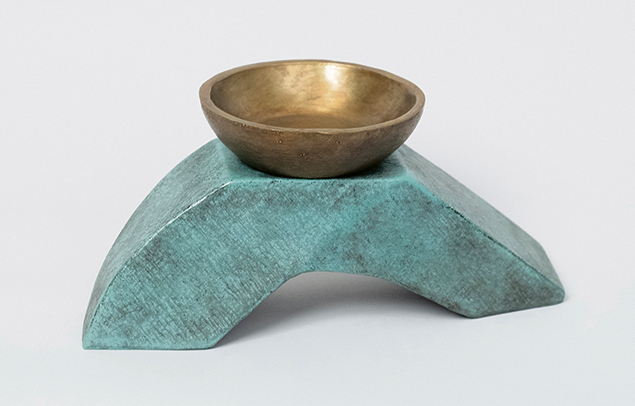
Mr. Kahn is a well-known artist; he creates his own work, and he shows it. He needed both the exposure and the income that running a program like this gives him when he started it, 45 years ago, but that hasn’t been the case for decades. So why does he do it?
“I’m an artist, but I’m also an educator,” Mr. Kahn said. “I don’t care only about my own art. I love showing other people’s art. I’m a visual thinker, I love to make art, and I care about people being educated about what is good art.
“I want them to learn, to stretch their imaginations about what art is. I want to show them things that they like, but I also want to show them things that they don’t like. That’s art, and that is cool for me.
“I feel like I’m teaching a class — I’m teaching you how to see, and how to stretch your imagination. I never show them anything that if they buy it, I will be embarrassed that they learned about it in my class. Even if everyone in the world is talking about a show, if I don’t like it, I won’t show it to them.”
On the other hand, though, “if it’s art that everybody is talking about, but it’s not exactly my taste, I might show it.” For example, he said, he took a class to see work by the conceptual artist Maurizio Cattelan, who later sold a banana duct-taped to a wall and appropriately titled “Comedian” for $6.2 million.
“I find his work fascinating,” he said. “So I took a class to see a show of his before the banana thing happened. And then it did, they went, ‘Ohmygod, Tobi showed us that!’”
There’s another reason he still leads the tours. “As an artist, it’s very important to know what other people are looking at,” he said. “When I’m teaching the group, I know every show that’s up. During the summer, and when I’m not teaching, I don’t go to galleries that much. One of the reasons I continue to do this is that otherwise I wouldn’t take every Thursday off to go to galleries.
“When I started doing this, I was very young, and now there are people who are second generation in the class, and there are also people who came the first year and still are coming, after all these years.”
There’s also a Jewish component to the art tours, as there is to everything that Mr. Kahn does, as an artist, as a husband, father, father-in-law, and grandfather, as a community member and as a friend. He’s the son of Holocaust refugees and of the Breuer community in Washington Heights; he’s an observant and open-minded and open-hearted Jew.
“Although many Jews think of us as the people of the book, I have always believed that one of the ways to understand the existence of God is through visual experience,” he said. “I believe I was put on this planet as an art maker and an art educator.”
Anyone interested in art can look at it through Tobi Kahn’s unique and generous lens at the program he runs with the Kaplen JCC on the Palisades in Tenafly. As its promotional literature says about him, “He does not simply point out what to look at. He shows you how to see.”
Who: Tobi Kahn
What: Leads the Contemporary Art Gallery Tour series for the Kaplen JCC on the Palisades in Tenafly
Where: In Manhattan; mainly Chelsea and also the Upper East Side and Tribeca
When: On consecutive Thursdays, October 8 through November 19, from 11 a.m. to 1 p.m. You can meet in Manhattan or arrange transportation through the JCC
How much: $60 for JCC members and $72 for everyone else. You pay by class; each is separate.
Learn more by going to jccotp.org and searching “Tobi Kahn”