

My greatest hero: Why Mordechai Anielewicz still teaches me how to fight
There are moments in the struggle against antisemitism when even the most determined advocate asks himself a painful question. Does any of this matter?
In recent years we have witnessed a tidal wave of antisemitism sweeping across social media and political discourse. Conspiracy theories about Jews have returned with frightening force. Influencers with enormous platforms normalize hatred of Israel. Extremists who once lurked on the fringes now command millions of followers online.
At times it feels overwhelming.
Get The Jewish Standard Newsletter by email and never miss our top stories Free Sign Up
When figures like Candace Owens repeat grotesque conspiracies about Jews, when Tucker Carlson platforms extremists who traffic in antisemitic narratives and Holocaust denial, when openly racist demagogues such as Nick Fuentes gain massive digital audiences, the question inevitably arises: What difference can one voice possibly make?
I have spent decades speaking out against antisemitism and defending Israel. I have written books, debated the worst public figures, organized massive global media campaigns, and confronted Jew-hatred wherever it appears.
Yet even I sometimes wonder whether any of it matters.
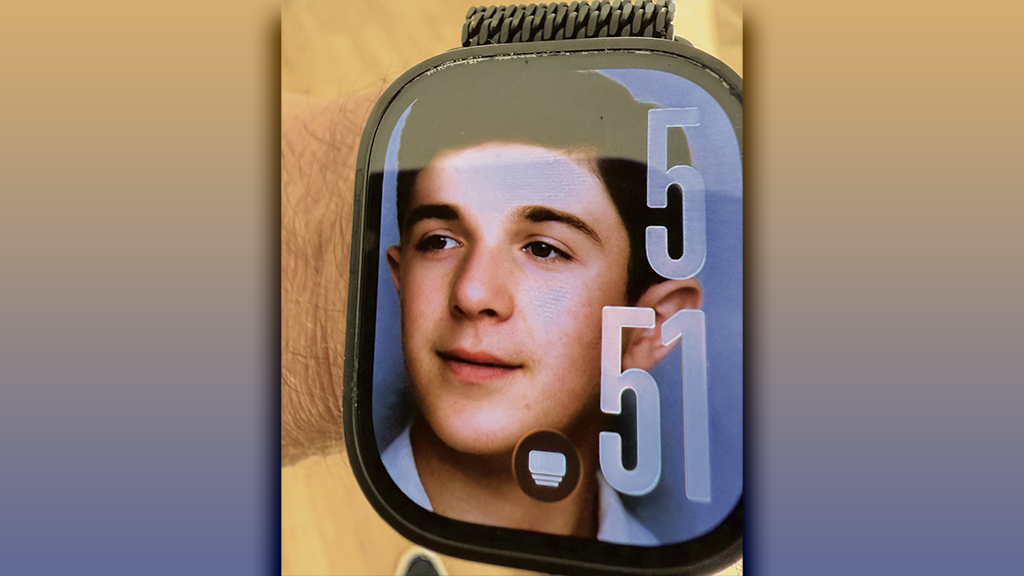
And whenever that doubt arises, I think of my greatest hero: Mordechai Anielewicz, whose photo is the home screen on my iPhone and Apple watch and after whom my most recent grandson, Yoav (my father OBM) Mordechai was named.
By late 1942 the Jews of Warsaw had already endured the unimaginable. The Nazis had crammed more than 400,000 Jews into a sealed ghetto. Starvation, disease, and overcrowding killed tens of thousands even before the mass deportations began.
Then came the summer of terror.
Between July and September 1942, the Nazis deported approximately 260,000 Jews from the Warsaw Ghetto to the Treblinka extermination camp. They were told they were going to labor camps. In reality, almost all were murdered within hours of arrival.
Including Jews from surrounding communities, roughly 900,000 were deported to Treblinka that year. By autumn, only about 60,000 Jews remained in Warsaw. They understood the truth. The Germans were not relocating Jews. They were exterminating them. And it was in that moment of utter despair that a 23-year-old Jewish leader faced a question that echoes across history.
Why fight?
After hundreds of thousands of Jews had already been murdered, what difference could a few pistols and grenades possibly make?
Mordechai Anielewicz knew the facts.
He knew the Jewish fighters had almost no weapons. A few pistols. A handful of rifles. Some homemade explosives. He knew they faced one of the most powerful and ruthless military machines in the world. He knew they would lose.
Even if they fought heroically, the most casualties they could realistically inflict on the Germans might be a few hundred. Which, as it turned out, was roughly an accurate number. So why fight at all? Why sacrifice lives in a battle that could not possibly be won?
Anielewicz gave the answer not with speeches, but with action. He fought because a Jew must live — and die — as a free human being.
Anielewicz was born in Warsaw in 1919 and grew up active in the Zionist youth movement, Hashomer Hatzair. When the Nazis invaded Poland, he attempted to escape occupied territory. But he returned to Warsaw with a single purpose: organizing Jewish resistance.
By late 1942 the surviving Jewish youth movements united to form the Jewish Fighting Organization, known as the ŻOB. They chose the young Anielewicz as their commander. Not because he had military experience, but because he had moral clarity. He understood something fundamental: the fight was not about military victory. It was about Jewish dignity. The goal was not to defeat the Nazis. The goal was to prove that Jews would not walk silently to their deaths and would kill those who rose to gas them.
In January 1943 the Germans returned to the ghetto to resume deportations. This time, they were ambushed. Jewish fighters attacked with pistols and homemade grenades. The Germans, shocked by the resistance, withdrew after several days. For the first time in occupied Poland, Nazi forces had been forced to retreat by Jews.
Anielewicz later wrote that the moment “exceeded our boldest dreams.” Not because they believed they could win, but because they had shown the world that Jews would fight.
On April 19, 1943 — the eve of Passover — German SS units entered the Warsaw Ghetto to eliminate it once and for all. More than 2,000 heavily armed troops marched in, expecting a quick operation. Instead, they encountered one of the most extraordinary acts of resistance in Jewish history.
Jewish fighters opened fire from rooftops and windows. Molotov cocktails and grenades rained down on German soldiers. Improvised mines exploded beneath Nazi vehicles. The Germans retreated in confusion on the first day. It was an astonishing moment. But the imbalance of power was overwhelming.
The Germans returned with tanks, flamethrowers, and artillery. They burned the ghetto building by building, forcing Jews out of bunkers and hiding places. Still, the fighters refused to surrender. For nearly three weeks they resisted. They knew every day was borrowed time. The Jewish fighters of Warsaw knew they could not win. They fought anyway.
In the end, about 700 Jewish fighters stood against thousands of heavily armed German troops. An estimated 7,000 Jews were killed during the uprising or burned alive in the ghetto.
On May 8, 1943, German forces discovered the command bunker at 18 Mila Street. Mordechai Anielewicz and roughly 100 fighters were inside it. They were surrounded, but they refused to surrender. Most died there that day. They blew themselves up with grenades. They died free men and women. Anielewicz was 23 years old.
For decades historians have asked the same question. What was the strategic value of the Warsaw Ghetto Uprising? Militarily, it changed nothing. The Germans still destroyed the ghetto. Almost all the remaining Jews were killed or deported.
So why did they fight?
Because freedom is not measured by outcomes. It is measured by courage.
Anielewicz did not fight to win. He fought to remain a free man. This is the lesson that returns to me whenever I confront the modern tsunami of antisemitism. The goal of fighting Jew-hatred is not always immediate victory. Hatred has deep roots. It mutates across generations. Defeating it completely may take centuries. But the Jewish obligation is not to guarantee success. It is to refuse silence.
Today the battlefield looks different. Instead of Nazi soldiers, we face digital mobs and Islamist and new-Nazi terrorists. Instead of ghettos, we confront algorithm-driven hatred spreading across social media. But the underlying struggle is the same. The delegitimization of Jews. The demonization of Israel. The normalization of antisemitic conspiracy theories. And in this climate, many Jews understandably feel exhausted.
When antisemitism explodes across social media, it can feel like shouting into a hurricane. Yet that is precisely when Anielewicz’s example becomes essential. He understood that resistance is not about calculating odds. It is about defending dignity.
When Jews speak out against antisemitism today, we are continuing the moral legacy of those who refused to submit. When we defend Israel’s right to exist, we are asserting the same principle the ghetto fighters asserted: Jewish life has value and must be defended.
The Warsaw Ghetto uprising shattered one of the most poisonous myths in history: the myth of Jewish passivity. The young fighters proved that Jews would resist even under the most impossible conditions. Their courage inspired other revolts, including uprisings in Treblinka and Sobibor later that same year.
More importantly, they transformed Jewish consciousness. After the Holocaust, the Jewish people made a collective vow: never again. And that vow was not only about survival. It was about dignity.
The fighters of Warsaw proved that Jewish dignity is worth defending even when victory seems impossible. Their legacy lives today in Israel’s determination to defend itself and in every Jew who refuses to remain silent in the face of hatred.
When rockets fall on Israeli cities. When antisemitic mobs chant for Jewish death. When public figures normalize hatred of Jews. The spirit of the Warsaw Ghetto fighters still answers.
Fight.
Whenever I feel discouraged by the scale of antisemitism today, I return to the example of Mordechai Anielewicz. He teaches me that the purpose of resistance is not immediate results. It is moral clarity. He teaches me that courage is measured not by victory but by refusal to surrender one’s humanity. And he teaches me that Jews must never again accept humiliation or extermination without resistance.
The lesson of the Warsaw Ghetto is simple: Jews fight back. Anielewicz did not save the Jews of Warsaw. But he saved something just as important. Jewish honor and Jewish freedom.
Rabbi Shmuley Boteach of Englewood is the author of 30 books. Follow him on Instagram and Twitter @RabbiShmuley.