

The comedian as storyteller
Joel Chasnoff describes being a Jewish joke-teller in this new world
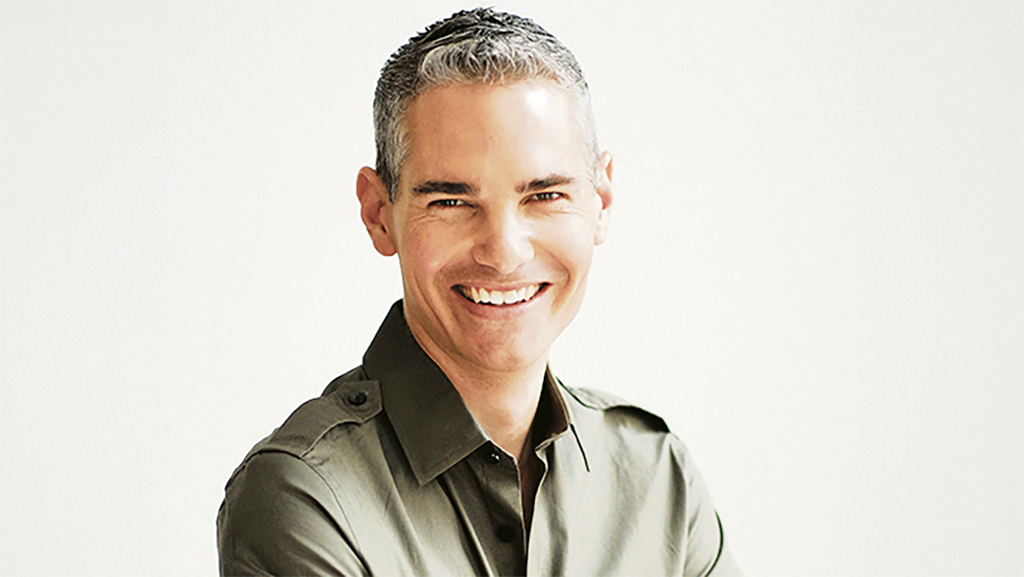
It used to be that a Jewish comedian did stand-up, rattling off jokes, ratcheting up the laughs, often relying on stereotypes — about Jews, about women — sometimes getting raunchy — they called it blue — and when they were successful leaving their audiences panting in pleasure.
That’s not what Jewish comedian Joel Chesnoff — who will be at the Barrymore Film Center in Fort Lee on October 29 — does. (See below.)
It’s not that the Chicago-born American-Israeli comedian isn’t funny. He is. But “I would like to think that it has a lot more storytelling,” he said.
Mr. Chasnoff grew up in a Conservative household deeply connected to Israel. He was a lone soldier, joining in the IDF in 1997, and wrote about that experience, in “The 188th Crybaby Brigade,” in a way that explained not only the experience of being a slightly older American in what was then a peacetime Israeli army but also — subtly, but thoughtfully — looked at how a then nearly infallible army could coalesce out of a culture that revered both the IDF and the family, as chalk-and-cheese as two institutions could be.
He’s co-written two other books; one of them “Israel 201,” with Benji Lovitt, won a National Jewish Book Award.
He has a podcast, “Inside Israel” — its content is clear, as is its presentation — and an email newsletter, “Hebrew Is Magic,” that looks at a Hebrew word and ties it to a current event, revealing connection, or fascinating backstory.
These projects aren’t all roll-on-the-floor funny, but they’re all smart and clever. And more quietly funny.
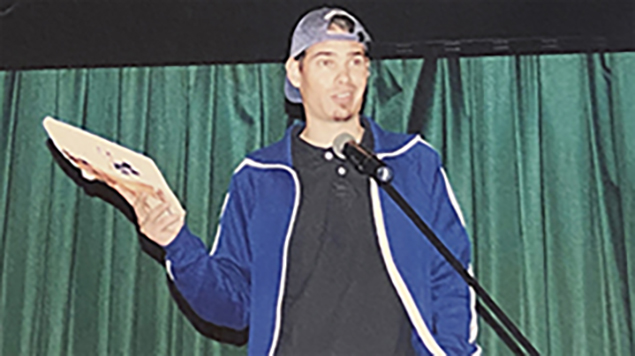
Although his comedy “is a lot more storytelling, that doesn’t mean that there are less laughs,” Mr. Chasnoff said. “But it’s a lot more important to me that the audience is kind of moved, and that we’ll all think about identity and about being Jewish in this bigger world a little differently.
“I’m certainly paying more attention to outsider feelings now.”
He’s never really been a standup, because that requires characteristics that he does not have, he said. “I never really flourished in the club scene.” You have to tell your jokes and get off the stage in seven minutes; that’s enough time to perform, “but you can’t establish enough of a narrative or with the audience in that amount of time. I need at least 20 minutes.
“Stand-up is a real art form,” he added. “It’s just not my art form.
“It’s like seeing someone on the subway for two minutes, or sitting down and having a cup of coffee with them. So even the phrase ‘regular comic’ — in the beginning I wanted to be one, but I never could be. It just wasn’t in the cards for me, and that’s fine. I’m much more drawn to the longer, narrative-driven form, which has a point. So you can say that it’s about something.
“In general, I think that comedy is bifurcating in two directions, going to the extremes. Those who are going really deep, and those who don’t have anything to say.”
Popular culture is changing, both here and in Israel, he said. The fact that attention spans are getting shorter — “Moby-Dick” has been replaced by TikTok videos — is not news. And the fact that people seem less fond of going out for dinner and a show, including a comedy show, than ordering from DoorDash and then watching something at home, on one of the many streaming services available from a viewer’s very own chair, has changed the economics and the demographics of his field.
So Mr. Chasnoff’s comedy is targeted to his audience. That makes sense, he said; “the best comedy is extremely personal, and then the most personal becomes the most universal.”
Doing comedy well demands resilience, he said; his comes from training and experience.
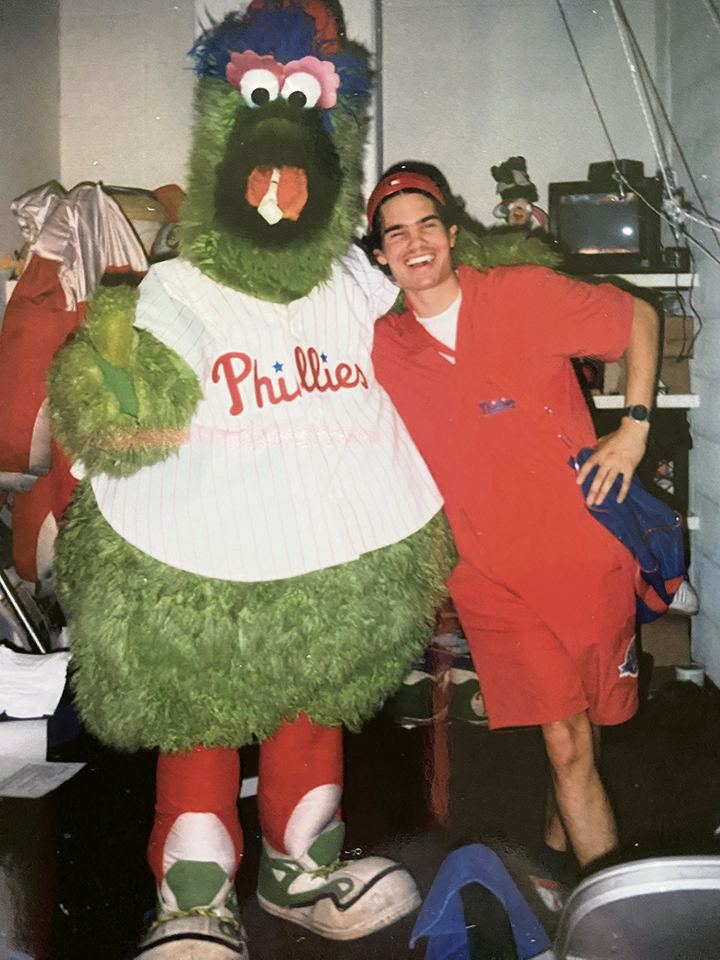
“My first real professional job was working for the Philadelphia Phillies as a performer in the stands and sometimes on the field,” he said; he was an undergrad at the University of Pennsylvania. “It was the best and the worst job.” The best because it was fun and he got to see all those games. The worst “because it was very hard. We were dealing with Phillies fans who didn’t want to be entertained during a game at the beginning. They were a tough audience.”
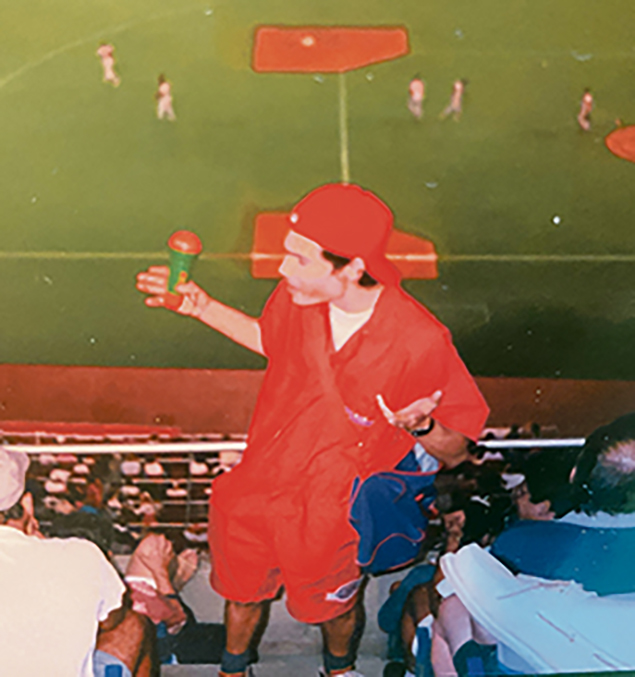
One of the jobs he did was shooting T-shirts in the stands; this was in Veterans Stadium, in 1996. He and his co-workers were basically like Catskills tummlers, except in a baseball stadium. “It taught me so much about resilience and performing for an audience that doesn’t necessarily want you to be there,” he said.
Mr. Chasnoff’s comedy is deeply Jewish. To be most moved by it — to laugh the hardest at it — “ideally you’ve spent at least a summer or two at a Jewish camp, and then maybe you go on staff. Maybe you’ve had some day school.” That might limit his audience, “but the ones who do get it — it means a lot to them. It’s got depth. And that’s my compass these days.”
He couldn’t write non-Jewish comedy were he to try, he said. “It’s like asking why you’re writing with your right hand, assuming you’re right-handed. It’s just ingrained. So any joke that I try to write, or any story that I try to tell, even non-Jewish ones, are going to be colored by my being Jewish, because it’s being built through me.”
What’s it like being a Jewish comedian post-October 7? On the one hand, Mr. Chasnoff said, it’s no longer a taboo subject. Enough time has passed. “The world moves pretty fast, I don’t think anyone is saying it’s not the right time for comedy.” (That doesn’t mean that he’s cavalier about the pain or the terror. That would be something entirely different.)
But the real problem in the post-October 7 world outside Israel is the discomfort about Israel itself, the discomfort venues might feel in advertising an Israeli performer, and the tools that may be used to try to end the engagement. “Getting people in the room is part of the challenge,” Mr. Chasnoff said. “And even Jews don’t always support Israel. So it can be dicey.”
The audiences he attracts tend to be older — older than what? “Old enough to know the value of Israel, and not to question it,” he said.
His show is basically his story. He went to the Solomon Schechter day school in Evanston, just outside Chicago, and to Camp Ramah in Wisconsin. “I fell in love not just with the country of Israel, but with the concept of Israel,” he said. “And dangerous things happen when you fall in love with a concept.” After his stint as a lone soldier Mr. Chasnoff went back to the Unites States, married, had children, and developed his career; more than a decade ago, he and his family moved back to Israel. All of that is in his show.
“I also include a little bit of insight about what’s going on in Israel, about what we’re actually going through now,” he added.
And then, once the show is over, “I always follow it with a Q & A, because I know that I’d want the chance to ask questions, and I expect a lot of questions along the lines of where is Israel going? And should I be worried? And do Israelis really pay attention to what a lot of American Jews are going through?
“Some of the questions are general, like what are schools like there? Questions like that. But there’s a lot of angst, and sometimes the angst comes out in the questions. It’s almost like, ‘What should I feel?’ People don’t know what they feel.”
This part of the show is less like comedy and more like group therapy, Mr. Chasnoff said. “I’ll make a joke, saying, ‘Like, well, we just ruined all the comedy.’ But I think it’s what people want, and what they need. And people like to be around each other.”
Because the situations in which Jewish communities find themselves vary across the very large, very diverse United States, “I think that the suburban Midwestern Jewish person is feeling something very different than the Teaneck Orthodox Jew is feeling,” Mr. Chasnoff said. “They’re facing different obstacles. I think that there are a lot more existential questions facing that Midwestern suburban Jewish audience, because their synagogue maybe just merged with another one, or the day school may be closing.”
Parents also ask questions at the show like “We took our kids to Israel, and they went on Birthright, and now one of them is protesting in Israel. Why? Why is that happening?” Mr. Chasnoff cannot answer such questions, but he can provide the setting where they can be asked, safely, in front of strangers who share if not identical then similar concerns. And they might laugh a little too.
Who: Joel Chasnoff
What: Is in “Joel Chasnoff: Direct from the Holy Land An Evening of Stand-up Comedy”
When: On Thursday, October 29, from 7:30 to 9:30 p.m.
Where: At the Barrymore Film Center in Fort Lee
How much: $30
For tickets and more information: Go to barrymorefilmcenter.org
For more information about Joel Chasnoff: Go to joelchasnoff.com