

‘We are a charedi Anglo family’
Passaic native puts her hat in Israeli electoral ring
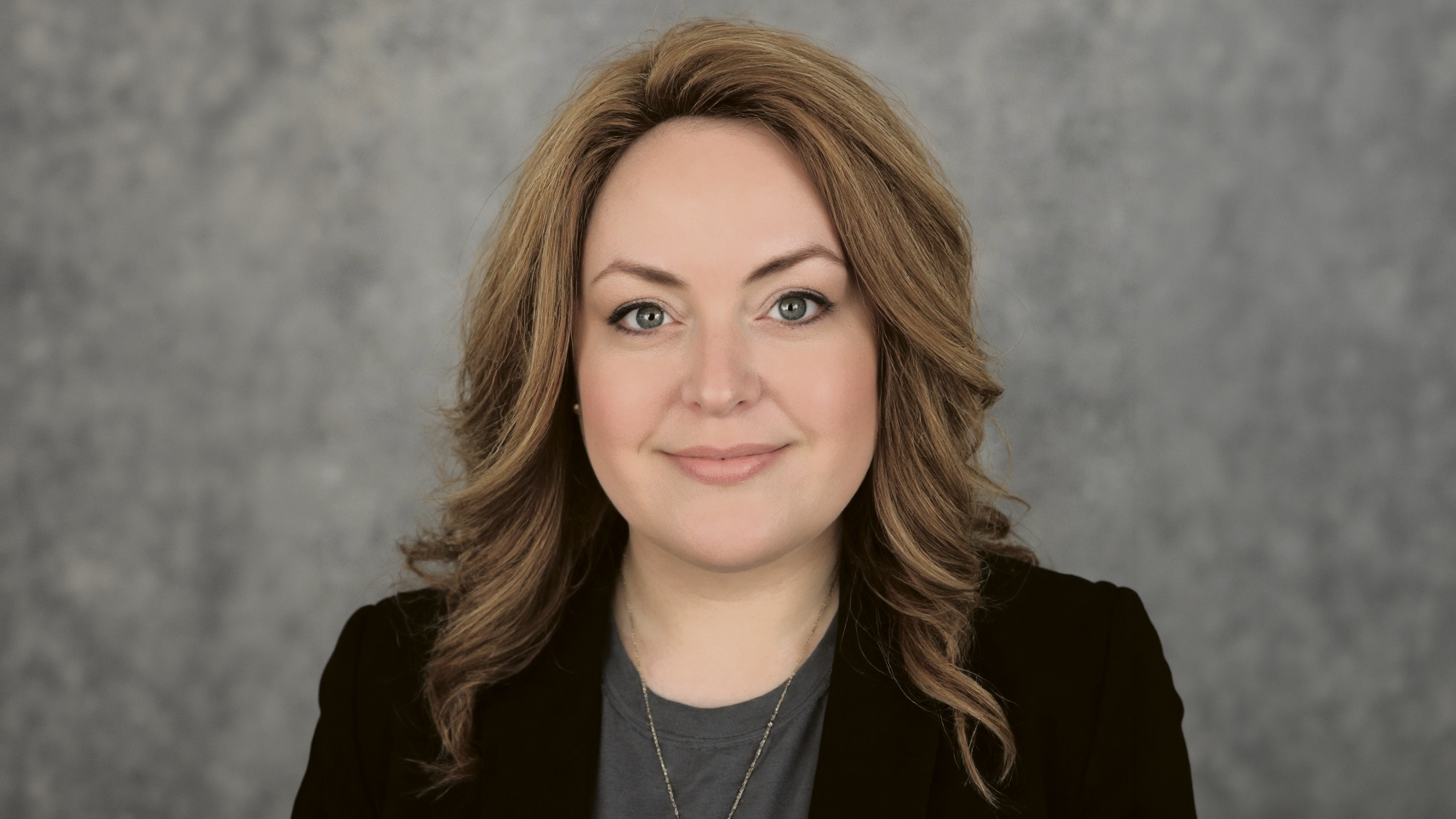
Growing up in Passaic in the 1980s and early ’90s was like “being brought up by a village,” Ziva Glanz said. She described the town then as a small, warm Orthodox community where her parents, Donny and Ariella Lautman, helped found Eitz Chaim, a shul that still exists.
“I used to joke that I had six parents because everybody was always looking out for you within that tight circle,” she said. “But it was a beautiful way to grow up.”
Ms. Glanz, 46, is one of two women on the slate of the new Israeli political party HaTzibur HaCharedi — the Charedi Public. The term “charedi” refers to ultra-Orthodox, as opposed to Modern Orthodox, Jews, including both chasidic and non-chasidic “yeshivish” or “black hat” communities.
The vote is set for October 27.
Despite common features, such as modest dress and fervent religious observance, charedi Jews encompass a large variety of flavors. Significant differences between the Israeli and American ways of life leave many American charedi immigrants struggling to fit into Israeli charedi social, educational, and professional settings.
As a candidate, Ms. Glanz pledges to recreate in Israel the sort of supportive environment she enjoyed as a child for today’s charedi immigrants from cities such as Passaic and Baltimore.
This issue is personal for her. Her parents made aliyah the year she was entering 10th grade but did not find a compatible community in Israel. They returned to Passaic permanently two years later.
“When people go back to their countries of origin — sometimes even after 10, 12, 15 years in Israel — because they can’t find the right community and schools, that is one of the most unsung tragedies of the state of Israel, because we lose such incredible talent and potential,” she said. “And it’s all because we have not created the proper support systems and communities that fit these people’s needs.”
Going back to Israel as an adult, she created LaShuv — it means “to return” — a volunteer-led professional network and nonprofit organization dedicated to helping ultra-Orthodox immigrant groups find appropriate places to live. “My passion for doing that stems from the experience my own family went through,” she said.
Easing charedi aliyah and integration is only one plank in the new party’s eight-plank platform. HaTzibur HaCharedi, headed by Moti Leitner, deputy mayor of Beit Shemesh, has a stated vision to “address complex challenges seriously and at their roots, in order to strengthen, protect, and improve the condition of the charedi community.”
A particularly pressing post-October 7 challenge is that most Israeli charedi communities encourage young men to engage in full-time talmudic study, for which they receive a small state stipend, and discourage their participation in the military, civil service, or workforce. This is mainly out of concern that such participation would necessitate compromising their lifestyle and expose them to secular influences.
Legacy charedi political parties have leveraged their power in the Netanyahu government to entrench this deeply divisive status quo rather than support and destigmatize the growing number of military, civic, educational, and professional alternatives customized for charedi men who cannot or choose not to learn full-time.
According to the Israel Democracy Institute, around 100,000 charedi men are eligible for the draft. IDF data reported in the press shows that about 4,000 charedi soldiers were inducted over the past year; the percentage is slowly increasing as a response to new inclusion programs.
HaTzibur HaCharedi’s platform states: “Every individual that does not devote his life completely to Torah study will be required to serve in some capacity, alongside the rest of Israeli youth. Appropriate and varied tracks will be established to enable meaningful service without compromising on meticulous Torah observance and charedi lifestyle.”
(Israelis of both genders receive draft notices at 18 and may choose civilian national service instead of IDF service; most charedim do neither. The need for male combat soldiers is more urgent, but Ms. Glanz said there are also fledgling efforts to attract young charedi women to noncombat military jobs or civil service.)
This contentious issue, too, is close to Ms. Glanz’s heart. Her eldest son, 21, recently received an award of excellence for his service in a joint IDF-police unit created for charedi men.
“It’s clear that we are going to be in a sustained security situation that doesn’t have an easy exit, and we must be able to maintain security,” Ms. Glanz said. “Everybody in Israel has been affected by the security situation — either serving in the reserve corps themselves, supporting family members in the reserves, or compensating for the many colleagues at work who are serving.”
Although, as she points out, thousands of charedi men and women stepped forward in the wake of October 7 to “contribute their best selves” via volunteer projects supporting soldiers and their families — Ms. Glanz joined these efforts — “the issue of the charedi draft has led to a stalemate where the current charedi parties have refused to have any dialogue whatsoever and the parties from the other side have tried to force the issue” through such punitive measures as jailing charedi draft dodgers.
Neither side is paying sufficient attention, she said, to the promising results of experimental inclusion initiatives like the program in which her son has excelled, or higher education and workforce inclusion initiatives for charedi men and women alike.
“We cannot afford as a society to retreat and isolate ourselves in our own ideological corners anymore and continue to be a fractured society battling each other out,” Ms. Glanz said. “We have massive national security needs and way too many existential issues that need to be addressed in a practical way. This party is exactly what is needed to bring healing and shift the current trends to move us toward a perfected society.”
The party’s goal of creating communities catering to American charedi sensibilities is integral to this vision.
“People who are coming from places like Passaic or Baltimore believe that Torah is of utmost value — but they also work, and pursue higher education, and believe in serving their country,” Ms. Glanz said.
“In my opinion, this is the only population that can work to bridge the gaps between the different sectors in Israeli society. We must build communities that reflect their values properly and that will allow more people to feel comfortable joining them.”
Ms. Glanz absorbed this mindset during her years back in the United States. She graduated as a biology major from Yeshiva University’s Stern College for Women, earned a master’s degree in public administration from Fairleigh Dickinson University in Teaneck, and married Rabbi Daniel Glanz. In 2005, the young couple returned to Israel with their first baby.
As the family grew to include five children — she gave birth to six but one died in infancy — they tried different communities before settling in the Jerusalem suburb of Mevaseret Zion. Rabbi Glanz is a mashgiach ruchani — spiritual supervisor/mentor — at Yeshivat Sha’arei Mevaseret Zion, a post-high school boys’ program for gap-year students from English-speaking countries.
“We are a charedi Anglo family,” Ms. Glanz said. “That’s a nuance which means that we were brought up on the American principles of ‘live and let live.’ We get along with all types of people; I work with people across the spectrum. In fact, a secular man from Tel Aviv, whom I worked with post-October 7 in the civilian war room out of the Ministry of Defense, called me after he heard I was joining this party. He said, ‘This is the first time that you’re going to have somebody secular like me voting for a charedi party.’
“The reason is because every Israeli understands that the issues we are coming to solve and the healing that this party is coming to bring to Israeli society is necessary. We can’t wait on another election cycle or another few years to bring this healing. It needs to happen now.”
If that sounds like the naïve pronouncement of a fresh political candidate, it’s critical to know that Ms. Glanz has earned an insider’s understanding of how to work the halls of Israeli power.
When she returned to Israel, she directed Jerusalem 5800, a private master plan for the greater Jerusalem metropolitan region covering tourism, transportation, and the regional economy.
“I witnessed a huge amount of interest from international investors to bring international-level projects to Israel, from theme parks to airports,” she said.
“But the Israeli government did not have the capability of handholding them properly throughout the entire bureaucratic process, so we lost these investors’ interest eventually. So after we completed that master plan, I decided to help bring good projects — what I call ‘ideological investments’ — to fruition successfully in Israel. This is not the easiest thing to do, but it is a tremendous privilege.”
In 2019, Ms. Glanz established the Sha’ar Group to shepherd public-private partnerships in regional infrastructure projects requiring statutory planning approval. One current Sha’ar Group project involves the expansion of two Jerusalem cemeteries to address limited plot availability for non-Israeli citizens.
In 2020, she founded Rainmaker and Associates, in which she deals in a volunteer capacity with overseas organizations and developers on long-term housing, retirement community, and urban master plan projects — including new communities for religious immigrants.
All her work requires English and Hebrew fluency, an ability to cut through red tape, and a flair for fostering cooperation among disparate government ministries.
“People should know that there is a method to the Israeli madness,” she said. “If you learn how to work the system, it can be done, and people are doing it successfully.” However, she added, “There is a tremendous amount of regulatory and statutory change that needs to be made in order to not only allow people to accomplish things in an easier, less bureaucratic, way but to allow international investments to come into Israel as well.”
Ms. Glanz honed her leadership skills early on, as an active member of the New Jersey Region of NCSY, the Orthodox Union’s youth movement.
“New Jersey NCSY in the 1990s was a magical place,” she said. “Somebody should do a documentary on it. In almost every Jewish community and major Jewish organization throughout the continental United States and even internationally, most often you will find somebody who is a ‘graduate’ of New Jersey NCSY during that era leading the organization or the community, using the same skill sets they gained by being involved in New Jersey NCSY. I always joke that we’re all just doing the same thing we were when we were running Shabbatons back then, but we get paid for it now.”
NCSY was a coed environment. In her professional life, Ms. Glanz often is the only woman in the room — and she’s fine with that. “Being the only female at the table is not a limitation; in many ways, it’s an advantage in navigating business situations,” she said.
While charedi party slates normally don’t include female candidates, HaTzibur HaCharedi has two. The other is Dr. Nechumi Malovicki-Yaffe, a senior lecturer at the School of Public Policy at Tel Aviv University and co-director of the Haredi Research Group at UCLA.
Ms. Glanz said female representation is long overdue not only because women comprise half the population, but also because women are the primary breadwinners in typical Israeli charedi households.
The Israel Democracy Institute’s 2025 report reveals that while only 54 percent of ultra-Orthodox men are employed — the new party proposes moving that needle in a culturally sensitive way through its “Dignified Livelihood” plan — ultra-Orthodox women have an 80 percent employment rate.
“In the charedi world in Israel, you have women functioning at high levels professionally in almost every field,” Ms. Glanz said. “They are viewed as superwomen because they have careers and take care of large households, and usually they’re hosting guests every Shabbos.
“I think the charedi world is being uplifted by the women and I’m happy to finally give representation to them.”
In the Israeli parliamentary system, voters cast their ballots for a political party rather than individual candidates. Seats in the 120-member Knesset are allocated based on total national vote share; if a party passes the 3.25 percent electoral threshold, it is included in that allocation. Of the 38 parties running in the October 27 elections, about a dozen are expected to cross that mark.
Ms. Glanz is fourth on HaTzibur HaCharedi’s slate, so the party must be allocated at least four Knesset seats for her to claim one. If that happens, she won’t be allowed to take the oath of office or enjoy the full rights of that office until she turns in her American passport. This is due to what she terms an “antiquated” rule barring dual citizenship for Israeli lawmakers.
“Giving up my U.S. citizenship is a serious personal decision, and it is a requirement that can create significant practical and technical difficulties, particularly for people who may need to continue helping care for parents or other family members who remain in the United States,” she said.
“For me, though, this is ultimately a mission. So, while the personal sacrifice certainly gave me pause, the mission took precedence.”
Ms. Glanz noted that the number of Knesset seats held by existing charedi parties has not increased over the course of many election cycles, despite exponential growth in the charedi population.
“This tells you that many charedi votes are going to a random array of other parties because these voters feel that the charedi parties have not properly served the general needs of the population,” she said.
“I do not believe that anybody has to try to ‘convert’ the 30 percent of the charedi world that absolutely does not want to have anything to do with the country and the army; that’s not our target audience. However, you also have a huge population that is seeking an alternative. We are trying to give these individuals the representation that they deserve and need — because everything in Israel ultimately comes down to politics.”