

What a life!
Remembering Sylvia Mowshowitz Orenstein of South Orange
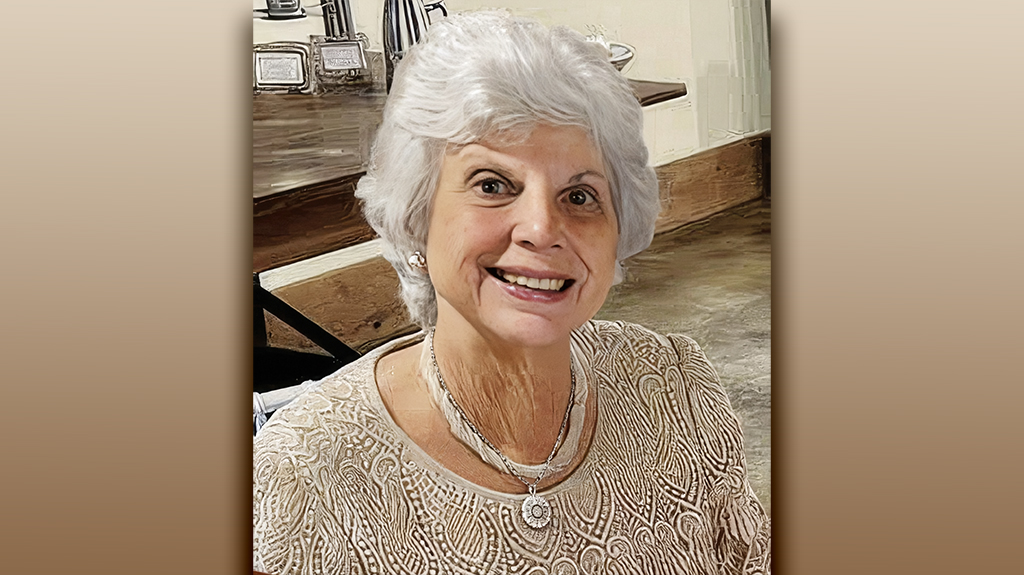
Sylvia Mowshowitz Orenstein of South Orange, who died on February 22 at 87, was so formidably accomplished that to attempt to describe her is inevitably to leave something —many things — out.
She was a rebbitzen whose understanding of that role demanded that she provide more food than any guest possibly could eat, along with an intuitive understanding of what each member of the community needed and both the desire and the ability to supply it. She ran book clubs, taught Hebrew school, baked and baked and baked. (You have to do that, bake and freeze and bake and freeze, if you are to provide dessert to 600 people on the second day of Rosh Hashanah every year.) She visited congregants in hospitals and was a constant presence at shivas.
She was also a lawyer, a public defender, a law-school teacher, a protector of immigrants, an advocate for refuseniks whose work in the Soviet Union pushed her uncomfortably close to encounters with the law there, and a fighter against injustice here.
She was also a loving wife to her husband, Rabbi Jehiel Orenstein, not only when he was the beloved head of Congregation Beth El but also when he was incapacitated with ALS, until he died of that cruel disease in 2013; an eagle-eyed mother to her three children — a doctor, a lawyer, and a rabbi — and their spouses; a doting grandmother; a devoted sister, aunt, and cousin, and the kind of friend whose legion of friends all think of themselves as her best friend.
The biggest challenge in writing about Ms. Orenstein is figuring out where to begin.
She was born into a rabbinical family, her younger brother, Solomon Mowshowitz, a molecular biologist who lives on the Upper West Side, said.
“My mother’s father, Shlomo Polachek, was imported into the United States to rejuvenate Orthodox Judaism in America,” Dr. Mowshowitz said. Rabbi Polachek — also known as the Meitscheter Illui — was a child prodigy, whose career at the fabled Volozhin yeshiva began when he was 12 years old.
He and his wife began moving west. The trip out of Poland wasn’t easy. But they made their way to London, where he was wanted as a congregational rabbi. “He lasted there for less than a year,” Dr. Mowshowitz said. “He was a great scholar, but a very shy person.”
But YU lured him to New York. The school prized him him for his intellect — “he was the preeminent scholar of his generation in the United States,” Dr. Mowshowitz said — so he was able to leave England in style, on the Queen Mary. “My grandmother saw her first movie there,” he added.
Rabbi Polacheck was rosh yeshiva at YU’s Rabbi Isaac Elchanan Theological Seminary — RIETS — and was forward-thinking, his grandson said. It’s likely that he would have been far more well known had he not died suddenly, in 1928, at 50.
He also might be better known had the manuscript he carried with him across Europe — “his magnum opus,” Dr. Mowshowitz said — made it across the Atlantic. But although he and his wife guarded it so fiercely that they would sleep on it, it was stolen at some point during the journey. Something so closely protected had to be valuable, the thieves thought. When they saw that it was just papers with writing, they burned it. “He wasn’t able to recreate it,” Dr. Mowshowitz said. “He didn’t have time.”
“Each of his five children named their first son Solomon after him,” Dr. Mowshowitz said. “I’m number three.”
Meanwhile, his father’s father, Rabbi Shmuel Ya’akov Mowshowitz, who grew up in deep poverty in Ukraine, had made it to America, and become a rabbi, first with a pulpit in Albany, and then as the head of a yeshiva in Hartford, Connecticut.
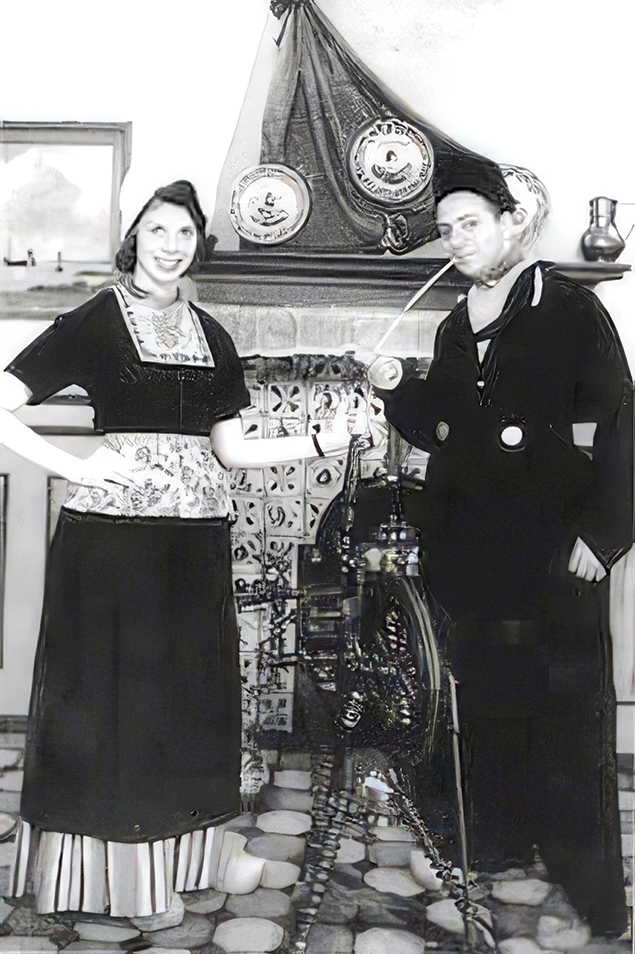
Sylvia and Solomon’s parents, Lillian Polacheck and Israel Mowshowitz, met at a shiva in New York. There’s another talent that runs deep in the family — for mathematics. Rabbi Polacheck was a gifted mathematician, and so was his daughter (and so are some of their great grandchildren). In fact, Dr. Mowshowitz added, his mother’s brother, Dr. Harry Polachek, was a mathematician “who was in charge of computations for the Manhattan Project, and he was the chief mathematician for the Navy.
“Oh, and my dad’s brother also worked on the Manhattan Project,” he added.
The Mowshowitzes got married, and they moved to Durham, North Carolina; Rabbi Mowshowitz had a pulpit there, at an Orthodox shul, and he also was working on a doctorate in psychology, “because in those days you had to be a rabbi doctor to be anybody,” Dr. Mowshowitz said. His mother was going to go to graduate school in math, “but in those days, when a woman got married, that was it. She became a satellite, and Dad was the planet.
Sylvia was born in 1938. When she was 3 1/2, her mother, who was pregnant with Solomon, got sick, “and my mother was sent off to live with her grandparents,” Sylvia’s younger daughter, Rabbi Debra Orenstein of Teaneck, said. “She really didn’t know them, because she’d been living in North Carolina. And they didn’t speak English. So she had a crash course in Yiddish.
“Whenever my mother talked about it, she’d be like, ‘Oh, it was such fun. And Bubbe did this, and Zeidie did that.’ But I always thought how traumatizing it must have been, to be ripped from her home, to not speak the same language.
“But there’s a series of stories where my mother was put in precarious positions, and she always reflected on them as adventures.”
Sylvia Mowshowitz stayed with her grandparents in Hartford for six months. Soon after she was back in Durham, the family moved to Omaha, and her father became the rabbi of the Orthodox shul there.
“My mother had fond memories of being the only Jew in school until Solomon came along,” her older daughter, Aviva Orenstein, said. “Every year she would be the one to explain Chanukah to everyone. That could be daunting, that could be alienating, but she always explained it as something that was meaningful to her, and gave her a powerful, positive sense of being different.”
During that time, Sylvia went to Camp Ramah in Wisconsin. She got there by herself; her parents put her on a train, “with a sign around her neck,” Rabbi Orenstein said. “She was picked up there by a family she didn’t know,” and taken the rest of the way to camp. “She was 6 years old.” (It sounds a little bit like Paddington Bear, with his pleading sign, but with a real little girl instead of an imaginary stuffed toy.)
“This is another story that my mother thought was perfectly reasonable, and I’m horrified,” Rabbi Orenstein said.
Camp Ramah in Wisconsin, the first and always most central of the Ramah camps, was home to many of the people who later became the intellectual stars of the Conservative movement. Much of camp life was conducted in Hebrew. Sylvia learned fast.
Why did an Orthodox family send a child to a camp run by the Conservative movement? The movements were closer then than they are now, and the boundaries between them were porous. And “my father was a progressive guy,” Dr. Mowshowitz said. “He crossed boundaries.”
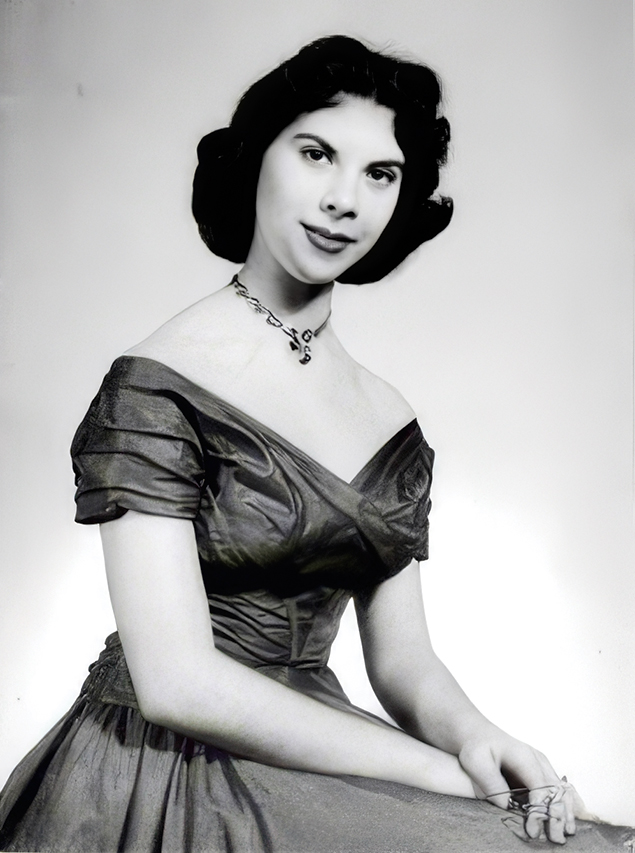
After eight years in Omaha, the Moshowitz family moved to Queens, where Rabbi Mowshowitz led one of the borough’s main Conservative synagogues, the Hillcrest Jewish Center. She went to Jamaica High School. So did her future husband, Jehiel Orenstein, who belonged to the Jamaica Jewish Center. (Dr. Mowshowitz, on the other hand, went to the Yeshiva of Central Queens.) Jerry Orenstein was four years older, than Sylvia, so they did not overlap in school, but he was the head of boys’ Arista, the honor society, and later she was the head of the girls’ division.
Eventually, and after some confusion, they were set up to meet — the story goes that Jehiel was prepped to call Sylvia, but nobody had remembered to tell her that, so when he called her for a date, her first question, logically enough, was “Who are you?”
Still they managed to set up a date. It was for a play by either Edward Albee or Harold Pinter, one of those 1950s playwrights given to few words and deep pauses, “and my mother was sitting there the whole time thinking, ‘Oh, I don’t know if I get it. I feel inadequate.’ And after it was over, she asked my father, ‘What did you think of it?’ and he said, ‘I thought it was pretentious.’
“She was so charmed by his honesty and lack of pretention.” And that was that.
Sylvia was a student at Cornell, but she transferred to Barnard so she could be closer to Jehiel, who was at rabbinical school at the Jewish Theological Seminary, right across Broadway.
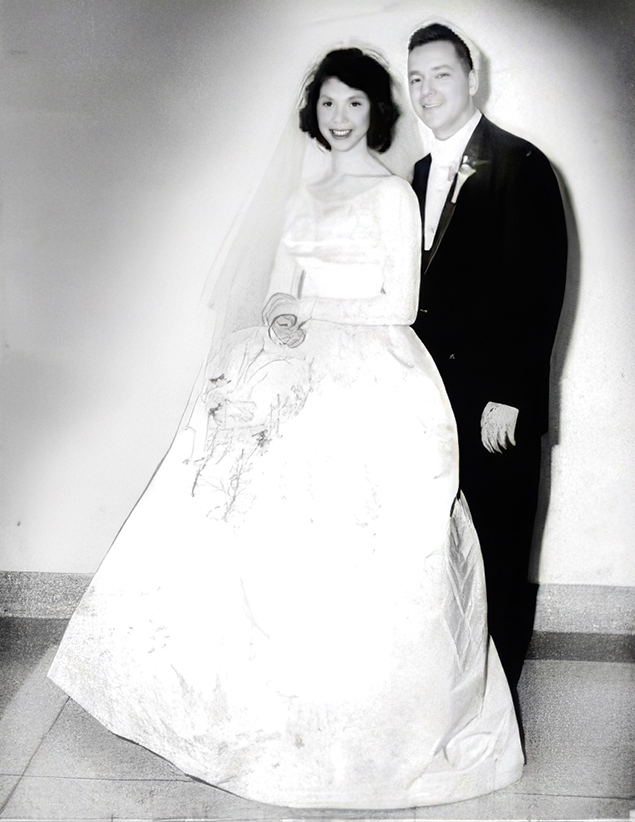
They got married in December 1958, “and they had a weird and unusual honeymoon,” Rabbi Orenstein said.
“Our father was on a scholarship at JTS, and for two years for his work he was the secretary to Abraham Joshua
Heschel. They became close. And when my parents were planning on traveling to Europe after the school year ended for their honeymoon, Heschel said, ‘If you’re going to Europe, go to Russia and find out what happened to the Soviet Jews. So they did that in 1959, for their honeymoon, while my mother was pregnant with Aviva.” They went to Israel next; that’s where Aviva was born.
“That time in Russia was very important to my mother.
“My mother described going to a synagogue there,” Rabbi Orenstein continued. “She was in the women’s balcony on Shabbat, praying, and the youngest person there by a lot, and the women there were suspicious of her. Like, what is she doing there? How does a young girl like you know how to daven?
“So, in Yiddish, she explained that she’d just been married, that she was going through Russia and was on her way to Israel, because they were going to Israel for the year to study. When she said that she was going to Israel, the women started to cry, and they kissed her hand.
“My parents ended up meeting a woman named Leah Luria, who was the very first person ever to apply for an exit visa from the Ovir office” — the Soviet bureaucracy that oversaw the paperwork of visas and other travel documents, Rabbi Orenstein said. “She talked to them about the doctors’ plot and the Jewish Antifascist Committee” — a bloody episode in recent Soviet history and a co-opted body used by the state — “and filled them in about Birobidzhan,” the fake Jewish autonomous Soviet state. These were things that most people did not know about at that time.
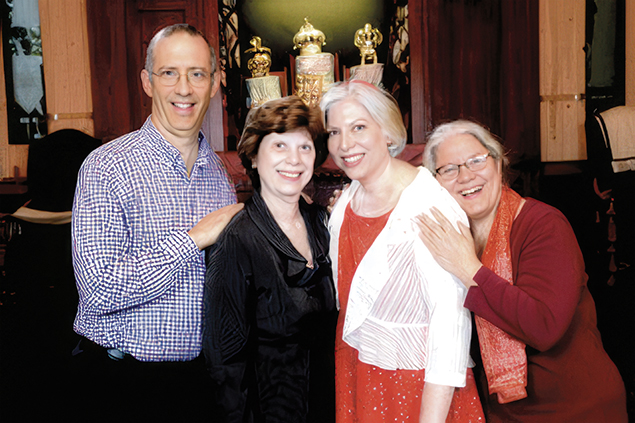
“My mother had been studying Russian literature and a little bit of Russian language” — when she was at Cornell, she took a class in Russian literature taught by Vladimir Nabokov, and later she earned a master’s degree in Russian literature at Seton Hall — “but that trip to Russia really galvanized her. It became a lifelong commitment to Soviet Jewry.
“My parents brought groups of Jews to Russia. My dad taught underground classes. My parents smuggled in food and medicines, and they smuggled out names. My mother eventually was barred from going back. She couldn’t get a visa. She was questioned by the KGB.
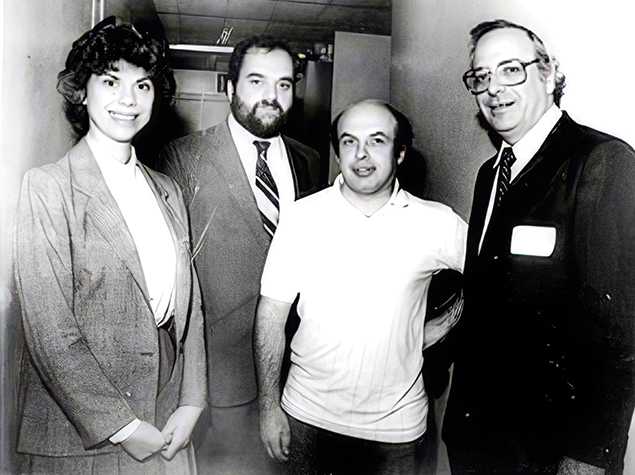
“And when Jews came out of the Soviet Union, she was instrumental in helping get them acclimated in Essex County. She and our father sponsored Russian children at the Solomon Schechter School. This was the biggest social justice project of her life.”
There is a family story about their mother, Aviva Orenstein said. “She was at the Moscow book fair, manning a booth, which was one of her covers. Of course, she kept kosher, and it was hard when she was there, so she brought little cans of tuna fish with her. She opened a little can of tuna, and she was eating it, and the KGB guy there” — of course there was a KGB guy there — “was staring at her with horror.
“And she said to him, ‘What’s the matter?’ And he said, ‘You are eating bumblebees!’”
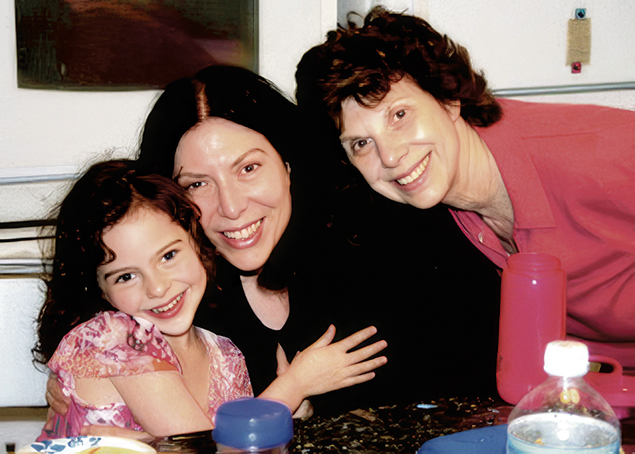
In the late 1970s the Orensteins moved to South Orange. Jehiel Orenstein became the rabbi of Congregation Beth El. Ms. Orenstein was the platonic ideal of a rebbetzin — baking, teaching, counseling, consoling, role-modeling. She would give book reviews, and draw crowds. That’s when she earned the master’s degree in Russian literature at Seton Hall; then she began teaching there.
Their children went to the brand-new Solomon Schechter School of Essex and Union and then, because Schechter did not yet have a high school, they went to Columbia High School in Maplewood.
During that time, Sylvia’s daughter Aviva became a lawyer — she teaches law at Indiana University — and her daughter Debra became a rabbi — she’s a speaker, a scholar-in-residence around the country, one of the first women to get smicha from JTS, and for 15 years the spiritual leader of Congregation B’nai Israel in Emerson; both daughters are writers. When her son Raphael, went off to college — he’s now a physician specializing in orthopedics in Durham, North Carolina — she went to law school. At Seton Hall, of course, because it was local, and she didn’t have to take time away from her work as a rebbetzin to commute elsewhere.
“She was inspired to go because she had visited Aviva in law school and really loved it,” Rabbi Orenstein said. “She had a really serious mind, and she had deep intellectual interests that were not really fulfilled until she went to law school. And she was good at it! She made law review.”
“She was a phenomenal student, and she was super nerdy,” her sister added. “She was of the generation who would go to get their hair done every Friday, but she’d bring a book on the history of Russia with her.
After she graduated, Ms. Orenstein worked for a corporate law firm, Gibbons P.C. — now called FBT Gibbons. “It’s a good firm, and there were always a lot of pro bono opportunities,” Aviva Orenstein said. Her mother took them. She worked there for 10 years — theoretically part time because of her other responsibilities, but a lawyer’s part time is often someone else’s time and a half — and then “she was invited to join the New Jersey Appellate Section as a public defender, and she worked there about 16 years.
“She took on a capital case; she was thrilled when New Jersey abolished capital punishment.” That was in 2007. “She was very effective. She argued a couple of cases that really changed New Jersey law, including one on cross racial identification.
“She loved research. She was a good writer, but her favorite thing to do was research. She wrote a couple of papers in law school that I think would have been publishable articles had she pursued them, about comparative free speech in Russia and America, and America’s Alien and Sedition Act as compared to what Russia did.”
Ms. Orenstein worked as a public defender until she was in her late 70s. Then she taught a class at her daughter Aviva’s law school, going to Indiana every week for the spring semester. “She taught what she did, which was to get a trial transcript, dissect it, figure out what the issues are, write a brief, and argue it.
“She won a teaching award.” (Of course she did.) That lasted through covid, when she taught on Zoom. When covid was over, though, she decided not to return to teaching. It was enough.
This narrative doesn’t include the major illnesses that Ms. Orenstein survived, or the time when she was hit by a car and not expected to make it — she did — or the enormous amount of time, energy, compassion, and love she spent taking care of her father and then her husband at the end of their lives.
Oh, and then there were the people who she called at least once every two weeks, just to check in and say hello. And the people who became part of her family and the friends she cherished. To leave them out seems unfair, but to list them all would be too hard, and would risk leaving someone out. And she never, ever would have done that.
Sylvia Orenstein also was a great storyteller, her children said, and there are many great stories to be told about her. And in the end, it seems clear that she did leave the world better than it had been before she entered it.