

Watch out for the other guy
Parking lots can be lethal if everyone isn’t careful
I will never look at a parking lot the same way again, either as a driver or as a pedestrian.
Last summer, I was walking through a crowded parking lot when a van suddenly began backing up directly toward me. I immediately realized that because I’m on the short side, the driver didn’t see me.
Thankfully, I wasn’t distracted by my phone and was aware of my surroundings. Still, the van kept coming. After a few terrifying seconds, I started screaming for the driver to stop.
She didn’t.
She was backing into a parking space so later she could pull straight out. Acting on instinct, I thrust my arm high into the air, so she finally would notice me.
The van stopped just inches from where I stood. The driver got out and hurried over.
“I’m sorry,” she said. “I just didn’t see you.”
Shaken by how close I had come to being hit, I could barely process her apology.
“What were you thinking?” I asked. “You were backing up in a crowded parking lot.” She continued apologizing, but I was rattled by how she seemed more upset about my reaction than her own accountability.
At the time, I viewed the incident as a frightening close call. I had no idea how differently I would think about it just months later.
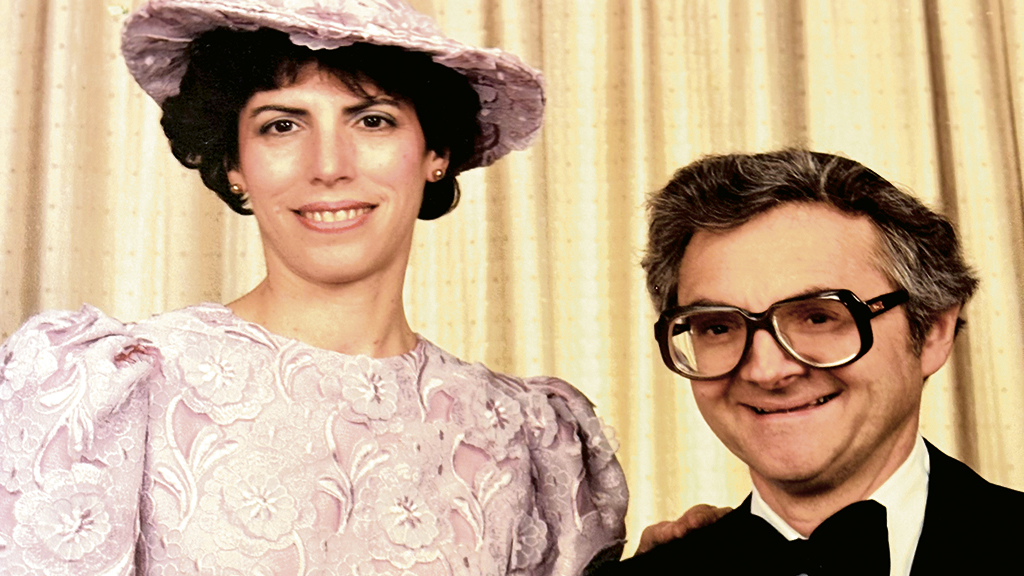
Shortly after Purim, my brother-in-law, Maurice Kofman, was struck by a car in a crowded parking lot in Boca Raton. According to reports, the driver was traveling too fast.
Maurice was on his way to buy matzah, something he always enjoyed doing. Shopping was one of life’s simple pleasures for him, and Pesach was a holiday he anticipated with joy.
What should have been an ordinary afternoon became a nightmare. When the vehicle struck him, it caused a devastating fall. Maurice never regained consciousness and died a few days later from a traumatic brain injury.
It was impossible to comprehend that someone so full of life and fun-loving could be gone so suddenly.
His beloved wife of many years, Eve — my sister — and their six grown children were left to pick up the pieces. But tragedies like this extend far beyond the immediate family. They send shockwaves through entire communities.
Maurice was known for his love of learning and Torah scholarship, his generosity, quick wit, and sense of humor. For many years he was a beloved member of the Long Beach, New York, community before he and Eve moved to Florida.
The question that haunted us was painfully simple. How could this happen?
Maurice was doing nothing unusual. He was simply on his way to do something he enjoyed — shopping for Pesach. In truth, what he loved most was shopping for the people he loved, especially Eve.
The last time I visited them in Florida, Maurice proudly showed me several designer dresses he had purchased for Eve on sale.
“Aren’t they gawgeous?” he asked in his unmistakable New York accent. “Guess how much I paid for them?”
The dresses were indeed very beautiful, and the prices were even more impressive. Eve merely nodded her approval. She had spent decades witnessing Maurice’s enthusiasm for shopping and finding a bargain.
As a furrier, he often brought home beautiful coats for her. When they moved to Boca Raton, one of their pleasures was shopping together for furniture for their new apartment. Shopping wasn’t merely an errand for Maurice — it was one of the ways he expressed his love, and it was a fun activity they did as a couple.
When I complimented Eve and Maurice on their new furnishings for their Boca Raton apartment, Maurice pointed to a new piece of furniture.
“Who do you think chose that, Eve or me?”
I was 9 years old when Eve married Maurice. We are 12 years apart, so Eve always referred to me as her kid sister. It seemed that Maurice considered me that as well. When I would visit them in Long Beach while I was in college in Manhattan, he often asked if I needed extra money.
Since Maurice’s death, I have never looked at parking lots the same way.
When I see drivers holding cell phones, pedestrians walking through traffic lanes while distracted by talking to friends, or vehicles backing out without fully checking their surroundings, I feel a sense of unease. What once seemed like an ordinary part of daily life now feels dangerous.
And the statistics bear this out.
According to the National Safety Council, approximately 50,000 pedestrian injuries occur in parking lots and garages each year, and roughly 500 pedestrians are killed. Many of these incidents involve drivers backing out of spaces, limited visibility from larger vehicles, distracted driving or walking, or motorists failing to yield near store entrances and crosswalks.
Young children are especially vulnerable because they are difficult for drivers to see. Many tragic back-over accidents involve toddlers in driveways and parking lots. Seniors are also at increased risk because they may walk more slowly, have reduced vision or hearing, and are more likely to suffer serious injuries when struck.
Parking lots are dangerous for people of every age. Vehicles move unpredictably, and drivers are often focused on finding spaces rather than watching for pedestrians. The safest assumption is that a driver may not see you — even when you think they should.
Safety organizations such as the National Safety Council, AAA Traffic Safety, and Safe Kids Worldwide recommend several simple precautions: hold children’s hands in parking lots, avoid using phones while walking or driving, remain alert in crosswalks, teach children that parking lots are not play areas, and place children safely inside the vehicle before loading groceries or other items.
Most importantly, never assume a driver sees you.
Years ago, there was a memorable driving safety campaign with a simple message: “Watch out for the other guy.” It’s advice worth remembering.
Our lives can change in an instant in a place most of us never think twice about. Perhaps we should all watch out for one another a little more carefully.
Esther Kook of Teaneck is a reading specialist and freelance writer. Her work has appeared in Hadassah magazine and the Jewish Action magazine.