

‘The only true vacations are in the past’
Remembering sleepaway camp, four decades later
Can it be that it was all so simple then, or has time rewritten every line? If we had the chance to do it all again, tell me, would we, could we?
“The Way We Were” by Marvin Hamlisch / Alan & Marilyn bergman
The summer is over, and lots of the kids are playing on the street where I live. Many if not most of them spent their summer at sleepaway camps, and I wonder what each of their camp experience was like and how they feel about being back home.
Camp thoughts always begin with the top of my car down as I drive through the South Mountain Reservation right after the grass has been cut; that’s what Camp Bayview, the camp I went to, smelled like.
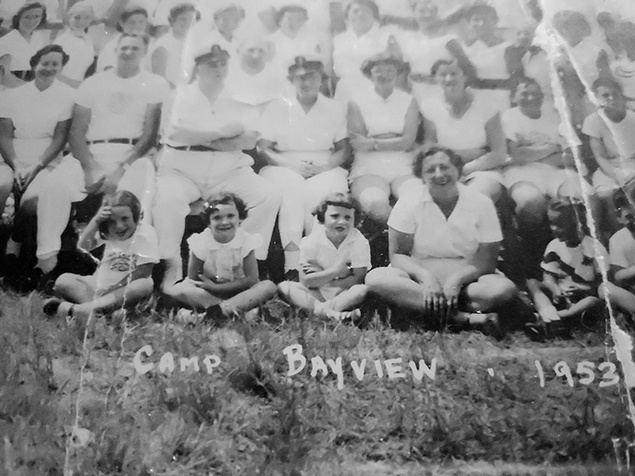
Bayview was a beautiful summer camp about 75 miles north of Montreal, nestled in the Laurentian Mountains, outside of the town of St. Donat. St. Donat was a one-block town (okay, so maybe it was two blocks) and we’d go into town occasionally for pommes frittes at a little luncheonette called Charbonneau’s.
My mom was the kiddieland director, so I went for free (trust me, my parents couldn’t have afforded Bayview), and I went for 11 summers: 1950 to 1960.
My thoughts wandered back to a motorcycle trip Shelly and I took to Camp Bayview in 2000.
It was a cold Canadian morning as we left Montreal and rode up toward camp by way of Ste. Agathe. The journey allowed the beauty of the Laurentian Mountains to envelop us, enhanced by crystal-clear lakes with bluer-than-blue waters.
We rode into St. Donat and we saw that it wasn’t a one-block town anymore. There were tons of stores and coffee shops, restaurants, and more tourists than I remember seeing all 11 years that I was there combined.
I had no desire to stop, and St. Donat’s new size didn’t allow for any reminiscing anyway, so we rode through and out of town. I wasn’t sure if I’d know where to turn off for the camp. Boy, was I wrong. There it was, a dirt road then and a dirt road still. It called to me and I turned onto it.
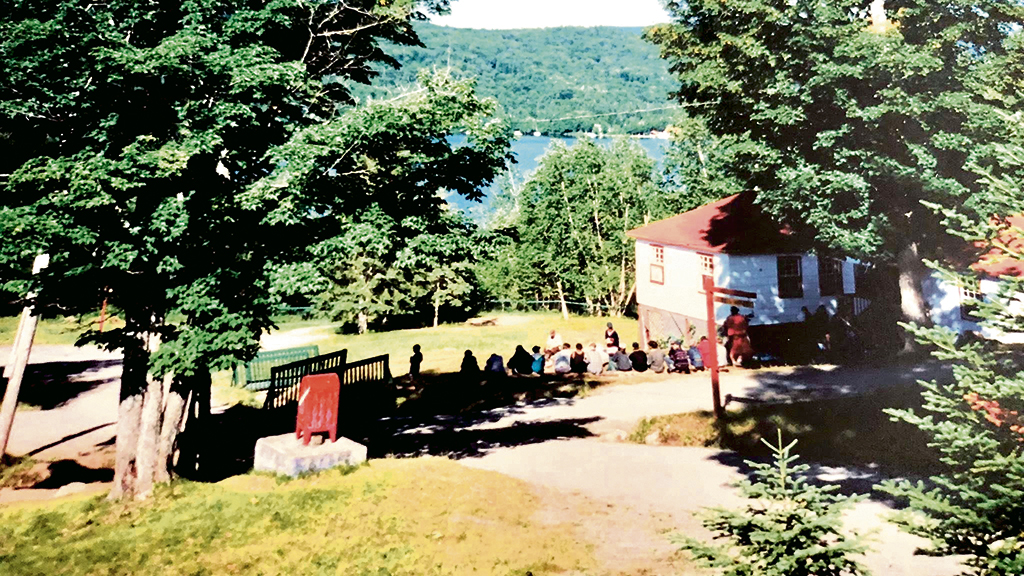
I could see Lac Archambault through the trees. My eyes started to fill with tears, and I could hardly catch my breath. We passed lots of homes on the lake, and I remembered the house of the Matthews family, who also owned Camp Bayview. I could never forget it, as it was my second home, “my summerhouse,” albeit for a couple of weeks before camp started and for another week or 10 days after camp was over. Back then, it was the only house on the lake, but now it was gone.
I remember how far it spread all along the lake. I see the boathouse with an elegant Chris Craft, all mahogany and brass, and the Matthews always in white: commodore caps, shirts, slacks, socks, and white bucks.
Their house had moose and elk heads adorning the walls. There were gun racks, bearskin rugs, and a wooden propeller from an old seaplane.
Just writing this brings back incredible emotions.
You see, I spent every school year dreaming about getting back to camp, but this time, four decades after my last summer there, was 10 times as exciting.
The sides of the road to camp were still dotted with blueberry bushes, and I remembered the many times our bunk would walk down the road picking them and then bringing them back to Mary, the baker. I can still smell the fresh, hot blueberry pie we’d fill up on at night.
I turned right onto a smaller dirt road and saw the bunks through the trees in the distance. The cabins were still red and white, just as they’d been 41 years earlier.
The first building was administration. After taking a couple of minutes to compose myself, I walked in.
It’s kind of hard to sneak up on someone with the roar emanating from the manifolds on our Harley-Davidson. That sound let people know you’re coming a half mile before you got there, so waiting outside the administration building wouldn’t have made a lot of sense. The director of the camp understood that I’d been a camper there many years ago, and he had no problem if Shelly and I walked around.
There were some changes, but the laughter of kids playing transcended everything. The bunks were the same, the boulders that we slid down hadn’t gotten any smaller, and these kids were sliding down them as well. The lyrics from a song by the Bee Gees ran through my head: “When I was small and Christmas trees were tall… now I am tall and Christmas trees are small…” didn’t work here. I was small and tall that very instant.
When I went to Bayview the camp was 95 percent Jewish. There were services erev Shabbat and Shabbat morning, which I, being a yeshiva boy, led for the last three years that I was there. It was obvious that because most of the campers at Camp St. Donat are French Canadian and Catholic, it’s unlikely that Shabbat services still exist.
We walked down to the lake. Archambault is a huge lake, the camp is on one of the bays, and this bay is about a mile and a half across. So there we stood, Shelly and I, looking out across the bay, the once pristine forest, now dotted with homes.
We took a bunch of pictures and walked back up the hill from the lake and peered into the buildings at Bayview.
This was my summer life. It’s where I used to play, dance, sing, fall in love, get my heart crushed — I’m sitting here chuckling as I remember and write — watching the faces of these kids doing the same. In my head, I play back our time there. In the movie “Camelot,” King Arthur says that “…the only true vacations are in the past…” I think he’s right.
The only difference is that I am still a kid: in my heart, head, and soul, if nowhere else.
Shelly and I walked through the camp and headed back to the bike, reliving our individual camp experiences, both in our own thoughts. You see, we met at a camp in 1971, and people who’ve been to sleepaway camps share a certain bond and relive similar experiences even if their camps were on different sides of the world.
The echoes of our laughter from 40 years ago melded with that of these kids at play today and I felt a warm glow come over me. It was wonderful, it said it all, and I looked up and said thanks.
We pulled out of camp at the end of the day; we were glowing. To see the smiles on the faces of kids, to hear the shouting and the laughter and to watch them interact, is a life lesson that can’t be taught; it has to be experienced.
Camp shaped my life in many ways and left me with so many memories, not all wonderful, but all a part of my life, all pieces of my puzzle. There’s no question that our son and our grandsons, who went to camp up in Maine for many summers, feel the same way.
It’s because of our experiences at summer camp that our daughter-in-law became a camp specialist — she knows, unequivocally, that sleepaway camps instill confidence, skills, and friendships that last a lifetime in campers. Her world, outside of her own family, is helping other families find the sleepaway camp that’s right for their kids’ needs.
Shelly had her hands on my shoulders as we got back on the bike. We sat for a moment more than necessary, allowing the throaty growl of our Harley to fill the air around Camp Bayview. I wanted to scream, for what would more than likely be my last time on that property: “Hey, I’m back, remember me? I missed you. Thanks for everything, and goodbye.”
Those 11 years were years that I will never forget. Nor will I ever forget these moments when I rode my own personal time machine into the past.
Cantor/Rabbi Lenny Mandel, who left the wilds of Manhattan almost 50 years ago and lives in West Orange, has been the chazan at Congregation B’nai Israel in Emerson for the past quarter century.