

Seeing the forest for the trees
As an alumnus of the rabbinical school at the Jewish Theological Seminary and as a past president of the Rabbinical Assembly, the professional organization of Conservative rabbis, I was profoundly saddened and dismayed to read of the current controversy surrounding JTS’s upcoming commencement ceremonies.
Isaac Herzog, the president of the State of Israel, has been invited to receive an honorary degree at the commencement and to deliver the keynote address on the occasion. That is a serious honor at JTS, as it is at any major university or academic institution. A small group of students from the undergraduate senior class took offense at the choice of Herzog, regarding him as complicit in what it perceives as Israel’s war crimes in Gaza. They circulated a petition among students and alumni urging the seminary to withdraw its invitation and the honorary degree. This, in turn, generated a counter-petition in support of JTS’s original plan, which is going on as intended, thanks to the resolve of outgoing Chancellor Shuly Rubin Schwartz. But the offended parties maintain that Herzog’s attendance would make them “morally conflicted about attending.”
None of this, as I understand it, was supposed to go public, but obviously it did. After the massive anti-Israel demonstrations of last year, particularly at Columbia, quite literally down the block from JTS, this was not the story that the seminary wanted or needed in the news this week.
Get The Jewish Standard Newsletter by email and never miss our top stories Free Sign Up
I’ve been spending a lot of time recently thinking about Israel, not least of all because my wife and I just spent a month there. Actually, it was supposed to be 10 days, but the war with Iran started two days after our arrival, and it was impossible to get a flight home. We returned two days before the beginning of Passover. So, like virtually all Israelis, we spent most of our time learning more than we ever wanted to know about where the shelters near us were, listening to the sound of Iran’s missiles (thankfully!) being blown out of the sky, and contemplating what is so right about Israel, and what, sadly, is so wrong.
We were amazed at how normally Israelis were trying to live their lives, despite the fundamental, existential absurdity of having enemies with powerful ballistic missiles trying very hard to kill you. Some people chose not to leave their homes or apartments, lest they be out of reach of safe space. But the streets were nonetheless filled with parents wheeling their children in strollers (there was no school, and most businesses were closed), restaurants were filled, and people took buses even though fairly regularly they had to exit when the air raid sirens went off. One had to marvel at how they coped with it all, despite the very real possibility of danger. They are a remarkable people, Israelis.
But when you really spend a serious amount of time in Israel, it’s hard, if not impossible, to appreciate the degree to which almost all Israelis, in one way or another, are still struggling with PTSD since October 7, 2023. The experience of that day, and the protracted hostage crisis that followed, scarred their very souls, depriving them of the ability to feel safe in their own homes, and their country.
The prime minister’s continued refusal to allow the creation of an independent, state-sponsored inquiry into exactly what happened that day, and which civilian and military leaders ultimately are responsible for the worst day in Israel’s history, has generated a deep distrust of many if not most of Israel’s leaders. Hezbollah was supposed to have been defeated, Hamas crippled, and Iran’s ability to sponsor them largely disabled by the joint actions of the American and Israeli military. Yet they still are fighting, and Israeli soldiers and civilians are being killed. There is little prospect of anything better on the horizon.
I share this because, if you were to list the entire roster of Israeli leaders who (in my opinion, of course) richly deserve not to be invited to receive an honorary degree from JTS or deliver the commencement address, President Herzog would not be on it (again, in my humble opinion). Smotrich? For sure. Ben-Gvir, for sure. The IDF general who was in charge of the Southern Command on October 7, for sure. And quite a few others as well.
But President Herzog, who occupies what is, in reality, a largely ceremonial role, is nobody’s version of a warmonger. He is a centrist surrounded by government ministers who lurch further to the right every day. Moreover, he has steadfastly resisted President Trump’s wildly inappropriate call to him to pardon Prime Minister Netanyahu of all criminal charges, and shield him from the prosecution that is sure to follow him when he leaves the government.
What seems to have irked the aggrieved students about President Herzog was a comment he made shortly after the attack of October 7. In responding to a reporter’s question about Israel’s imminent incursion into Gaza, and how Israel might avoid harming innocent civilians, Herzog asserted that essentially there were no innocent civilians in Gaza. They had allowed themselves to be ruled by Hamas without rebelling against them, as Hamas itself had done by rebelling against the rule of the Palestinian Authority.
President Herzog asserts that his words were taken out of context. Whether or not that is the case, one cannot say with any certainty. But again, I must refer back to what I said earlier. Every Israeli was consumed with wild rage in the aftermath of October 7. And many still are. To paraphrase the words of our ancient rabbis, there is no consolation to be had when the dead essentially lie before you. “Indicting” President Herzog for articulating a desire for revenge, even if unfortunately phrased, belies an unforgivably naïve ignorance of trauma and its aftermath in general, and Israel’s agony in the days that followed that awful day in October in particular. Shabbat Hashahor, they called it on the monuments of some of those victims buried on Kibbutz Be’eri — “black Sabbath.” President Herzog showed himself to be human. It takes a certain level of maturity to understand that, a maturity not necessarily achieved even when graduating college.
I am again grateful to Chancellor Shuly Rubin Schwartz for affirming the decision of the Jewish Theological Seminary to honor President Isaac Herzog in a manner befitting the president of Israel. At a time when it has become so sadly common to vilify Israel in the public arena, her ability to remind us all of the seminary’s fundamental commitment to Israel and Zionism prevented an unfortunate moment from becoming far worse.
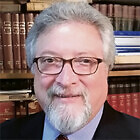
Rabbi Gerald C. Skolnik is the rabbi emeritus of the Forest Hills Jewish Center in Queens, where he served for 42 years. After retiring in 2023, he and his wife moved to West Orange.