

‘Ruth, the Whole Ruth, and Nothing But the Ruth’
Temple Emanuel of North Jersey’s tikkun leyl Shavuot will concentrate on her many personas

Shavuot is a holiday blessed with challengingly many themes. They range from the transcendent — God giving the Torah to the people of Israel on Mount Sinai, amid the sound of lightning and the sight of thunder — to the pastoral — it’s the festival of first fruits — to the biblically pedestrian — it’s one of the three pilgrimage holidays — to the welcoming — it celebrates conversion — to the genealogical — it’s about the lineage of King David — to the arithmetic, seven times seven plus one — to the creamily delicious — that, of course, is cheesecake.
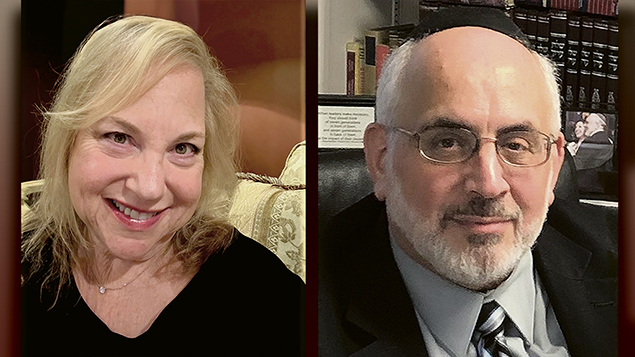
The biblical book that’s read on Shavuot is Ruth. This Shavuot, for the tikkun leyl Shavuot — the late-into-the-night study that characterizes the holiday — Rabbi Joseph Prouser will lead his Temple Emanuel of North Jersey in Franklin Lakes in thinking about many of the Ruths who have provided examples of courage, wisdom, and goodness to the Jewish people in living memory; in fact, some of them are still alive. (The tikkun traditionally goes all night, but many shuls make concessions to their members’ discomfort in staying up until daybreak by stopping before then.)
“In some ways, this is a more conventional approach to the tikkun than I have taken over the last 13 years,” Rabbi Prouser said. “Some of them have been more offbeat — Jewish astronauts, Jewish Supreme Court justices — but here I’m going back to the traditional study of the Book of Ruth, but the unconventional part is looking at the modern Ruths from the Jewish community. We’ll do a biographical study of each one; each of our speakers is tasked with making a connection to the Book of Ruth.”
The program, logically, is called “Ruth, the Whole Ruth, and Nothing But the Ruth.”
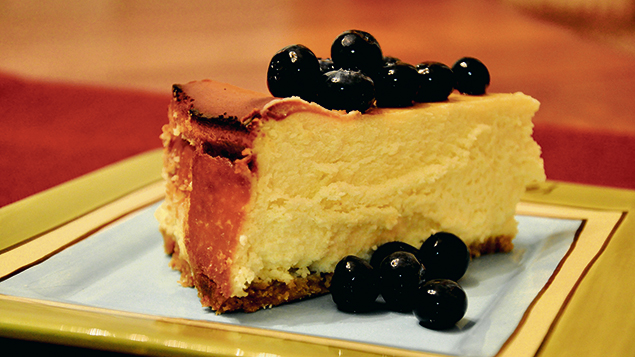
One of the Ruths is Ruth Reichl, the food writer. “There’s all sorts of imagery about food in the Book of Ruth — a central part of it is about gleaning — but I also found her cheesecake recipe,” Rabbi Prouser said. “So we’ll have Ruth Reichl’s cheesecake for the tikkun.”
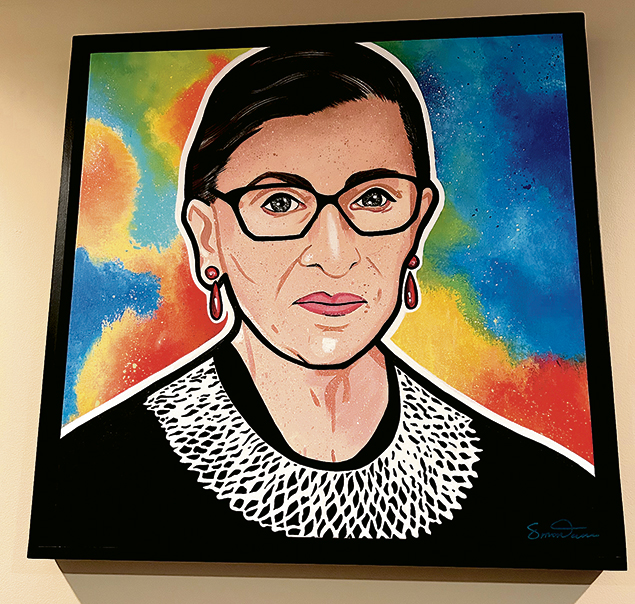
When he asked some members of his congregation to pick a Ruth and speak about her, “there was fierce competition to speak about Ruth Bader Ginsburg,” he said. “I sent out emails simultaneously to all the likely speakers, and I told them that it would be first come, first served. Six minutes after I sent it out, literally six minutes, an attorney wrote back and asked to speak about her. Another attorney wrote back two minutes later — eight minutes after I sent it — and I had to tell him, sorry, she’s taken.”
The other Ruths are Westheimer, the sex therapist, talk show host, and Haganah sniper; former Manhattan borough president Messinger; Knesset member, feminist scholar, and Ph.D. in Talmud Calderon; and radio executive Seymour. And, of course, the titular Ruth of the Book of; Rabbi Prouser will discuss her.
The evening will begin with a talk by Dr. Ora Horn Prouser, who holds a doctorate from the Jewish Theological Seminary in Bible and is the CEO and academic dean of the Academy for Jewish Religion (and is married to Rabbi Prouser). She’ll give an overview of the Book of Ruth. The evening also will include davening and a dairy dinner.
Adoption attorney Deb Guston will talk about Justice Ginsburg. “I first read about her when I was in law school, at Cardozo, 30 — oh, gosh, 36 years ago!,” she said. “We were reading about her work as a lawyer, before she was on the Supreme Court. She was just about to go onto the district then — President Clinton appointed her. We read about her work on gender equality; she primarily represented men, and her big case was against the Social Security Administration, which at the time was only giving benefits to widows, not to widowers. I was fascinated with her — with her jurisprudence, with her writing. She was such an influential justice — and, sadly, someone who probably stayed on too long, and opened the door to some bad actors.
“I hope that in the long run, that is not her legacy.
“I will talk about her accomplishments, but I also think it’s fair to talk about people’s failings. But we also have to remember that in the last few years, she was able to write some meaningful dissents, and that is important too.”
What about her connection to the Book of Ruth? “I think that an entire generation of civil rights lawyers and other lawyers looked up to her,” Ms. Guston said. “In that sense, she is somewhat of a mother to a large group of people, and of a certain legal ideology. And I also think that her ability to reach out to form friendships with people who were not quite like her stands out, in a way that the other Ruths we will be talking about, and the Ruth of the Bible, stands out.”
Dara Gelerter will talk about Doctor Ruth — Dr. Westheimer, to the more formal among us. “I remember that when I was growing up and I saw her, I always got the feeling that she was an everyday person,” Ms. Gelerter, a retired teacher who taught in Paterson for 27 years and in Israel for another six, said. Not that she was an average, regular kind of person, she elaborated, but “you felt that if you met her, you could really sit and talk with her.”
Although she already felt familiar with Dr. Ruth, since she decided to talk about her on Shavuot, Ms. Gelerter “spent a lot of time looking at videos of her on YouTube,” she said. “Unlike some of the other Ruths, who seem to be on a pedestal, this was a person who achieved greatness and yet she was someone you could feel comfortable with.
“Talking to family and friends, it turns out that a lot of people I know actually had crossed paths with her. Everyone agreed that she was down to earth. She was warm. She was interested in people. She was a dynamic person who drew others to her.”
Dr. Ruth was born in Germany in 1928. Her parents sent her to school in Switzerland to save her life; it worked, but they both died in the camps. Ruth went to Palestine after the war ended, but before the country became Israel; she was a sniper for the Haganah. Later, she came to the United States, eventually earned a doctorate at Columbia, and developed a practice as a sex therapist. She also was 4 feet 7 inches tall, although “I would describe her as someone with a very tall persona,” Ms. Gelerter said. What she lacked in inches she had in charisma.
She told a story she’d heard Dr. Ruth tell, about how she once took her four grandchildren to a theme park. There was a ride that allowed people only above a certain, fairly low height. All her grandchildren made that cut, but she did not. She was too short, and had to wait for them. “She told that story with such a great sense of humor and love,” Ms. Gelerter said.
She told another story about Dr. Ruth. “She exhibited unwavering loyalty and willingness to serve,” she said; in that, she embodied the biblical Ruth after whom she was named. “She mentioned that she had a reunion with many of the women she spent time with in the group home in Switzerland, and she learned that each and every one of them chose a life of service, teaching or doing social work or medical care. Every one of them.
“And I want to add that another Ruth, my Aunt Ruth, Ruth Brooks, will be joining us too,” Ms. Gelerter said proudly. “She is 91 years old.”
In this program, and in all the others he’s imagined and then organized, “Rabbi Prouser brings the community together,” Ms. Gelerter said. “Each one is unique and each one is interesting. Everyone gives something. And there’s always food too — and you can never go wrong with food.”
Who: Rabbi Joseph Prouser
What: Organized his shul’s tikkun leyl Shavuot
Where: At Temple Emanuel of North Jersey in Franklin Lakes
When: On Sunday, June 1, starting at 6 p.m.
What else: Dinner — dairy, including Ruth Reichl’s cheesecake — is available throughout the evening. Shavuot evening services will follow the program at 9 p.m. Rabbi Prouser, the last speaker, plans to start at 10.
For more information: Go to www.tenjfl.org