

‘His story ended but mine continues’
A mother’s journey through grief and her rediscovery of feeling
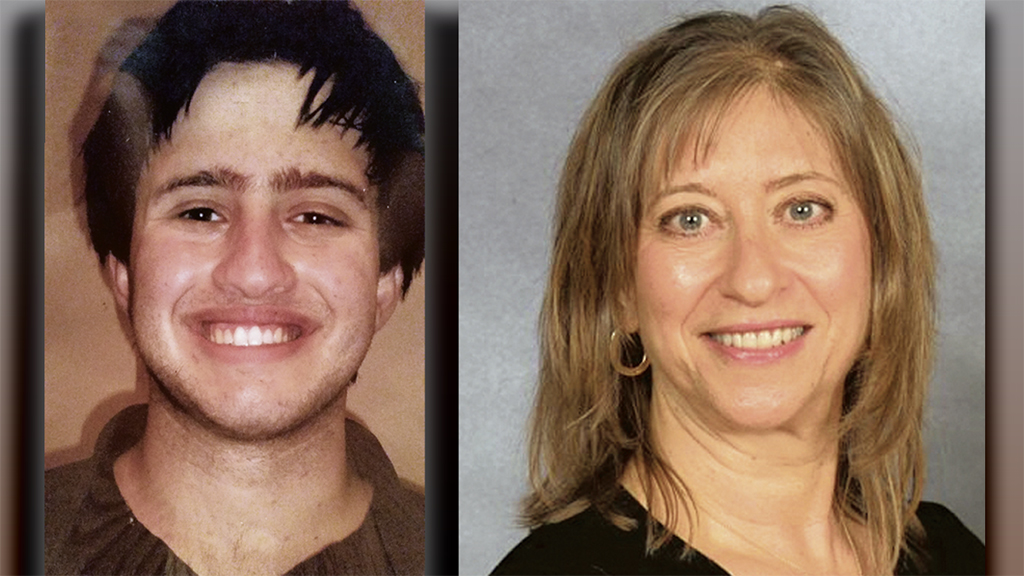
I am a survivor of adult child loss.
Thirteen years ago, in July of 2012, I first learned, in the most devastating way possible, that my son suffered from a severe mental illness: I found him dying from a self-inflicted wound.
When Jonathan returned home from the hospital after surviving this first suicide attempt, he asked me, “What would you have done if I had died?” Without hesitation, I replied, “I would have laid down in my bed and asked God to please take me too, right then.” His expression shifted from surprise to sadness. “Maybe,” I remember thinking afterward, “if he knows the depth of my pain at losing him, it will somehow keep him from ever again attempting to kill himself.”
But I didn’t understand the intensity of his suffering. In those moments, nothing could penetrate his anguish — no other thought, feeling, or concern for any other person could enter his mind. He believed, perhaps, that I, we, would be better off without him. He would be incapable of considering anyone or anything else but ending his own pain. And, while we strove mightily in the months following Jonathan’s suicide attempt both to help him heal and to protect him from his suicidal urges, we lost our battle in December of that year – a mere five months later.
Jonathan died at 21. While I already was forced to confront overwhelming trauma, I began a journey of overwhelming grief.
My response to his question had been sincere. I could not imagine surviving his death. Indeed, during the initial aftermath of Jonathan’s death, the intensity of my emotional pain was so profound and all-encompassing that I truly felt as though my body could not bear the devastating level of pain and would give out, and that my heart would simply stop beating, unable to withstand the burden of this loss.
Yet there I was, after his death, sitting shiva, still breathing, my heart beating. I was living through something I once thought impossible, albeit in a state of indomitable sadness.
Everything — every action — even breathing — felt overwhelming. Nothing would ever be as I had once envisioned. My life had assumed a different trajectory.
In those first days, weeks, and months following Jonathan’s death, I lived in a state of altered existence, as though walking inside a bubble of sorrow that could not be penetrated. Nothing existed outside the pain in my soul. Even the act of leaving my home was an enormous challenge. I couldn’t face people. I felt that I existed in that bubble, disconnected from all people, completely isolated. I could barely manage. I merely existed.
Eventually, I managed to accomplish daily tasks and to talk with people, but everything passed through a filter of grief. Interactions and events felt muted, colors faded, and music and happiness felt distant. Every conversation, no matter how routine, was contextualized by my loss. Simple questions like “How are you?” prompted polite responses, while my inner world cried out in pain. Similarly, whenever my daughters were mentioned, my thoughts returned to Jonathan’s absence. Every interaction was shadowed by internal anguish.
During this phase of living life through the filter, I left my home and interacted with others only when necessary. Shopping trips were carefully planned for times and places where I would not encounter people who knew me, to avoid the need to exchange pleasantries. How could I explain crying in the supermarket when I saw Jonathan’s favorite foods, or his favorite iced tea? My grief shaped the boundaries and contours of my life.
Eventually, grief evolved from being the filter through which I experienced life to becoming the wallpaper. All events occurred against the backdrop of my sadness and grief. My daughters’ weddings were accompanied by the reminder of Jonathan’s absence. I thought, “Yes, it is wonderful, they are getting married; but Jonathan is not here.” My daughters sought to mark their joyous wedding days with a reminder of their missing little brother.
When we would get together as a family, I was keenly aware that Jonathan was not there. Happiness and joy were never complete. Sadness impeded their being able to fully inhabit my heart the way they always had. Jonathan’s absence was the context of my life.
Over the past 13 years, through therapy, attending a support group, and education about grief with experts like David Kessler, I have learned to integrate my sense of loss into my daily life and to think of my son with love. Jonathan remains a part of my thoughts every day, but I understand that his story has ended, while mine continues. He and my grief are part of the mosaic of my life, and any attempt to wrest him from the past, or recapture my time with him, or keep him with me except in memory, is futile and ultimately leads to depression. I accept that moments of sadness will persist and are inevitable due to the depth of love and cherishment I held for my son.
It is now possible for me to live. I can smile and feel it in my heart and appreciate the beautiful aspects of my life and the world. This is a blessing. It has enabled me to love my son totally and purely. The loss is no longer solely about me and my pain; it is about missing Jonathan, who now resides in my memory and heart as an indelible part of the story of my life. While I will always feel grief, I have found a way to coexist with it.
There are so many kinds of losses that people suffer — the loss of a parent, a sibling, a child, a beloved relative or friend, a pregnancy, and there are others as well. It feels like the end of our own lives as well, because a part of our own future is gone. We question ourselves, feel guilt, anger, blame, and so many other emotions. We seek rational answers when sometimes there are none to be had. Yet we go on, even as the path of our lives has taken an unforeseen dramatic shift. It has veered off course.
It is my hope, even though each person’s journey is fully their own, that by sharing the arc of my own grief journey I can help others who have faced painful losses. I hope that they will find solace and believe that they can experience genuine joy again.
I believe completely that the support I found at different stages of my grief made an enormous difference. In the beginning, the cocoon of loving and caring friends and community helped, but eventually this support ran its course. Joining a support group and seeking grief counseling was extraordinarily helpful. I found that being understood and having my grief witnessed by people who could empathize was invaluable. I found it so helpful that I even became a certified grief counselor, and have spoken with many (unfortunately, there are many) parents.
The grief journey doesn’t end because there are always activators that can reduce me to tears — special family events, holidays, birthdays, the anniversary of the date of loss. I encourage all who have experienced the trauma of loss to reach out to find support from others who can truly understand and empathize. It is not a sign of weakness to reach out; it is like being able to breathe again. And it helps immeasurably. In trying to help yourself this way, it is my hope that you will once again eventually learn to live and not merely exist.
Once upon a time, I had a son, named Jonathan Aryeh. He died on Sunday, December 16, 2012, the day after Chanukah, the third day of Tevet in the Hebrew calendar. May his soul ascend to the highest gates of heaven, and his memory be a continual blessing.
Ruth Roth of Teaneck is the mother of two daughters and a son who died. Her background includes both a master’s degree in social work and an MBA, and she has worked in both sectors.
comments