

Esther must be smiling
A circular path reconnects war-torn family
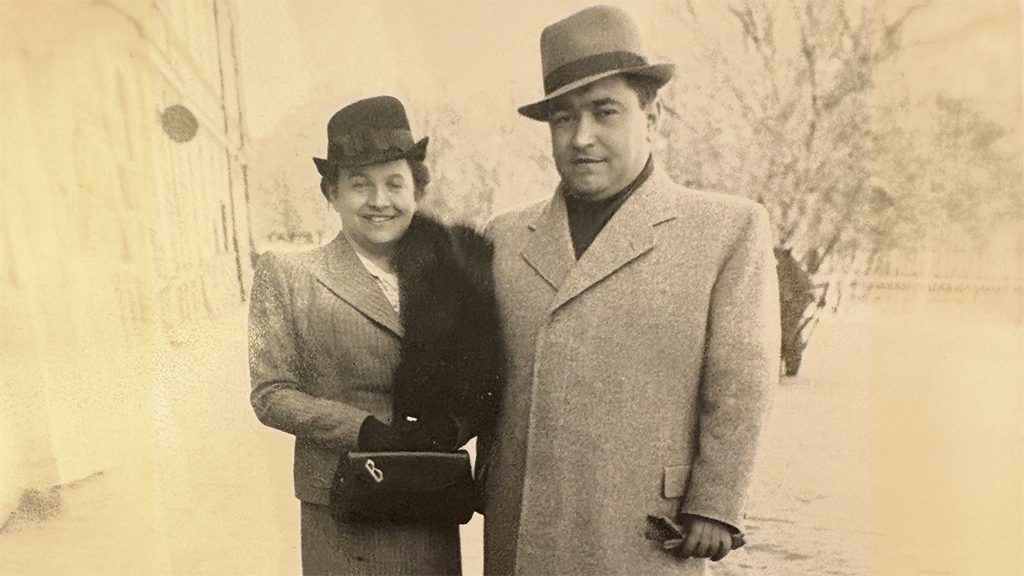
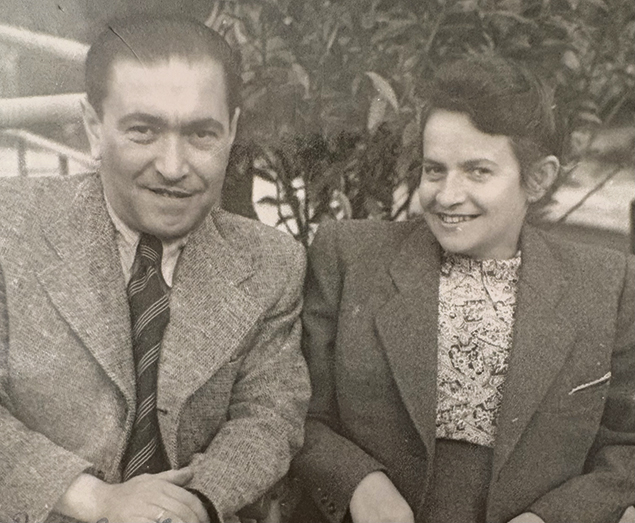
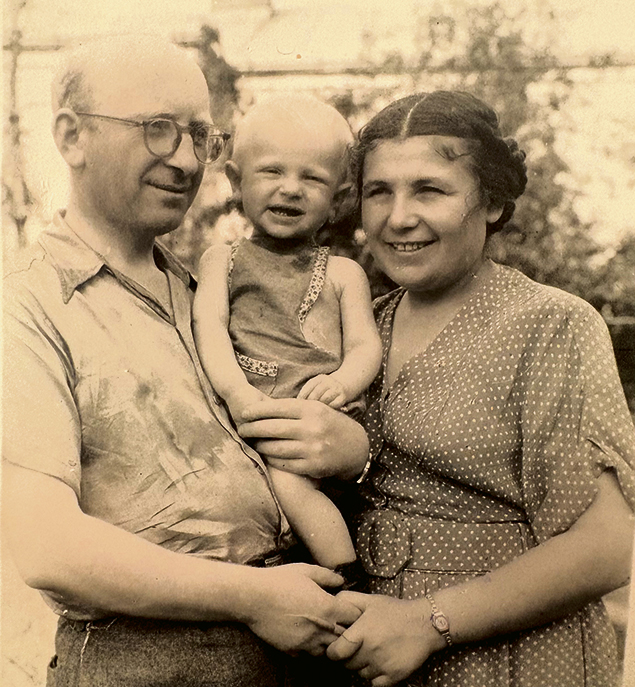
My mother-in-law, Esther, whose Polish name was Tynka, lost her father, Berish (Dov); her mother, Ratzya; and her brother, Salo (Shmuel), in the Holocaust.
Only Esther and her older brother Izio (Yitzchak) survived. A gentle personality like his sister and two years her senior, Izio was a physician. According to his official FSU obituary, “During the Great Patriotic War, he worked as a therapist in military hospitals of the Soviet army.”
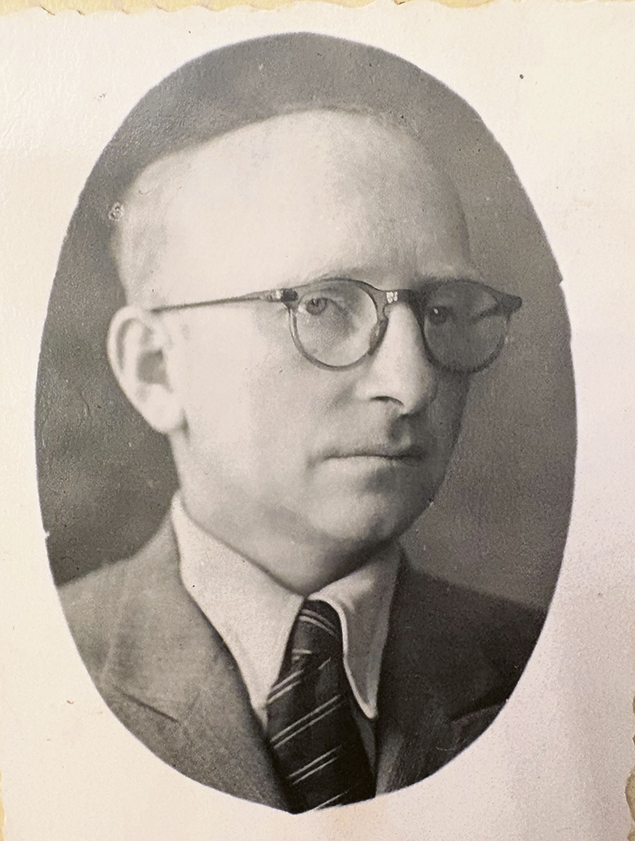
My father-in-law, Meyer, was also a doctor. When Germany invaded Poland in September 1939, he joined the Polish army as an officer. But Polish forces fell apart after 36 days, at which time Meyer joined the Russian army, again as an officer.
While most of their family members were being murdered, Meyer and Izio stayed alive as Russian soldiers. But that is where the similarity ended.
Sometime in 1944, Meyer and Esther were reunited, quite remarkable to be sure. In April 1945, Esther gave birth to a son named Bruno (Dov) who would one day become my husband.
Surviving the Shoah while so many people she loved were murdered colored Esther’s world from that point forward. Loss was now a part of her soul, but so was her determination to live and move forward. It was Esther, not Meyer, who understood that life as they knew it no longer existed. There was no future for a Jew in Poland.
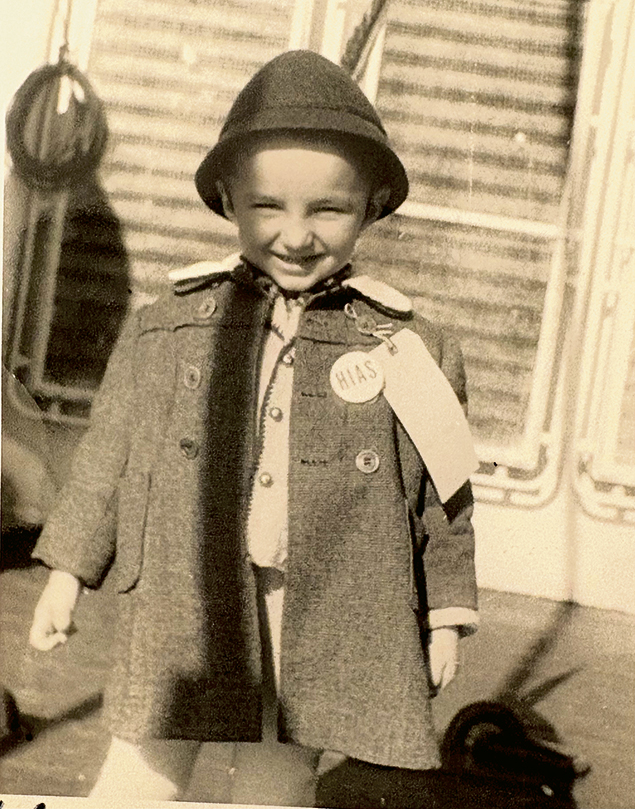
And so she hatched a plan while they were on a brief holiday. The war was barely over and Meyer was still a doctor in the Russian army. Esther knew that Vienna was divided into four Allied occupation zones: Soviet, American, British, and French. Without a word to her husband, she arranged to have their car crash through the barricade of the American sector.
It always sounded to me like a scene out of a movie. Once order was restored, they were questioned and were eventually sent to a Displaced Persons camp in Bad Gastein, Austria, where they lived for more than two years. In October 1948, Esther, Meyer, and 3-year-old Bruno stepped onto the USS General Black in Bremerhaven, Germany, and headed to a new life in America.
Izio, on the other hand, chose to return to his Polish hometown, Czortkow, only to find that his wife, Tosia, their two young children, and most of the rest of his family had been murdered. In time, he remarried a Jewish woman named Frydia. In 1947, he and his wife were blessed with their only child, a son named Boris.
After World War II, the Polish town of Czortkow became Chortkiv in the Soviet Union and later became part of independent Ukraine when the Soviet Union was dissolved in 1991. Chortkiv remained Izio’s home until the day he died. His official obituary describes his profession as follows: he was the chief physician of the children’s hospital there and was the head therapist of the regional health department. It also clearly notes that he was a member of the CPSU, the Communist Party of the Soviet Union.
Meyer’s path back to his profession was far more difficult and lengthy than his brother-in-law’s. He was required to repeat his internship and residency in New York to become a licensed physician in his new country. But Meyer was a sharp, highly intelligent, street-smart, very determined man. In time, he became the medical director of New York’s Blue Cross.
I never asked how the brother and sister knew they had both survived the war. What I do know is that Izio was very quiet about being Jewish. He was afraid to be targeted as a Jew with a family in the United States, and so Esther and her brother never spoke to each other on the telephone, never wrote to each other directly, and Esther never shipped clothes directly to them for little Boris. All letters and photos and clothing were sent through an intermediary.
In September 1965, the Secretary-General of the United Nations invited Meyer to participate in a world population conference in Belgrade, Yugoslavia. Esther, of course, joined him on the trip. This, she thought, was her golden opportunity to see her beloved brother. She made it clear to the person who carried the messages back and forth that she would travel to meet him anywhere he wanted: the train station, a restaurant, a park, anywhere. Surely his heart yearned to see her, but he could not do it. Fear of discovery was a powerful deterrent. Esther never saw her brother again, and he passed away in November 1969. Esther died on December 31, 1985.
Then came some historical changes in the late 1980s. Mikhail Gorbachev, the leader of the Soviet Union, introduced glasnost, a new openness that increased transparency and freedom of information within both the Soviet government and the media. That policy was joined by perestroika, the restructuring of the economic and political system. It was a bold move that was greeted with hope and joy by people everywhere.
Sometime in 1991, my husband, Bruno, received an unexpected but clear message from Izio’s son Boris, who was now in his mid-40s. Boris and his wife, Irina, who was not Jewish, lived in Minsk, Belarus, and were raising two teenage sons. Boris, I later learned, wore many hats: one old business card I have describes him as head of sports of the National State TV and Radio Company, while another business card shows him as chairman of the Union of Belarusian Jewish Public Associations and Communities. His professional world clearly was diverse and busy.
I do not recall how Boris reached out to Bruno, but I remember clearly what Boris wanted. He wanted to have a direct telephone conversation.
Bruno logically assumed that Boris spoke only Russian, and so he enlisted the aid of our Russian friend to mediate the phone call. About two minutes into the call, Bruno, whose first language was Polish, asked our friend to ask Boris if he spoke Polish. Of course he did! Both his parents were Polish and that was his first language. And so these reunited first cousins had their first one-on-one phone conversation. It was a telephone connection that Esther never could have imagined.
The purpose for the call was medical. Irina had undergone a double mastectomy. While the doctors assured Boris that his wife was fine and healthy, he needed more convincing. He believed that his cousin Bruno could help him get that assurance through the medical system in the United States. Without a moment’s hesitation, as Boris began the paperwork on his side, Bruno made arrangements here in the New York area for medical appointments and all necessary tests. All fees were waived (or at least that is what Bruno told me). And Bruno arranged the flights and paid for the tickets. He also encouraged his cousin to bring his two teenage sons with them, but Irina insisted that they remain at home with her parents.
The evening I first met them is etched in my memory. I returned from work on a cold day in December and found the unexpected warmth of Boris and Irina standing, almost glowing, in our home. It was Chanukah 1991. I had one single powerful thought. Here was a Chanukah miracle that, once again, Esther could not have never imagined.
And so began an approximate three-month visit that was in some ways astonishing, in some ways wonderful, in some ways stressful, in some ways funny, but always, always very interesting.
Boris’s personality was calm, easygoing, and thoughtful. There was an obvious feeling of connectedness to us as family. Irina was often excitable, a bit childlike in her amazement with everything, outgoing, with a high-pitched voice that sometimes made us laugh and absolutely could not be ignored. She was totally clueless about Jewish people and customs and was unabashedly ignorant of the Holocaust. Boris was often vague about things as well. But then again, they lived under Communist rule, as did Boris’s parents, where Jewishness was a liability.
Irina proudly shared that her father was a card-carrying Communist. When Bruno delicately suggested the possibility of moving here with their sons, she responded that life was good in her country and she would not want to move away from her parents.
Conversations at the Shabbat table were a bit complicated. While Boris spoke English fairly well, Bruno would often translate a detailed discussion into Polish to Boris who then repeated it to Irina in Russian. Her responses were then relayed in the opposite direction. It was a sometimes tedious but often funny process.
And oh, such excitement about food from Irina! She had never tasted sweet potatoes or peanut butter, and canned pineapple sent her into a frenzy. She acknowledged her total joy in the new foods by declaring them to be, in her halting, newly discovered English, “tasty and delicious!”
And Boris? He observed and savored. Involved with television back in Belarus, he professionally videoed our eldest daughter’s engagement party. Curious about Jewish life in America, he combined that passion with his professionalism by going to my children’s elementary Jewish day school and preparing a documentary video about a day of Jewish education in America. And because he was interested in the foundations of the country he was visiting, Bruno and I traveled with him and Irina to Washington, D.C., for two or three days. I don’t recall too much about that trip, but I have photos that document our time there.
After approximately three months, and satisfied that all the testing on Irina verified that she was cancer-free, Boris and Irina returned home. Of course we stayed in touch. And on a rare occasion when Boris came to New York for business, he made sure to see us.
Both of Boris and Irina’s sons eventually married non-Jewish women, and each had one child. In December 2004, I was in Moscow and Minsk briefly for business, and I asked the staff person arranging my itinerary to please reach out to my husband’s cousin, as I very much wanted to see him. It was so interesting to observe Boris on his own turf. He was clearly involved with the Jewish community; when he appeared in the Jewish Community Center I was visiting, no one seemed surprised to see him. I, of course, was overjoyed to spend time with him again. And I also had the opportunity to visit with Boris and Irina in their apartment, along with one of their sons and his wife. Again I kept wondering: Could Esther have imagined such a visit? Unlikely.
But the final arc of the family circle was yet to come. As the reader may know, on July 5, 1950, Israel passed the Law of Return, which declared that every Jew (someone who either has a Jewish mother or has converted to Judaism) had the right to immigrate to Israel and would automatically become a citizen. That law was amended in 1970 (and it’s controversial today, I am told) to include children and grandchildren of Jews, along with their spouses.
According to halacha — Jewish law — Boris’s sons were not Jewish. But their grandparents were Boris’s parents, Izio and Frydia. They definitely had Jewish grandparents. I do not have precise dates or details, but an educated guess and some memory says that Boris’s sons and their wives made aliyah sometime after I saw them in December 2004. Were they seeking a better life in Israel for themselves and their families? Probably. Did the Jewish piece play into that decision? I do not know.
What I do know is that I last saw Boris about 10 to 12 years ago. He was in New York on business and visited me in my office. He shared his hopes that one day he would make the same move that his sons had made. And he proudly showed me a photo of his grandson serving in the IDF. Boris was grinning from ear to ear.
A treasured moment for me. A “wow” moment as well. I was remembering that my father-in-law, Meyer, rarely called his wife Tynka or Esther, but preferred to call her Ducha, which means “soul.” I looked up to the heavens, felt my beloved mother-in-law’s soul watching this unexpected completion of the circle of her brother’s life, and believed with all my heart that she was smiling. Yes, I reflected, she is definitely smiling. At last, at long last, her beautiful soul surely believes in miracles.
Tzivia Bieler and her late husband, Bruno, moved to Teaneck in January 1974. Retirement five years ago brought her greater freedom; covid brought her back to her love of writing.