

Engaging teens in Jewish life
Local organizations partner to develop collective programming
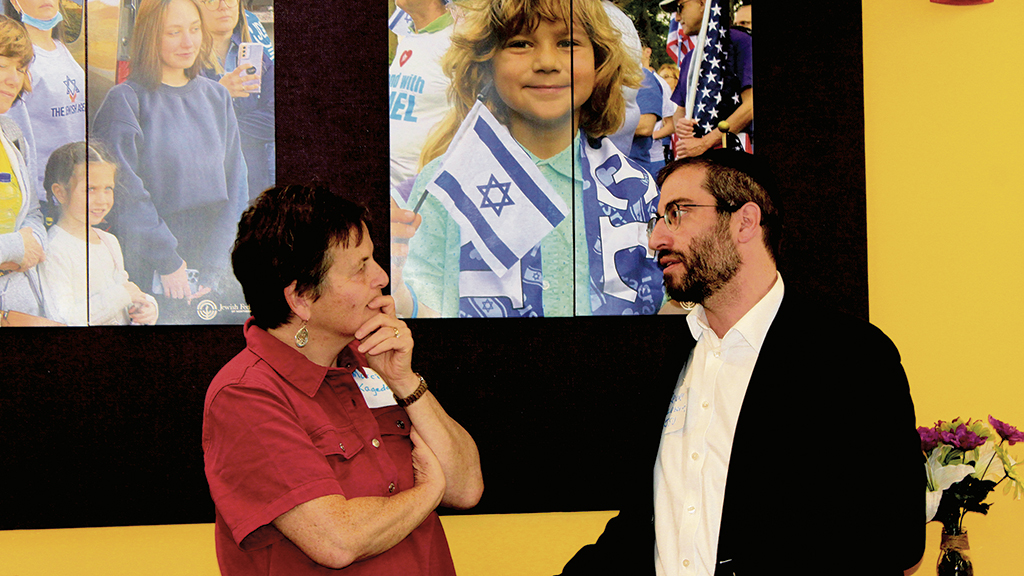
The Jewish Federation of Northern New Jersey, the Jewish Education Project, and the Kaplen JCC on the Palisades recently announced their launch of the Center for Jewish Teen Engagement, with funding from the Russell Berrie Foundation.
The initiative’s goal is to engage more teens in Jewish life, particularly those who don’t attend Jewish day schools, Sara Miriam Liben, who directs the new center, said. When the Berrie Foundation started working with JFNNJ, JEP, and the JCC to strengthen local teen programming, JEP led a field study to help the partners get a sense of what the local teenscape looked like — what programs teens were participating in and what was keeping others from getting involved. “They really found that parents were looking for their kids to be more engaged in Jewish lives before they went out to college campuses,” Ms. Liben said. College is “about connecting young adults to their history, between their history and their future. College is a formative time, and I think that high school is the time to give you the tools to do that. When you’re still in the safety of your parents’ home and your community, you’re able to explore, go deeper into what your Jewish identity looks like, and then you can build upon that when you leave your home.”
The center was not created as a reaction to October 7, Ms. Liben added — the initiative was already being discussed before then — but she sees teen engagement in a post-October 7th world as more important than ever. “Teens need to be engaged in high school in order to make a choice of what their Jewish life will look like on college campuses,” she said. It’s a lot harder to ignore your Jewish identity on campus now. “My goal is not to give anyone a specific opinion, or to say that I really want you to be connected to this part of your identity over that part of your identity,” but to give teens the tools and the comfort to engage in ways that are important to them.
A Jewish student shouldn’t have a negative experience — like being haassed at a pro-Palestinian encampment on campus, for example — “as their first experience of engagement with Israel or their Jewish identity” or have their Jewish identity “defined by someone else,” Ms. Liben continued.
“It’s really important that when Jews are on campus, they have a sense of who they are so that they can continue to grow that sense of self, whether it’s at a Hillel or a Chabad or any other group, and delve deeper into their Jewish identity. And we want to foster that for them. So the idea is really Jewish engagement — it’s trying to get people in the door to some Jewish community. And I would say that broadly, because it doesn’t have to be your classic engagement. It could be engagement with a youth group. It could be engagement with Israeli dance. It could be engagement via leadership or via social action. There are so many ways that we can use a Jewish lens to what we are doing in our lives in our high school years.”
The study also found that families reported having difficulty finding local programming, Kaarin Varon, a program officer at Russell Berrie, said. “There was no central place. There were a lot of programs, the community is fairly large, and there was no central place to kind of say, what’s going on in my neighborhood,” she said. “We had a lot of families say ‘we are only able to find out based on word of mouth,’ but if you’re a newcomer to this community, you have no central place to look for that.”
Other findings made it clear that “there was an appetite for teens to engage cross-denominationally and across the community,” Ms. Varon continued, and that existing programs “were meeting some needs but not meeting all needs — that there was a sector of the teens that were not being engaged or were under engaged.
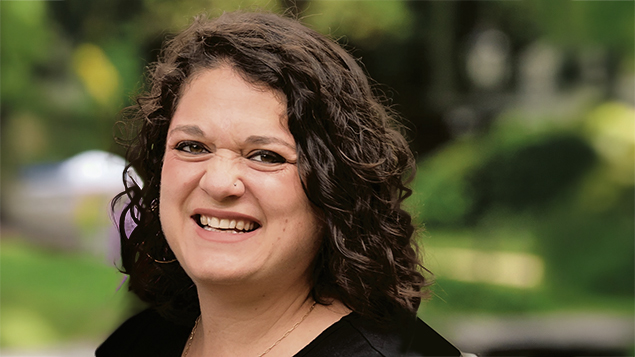
“Teens will be the future residents of this community, so if we provide positive Jewish engagement experiences, we are investing in their Jewish identity now, so that their Jewish lifelong engagement continues.”
The center is designed to address the study findings and strengthen local teen engagement by supporting the people who are working with teens throughout JFNNJ’s catchment area. “We want to help them reach more teens and attract more teens to the great programming that already exists,” Ms. Liben said. The center will also facilitate collaboration among local teen-facing organizations and help identify and develop new teen programming. The goal is to see the field and think about what types of projects might be missing, to ask “what isn’t here that could fall into the category of Jewish engagement and could pull more teens towards Jewish engagement?”
Ms. Liben worked with the partnering organizations to identify local institutions running teen programming geared primarily to non-day school students and invited the professionals working with teens to join the center’s series of roundtable discussions. The sessions feel like a professional collective, Ms. Liben said. They include professional development seminars and an opportunity for the teen-facing professionals to work together. They might brainstorm ideas or collaborate on larger programs.
“Never before, to my knowledge, has there actually been a professional network of teen-facing professionals in northern New Jersey,” Ms. Liben said. “That includes youth advisors who are housed at synagogues, directors of youth groups like BBYO or USY, religious school directors who are working to address challenges of drop-off in the Hebrew school participation rate post bar mitzvah. It also includes day camp directors, who are engaging their teenage counselors, and people running programs that are geared towards teens.”
The center held its first roundtable session last month. “We had 23 professionals attend from all of these different organizations throughout the catchment area,” Ms. Liben said. “We had people from Jersey City, Hoboken, Wayne, and a lot of your classic Bergen towns. And they all came together, for the first time that any of them could remember, to begin a series of professional development and networking. The idea is we need to meet each other. We need to be able to talk about what are the trends, what are the challenges? To work together, to partner for the sake of giving better and deeper experiences.”
Part of Ms. Liben’s job is to really get to know all the local teen-facing professionals, and to develop relationships with them. She’s traveled throughout the area “to meet them, to know who they are, to understand where they are succeeding, where would they love to dream and grow, and where their challenges are.”
In one instance, she learned that three different synagogues each were developing a monthly program to take high schoolers on Jewish lens trips to sites like Ellis Island or the Tenement Museum. “They each faced different challenges and they each had small groups,” Ms. Liben said. “If they’re not talking to each other, they stay in their silos. But because I’m talking to all of them, and now we’re gathering, I can call them back and say, you know, what would look really cool? If instead of you all trying to run this on your own for five to 10 teens, what if we put it together and run the trips across the area. And then we’re sharing resources, we’re sharing staff time, and the teens are actually meeting each other, and it becomes a much more attractive program. So that’s the kind of collaboration that we’re starting to do across the community.

“Someone called me a shadchanit — a matchmaker — of teen engagement.
“It’s very exciting. And it seems so simple, but every town is different, and every community’s priorities are different, so it takes us a little bit of time to say, ‘we need to take a step back, we need to let our minds do some good old professional development, and to say, what could we do if we partner together and look wider for the sake of the community?’”
The center will also be in the position to coordinate community-wide programming, Ms. Varon said. This community has never held a Jewish-life focused college fair — an event that introduces Jewish students to the Jewish life available on different campuses. “That’s not something a single organization can do but it is something that can be provided collectively.”
In an effort to foster innovation, next year the center plans to start offering microgrants to organizations or individuals to pilot initiatives that promote teen engagement. The center will also help grant recipients execute their projects. The idea, Ms. Liben said, is to encourage innovation in the community and to “support the landscape” — the local institutions that are engaging teens.
Sue Gelsey is the CEO of the Kaplen JCC. “We’re really excited for the opportunity to make an impact in the teen population and their connection to their Jewish identity and the Jewish community,” she said. “And we’re excited to be able to do it in this particular partnership with the Russell Berrie Foundation, with the Jewish Federation, and with the Jewish Education Project.”
Rabbi Jeremy Ruberg, the rabbi for lifelong learning at Temple Emanu-El in Closter, participated in the center’s first roundtable and was excited by the opportunity to collaborate on ways to serve the teen population. “We think we know what teens want, but we’re not always right,” Rabbi Ruberg said. “So by working together, I believe that we can better serve them.”
Looking forward, Ms. Liben hopes to develop a parent advisory committee and a teen advisory committee. “It’s great to start with the data and to start with the professionals in the field, but it would serve us all well to make sure that we have stakeholders involved in what we’re doing, and our stakeholders are teens and their parents,” she said.
“High-schoolers are craving connections, and I believe that it’s imperative on us, on the adults, to help them find places where they can foster creativity and get excited about Judaism,” she concluded. “I believe that if we set programming to the level that we expect them to rise to, then they will. That means in terms of Jewish educational experience, in terms of conversations about Israel, in terms of treating them as the leaders that we want them to be. There’s so much that teens can be doing, and we should really be partners in creating their Jewish leadership.”