

Back to cholent
Thoughts on the beloved Shabbat-afternoon meal

After a week of Passover and eating all things matzah — including matzah balls, matzah pizza, matzah lasagna, and matzaoh brei — I was excited for a Shabbat of challah followed by a hearty cholent with barley.
First, I had to find my new crockpot that was stashed away before Passover.
Because we are Ashkenazi, my family does not eat any kind of kitniot, which includes barley, corn, and beans.
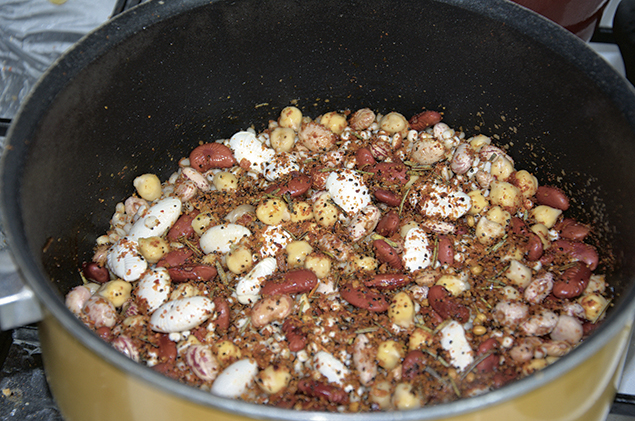
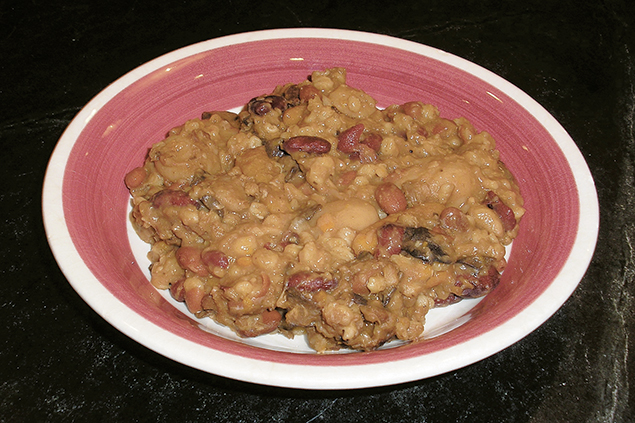
Cholent is a slow-cooked stew that simmers overnight, usually with meat, beans, potatoes, and spices. It is a traditional Jewish dish associated with Shabbat because it can cook slowly without violating the day’s restrictions. The name “cholent” derives from Medieval French: chault, meaning hot, and lent, meaning slow, referring to the long cooking process. It’s such a versatile and easy dish to make that most people like to experiment with different ingredients.
When it comes to cholent recipes, it’s very individual. People have their own ways of preparing this delicious dish, usually eaten at Shabbat lunch. Years ago, when I was traveling in Venice, a Chabad rebbetzin prepared a huge and delicious cholent for a crowd of travelers dining over Shabbat. When I asked what her secret ingredients were, she told me that she first sautés many onions and then adds them to the cholent to cook.
Perhaps your shul will have a kiddush? The cholent table is usually the most popular and crowded spot. I remember one particular time when the cholent ran out. People were standing in line when there was an abrupt announcement followed by commotion:
“We just ran out of cholent!”
“C’mon, what do you mean?”
“Check the kitchen!”
When it comes to a shul kiddush, people expect a certain amount of cholent to come their way. They weren’t particularly interested in the potato kugel, chicken marsala, or the salads nearby. Finally, once it became clear that cholent was no longer on the kiddush horizon, they shuffled sadly over to the gefilte fish and herring table.
A sad second choice.
So what is it about cholent that gets us Jews in such a tizzy?
I decided to do some historical research. As Jewish communities settled across Eastern Europe, I learned, cholent evolved, and each region developed its own variation. My family comes from Poland, where there was a greater emphasis on beans, barley, and potatoes. In European towns, families brought their pots of cholent to a local bakery before Shabbat; the ovens were perfect for slow cooking overnight.
A Sephardi cholent is usually cooked in a similar way but with different ingredients, such as chickpeas and rice. The spices may include cumin, turmeric, and paprika, with variations depending on the region.
 My Bubbie came from Plinsk in Poland. Along with all the other chores — baking challot, chopping fish for gefilte fish — she, like the other local women, also prepared cholent and sealed the pots with a flour-and-water paste.
Before sundown on Friday, exhausted women by the dozen schlepped their cholents to the baker’s ovens, where they were given numbered metal tags to ensure that they would retrieve the correct pots. Then, on Shabbat morning, the men and children would pick up the cholent on their way home from shul.
I can’t help but imagine this scenario: What would happen if a numbered tag fell off?
It’s Shabbat lunch, and the family is enjoying their first bites of delicious-smelling cholent. Ahh, everyone is happy — except for Bubbie Roisa, who is chewing very slowly, looking pale. Then she says, “Someone switched my cholent pot — this is not my cholent!”
No one has ever seen Bubbie Roisa this upset, practically speechless. Finally, she sputters, “This is definitely Yenta Schwartz’s… everyone knows she uses too much salt and not enough potatoes! I keep telling her not to use so much salt, but does she listen to me?”
If people regularly switch coats in shul, it stands to reason they could switch pots at the baker’s oven, too. Mistakes happen — but how would you even return a pot of cholent?
Since my bubbies came from Eastern Europe, I like to continue the tradition and use a basic Polish-style recipe: barley, potatoes, flanken, kishka, and spices (with a little American ketchup and duck sauce, too!).
Wishing you all a cholent-filled Shabbat — and good luck at your local kiddush!
Esther Kook of Teaneck is a reading specialist and freelance writer.