

A monument to what?
Disgraced director offers thought-provoking film about the dilemma in Lebanon
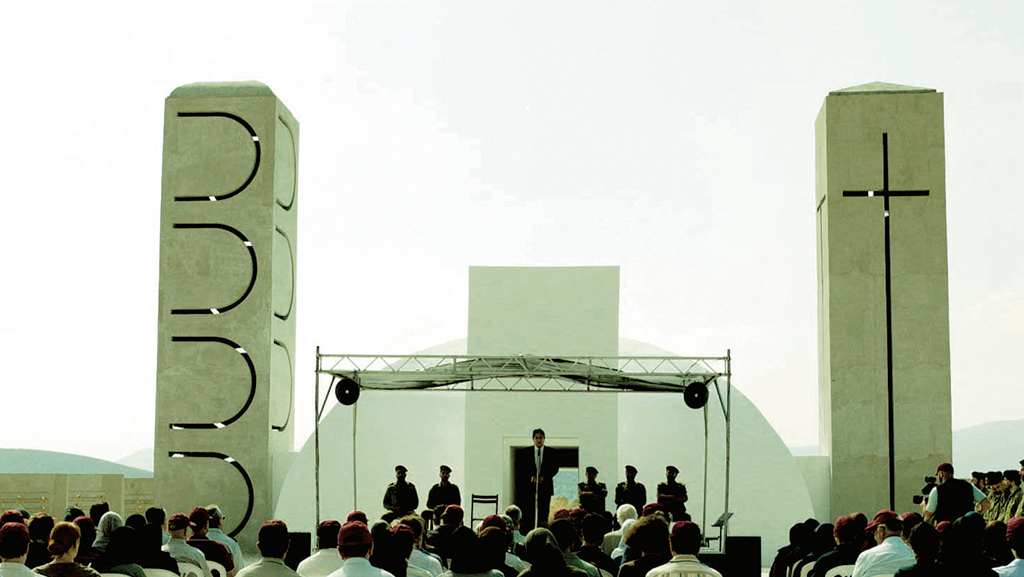
“Monument” is an intelligent, exciting, and suspenseful movie about building a peace bridge in the Middle East, specifically Lebanon — a bridge that sadly and inevitably collapses.
It comes from director Bryan Singer (the “X-Men” movies, “Superman Returns”), his first feature after a nearly decade-long absence from motion picture screens. As anyone with access to Wikipedia knows, the likely reason he virtually disappeared was a series of sexual assault accusations leveled by young boys.
That type of behavior seems to make almost daily headlines today. Does the name Epstein ring a bell? But Woody Allen still makes films, and Kevin Spacey is reportedly attempting a comeback. Both were accused of sexual crimes. Does art trump bad behavior? That’s above my pay grade.
But I wrestled with that question when deciding whether or not to review the film. Ultimately, I determined “Monument” was too good — and timely with fighting once again raging in south Lebanon — to ignore. And, yes, I suspect if the film had been dreck, I would have moved on.
Also, since none of the acusations against Singer ever led to a criminal conviction, I tussled with whether or not to even mention them. But I decided I couldn’t leave that out.
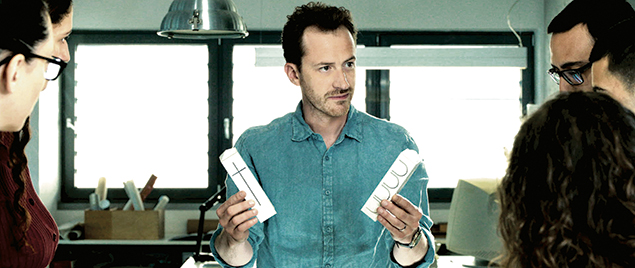
“Monument” is based on a true story. Mr. Singer’s journey began when he met one of the real-life participants in the events, Amnon Rechter, at a diner in Israel where (again according to Wikipedia) he now lives. That’s when he heard the story that eventually became this film.
The year is 1999, and Israel is riven with dissent. IDF troops occupy south Lebanon, allied with the largely Christian South Lebanon Army, and are experiencing substantial casualties in the fight against Hezbollah. Israeli streets are filled with protesters against the occupation — and Prime Minister Benjamin Netanyahu.
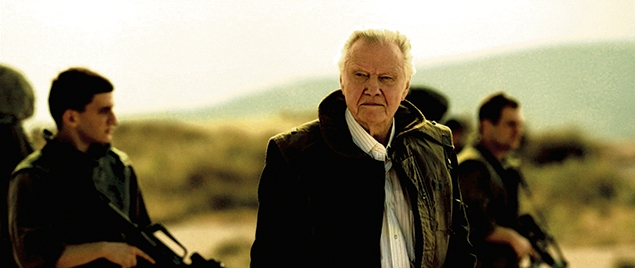
Despite the seemingly endless conflagration that is Israeli politics (or perhaps because of it), Yakov Rechter (Jon Voight) and his son Amnon (Joe Mazzello), two of Israel’s premier architects, receive unexpected guests.
The visitors are Uri Lubrani (the late Alon Aboutboul), a long-time Israeli diplomat and at the time a consultant to the Defense Ministry, and Antoine Lahad (Igal Naor), the SLA’s military commander. The two men want to commission the Rechters to design and build a monument to fallen SLA soldiers.
The Rechters argue about whether to accept the job. Yakov, suffering from late-stage cancer, wants to. But Amnon is against it. “Lebanon is our Vietnam,” he tells his father. “You’re putting yourself and company at risk.”
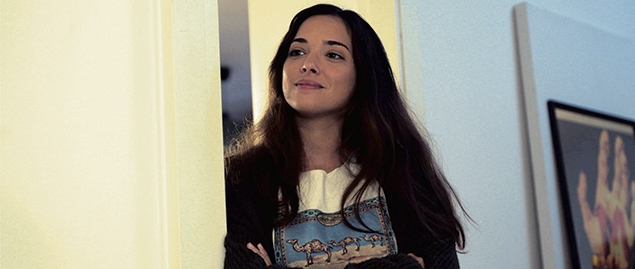
Amnon’s wife, Osnat (Aviv Pinkus), agrees, arguing that she is tired of being the “national womb producing cannon fodder.” She represents a movement largely led by women and voices one of the film’s great lines: “God asks Abraham to sacrifice his son, and Abraham says yes. God didn’t ask Sarah because Sarah would have told God to f**k himself.”
Ultimately, the young Mr. Rechter agrees to do the project, but only if his firm accepts no payment for its work, and more importantly, the monument becomes a tribute to fallen Christians and Muslims alike. His design features two towers, one with a crescent, the other with a cross, surrounded by a circle of concrete slabs. Like the wall at the Vietnam memorial in Washington, the slabs carry the names of those killed in action.
But getting it built required frequent, suspenseful, and dangerous trips outside the relative safety of Israel on the so-called death road leading to the building site. Snipers and a road littered with IEDs posed twin threats.
But Amnon is not to be stopped, and his passion is contagious, infecting the Arab construction crew, which continues its labors even after the government cuts the budget. “Lebanon is running out of fashion,” he’s told.
But not everyone is as excited about the project. One evening, someone throws a rock through the window of Amnon’s home “Jew-rab” is scrawled on it. This prompts Osnat (who seems to get the best lines) to say that “the upside to being attacked by extremists is now you know you’re doing the right thing.”
Alena Alova’s script is ambitious and filled with smaller moments, tiny details that might be overlooked in the scheme of things, but illustrate the movie’s larger themes.
In preparation for his trips to the construction site, Amnon is outfitted with a Kevlar vest and steel helmet and gets into a heavily armored car whose license plate is changed from Israeli to Lebanese.
However, what better illustrates the mission’s danger is that inches from where Amnon sits are the remnants of a sniper’s bullet that couldn’t quite break through the glass. It had been aimed at a previous occupant’s head.
Another moment is when Amnon gives a lift to four women who lost family members in Lebanon. They are part of the grassroots movement protesting the war, and they talk about their pain and make the abstract numbers of soldiers lost feel very real.
Or the intergenerational competition between father and son: Amnon saying: “I want to create something beautiful before he (Yakov) goes so that he knows the time he spent teaching me was worth it.”
He got his wish because the monument is beautiful and moving. At its dedication ceremony, we watch as Arab women visit the slabs where their loved ones are memorialized, raising ever so briefly hope that perhaps a reconciliation and peace may be possible.
But this is not a spoiler. Ehud Barak replaces Bibi, Israeli troops are withdrawn from Lebanon, and just 36 hours after the dedication ceremony, Hezbollah operatives blow it up.
“Monument” opens March 20 at the Montgomery Theater in Somerset County, and in New York City, with more showings in other places promised.