

Torah, social change and Yiddish
Avram Mlotek talks about his recently published passion projects

Plus ça change, plus c’est la meme chose, right?
Well, maybe, sort of yes. In some ways, the more things change, the more they stay the same. And in other ways, no, when they change, they change for real.
Social media has radically changed the way we communicate with each other. Every new mechanical mode of communication — telephone, radio, movies, television — changed our relationship to the world and each other. Each made it easier to share information, and each brought the world closer together.
But there is no real analog to social media, which at the same time has an immensely broad reach and is deeply personal. It can make some lucky person rich by becoming a successful influencer — a field that did not exist not very long ago — or it can make an impressionable teenager feel that the whole world hates every last thing about her. Because as much as technology changes, human nature does not.
So how does that leave us?
Among very many other things, it leaves us in dire need of guidance.
“The Torah of Social Media” looks at social media through a Jewish lens. It’s edited by Avram Mlotek of Teaneck, and includes essays and poems from a wide range of Jewish thinkers, including him.
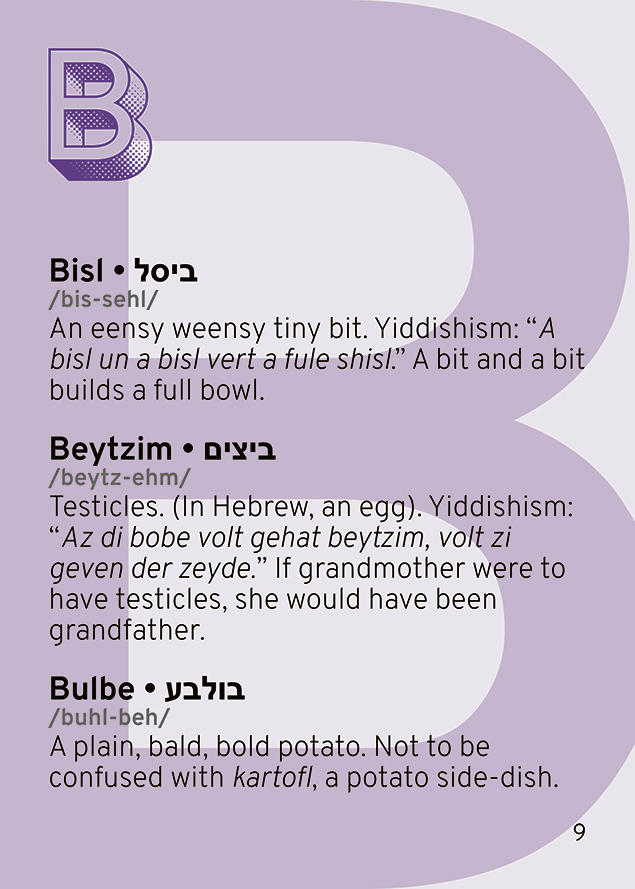
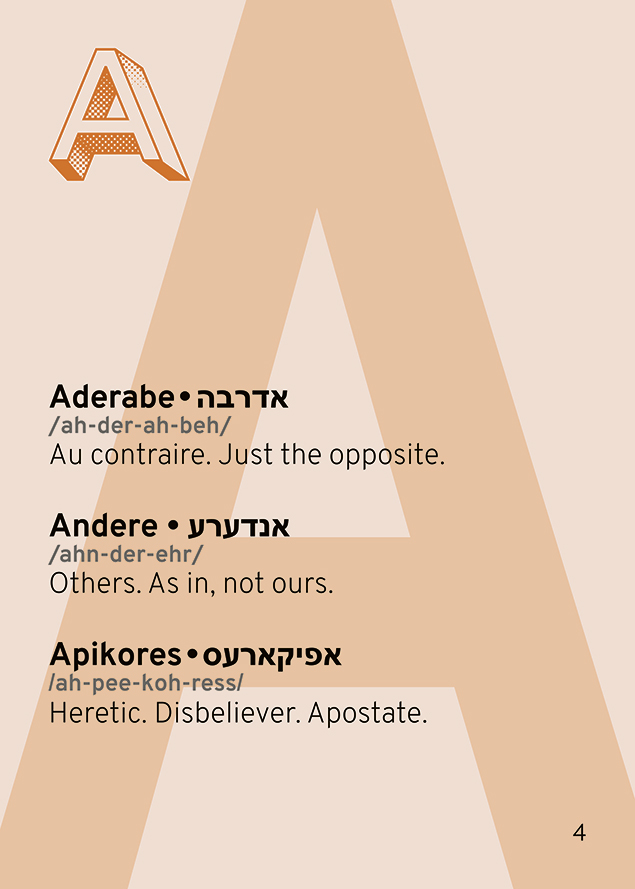
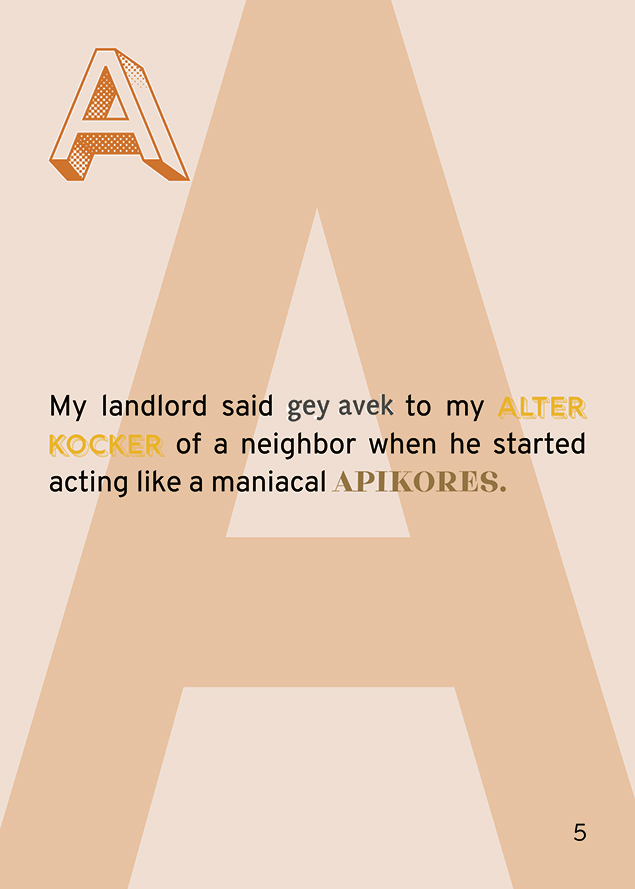
And “My Yiddish Alphabet,” playful where “The Torah of Social Media” is serious, is a joyous beginner’s look at Yiddish, illustrated by what Rabbi Mlotek calls “New Yorker-style cartoons” by Jenny Young.
Rabbi Mlotek, who was one of the founders of Base, an organization that offers young Jews looking for community, meaning, and connection a home-based place to find those things, is a social activist and a teacher. Like most of his family — his father is the Folksbiene’s Zalmen Mlotek, and his grandparents were the pioneering Yiddishists Eleanor and Joseph — he’s also a musician, a musicologist, a Yiddish speaker, and the grandson of a Holocaust survivor. His ordination is from the left-wing Orthodox Yeshivat Chovevei Torah. He is active in the fight against antisemitism around the world, and he works with Jews by choice as they move toward conversion. He is so sturdily planted in so many parts of the Jewish world that he’s well positioned to reach out to people in various corners of it and to draw them in.
That’s what he did in this book.
“‘The Torah of Social Media’ has been a passion project,” Rabbi Mlotek said. “It originated during covid. The guiding question was ‘how can this force’” — social media in particular, and the force of the internet in general — “be used? How does it affect our spiritual lives? Might it be used for deeper connection and positivity?” Those were very real issues during the pandemic, but they’ve been even deeper and more nagging with the growth of AI. “The book has been updated to talk more directly about AI,” he said.
“The Torah of Social Media” looks at the possibilities of the internet with hope. “The negative forces of the internet have long been documented, whether it’s cyberbully or misinformation,” Rabbi Mlotek said. “Remember the rally in CitiField over a decade ago?” That was in May 2012; when, the New York Times reported, “more than 40,000 ultra-Orthodox Jews” — all men, because women were not allowed in the stadium, although they could gather for watch parties back in Brooklyn, the paper said — jammed the sold-out stadium, in Queens, and others gathered nearby, in Arthur Ashe Stadium, to hear about the dangers of the internet.
“But there hasn’t really been a collection of Jewish voices asking how we can use the internet or social media l’shem shamayim,” for the sake of heaven. “So that’s what this collection is.
 “It’s an array of rabbis, teachers, some Jewish online influencers, talking about their own relationships with social media, and around all those questions.”
The authors, to name them almost at random, Rabbi Mlotek said, include Rabbi Menachem Creditor, UJA-Federation of New York’s rabbi in residence; Adam Louis-Klein, the founder of the Movement Against Antizionism; Rabbi Emily Cohen, the leader of the Reconstructionist West End Synagogue in Manhattan; fellow Chovevei graduate and social activist Rabbi Shmuly Yanklowitz; modern Orthodox teacher Rabbi Adam Mintz, actress and singer Daniella Rabbani, and rapper Kosha Dillz. The writers in the book “are pluralistic,” Rabbi Mlotek said. “They range from Orthodox to Conservative to Reform to Reconstructionist.
“They are people who strive to use their own platforms in their own way. I just invited them to reflect on what they are doing.”
Rabbi Mlotek’s own chapters include “Google could use a little Godliness,” an essay that was published in the Los Angeles Times in 2018. In it, he posits that Silicon Valley and other tech firms would benefit should they include chaplains on their payrolls. “They already hired social workers and massage therapists,” he said. And social media has brought with it the kinds of changes that are difficult for people to navigate on their own. In other words, even eight years ago Rabbi Mlotek foresaw the kinds of stresses that are impossible to overlook by now.
The other book is “to just introduce folks to the expressiveness and joy of Yiddish,” Rabbi Mlotek said. It is, perhaps, a coffee-table-style book adaptation — with cartoons — of Leo Rosten’s “Joys of Yiddish,” first published in 1968, for a new time.

It’s a bit more snarky than Mr. Rosten’s work, Rabbi Mlotek said. “A bit darker.”
“Jewish joy, as the chasidic masters would articulate it, encompasses the totality of human emotion,” Rabbi Mlotek said. “It acknowledges the brokenness and sadness and hardships of the human experience.” It just somehow manages, at least part of the time, at least very darkly, to make it funny.
Both of these books, in very different ways, are “a step into intentional Jewish living, which I think is an important response to this moment,” he continued.
In his work supporting and teaching people as they convert to Judaism, Rabbi Mlotek has noticed a change. Right after October 7, there was a great surge in the number of people who wanted to become Jews. He’s not sure if that surge has continued to grow or simply maintained itself, but what he does know, from his day-to-day work with that community, is that the feeling of soon-to-be Jews for Judaism is intense.
“Their passion is extraordinary,” he said. “How better I can keep myself from feeling overwhelmed by things like the jews.com signs on Route 4”— the appearance, as we documented in the paper last week, of the mysterious highway signs that purport to be by and for Jews, but actually have been put up by Christians looking to convert them — “or by the antisemitism that’s coming from both the left and the right than to spend my days teaching Torah and working with people who are seeking entry into Jewish life? People who are aware of the political and cultural reality and still are driven by a sense of joy and belonging?
“It is an inspiring thing,” Rabbi Mlotek said, and he intends to continue to be inspired by it.