

Summer outside the city
Pamela Gray talks about “A Walk on the Moon” as she turns it into a Broadway musical
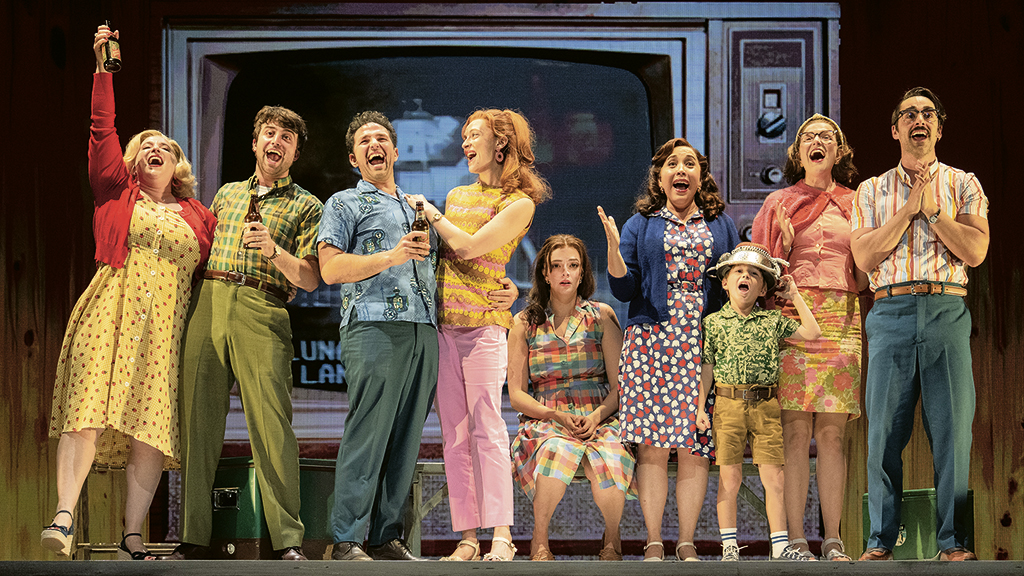
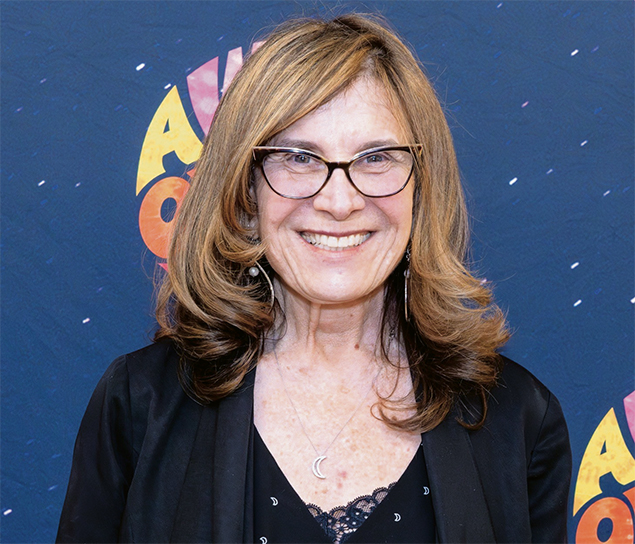
Screenwriter and playwright Pamela Gray grew up in the Flatlands section of Brooklyn, in what she describes as a lower-middle-class family.
Her father, Lawrence, was a salesman — of the World Book Encyclopedia, of storm windows, of funeral supplies. Her mom, Arlene, dropped out of college to help take care of her father, who was diagnosed with cancer. She went back to school when Ms. Gray was 5, earned two masters degrees, and went on to teach in the New York City public school system.
But no matter how much (or how little) was in the family coffers, there was always $250 available to book a summer kuchalein.
From the time Ms. Gray, who’s now 70, was 3, until she was 15, she spent summers in the Catskills, mostly in bungalow colonies in Swan Lake. It was her experiences during those summers that gave her the fodder for one of her biggest hits, “A Walk on the Moon.”
The 1999 film is set in the summer of 1969, when men walked on the moon and hippies walked to Woodstock. It’s about an unfulfilled housewife spending the summer at a bungalow colony who has an affair with a visiting tradesman, and it starred Diane Lane as Pearl Kantrowitz, Viggo Mortensen as blouse man Walker Jerome, and Liev Schreiber as Pearl’s hard-working husband, Marty. It was a critical and box-office success.
The reason I am about to Zoom with Ms. Gray is that she has reimagined her film as a musical. While the story has been updated — more on that later — it retains the flavor of 1960s summers in the Jewish world in which Ms. Gray was raised.
Her own family was “very assimilated,” she said. “We did not go to shul. We did have seders, but there usually was Italian bread and spaghetti served along with the matzah ball soup.”
Growing up, “I wanted to be a writer and a teacher. So I would set up my stuffed animals and dolls and, you know, teach school to them. But I was writing stories from the time I was 7, and I had this fantasy that there was some way to grow up and be a writer.”
One story she wrote turned out to have a particularly important impact on her life. Her second-grade teacher asked the class to create an alternate version of a children’s book they enjoyed. Ms. Gray selected “Veronica.”
In her version, Veronica, who is a hippopotamus, looks at her reflection “and imagines people asking for her autographs. She decides to leave the pond” and head to Hollywood, planning a career in film and television.
“But, alas, because she was a hippo, they turned her into a stunt woman. I had an illustration of pies being thrown at poor Veronica. She went back to the pond and gave up her dream.”
It was a remarkably sad and mature story for a second grader, but ultimately it would prove pivotal in her career. Before then, though, came the University of Buffalo, Boston University (for an MA in poetry), and a move to California, where she taught women’s studies at the University of San Francisco and performed as a spoken-word poet.
“My parents were coming out to visit me for Passover, and I didn’t have a dining-room table,” Ms. Gray said. “I looked in the Free Paper, but there were no tables available in the furniture section. But one line under instruction asked, ‘Are you funny?’ and offered a free sitcom writing class.”
She describes the first class she attended as “a lightbulb moment.” It became clear to her that people could make a living writing scripts, and that if she were going to do that, she would have to follow Veronica to Hollywood.
She quit her job and enrolled in UCLA’s film school, where she heard about a writing fellowship sponsored by the Television Academy. The folks who give out the Emmys.
“You had to write an essay about why you would benefit from a TV writing fellowship, and so I started describing this early story where I created this hippopotamus who couldn’t handle how Hollywood treated him and gave up,” she said.
“I talked about that and then said that I was someone who was determined to make a living in film and television, and I was never going to give up. The judge was so charged that she chose me for the fellowship.”
It involved an internship at “Star Trek,” where someone wrote a story — Hollywood for an idea — that didn’t quite beam up any enthusiasm. With nothing to lose, the producers let their intern try — and she did. Then, miraculously, they let her co-write the script. And that changed her life.
With the fellowship win and a script credit under her belt, she landed an agent who sent out a script she’d been working on, something called “The Blouse Man.” Nobody bought it, but it won the Samuel Goldwyn writing award, which attracted the attention of Tony Goldwyn, actor and grandson of studio mogul Samuel. This was his first shot at directing.
Anyone who summered in the Catskills in the mid 20th century will recognize the story. “Dads came up Friday night and left Sunday night. There were vendors who kept the women occupied during the week, because no one had cars. They couldn’t go shopping.
“There were constant announcements. We had a bathing suit man. We had a blouse man. We had a fruit man. We had a dress man. We had a linen man, and many years later I met someone who had been a girdle man. And of course there was Ruby the knish man. There was only one knish man in the Catskills.”
But of course, I suggest, women didn’t have affairs back then. Back then, Ms. Gray replied, “the gossip was whether anybody thought their husband might be having an affair during the week in Manhattan.
“I don’t know if anybody did. But the two what-ifs in terms of writing the screenplay were, one, what if the blouse man wasn’t a guy from Brooklyn with a station wagon, but was a hippie? And two, what if it is a woman who had the affair? And that’s where I started.”
One major change in the transition from film to stage is that the characters are more politically aware. “Through the years of developing the musical — probably around the time we lost abortion rights and things started going backwards — I looked more closely and decided that even though Pearl Kantrowitz in the movie would not be paying attention to someone like Betty Friedan, the women in the play were going to be aware of the burgeoning women’s movement.”
But time has moved on, and I wondered if she was concerned that there wouldn’t be an audience of people who remembered what that time was like.
“Audiences are mixed,” Ms. Gray confessed. “I know when there are Catskill people in the audience. If people laugh when they hear the announcement that Shimmy the pickle man is here, it means Catskill people are in the house.”
Finally I wondered if Allison, the Kantrowitz daughter, was in fact a stand-in for Pamela Gray. “I wasn’t smart like Allison,” she answered. “I was obnoxious, but I didn’t have the political awareness Allison has.”
Also unlike Allison, Ms. Gray never made it to Woodstock. “I didn’t have the nerve to sneak off. Other kids did, but I was this good Jewish girl who didn’t want to get into trouble.”
Instead, she stood by the chain-link fence by the swimming pool and watched other people on their way to the festival. “It was insane that I wasn’t with them,” she said.
“A Walk on the Moon” plays at the Laura Pels Theater through August 22.