

Kind of big numbers
Leon Cooperman talks freely about philanthropy
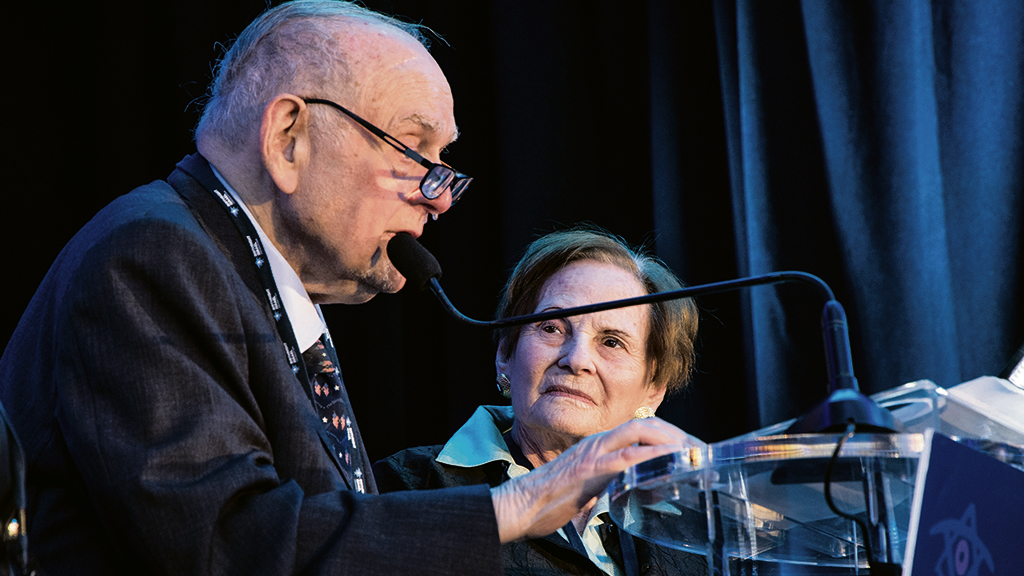
Leon Cooperman of Short Hills and Boca Raton received his MBA from Columbia Business School in 1967 and immediately began looking for a job.
He’d been a straight-A student, so generating interest wasn’t a problem. “I had 15 job offers, but I was totally broke,” Mr. Cooperman, 83, said in a Zoom interview,
Of those offers, he was most interested in joining Goldman Sachs, “but Goldman was not the best offer,” he said. “They were the fifth best offer financially, but I liked the people I met.
“So when this guy Bob Danforth” — a Goldman Sachs partner — “called to see if I’d accept the offer and said we haven’t heard from you, I said, ‘Bob, let me be honest with you. I’m totally broke. I’d like to go with Goldman, but I have offers better than yours.’”
Adding to the pressure, he and his wife, Toby, also had a six-month-old child, and Goldman’s offer was $13,000 a year. But intuitively, he felt the company was the correct fit. So he asked Mr. Danforth, “‘Do you think I can make $25,000 in five years?’ He told me, ‘If you work hard and keep your nose clean, I think you could do it.’ So I said, ‘Okay, I’ll take the job.’”
Mr. Cooperman kept his nose clean, worked hard, and in his fifth year made — wait for it — $180,000. In his ninth year, he made partner. When he retired from Goldman in 1991, he was a general partner and chairman and CEO of Goldman Sachs Asset Management.
He also was a billionaire.
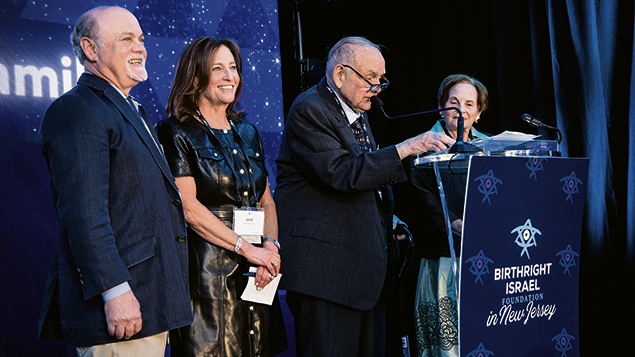
Latest figures peg his fiscal worth at $3.6 billion, but to be fair, that’s only number 1,189 on Forbes’ 2026 billionaire’s list. Still, it was enough for Birthright Israel and nearly 400 guests to honor Mr. Cooperman and his family at the organization’s New Jersey gala in Livingston earlier this month. It proved the perfect time and place for the Coopermans to announce a $10 million donation to the organization.
It continues a Cooperman tradition. Mr. Cooperman and his family have become something of a local giving machine: $125 million to Cooperman Barnabas Medical Center, $50 million to an education program in Newark, $20 million to the Daughters of Israel home in West Orange.
“I don’t like talking about the numbers,” Mr. Cooperman said. “They’re kind of big. They’re embarrassing.”
I asked Mr. Cooperman what was behind his philanthropy. “I figured out many years ago that there are only four things you can do with money,” he answered. “The first is you can spend it yourself. But my wife and I are basically of the same view that possessions can bring with them as much aggravation as pleasure.
“The second thing you do with your money is give it to your children. But if you have a lot of money, giving it to your children is a mistake. You’ve deprived them of self-achievement.
“Number three, you can give the government money. But who the hell gives the government money-if you don’t have to? You pay your taxes, and that’s it.
“The fourth thing to do with the money is to recycle it back into society, make the world a better place. We were determined to give other people the opportunity to live the American dream.
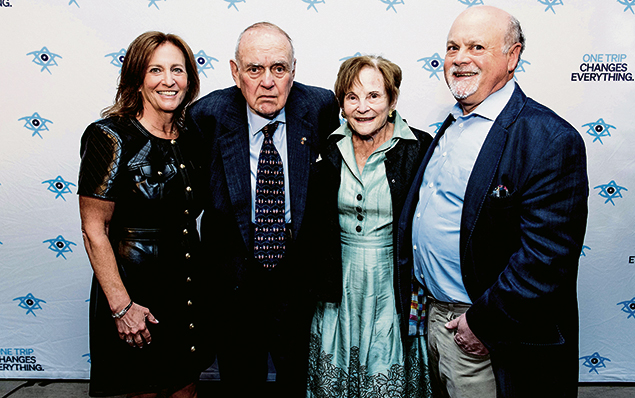 “I give money to those organizations and institutions that have made a difference to me in my lifetime. Inner-city kids and heath care being a priority.”
Both Leon and Toby Cooperman signed the Giving Pledge, a charitable campaign founded by Warren Buffet and Bill and Melinda French Gates to encourage wealthy people to donate the majority of their wealth to philanthropic causes. The couple also signed on to Jewish Future Promise, pledging that at least half their estate would be given to Jewish causes or Israel on their deaths.
Leon Cooperman is first-generation American, the son of immigrants from Poland who settled in the Bronx. That’s where Mr. Cooperman went to Talmud Torah on Wilkins Avenue and then Hunter College (now Lehman College).
I wondered whether he imagined how his life would turn out when he was growing up in the east Bronx. “I had no specific ambitions,” he said. “When I was growing up, I couldn’t spell the word philanthropist.”
Mr. Cooperman has been ill of late. He’s had two strokes, is blind in one eye, and suffers from Parkinson’s disease.
I wished him well when our conversation ended, and said I hope that his health improves. “You know they say the best thing about Parkinson’s is that you don’t die with it, you live with it,” he said. “My life has deteriorated. But whatever it is, there’s always someone with a worse story.”
Elias Saratovsky, the Birthright Israel Foundation’s president and CEO, thanked the Coopermans for their gift. “This extraordinary gift from the Cooperman family reflects the very essence of what Birthright Israel stands for — continuity, connection, and the power of investing in future generations,” he said.