

Jane Loeb Rubin has quite a story
Living with cancer, writing about everything
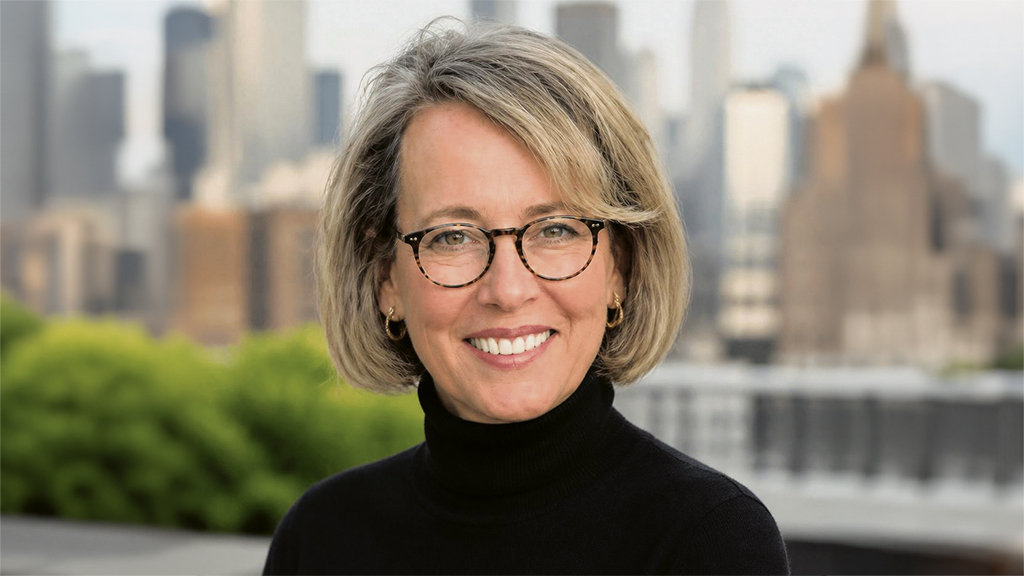
Sometimes life can be a little like alchemy. You put unlikely elements together, mix, hope, wait — and if you’re incredibly lucky, you might end up with gold.
On the one hand, the medieval alchemists didn’t. Their quest for gold was literal and unsuccessful. But if you’re looking for disparate experiences to meld into an unexpected new thing — a thing of real value — maybe try the life story and the work of Jane Loeb Rubin of Morristown.
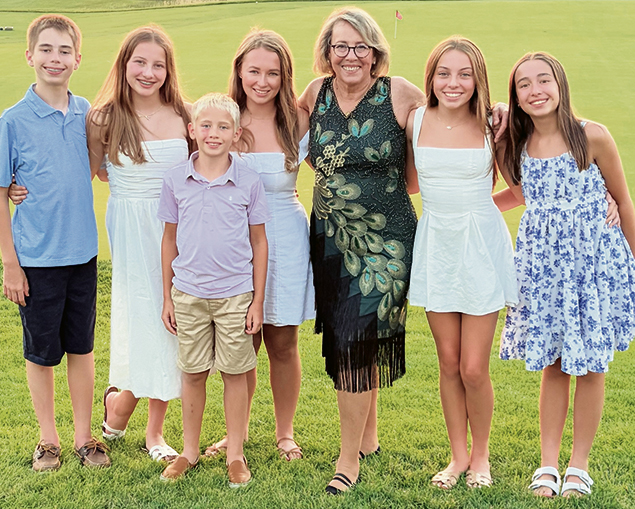
Ms. Rubin is a former healthcare executive; she spent 30 years in that demanding field. She is a 27-year breast cancer and 17-year ovarian cancer survivor, thanks to the BRCA1 gene. She is the mother of three children and the grandmother of seven grandchildren. And she is now a full-time author who has written essays, memoirs — and four historical novels, based on family history and the kind of extensive research more often associated with an academic than with, say, a healthcare executive.
As she marked the launch of her most recent book, “Mayhem in the Mountains,” part of her Gilded City series, Ms. Rubin talked about her life, on Zoom rather than by phone because it’s so important to be able to see the person on the other end of what otherwise could be an impersonal line.
She wears a Jewish star around her neck; that’s not the sort of necklace she wore as a child, she said. She was born in Whippany in 1954 and grew up there, in a family that was “totally nonreligious.” Her Brooklyn-born father was a fighter pilot in the Pacific during World War II, “and two of his brothers also fought in the war,” she said. He “came back from war an atheist. He had strong feelings about Israel, and he contributed heavily to it,” but neither of her parents was interested in organized religion.
She had a standard, happy childhood, went on to college, majored in psychology, got a master’s in speech therapy and then an MBA, entered the healthcare field, and eventually was responsible for neuroscience services at Atlantic Health. During that time, she married, had her children, and then divorced. (She’s long since remarried.)
That’s what she was doing in 2009, when she was diagnosed with metastatic cancer. “I was just so blown away by at how horrific it was,” she said. “My oldest daughter was about to have a child, my first grandchild. I thought I’d never get to know my grandchildren. Ironically, this daughter now is the CEO of Dimer Health,” a company that helps patients transition from a hospital stay to recovering from that stay at home — a service that’s become vitally important to Ms. Rubin — and that granddaughter is starting her first year at college.
Ten years after her initial diagnosis with breast cancer and the treatment that followed, 17 years ago, Ms. Rubin was diagnosed with metastatic ovarian cancer — specifically, with primary peritoneal cancer, a rare form of the disease. She has never been in remission — she started a new treatment just last week — but she has lived with her illness with visible grace and clear resolve.
“It is awful and it is incredibly amazing,” she said. “I do a lot of speaking engagements and a lot of fundraiser engagements for cancer programs. I do a lot of speaking in Florida, where we live for half the year. I feel good about being able to give people hope. It reminds me never to take a day of my life for granted.”
Another way that Ms. Rubin dealt with cancer was through writing.

“My first book, ‘Almost a Princess, My Life as a Two-Time Cancer Survivor,’ is a series of essays. It has little cameo stories about my father during the war, my mother growing up poor in Brooklyn, about extended family being welcomed into their homes. It’s about some experiences I had as a child. When you have parents from the Greatest Generation, you learn to buck up. It’s not like parents today.
“So I started to believe that I did have the strength to face this head on, and that I wasn’t going to stop living. It was not going to stop me.”
That’s when Ms. Rubin became a novelist.
Her series grew out of a number of her interests. Her career in healthcare shows; her books all have medical plots, settings, or characters. Her interest in genealogy, piqued by the BRCA1 gene she inherited, is behind her choosing to learn more about her own real-life ancestors as she fictionalizes them. Her setting a book in the Catskills can be attributed to her grandparents’ having lived in a similar rural setting. Her diligence as a historian traces back to her lifelong love of history, and her ability to focus research can be drawn from the work she did for 30 years. Her feminism impels her to make her protagonists women. Her Jewishness compels her to make those heroines and their families Jews. Her understanding that in general people, human beings, have much more in common than the issues that divide them guides her as she creates deeply specific characters with broadly human goals, traits, and motives.
And her desire to help other people with cancer has led her to donate all the money she makes from her writing to either the Ovarian Cancer Research Alliance or the Mathilda Fund. The two are related; the fund is part of the OCRA, which, she says, does invaluable work. “I’ve raised over $85,000 from small donors through that fund, which goes back to the mothership,” the OCRA, she said.
That leads us back to writing.
“The first book in the series, ‘Threadbare,’ begins with my great-grandmother’s immigration to the United States from Germany in 1866, just after the Civil War,” Ms. Rubin said. “First they moved to Harlem, where her father opened a kosher chicken farm. Later, they moved to Sullivan County.
“The only reason that I know anything about my great-grandmother is because of the BRCA1 gene. I wanted to find out where it came from.
“I traced it back to Mathilda, and I found her in a census report. No one in the family remembered her name because she died young, of what was said to be a ‘woman’s disease.’” Her full name was Mathilda Loeb.
“Once I found her, I decided that I would write a book honoring women like her.”
That’s “Threadbare.” The heroine, based on Mathilda, is named Tilly.
“The second book, ‘In the Hands of Women,’ picks up with Tilly’s fictional younger sister, Hannah, who is the child who gets the opportunities that Tilly never had. She goes to high school, she goes to college, she goes to medical school.” The book begins in the late 1890s and ends in 1909. It’s about the historical battle between midwives — women, with empathy for their patients but with little knowledge of anatomy — on one side and physicians — men, generally unable to identify with their patients but well-schooled-for-their-time professionals — on the other. History tells us that there really were a few — a very few — female doctors. They were faced with very real moral, ethical, and emotional dilemmas, including the still-with-us issue of abortion.
Ms. Rubin writes about all of this, based on both her characters and the research she’s done.
Next in the series, “Over There,” is about World War I and the four family members who face a range of dilemmas posed by the horrors of trench warfare, the rise of medical technology, and the fears that quite reasonably grip the family members left to worry at home.
The newly released book, “Mayhem in the Mountains,” takes readers back to Sullivan County — the mountains are the Catskills — during Prohibition as the family takes on the KKK, an often-forgotten but historically accurate confrontation.
Her next book, due to come out in the spring, is set in Ann Arbor in 1971; it’s the story of the Michigan Murderer, a nonfictional serial killer not well known outside Michigan but not news to Michiganders. “When I found out about him, I kept him alive in my novel,” Ms. Rubin said.
How has she done all this?
“I was always a reader,” she said. “My first really favorite book was ‘The Secret Garden,’” Frances Hodgson Burnett’s 1911 children’s book about a rich, unhappy orphan who eventually and picturesquely found joy. “My second one was ‘Gone With The Wind.’ I got in trouble with that book. It had so many hundreds of pages, I was up to the last few pages, my family had company coming, and I didn’t want to stop reading.” She didn’t stop — so “I got grounded.”
Once she decided to write, Ms. Rubin said, she took writing classes. She now has a circle of writer friends with whom she can share stories and advice.

She makes her characters Jewish because her family is Jewish, and because her second husband is not only Jewish but far more observant than she was. “I decided to learn about it,” she said. The family now belongs to Temple B’nai Or in Morristown.
She is a self-taught historian and reads books and visits libraries, archives, and historic buildings. “I want to see places with my own eyes,” she said. “I order half-a-dozen, eight books on the period. I want to be sure I can double check what I think I know.”
Writing is a solitary occupation, but talking about her books to live audiences is not, Ms. Rubin said. “I love it. I love speaking to audiences about how similar we are underneath our skin and our culture.”
She loves sharing bits of information she gleans as she researches. For example, she said, she hadn’t known that sewing machines first were invented to help make sails for boats. Indeed, who knew?
Then there’s a story that she unearthed and loves to tell, Ms. Rubin said. It’s from the U.S. Army archives. “It’s a letter from an Italian-American soldier, who was writing home to his mother on Mott Street,” in the Italian section of the Lower East Side. The soldier, who was fighting in World War I, was writing from a European hospital. “He tells his mother that a German soldier shot him in the leg, and he fell down. He looked up and saw that the German soldier was holding his bayonet, ready to use it on him.
“And then he looked over and saw his friend Murray, from his battalion, holding his gun.”
Ms. Rubin broke from her story to explain that 20 percent of the U.S. military were immigrants during the First World War, “a disproportionately high number compared to the population. Jews were about 3 percent of the population and 6 percent of the military, and Italians were 4 percent of the population and 13 percent of the military. So Pershing”— that’s General John Joseph Pershing, head of the American Expeditionary Forces from 1917 to 1920 — “had to get everyone speaking in one language and trusting each other. So he had set up special recruitment camps where they could learn to work together as a platoon.”
So, back to the story. Murray shoots, “and Murray saves the Italian soldier’s life. In the hospital the Italian soldier writes to his mother — and I am paraphrasing — and says ‘Hi, Mom, I’m fine. I’m going to come home. I’m keeping my leg. And you can thank Murray from Hester Street” — on the Jewish Lower East Side — “for saving my life. He didn’t rob me. He gave me life.
“He is more of a brother to me than my natural brothers.”
So that’s the message. You fight cancer alone, but also with the support of doctors and nurses and support staff and family and friends. You come home and are supported there too. We tell stories and we listen to them, and those stories help us fight and connect us to each other and give us joy.
Jane Loeb Rubin has learned a great deal during her 17 years with cancer, and she tells the kinds of stories that distill that knowledge. We all benefit from it.
Learn more about Ms. Rubin, the Mathilda Foundation, her books, and her speaking engagements on her website, janeloebrubin.com.