

Iranian uranium
A look at why CIA director John Ratcliffe went to Moscow
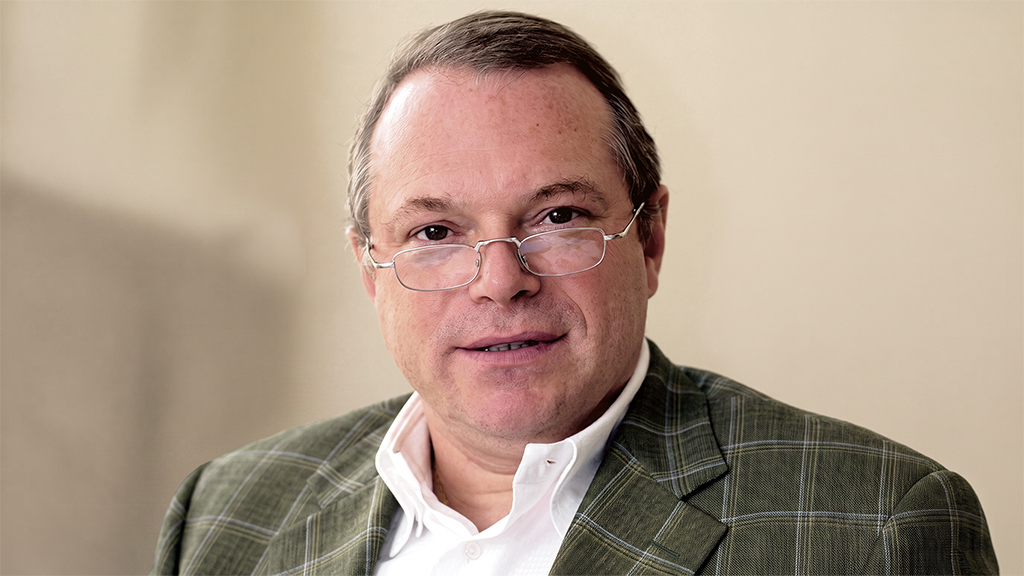
It’s not as if the moves that have defined Russia’s war with Ukraine, or for that matter America’s war with Iran, have been easily understandable to onlookers. The reason that we turn to analysts like Alexander Smukler, now of Montclair but of Moscow for the first three decades of his life, is because they’re difficult to decode.
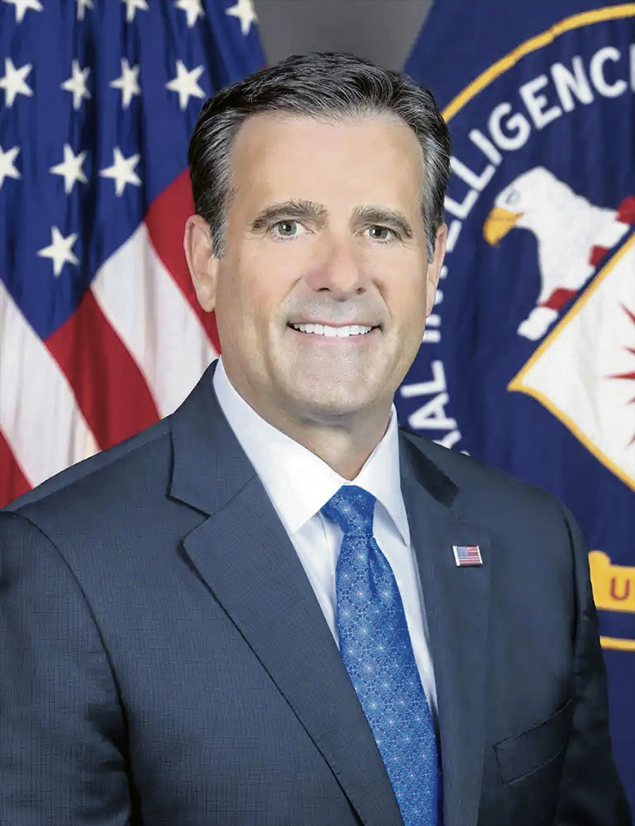
But even by his standards, the eight-or-so-hour event is Moscow last week, when the CIA director John Ratcliffe went there for a meeting, was “an extraordinary thing,” Mr. Smukler said.
To set the scene, this summer, the situation on the frontline between Russia and Ukraine “was extremely brutal, and the conflict reached the highest point of escalation,” he continued. “I still believe that by the end of this year or the first quarter of next year some kind of agreement will be reached and the conflict will cool down.” It will result in a tense frozen zone, like the one that separates North and South Korea.
Mr. Smukler also believes, as he has since the war started, that the situation is exacerbated by President Donald Trump’s desire to reshape the world; to redo the understandings that have kept most countries in more or less stable relationships with each other, with wars largely regional rather than inflaming the entire world, since the end of World War II. Trump’s desire to leave a legacy that will keep him in history books forever is driving him to want a Yalta redux, a summit with Russia’s Vladimir Putin, China’s Xi Jinping, and possibly Turkey’s Recep Tayyip Erdoğan, where the world order will be redefined.
(Note that Mr. Smukler is not saying that such a summit or its outcome would be guaranteed, or that it is wise. He is saying simply that Trump wants it.)
“Based on that logic, let’s analyze the recent development in the global game of thrones,” Mr. Smukler said. “John Ratcliffe’s visit to Moscow has a lot of clues, and analysts are going in a lot of different directions.”
The trip was inherently unusual, he said. The last such visit was the one President Joe Biden’s CIA head, William Burns, made in 2021. “Most experts agree that his trip was directly connected with information that the CIA possessed that Putin was preparing full-scale aggression against Ukraine. It was to warn Putin’s administration that it would be a huge mistake to take that step, and that Western countries could respond accordingly. They would not tolerate that aggression as they tolerated the invasion of Crimea in 2014.”
We all know how much attention Putin paid to Burns, and how that has worked out for him. (And for Ukraine. And for Russia.)
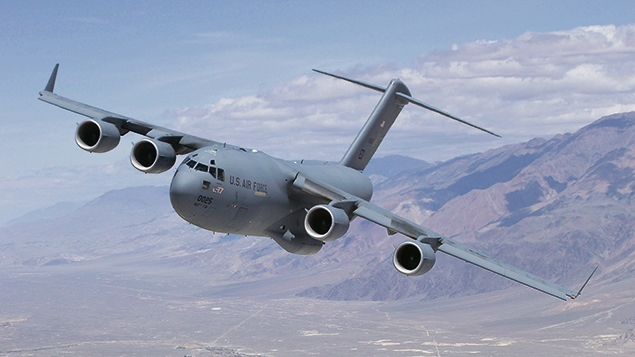
We also know that on Tuesday, August 25, “a Boeing C-17A Globemaster III suddenly took off from Riga,” on its way from Joint Base Andrews in Maryland to Moscow; it had stopped for refueling. Ratcliffe was on that plane.
“That plane is a military jumbo jet that’s mostly used to transport heavy military equipment,” Mr. Smukler said. “I think that it refueled in Riga, which is a one hour and 15 minute flight to Moscow, because Ratcliffe did not trust that the Moscow airport would provide the service,” or at least in a way that he could trust.
What? Wait. It gets odder.
“I mention this detail because usually when CIA directors come for secret meetings they use small private jets and meet quietly. This is an unusual way for a CIA director to travel.
“Several sources in the intelligence community are saying — and I agree with them — that Ratcliffe went on that huge military jet because he brought his own bulletproof car with him.” The car is not only bulletproof but equipped with the most sophisticated security and communications systems extant. “He refused to use similarly equipped cars from the U.S. embassy, because they have surveillance devices installed by the Russians. He didn’t trust those cars, for reasons of security, secrecy, and safety.”
Now, “everybody in the world is asking the same question — why did Ratcliffe go to Rusia in such an unusual way, and for such a short visit? The Kremlin and the White House both announced that Ratcliffe did not meet with Putin.” Although neither of those sources is unimpeachable, “most experts agree that Putin did not meet Ratcliffe, but obviously nobody really knows anything about it. The visit was so secret that we can only guess.
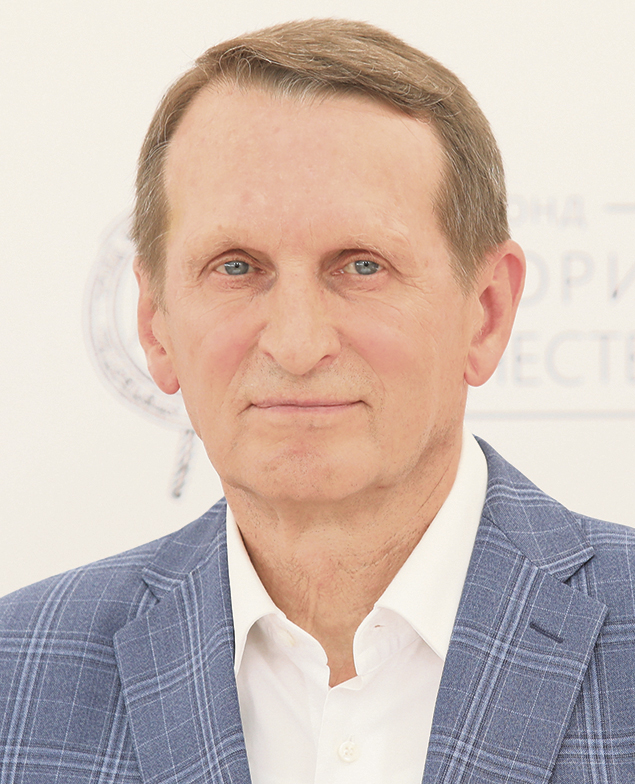
“According to media sources, Ratcliffe met with the head of Russian intelligence, Sergey Naryshkin, and with Alexander Bortnikov, the director of the FSB, the Russian national security agency that is the successor to the KGB,” Mr. Smukler said.
When he discusses what happened at that meeting, “I am also guessing,” he continued. “My information is not based on any internal sources. It is based purely on open sources of information and my own analytical work.”
So, Mr. Smukler, what do you think is going on?
First, let’s discuss what other analysts think. “The Wall Street Journal and Politico published articles saying that the CIA organized the trip to warn the Kremlin that any provocations against the Baltic states will lead to serious tensions and real consequences,” Mr. Smukler said. “The CIA and the White House have information saying that Putin is moving toward aggression against those states, which would be a direct clash with NATO.
“The New York Times has a different approach. It says that Radcliffe met with Bortnikov and shared with him a very gloomy view on the war in Ukraine and future escalation, and that he advised him — and Putin through him — to start negotiations ASAP. To explain to Putin how dangerous it is to continue the war.”
Next, the Washington Post, which “said that Ratcliffe’s visit to Moscow was connected with the war in Iran because Russia thinks that the U.S. is exhausted with the war in Iran, that its military arsenals are empty, that it has nothing to use to help Ukraine, and that gives Putin another reason to escalate his war in Ukraine, to bomb Ukrainian civilian objects very heavily. The Washington Post thinks that Ratcliffe’s goal was to argue that this view is incorrect because the United States does have enough in its arsenals and it is increasing production of anti-drone and antimissile systems, and so it is a mistake to think that Ukraine can be eliminated because of a lack of supply from the United States.”
These are just some of the guesses forwarded as fact, from perhaps the most well-respected of the major news media. “I’m not going to repeat any more of them, but I want to give a sense of what the U.S. media thinks.
“It shows me something interesting — that there has been no leak of information. Nobody knows exactly what happened. That is very unusual for U.S. media coverage.” This is inherently odd, Mr. Smukler said. There almost always are leaks; Trump’s White House recently has had a constant drip of not-quite-public news. But there has been dead silence about this meeting from inside the house. “And it’s soon before the midterms,” the extremely consequential elections set for November 3.
Here’s Mr. Smukler’s analysis of the meeting.
“In July, Russia took 27 square kilometers in Ukraine, and it is confirmed that Russia is losing between 25,000 and 42,000 soldiers a month. It is not able to replace those people, and it is not advancing in taking Ukrainian territory.
“Remember, Putin gave his military the order to occupy Donbas fully by the end of 2026. Most military experts say that in order to achieve this goal, Russia would have to mobilize between 300,000 and 500,000 soldiers. Otherwise it would be impossible. So right after the parliamentary election on September 20, Putin will start a new wave of mobilization, because if he does not, he cannot continue the war.
Wait. A parliamentary election in Russia! What?
Yes. The Federal Assembly’s lower house — the Duma — has 450 seats up for grabs. At least theoretically. Vladimir Putin’s party, United Russia, will win. He will have “a constitutional majority,” Mr. Smukler said. Then he will institute a draft. “It will create tensions inside Russia. The idea of throwing another 500,000 lives into the war is extremely unpopular.” That’s why Putin has to wait until he has at least a legislative fig leaf.
Meanwhile, “talking about another throne, Trump is having major issues with the midterm elections now,” Mr. Smukler continued. “The situation in Iran is the most important for Trump, because he is stuck in the conflict. Nobody knows how to resolve it. On Sunday, there was another exchange of ballistic missiles. There are no real peace negotiations going on, passage through the Strait of Hormuz is partially open but “the U.S. Navy is providing safety and security for ships and oil tankers and probably will be there forever. At the same time, Trump announced that the economic blockade of Iran will lead to the collapse of Iran’s economy very soon, and eventually the regime will fail.”
That’s not very likely, Mr. Smukler said. “We know from Venezuela and Cuba and even Iran that living under the most severe sanctions and blockades, and despite the fact that people are suffering, the economy is suffering, these regimes can exist and survive.
“So it has been obvious that for Trump today, there is nothing more important than to end the debacle in the Middle East and find a way to get out before the midterms. If not, this conflict will suck in Trump and his legacy and administration until the end of his term. Basically, Trump will lose his legacy.”
Mr. Smukler firmly believes that Donald Trump is concerned about his legacy — that’s his previously mentioned desire to figure in the annals of world history — and that desire is not satisfied with the physical changes he’s making to Washington. Instead, he wants to make huge changes in the global game of thrones. “If he can’t have the Nobel prize, at least he can sit with the other great world leaders of our time,” Mr. Smukler said. “That will bring him into the history of mankind.
“Why do we remember Napoleon? He destroyed all of Europe. He was brutal dictator. He was an aggressor. He demolished all the dynasties — and then he recreated them. He was a huge brand.” That’s what Trump wants too.
“That is why the CIA director was in Russia. Not to discuss aggression against the Baltic states. Not to exchange political prisoners, as some other sources are suggesting, or to liberate Charles Zimmerman, the American prisoner still held there.” CIA directors don’t go on secret missions in gigantic car-carrying Boeing jets for such reasons.
“My personal opinion is that it’s about Iran.
“The CIA collected enough information and proof to show that Russia is helping Iran identify U.S. targets to bomb, and that it basically participated in Iran’s attacks against us. The CIA has prepared a dossier that is 100 percent proof that Iran is not only getting military help but also intelligence from Russia, which gave Iran the opportunity to hit at U.S. targets in the Middle East.
He sees four possible reasons for the trip, and the negotiations it might have entailed. First — and most horrifyingly — “in order to prevent this from happening again, Ratcliffe had to go to Moscow and threaten that the U.S. would respond accordingly. Or” — and here’s the really bad part — “the U.S. could make a trade with them. The U.S. could say, ‘Stop doing that, and we will stop doing something else.’
“For example, Russian propaganda constantly says that Ukraine is getting information about targets and other intelligence from the CIA, like when Ukraine bombs Russian objects. So the U.S. could exchange not providing intelligence information to Ukraine for the Russians not using their satellites and other intelligence to help Iran.
“This is a possible trade. I’m surprised that no other media sources have come up with it. Because Ratcliffe’s visit had nothing to do with swapping spies or NATO. Russia is so exhausted right now. It cannot fight on two fronts.”
Mr. Smukler is not sure that this is the trade that Ratcliffe is offering Russia, but he is sure that “the subject of the discussion was Russian intelligence,” he said.
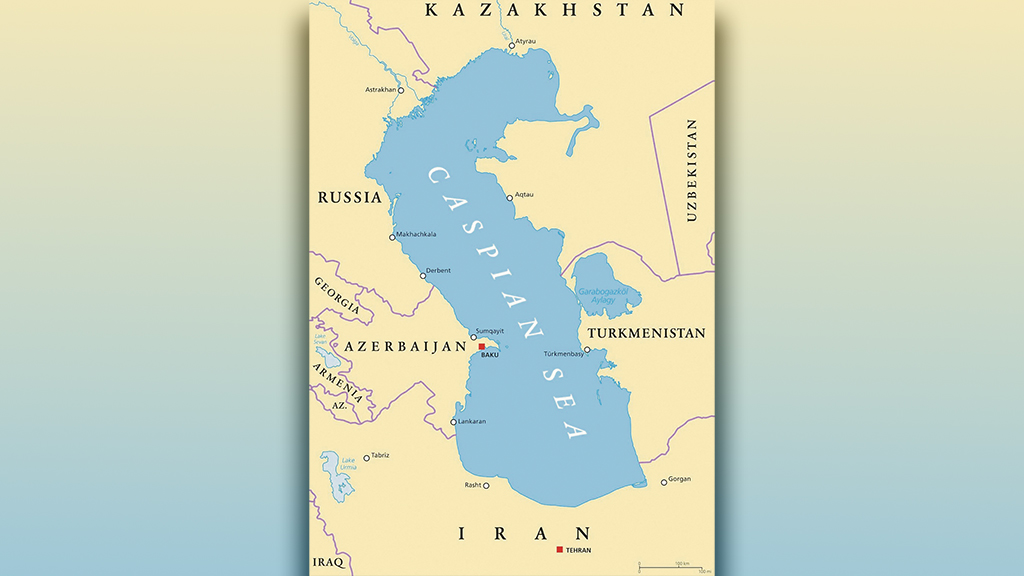
The second reason is because the blockade of Iran is not real. “Remember that Iran has a source of communications with its allies through the Caspian Sea, which has become the blood vessel for the Iranian economy.” The Caspian Sea — really a huge inland saltwater lake — is surrounded by five countries: Russia, Kazakhstan, Turkmenistan, Azerbaijan, and Iran. “This is how Russia supplies not only very sophisticated weapons parts and drones but also everything else, from grain to artillery, to Iran. It is completely out of U.S. control. So unless this blood vessel is blocked, Iran is not under blockade.”
Negotiations would center around blocking it.
The third possibility on Mr. Smukler’s list is the most important, he said. In order to placate the United States and have a chance of his party not losing too badly in the midterms — an outcome he fears — Trump has to be able to “announce that the war with Iran is over, and that the United States won it,” Mr. Smukler said. “How can he do that?” he asked rhetorically. “What will give people a reason to believe that Trump won the war?”
“There are only two ways,” he continued, answering his own question. “One is changing the regime. A revolution in Iran would do that. But that won’t happen. The regime is brutal, and the revolutionary energy that was there a few months ago disappeared, after it was repressed brutally.
“The other reason to believe would be if Trump could provide proof that Iran has no enriched uranium, and that the threat of a nuclear bomb, of a nuclear Iran, has disappeared.” Remember that although the Trump administration never gave a clear, unchanging reason for the war, one of the many reasons offered, although soon it no longer was mentioned, was to remove the nuclear threat that Iran has posed to the world.
“Nobody else has said it, but I believe that the Iranian uranium was moved out of Iran and stored in Russia,” he said. “I think that’s why Ratcliffe went to Moscow. He brought the documents and the proof that the Russians know where it is. I think Ratcliffe went to Moscow to say that we agree that it is in Russia, and that is never been sent back to Iran.
“Of course this isn’t safe. It isn’t good. But Ratcliffe brought a strong message. He said that we know that you took it from Iran temporarily. We know that the Iranian leadership is waiting until they can tell you to bring it back, and that Iran is continuing to develop its nuclear program.
“We know that you have it, and we are okay with it being in Russia, but if you send it back there will be consequences. And we have to be sure that our president can say that we won the war in Iran because he can say to the world that Iran does not have nuclear capacity, and that is his accomplishment.
“In order for Trump to be able to say that, the U.S. has to be 100 percent sure that all the enriched uranium is destroyed, or it is not there but safely somewhere else. Some people think that the enriched uranium is hidden in the tunnels under the mountains in Iran, but I have consistently believed that it is in Russia, and I think that Ratcliffe’s trip to Moscow proves it. I think he went to Russia to warn them that now we know for sure that the uranium is there and we need to be sure that it never will be sent back.
“I have no idea how the U.S. knows this, how Ratcliffe framed it, or if Russia will go along with it, but I do know that the only reason for such a high-level person to go to Russia in high secure limousine is because he had to be sure that the Russians know that the U.S. knows where the enriched uranium is.”
There’s a fourth reason too. “Right now, Iran is looking for revenge for the murder of Ayatollah Khamenei,” the mullah who’d led the country until the U.S. bombed his compound. “There’s a fatwa against Trump and his family, and they need full cooperation from Russian intelligence to protect them.” Last week, Benyamin Netanyahu’s son, the rightwing influencer and podcaster Yair, had to be evacuated from Miami, where he’s lived since 2023, because his life was thought to be in danger. He also was thought to be the subject of an Iranian fatwa. “The cooperation of secret service and intelligence agencies is essential, and the U.S. fully understands that Russia intelligence is active in Iran,” Mr. Smukler said.
“That’s why Trump called Ratcliffe’s visit just routine,” Mr. Smukler said. But it was anything but routine. It was, instead, another move on the board of the global game of thrones.