

I witnessed the birth of the State of Israel
A cantor’s journey from Iraq to Israel to New Jersey
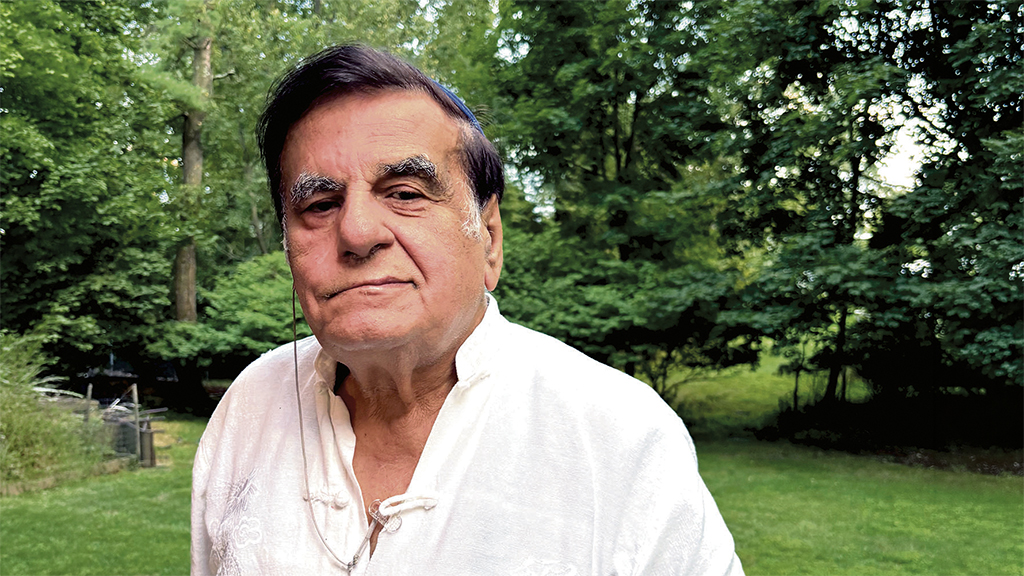
It was May 14, 1948, six weeks shy of my 10th birthday, and I was in Basrah, Iraq.
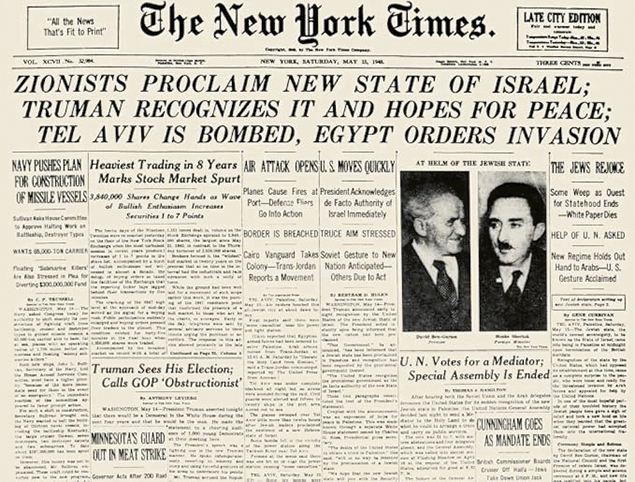
My uncle asked me to help him lower a wire from the roof to serve as an antenna to his shortwave radio. He tuned to a station called Kol Tzion La Gola — the Voice of Zion to the Diaspora. The voice of David Ben-Gurion came from the tiny radio, declaring the establishment of the State of Israel.
All around me, the people were weeping with joy. After 2,500 years of sitting and weeping by the river of Babylon and remembering Zion — now was the time to return.
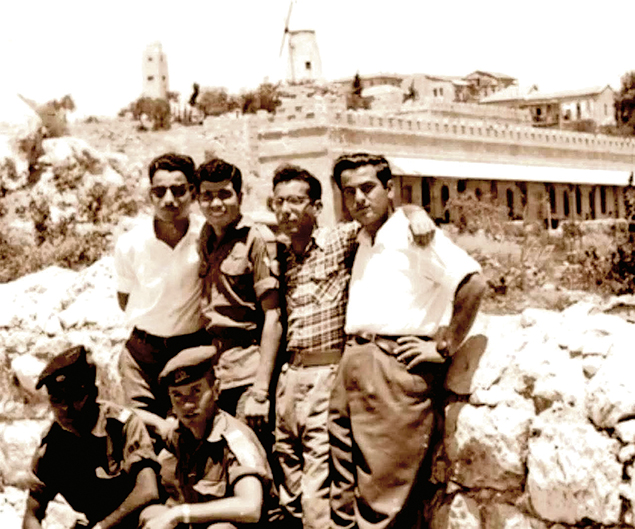
I was raised in a home of Zionist underground activity. After the pogrom in Bagdad — the farhud — in 1941, the Jewish Agency from Eretz Yisrael — the Land of Israel — sent shlichim, emissaries, to organize the Hatnoah, the Zionist underground movement.
One of my brothers was the head of the Haganah, which obtained weapons and trained young people to defend the community in case of violence against Jews. Another brother was a member of the committee of five men and two women called Va’adat Aliyah, whose aim was to smuggle Jews out of Iraq to Israel.
Basrah was the gateway to the underground railroad through Iran. Many Jews who wanted to be smuggled to Iran came through Basrah from all over Iraq. My house was like a bed and breakfast. Many young people we never knew stayed with us for one or two nights, or sometimes more. They stayed until there was an opportunity for them to leave. I was born just 90 miles from where Abraham Aveinu (Our father Abraham) was born, and through him I received the call of Lech Lecha, to go forth.
My parents bravely entrusted my safety with members of the aliyah committee. After they stuffed my few necessities in a pillowcase, I was taken to a safe house where a dozen other Jews were waiting to be smuggled out of the city. At midnight we were packed like sardines into a station wagon and driven to the edge of the river. We crossed the river as did Abraham, and when we reached the other side, we began to walk until we reached the desert. In the pitch dark, there was a choir of wolves and coyotes, and the sound of bullets from the border police as they tried to catch smugglers. I don’t think I was afraid. As the psalms say, “Even when I walk through the valley of the shadow of death, I shall fear no evil.”
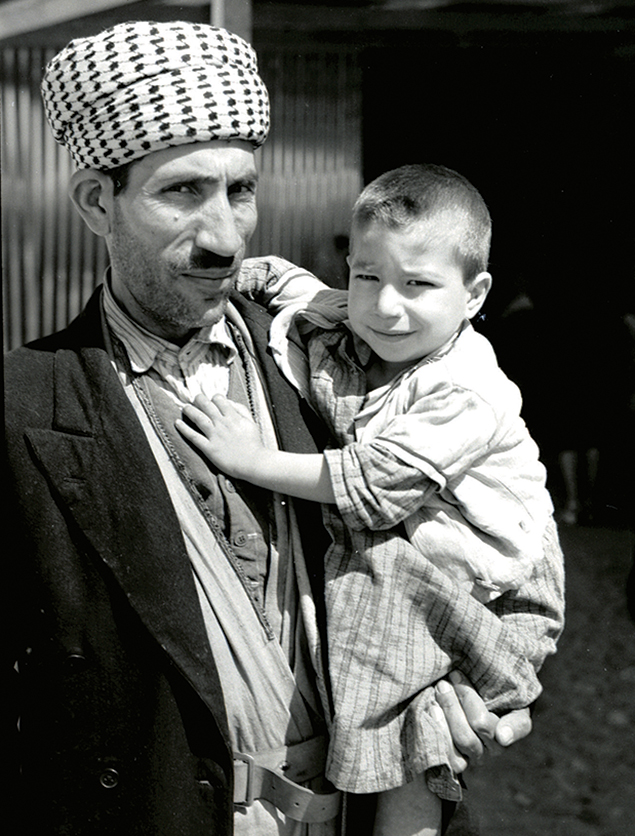
At dawn, we were finally across the border of Iran. We were driven to the city of Ahvaz and hosted in the houses of Iraqi Jews who had settled there. After two days, 10 other children and I were taken to a train station, accompanied by a single Iraqi Jewish man. We traveled 36 hours to Tehran and were deposited in a makeshift refugee camp run by the Jewish Agency. The 10 of us shivered in our borrowed beds, all of us seeing snow for the very first time. After a few days, we were taken to Iranian Jews who posed as our parents for ID photos. From there, we were taken to the airport and flown to Lod.
When we arrived we all bent over and kissed the ground.
Once in Israel, I was sent to a kibbutz until my parents and other family members appeared, one by one. Once we were reunited, we were sent to a ma’abara— a transition camp — in Jerusalem and assigned a tin hut there. That hut was an oven during the day and a freezer at night. We had iron spring cots and straw mattresses, and every morning we had to pile the beds in the corner to make enough space for us to move. Showers and bathrooms were public. There was no privacy. Our family lived for more than a year there to save enough money to rent an apartment.
Education was mandatory only through elementary school at the time. High school was only for the wealthy. I enrolled in the employment bureau for teenagers, where they wanted to apprentice me to a mechanic or carpenter. I refused, and insisted on having a job in an office. Back then, every government agency and private company hired teenagers to do errands and communicate with each other. I was lucky — I was sent to the Ministry of Foreign Affairs.
The ministry and other government agencies were built like military camp barracks. My first assignment was in a hallway in the only building that had two floors. The upper floor was the office of the foreign minister, and the lower one was for the general director and the higher echelons of the diplomatic corps. I had a small table with a little drawer, out in the hallway. There was an electronic board with numbers on the wall, and when a number appeared, I would rush to the location it symbolized to complete my task. It was there I saw Moshe Sharret, Israel’s first foreign minister and its second prime minister, coming and going every day. Sharret had the custom of going from room to room and greeting every employee in the foreign ministry, so I was privileged to shake hands with him several times.
After serving in the army, I returned to work in the foreign ministry, where Golda Meir had been appointed. She continued the tradition of greeting every worker before Pesach and the High Holidays. In addition, she invited all the employees, from the cleaners to the highest officials, to a reception at her house. I was privileged to attend three of those events.
Throughout this period many people commented on my voice, so with the help of scholarships, I was granted admission to the Jerusalem Academy of Music. In 1964, I decided to come to the United States to continue my musical education in New York. After attending a service in a Reform synagogue, I was inspired to become a cantor and enrolled at the Hebrew Union College School of Sacred Music. I graduated in 1972 and accepted the pulpit at Temple Beth-El of Northern Valley, where I served for three decades. I was very active in the American Conference of Cantors, where I served in different capacities, including as treasurer and vice president. I was also honored to represent the ACC at the executive board of ARZA, the American Reform Zionist Association.
In my wildest dreams I never imagined that a little boy from Basrah would be a delegate to the 33rd Zionist Congress in 1997. As I stood in Jerusalem once again, I remembered. I had witnessed the birth of the State of Israel.