

Born Jewish, becoming Jewish
Nicholas Lemann’s move from New Orleans to community
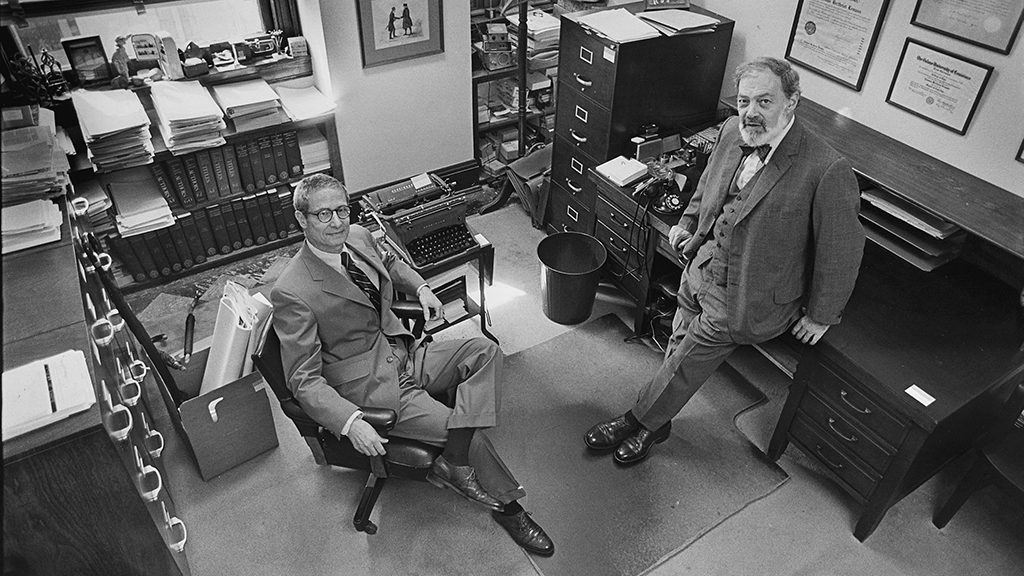
Nicholas Lemann’s upbringing was, well, different.
Mr. Lemann, 71, is a respected journalist. He is a long-time staff writer at the New Yorker and a professor and dean emeritus at the Columbia Graduate School of Journalism. We’re Zooming — he from a home in upstate New York (he also lives in Columbia faculty housing) — to talk about his new book, “Returning: A Search for Home Across Three Centuries.” It is a well-researched, well-written, evocative memoir of growing up Jewish — sort of — in New Orleans — and its surprising aftermath.
Mr. Lemann is fifth-generation NOLA, scion of a very well-to-do German-Jewish family that settled there in the 19th century, part of a kind of southern Our Crowd. The Lemanns owned plantations, ran a successful business, and had a house full of servants. But there was no sense of Yiddishkeit.
His father, Thomas, “had the aspiration of being admitted to New Orleans non-Jewish high society,” Mr. Lemann said. To do that, his Jewishness had to be very quiet and virtually invisible.
For example, young Nicholas was invited to a special Mardi Gras ball, an invite that allowed him to bring two or three guests. His father instructed him not to invite any Jews because people already believed Jews were clannish.
When Thomas was married at his in-laws’ house in Perth Amboy, he spotted a basket of kippot and hid it. Mr. Lemann wrote that he “didn’t remember anything Jewish being mentioned during my long childhood visits to Perth Amboy. After my mother,” Nancy, “died, I was surprised to find out that in high school she had been a Hebrew school teacher at the synagogue Congregation Beth Mordecai.”
Thomas took membership in a country club that excluded Jews. He found it difficult even to say the word Jew, preferring Israelite instead.
His father, Mr. Lemann summarized, wanted “a pre-Holocaust Jewish life.” I wondered what that meant. “It would mean that the Reform movement would be following the original Pittsburgh platform of 1885, and it would mean that Germany would still be a country that was kind of the place that invented Jewish emancipation. A place that Jews could admire as a seat of civilization.”
The Pittsburgh Platform — never approved by the Union of American Hebrew Congregations — rejected “all laws not adapted to the views and habits of modern civilization” — for example, the kashrut rules — and rejected the idea of a Jewish state.
Mr. Lemann’s father’s views were not open to question. The family’s Jewishness, he wrote, “wasn’t stated, or even conscientiously felt, but somehow we knew that to probe into the meaning of our Jewishness is too deeply to destabilize the comfortable foundation of our lives.”
So why not convert? As Mr. Lemann writes: “If we tell people we weren’t Jewish, it wouldn’t matter. Everybody knew we were. Father’s preference was to redefine Jewishness as it applied to us.”
Looking back, I ask Mr. Lemann if he felt that Thomas and Nancy were otherwise good parents.
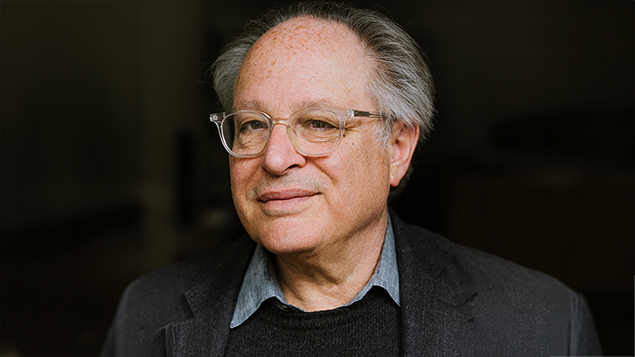
“I loved my parents a lot and I always felt they loved me a lot,” he replied. “The way I was brought up is a million ways different from the way I’ve brought up my children. It was different, and not just in this way. I’ll give you an example. It wouldn’t have occurred to me to go to my parents and say, ‘Will you help me with my homework?’
“That’s just not what they did. Or ‘Can you take me to a Little League game and maybe coach my Little League team?’ That just was not their style of parenting. My upbringing was kind of like Mary Poppins. I feel like I grew up in a home of great love and warmth.”
Loved, warm, but sheltered. “This occurred to me recently, after the book was out,” Mr. Lemann said. “I was born in 1954, so I sort of started noticing the outside world, I guess, in the early ’60s, right? We lived pretty far apart from the main national culture. This was the age of the organization man, ‘Mad Men.’ I don’t think I knew a single person who worked for a big company. That kind of person was just unknown to me, so we were pretty cut off.
“We had television. We had books. I have a specific memory that came to me recently. There was this cheesy novelty record by this guy, Alan Sherman. Do you remember him? I remembered that the record was so popular that even non-Jewish people had it and were listening to it. I knew it was coming from a culture that was completely foreign to me, and that it was Jewish in some way. So that would be an example of little signals that would be popping into my awareness.”
Still, he added, “I grew up the way I grew up. I went to college. That’s when I noticed I felt unaccountably comfortable with Jews, and I don’t know why because these are people of a type I had never encountered before. But I did feel some attraction or commonality.”
Yet when the Hillel rabbi personally invited him for Shabbat, Mr. Lemann said no. “All these years I’ve had trouble describing the world I grew up in to people who grew up in a more normal Jewish way. That” — the world of Jewish observance — “was just so far outside the boundaries of my known world. I’d never met anybody like that, and it felt sort of scary to me.
“I’d never been to anything on Shabbat, and there’d be other students there who had different sets of reference points and consciousness than me. To the extent I remember it, it felt sort of scary. Like what would I do when I got there? What would I find?”
His unease is understandable. is father took him to synagogue just once a year. Not Yom Kippur, but Thanksgiving, which he considered a holiday for all Americans, not just Jews.
“I didn’t know any Yiddish expressions,” Mr. Lemann wrote. “Not even oy vey. I had never eaten at a delicatessen. I had never lit Chanukah candles. I wasn’t aware of knowing anybody who’d been to Israel. I had never been to a bar mitzvah.”
In his 20s, he felt “a distinct tug in the direction of Judaism,” he said. “It’s hard to describe. There was something about it that appealed to me. With my family, it was this very big, important thing that was pushed out of sight, hidden away. So that makes you kind of curious.”
“Have you ever seen ‘The Godfather’? You remember Michael Corleone. He’s like this nice guy. He’s in the Army. He goes to Dartmouth. But there is this Sicilian in him that just bubbles up. I mention that because I feel it captures something of [what happened to me].”
He began slowly dipping his toes in the holy water by attending services that he did not understand. His first wife, editor Dominique Browning, didn’t learn that her mother was Jewish until she was in college.
They were married by a Reform rabbi. When the family moved to suburban Westchester County, they joined the Pelham Jewish Center — a move he writes that was largely fueled by his desire that his children have a better grasp on their Jewish heritage than he did.
In one of the most moving passages in the book, Mr. Lemann describes what happened when he occasionally attended services, usually for a friend’s child’s bar or bat mitzvah, and the Torah was removed from the ark.
“Before beginning the procession around the room, the child would intone the essential Jewish prayer, the Shema. And at that point, unbidden, I would burst into helpless tears, struggling to keep it quiet enough not to be noticed.”
With a group of friends — many in mixed marriages — he arranged for a rabbi to tutor his boys for their bar mitzvahs. His mother called that “child abuse” but eventually agreed to attend the service with Thomas as long as no one else outside the immediate family from New Orleans was invited and promised never to mention the ceremony when he returned there.
At around the same time, he began dating Judith Shulevitz, who would become his second wife and Jewish mentor. At age 45, Ms. Shulevitz’s mother relocated the family from Puerto Rico to New York so she could attend the Jewish Theological Seminary. There she was among the first women ordained as a Conservative rabbi, graduating at 56 and working as a chaplain in hospitals and hospices.
So Judith “had familiarity with the observant Conservative Jewish world way, way beyond what I had. So there was somebody who could guide me into it.” Ms. Shulevitz is the author of “The Sabbath World: Glimpses of a Different Order of Time.” Today, she and Mr. Lehmann attend services at Congregation Ansche Chesed on the Upper West Side.
And the good news is that Mr. Lemann’s journey to this point was not entirely alone. Before he died, his father took some baby steps on the journey.
“As he got older and my mother died and he remarried, he became less resistant to Jewishness,” Mr. Lemann wrote. “It’s hardly noticeable by the standards you might be familiar with. But occasionally, he’d go to the temple on Yom Kippur, which he had not done the whole time I was growing up. And occasionally, he would kind of grumble to me about super heated criticism of Israel that he thought was over the top. That was also different from what I had known growing up when he didn’t want Israel mentioned at all.”
At several points in “Returning,” Nicholas Lemann mentions the perpetual black cloud that hangs over the Jewish people.
“For Jews, there’s always a lurking awareness that no matter how well things seem to be going, everything can always be abruptly snatched away, as has happened so many times in the past.
“Returning” was finished before October 7, so, given those sentiments, I wondered if he was more worried now.
“On some sort of subconscious level, yes,” he said. “It’s become clearer since October 7 that being Jewish and being in the mainstream is not compatible, at least in certain parts of America.
“I think the book is landing in a moment of tremendous self-examination in Jewish America. My impression is that the self-examination is largely taking place not in public, but in living rooms and dining rooms, tables and shuls and places like that.
“Many people I know who grew up in a sort of normal Jewish way that I didn’t felt that the golden age that you heard about, when Jews were accepted, when Israel was an admired country, when Jewish culture became a national culture — all those things are gone now or very eroded.”
I wondered whether he felt unsafe on the Columbia campus. He said “no,” but quickly added “I mean physically.”
Why?
“It’s a big event, psychologically,” he said. “If you’re Jewish, you’re part of a fairly small people in the world. Half of them live in Israel, which is the only Jewish country in the world, and your campus is in a state of high moral outrage against not only the actions of the Jewish state, but the existence of the Jewish state. So how can that not make you feel self-conscious and uncomfortable?”