

An Ethiopian feast at the JCC
Beejhy Barhany talks about ‘Gursha’
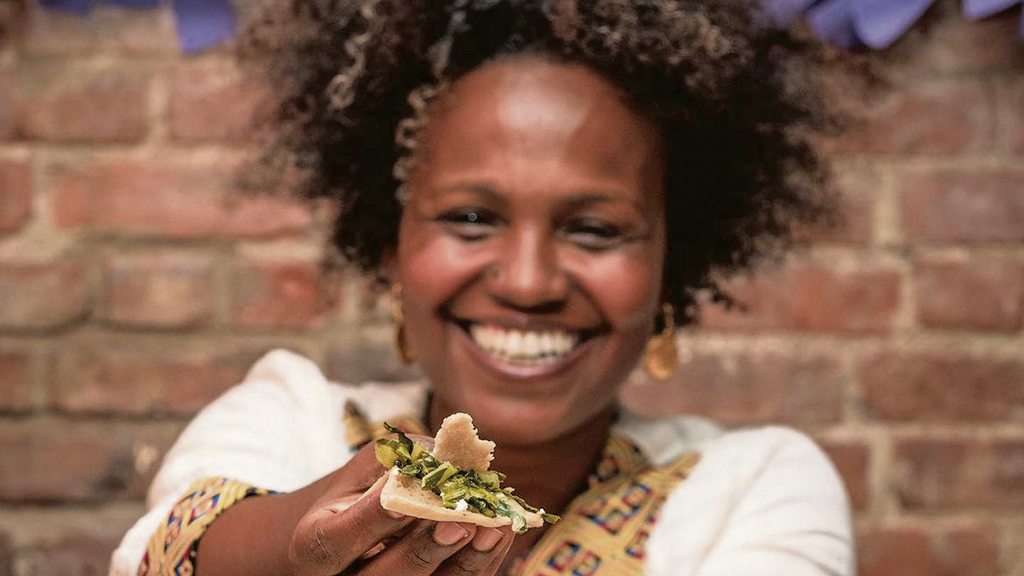
There are many legends about how the Jews first got to Ethiopia.
It’s an ancient community. That much is undisputed. But did Jews arrive there with the son of the Queen of Sheba, whose father was King Solomon? Was the community one of the ten lost tribes, the descendants of the Tribe of Dan?
No, Beejhy Barhany said. Ms. Barhany, an Ethiopian-Israeli-American Jew, says that her people descended from Moses. Moshe Rabbeinu himself. “When Moses fled from Egypt after he killed the taskmaster, we are told that he fled to Midian, but in reality, according to midrash, he fled to Ethiopia, married an Ethiopian princess, and ruled there for 40 years.
“Christianity only came to Ethiopia in the 4th century, and Islam came after. The foundation of Ethiopia is Jewish.”
Ms. Barhany is deeply proud of Ethiopian culture, with its mystical roots, its overwhelming openness and hospitality, and its deeply practical resilience.
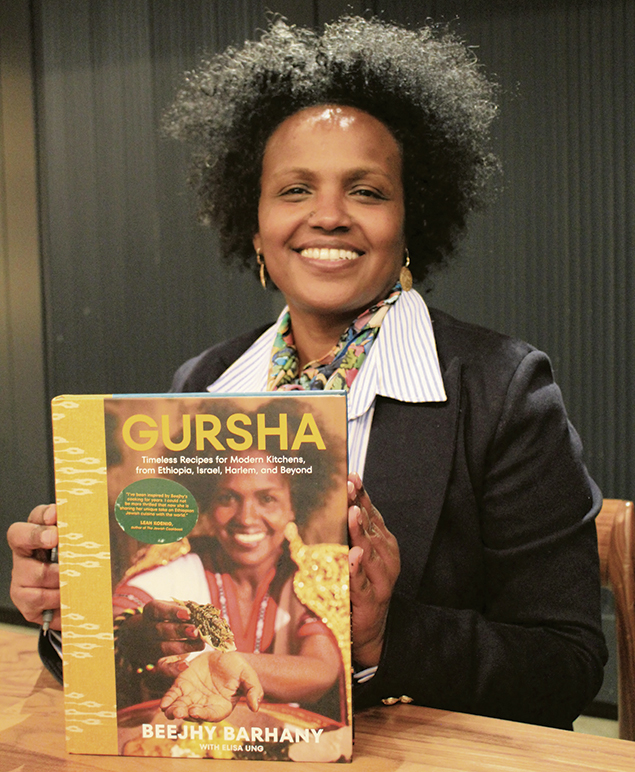
She’s written “Gursha: Timeless Recipes for Modern Kitchens from Ethiopia, Israel, Harlem, and Beyond.” It’s called a cookbook — cowritten with Elisa Ung — but it’s far more than that. It’s a compilation of stories about the community’s migration, and Ms. Barhany’s own journey. It’s about identity and spices and sharing and joy and yes, also recipes; it’s on the list of the New York Times’ “14 Best Cookbooks of 2025.”
Ms. Barhany will be at the Kaplen JCC on the Palisades in Tenafly on March 4 for the new Culture and Cuisine program. She’ll talk about her life and her recipes as guests taste her food. (See below.)
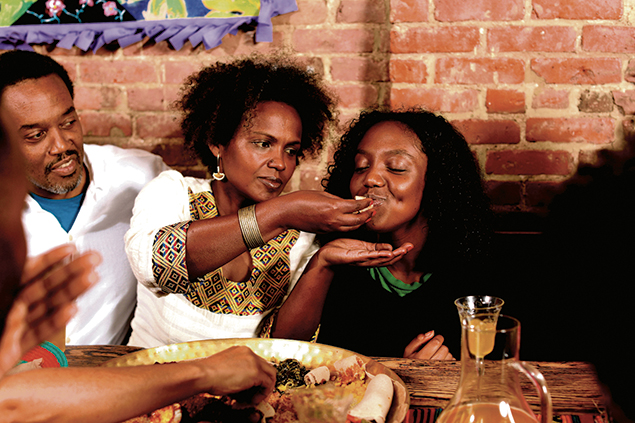
Gursha is an Amharic word that literally means mouthful. “It’s basically the wonderful Ethiopian tradition of feeding each other,” Ms. Barhany said. “Of nurturing each other.” When she says feeding, she explained, “I mean that you literally take a morsel of food and you feed your loved one.
“It’s our tradition,” she said, but it’s more than that. It’s deeply human. “We come into this world as a baby, and our mothers, our parents, our grandparents feed us. They nourish us. That’s the connection and the bond we create.
“That’s what I want to do through ‘Gursha’ — and, in fact, through lower-case gursha, both the book and love behind the custom. “I want to create a connection between different communities, and eventually break the barriers and misunderstandings that are going around.”
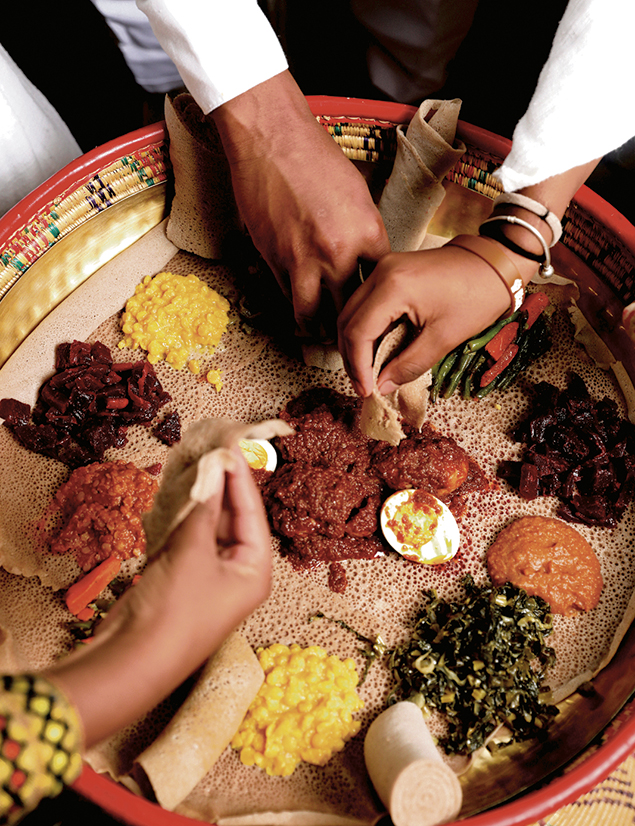
Ethiopian food “is very ancient,” she said. “It uses a lot of Asian grains. The base is injera, a flatbread made from a fermented grain called teff that ferments for three to five days.” It’s a base in more ways than one — not only is it the most basic component of the diet, but it’s also used as a platter or utensil. Think of it as an extremely multitasking sandwich bread. “We put different stews on it, ranging from ancient red lentils to chicken stew to collard greens to cabbage. And it’s very much community-based, with everybody sharing everything.
“It’s flavorful, delicious, and nutritious food, and it’s very much part of the culinary tradition of Ethiopian Jews.”
Her book, Ms. Barhany said, includes stories about how she and her family got to Israel.
She was born in Ethiopia’s Tigray province and had a happy, protected, traditional early childhood. But in 1980, when she was about 4, the political unrest that followed the death of the dictator Haille Selassie made the country increasingly unsafe for everyone — and particularly unsafe for Jews. That year, 300 people from her village — they’re all family, Ms. Barhany said — escaped from the country.
That was early, Ms. Barhany said. They were not part of an organized airlift, not Operations Moses or Solomon.
They walked, they rode in horse-drawn wagons or on horseback, they moved only under cover of darkness — and they got out. They went first to Sudan, where they lived for two years, pretending not to be Jewish. Then they moved through Uganda and Kenya, and there, finally, they could board planes to fly to Israel.
Ms. Barhany told a story that’s in her book, and that illustrates the community’s resilience. “There was a pregnant woman, and she gave birth during this journey. Oh, wow. Journey. To save the community from being in jeopardy, she literally had to move on in 20 minutes.” That’s 20 minutes of giving birth. She was helped by the food she was given — flaxseed and honey, among other natural healers. “That’s the resilience of this community,” Ms. Barhany said. “That’s the kind of sacrifice and determination they had.
It wasn’t always easy when they got to Israel.
Ms. Barhany remembers landing in Israel. “It was exciting to be in our forefathers’ land and celebrate Jewish unity, but there were some challenges, too, in terms of our acceptance, because we were Black. Many Israelis had never seen Black Jews before.
“And of course we’d never seen white Jews before either.”

There were culinary challenges as well; some of those are detailed in her book. For example, she said, teff, the extremely nutritious grain that’s used in much of Ethiopian cuisine, and particularly in injera, the indispensable Ethiopian flatbread, was not available in Israel for the first 20 or so years after her community made aliyah. Ethiopian bakers and cooks replaced it with corn and wheat flour. They made do, but it wasn’t the same, and it caused health problems for many of them. “Twenty years later, though, they were able to import their beloved teff, and now they can grow it in Israel,” Ms. Barhany said.
Ms. Barhany owns a café in Harlem’s beautiful Sugar Hill neighborhood. (That’s where the Harlem in her book’s subtitle comes from). Tsion Café served Ethiopian food. After October 7, with all the illogic for which many protesters are known, Tsion Café was picketed and vandalized, and its employees were harassed. Last week, it stopped its normal service — it had been a regular restaurant, recently certified as kosher and vegan. But it did not close.
Instead, Tsion Café now will provide more intentional, immersive experiences. Guests will register in advance, and Ms. Barhany will provide them with a fully Ethiopian Jewish meal, including handwashing and a coffee ceremony, and she’ll talk to them about Ethiopian culture.
She is proud of her culture and her community, proud of being a Black Jewish woman from Israel and in Harlem, and she is proud of the food that helps create community, not only in how it tastes but also in how it is served.
She is proud of being an Ethiopian Jew.
“That’s the strength of my community, and I want to share it with the world,” she said. “I hope it will bring more Jewish inclusion and celebration of diversity.”
Who: Beejhy Barhany
What: Will talk about her culture and her book, “Gursha,” and share her food
When: On Wednesday, March 4, at 7 p.m.
Where: At the Kaplen JCC on the Palisades in Tenafly
Why: As part of the JCC’s new Culture and Cuisine program
How much: $60 for JCC members, $70 for everyone else.
For more information and to register: Go to jccotp.org and type Culture and Cuisine into the search box, or call (201) 569-7900.