

How I spent my 60th birthday
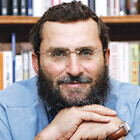
On November 19, I will turn 60 years old, God willing. It is a milestone that invites reflection on the meaning of life, the passage of time, and the legacy we leave behind.
Some people celebrate their 60th birthday with extravagant parties, exotic vacations, or lavish gifts.
I chose something different. I came to Hawaii to help consecrate a Jewish cemetery and participate in the burial of a Jewish stranger who might otherwise have been cremated. And I can think of few more meaningful ways to celebrate six decades of life.
Get The Jewish Standard Newsletter by email and never miss our top stories Free Sign Up
The symbolism is overwhelming.
Hawaii is where the Second World War began for the United States, when Japanese aircraft attacked Pearl Harbor on December 7, 1941. That attack ultimately helped bring about the destruction of Nazi Germany and the liberation of the surviving Jews of Europe.
Now, 85 years later, I have come to these same islands to affirm the sanctity of Jewish life through the dignity of Jewish death.
Pearl Harbor helped set in motion the defeat of the Nazis. A Jewish cemetery in Hawaii represents something the Nazis could never destroy: the eternity of the Jewish people. My dear friend Rabbi Michoel Goldman, the extraordinary emissary of the Lubavitcher Rebbe to Kauai, has devoted five years to establishing a dedicated Jewish cemetery for the islands’ community.
Anyone who knows the Rebbe’s shluchim understands their astonishing dedication. They travel to the farthest corners of the earth, often without established Jewish institutions, and build communities where Jewish life can flourish.
But Rabbi Goldman has done something especially profound. He has worked to ensure that Jews in Hawaii will have a place to rest in death, according to the traditions of their ancestors. It is one thing to build a synagogue where Jews can pray. It is another to establish a school where Jewish children can learn. But to establish a cemetery is to declare that Jewish belonging does not end when a heartbeat stops.
A cemetery says that a Jew is never abandoned. Not in life. Not in death. Not in eternity. And this cemetery’s consecration became especially poignant when the opportunity arose to give a Jewish stranger a proper burial rather than allow the body to be cremated.
I had not known this person in life. We had never shared a meal, exchanged a word, or celebrated a Sabbath together. Yet Jewish tradition teaches that the obligation to bury the dead is among the highest forms of kindness, chesed shel emet, kindness of truth.
Why?
Because the deceased can never repay us.
There is no applause, no recognition, no expectation of gratitude. We do it because human dignity is sacred, and because every person is created in the image of God. The Torah commands us to bury the dead, and Jewish tradition regards the body not as disposable matter but as the sacred vessel that once housed an immortal soul.
Cremation, by contrast, is contrary to traditional Jewish burial law.
For Jews, the issue carries an additional historical anguish. Our people watched the Nazis turn human beings into smoke and ashes. At Auschwitz-Birkenau, Treblinka, Sobibor, Belzec, and other killing centers, Jewish men, women, and children were murdered and their bodies burned in a deliberate effort to erase not only their lives but the evidence that they had ever existed.
Six million Jews were murdered in the Holocaust. Countless victims were denied individual graves, proper funerals, and the dignity of burial. Their families were denied even a stone at which to weep.
And so, standing in Hawaii, helping to bury a Jew whose body might otherwise have been reduced to ashes, I felt the immense historical and spiritual significance of the moment. The Nazis sought to reduce Jews to ashes. Our response must always be to affirm that every Jewish life, and every Jewish body, possesses eternal dignity.
Consider the extraordinary historical convergence.
On December 7, 1941, Japanese bombers descended upon Pearl Harbor, killing more than 2,400 Americans and thrusting the United States into the Second World War. Four days later, Nazi Germany declared war on America. By then, approximately one million Jews had already been murdered in the Holocaust, many through mass shootings across Nazi-occupied Eastern Europe.
On December 8, 1941, the Nazis began systematic killing with gas vans at Chełmno. On January 20, 1942, senior Nazi officials met at Wannsee to coordinate the machinery of the Final Solution, a genocide already underway.
Pearl Harbor did not begin the Holocaust. Nor did it begin the Second World War. But it helped bring the United States decisively into the struggle that would ultimately destroy Hitler’s regime. In that sense, Pearl Harbor marked a crucial turning point toward the Holocaust’s eventual end.
And now, on the islands where that turning point began, we are consecrating a place where Jewish dignity will be preserved for generations.
History rarely offers symbolism this powerful.
I have visited Hawaii many times and spoken repeatedly to its Jewish communities. I have always been moved by the beauty of these islands and the warmth of their people. But this visit is different. I came not merely to speak about Judaism, but to participate in one of its most sacred obligations.
I came to honor someone I had never met. I came to affirm that no Jew should be forgotten, even on an island thousands of miles from the great centers of Jewish civilization. And I came carrying the memory of my own parents.
Over the past few years, I have buried both my father and my mother, of blessed memory. There are few experiences that transform a person more profoundly than standing beside the graves of those who gave you life.
When you are young, your parents seem permanent. They are the pillars of your existence, the people who were there before you and whom you imagine will always remain. Then comes the unbearable day when you stand over their graves and realize that you have become the older generation. The people who once held your hand must now be entrusted to the earth.
I remember the pain of saying goodbye, the terrible finality of burial, and the consolation of knowing that my parents had been laid to rest with dignity. Their graves are sacred places where memory becomes tangible and love finds a physical address. I can visit them. I can pray there. I can place a stone upon their graves.
Millions of Jews murdered in the Holocaust were denied even that elementary human consolation. Their children had no graves to visit. Their grandchildren inherited names without resting places. That absence is one of the Holocaust’s enduring cruelties.
Perhaps this is why, approaching my 60th birthday, the consecration of a Jewish cemetery has moved me so deeply.
At 60, you begin to understand that life is not measured principally by how much you accumulate, how many people applaud you, or how loudly your name is celebrated. It is measured by what you give. By the people you comfort. By the dignity you restore. By the souls you help.
Jewish tradition teaches in Pirkei Avot that 60 is the age of mature strength, ziknah. It is an age when experience should ripen into wisdom, and ambition should increasingly give way to purpose.
What greater birthday gift could there be than helping another Jew receive the dignity of burial? What greater tribute to my parents than honoring the sacred traditions they handed down to me? And what greater answer to the Holocaust than demonstrating that Jewish continuity extends even to the remotest islands of the Pacific?
Rabbi Goldman’s achievement deserves recognition far beyond Hawaii. A Jewish cemetery is not simply a plot of land. It is a declaration of permanence. It tells Jewish families that their community is not temporary, their traditions are not expendable, and their dead will not be forgotten. It proclaims that Jewish life has taken root so deeply that even death cannot uproot it.
I think of the six million Jews whose lives were extinguished, the parents I have lost, and the stranger whose burial brought me here. Their stories are vastly different, yet they converge in a single Jewish conviction: human beings are not disposable. We are more than flesh and bone. We are souls entrusted to one another. And when someone dies, our responsibility to that person does not end.
As I turn 60, I am grateful for the blessings of my life, for my family, for the parents who raised me, and for the privilege of serving the Jewish people. But I am especially grateful that this birthday has brought me to Hawaii, where the history of America’s entry into the war against Nazi tyranny now meets the timeless Jewish obligation to honor the dead.
The measure of a civilization is not merely how it celebrates the living, but how faithfully it honors those who can no longer speak for themselves. The Nazis tried to make the Jewish people disappear without a trace. Here in Hawaii, we are ensuring that even a Jewish stranger will have a grave, a name, a memory, and a place among our people.
That is how I have chosen to celebrate turning 60. Not with a monument to myself. But by helping give another human being a resting place. And by affirming, in the shadow of Pearl Harbor and the memory of Auschwitz, that the Jewish people will never disappear.
Rabbi Shmuley Boteach of Englewood is the author most recently of “Holocaust Holiday: One Family’s Descent into Genocide Memory Hell.” Follow him on Instagram and Twitter @RabbiShmuley.