

‘Navigating invisible grief’
A family remembers Ilona by convening experts on pregnancy loss and infertility
“In any journey of pain or grief, people tend to feel very alone and isolated,” Nancy Fish Bravman of Fair Lawn said. Hearing about “other people’s experiences, and grieving together, tends to help ease some of the pain.”
Ms. Bravman is a psychotherapist. She’s also a parent. Her daughter Ilona was diagnosed with spinal muscular atrophy when she was 11 months old and died in 2021, at the age of 28.
Ilona was physically disabled and began using an augmentative communication device when she was 3, Ms. Bravman said. By the time she was 5, “she was very articulate on her device,” and it was clear that she was bright.
Ms. Bravman also described Ilona as vibrant, as someone who did everything with joy and determination and inspired those around her. And Ilona helped her parents develop a heightened sensitivity to what other people might be experiencing. “She taught us so much about talking about feelings and understanding feelings that are often not addressed or understood,” Ms. Bravman said.
To honor Ilona’s memory, she and her husband, Larry Bravman, established “Inspired by Ilona,” a series of panel discussions on “topics that are not always covered as frequently as they should be,” Ms. Bravman said. The series is designed to bring awareness to the subjects, to provide support, and to help people feel less alone. Programs have focused on a wide range of topics, including physical disabilities, family members choosing different religious paths, children described as “out-of-the-box,” and students who may fall “under the radar.”
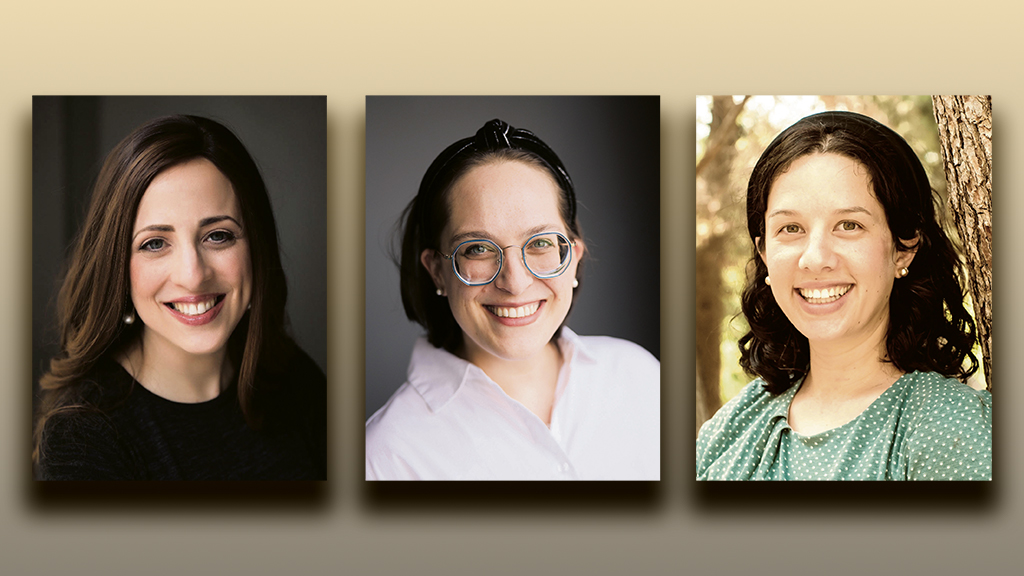
The next panel in the series, “Navigating Invisible Grief,” will focus on pregnancy loss and infertility. Doctors Esther Rollhaus, Aimee Baron, and Shira Billet will speak at Congregation Shomrei Torah in Fair Lawn on December 1. (See box.)
Almost two years ago, the Bravmans’ younger daughter lost a baby at 23 weeks. She had a child afterward; “we have a beautiful six-month-old granddaughter,” Ms. Bravman said. But “it was very traumatic.” The Bravmans realized it was a topic that should be discussed. “We wanted to do something around the sort of invisible feelings, the invisible grief, that accompany losing a baby or infertility and living in a community like ours where there is so much focus on children,” Ms. Bravman said.
The panel is intended to help people who are facing these challenges and to help others understand how they can support friends or relatives who are facing them, “because people often don’t know,” Ms. Bravman said. The panelists will discuss “processing reproductive trauma, healing, and supporting others” from their professional perspectives. They will also talk about their personal experiences with infertility and pregnancy loss. Ms. Bravman hopes the discussion will help “to normalize the grief” and help people “get to a path of healing.”
Ms. Bravman asked Dr. Baron to speak on the panel because she was “so instrumental in helping my daughter.”
Dr. Baron is the founder and executive director of I Was Supposed to Have a Baby, an organization whose mission is to “transform how the Jewish community cares for people struggling with fertility and loss by providing mental health support, educational resources, and a warm, nurturing space,” according to its website, iwassupposedtohaveababy.org.
“For me this work is personal,” Dr. Baron said. A pediatrician by training, she decided to stop practicing medicine and start the organization after experiencing secondary infertility and then six miscarriages.
Dr. Baron founded I was Supposed to Have a Baby in 2019 to “help support people,” she said. It’s an organization “that really holds people, all different kinds of people and families as they’re struggling to build their family.” The organization also works to “really educate communities at large that these kinds of issues exist in the world and that they are much more prevalent than people think.”
Like Ms. Bravman, Dr. Baron feels it’s important to talk about these topics. “It’s our job as a community to learn how to better support people who are struggling,” she said. She hopes the panel will “bring more sensitivity and awareness” and let people who are struggling know where they can turn. And she hopes it will help community members recognize that “there are people in their lives who they may not even know are going through this” and give them tools to provide support.
Dr. Billet, who has a Ph.D. in religion and philosophy, is an assistant professor of Jewish Ethics at the Jewish Theological Seminary. She lectures widely on topics related to Jewish thought and ethics, including parental grief and pregnancy loss.
Dr. Rollhaus, a reproductive psychiatrist with particular interests in women’s mental health, fertility and pregnancy loss, and peripartum mental health, will bring a different perspective to the conversation.
“It is so important for people to be able to talk openly about these issues and about a lot more issues than people feel comfortable talking about in general,” Dr. Rollhaus said. “Otherwise, people feel lonely and isolated and can’t access support.
“There are taboos within the community, both the Jewish community and the general culture, about suffering or struggling, and we know that people do better when they don’t suffer or struggle alone.”
She feels that telling her own story “helps normalize this for people.” And she applauds the work of Inspired by Ilona to “advance the discourse.”
Of course, everyone does not need to tell their stories publicly, or at all, Dr. Rollhaus said. “But if we have a culture where it’s not that taboo, then it makes it easier for somebody to cope and to know that they’re not alone.” And if they do want to share, it makes it “easier to let someone into the suffering.
“The more people like myself share, the easier it is for people to have conversations around it.”
Who: Dr. Esther Rollhaus, Dr. Aimee Baron, and Dr. Shira Billet
What: Will talk about “Pregnancy Loss and Infertility: Navigating Invisible Grief – Expert Insights on Processing Reproductive Trauma, Healing and Supporting Others”
When: Tuesday, December 1, at 8 p.m.
Where: Congregation Shomrei Torah in Fair Lawn. Livestream available at inspiredbyilona.com
More information at: inspiredbyilona.com