

You’ve got to be taught to hate
JFNNJ offers toolkit to help parents whose kids face antisemitism at school

Antisemitism is rising throughout the country, including right here in northern New Jersey.
This is not a pleasant fact, but it is true nonetheless. Antisemitism is not an epidemic, it’s not inescapable, and it’s not at all inevitable, but it’s one of those many evils that cannot be fought until it is acknowledged.
The Jewish Federation of Northern New Jersey has produced a handbook, “Addressing Antisemitism K-12 Schools: A Toolkit for Families,” that offers not a bland checklist or a hair-on-fire shriek but a sober, step-by-step guide for parents on reporting antisemitism and supporting their children. The federation has also compiled and is distributing a guide to help school administrators and teachers identity antisemitism and address it, a resource guide for them, and a clearly written, assume-nothing guide to the Jewish holidays, from the most well-known to arguably the least — most public school students probably do not observe Tzom Gedalia.
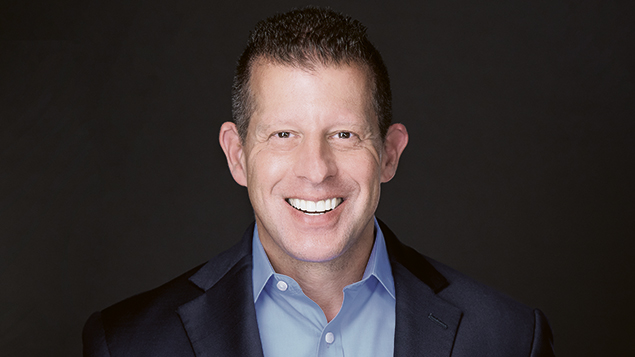
David Barkey is the federation’s director of the Jewish Community Relations Committee. He’s well positioned to be able to provide help to students, teachers, and administrators; he’s a lawyer, and he spent more than two decades in Florida, helping to lead the Anti-Defamation League’s southern region, before he moved back north last year.
He has some numbers about hate. There were 2,007 bias incidents reported in New Jersey last year, he said; “the number targeting the Jewish community was 432, which is about 22 percent of those incidents.” Were those incidents to be parceled out neatly, “that’s at least one incident a day in the state,” he said.
The grim facts are that most hate and most bias incidents are racist, aimed at black and brown people, he said. “The gay community is a heavily targeted group — gay men, and also anti-trans.” But proportionately — “Jews make up about 6 percent of New Jersey’s population; there are about 600,000 in the state — disproportionately many of those crimes and incidents are aimed at Jews.”
And a lot of those incidents happen in schools.
Schoolchildren by definition are young and vulnerable. “We parents entrust our kids to schools,” Mr. Barkey said, and the teachers and administrators there act in loco parentis: In place of parents. “Parents expect schools to provide safe, welcoming, and productive learning environments, but this seems to be an issue in New Jersey.
“Parents may be surprised about the number of bias incidents at school. But we shouldn’t put our heads in the sand. It happens. And if it happens to your kid there, this resource is for you.
“Federation is there to be your ally and resource in helping address this problem. You’re not alone. That’s what we do. We stand with you.”
The booklets — they’re available both on line and in hard copy — “are a roadmap about how to deal with an incident of bullying, harassment, or discrimination against your school, or if your child is victimized in the school setting,” he continued. “It’s a how-to guide on how to work your way through the process.
“Parents and guardians should know that they’re not alone. If there is an incident, they should not hesitate to reach out to the federation, because we can help shepherd them through the process.”
There’s more than one way through the process, Mr. Barkey continued, and parents should do it in the way that feels most comfortable for the child and the family. “It’s not our goal to create an antagonistic situation with the school,” he said. “We don’t want to create any more difficulties, any more tension for the students.
“Look. Kids do stupid things.” Each school has the chance to deal with each incident of malice, misunderstanding, or simply idiocy in its own way too, “and depending on how the school does it, it can get either our criticism or our accolades.”
Among other things, “kids bring things they learn at home to school. If a kid calls another a kid an epithet because they’re Jewish, how the school handles the situation can make a big difference to the victimized student and to the bigger community.
“When I was at the ADL, it was doing a lot of work with early childhood, and we learned that children can start incorporating biased views when they are as young as 3 years old. So hate is learned — and it also can be unlearned. But if that’s what the child is learning at home, that’s what that child knows.
“The child is innocent, but…”
Mr. Barkey monitored cross-burnings when he was with the ADL — this was with neo-Nazi and Klan members in Indiana — “and one of the saddest thing I saw was little children — they were probably, 5? 6? 7? Maybe 8? — doing Heil Hitler salutes to a burning swastika.
“They’re children. They’re emulating the adults around them. Their parents. They have no idea what they’re doing. They don’t know what it means. They don’t know any better.
“But the problem is that they are going to grow up to become adults, and if they don’t change, they’ll grow up to become bigots.” At the very least. “They perhaps will grow up to do very bad things.
“But children aren’t born as haters. They learn it at home and bring it to school. They think, ‘If Mommy and Daddy are doing it, I guess it’s okay.’”
Once an incident happens, “If the school handles it properly, if they follow all the policies, if they do a thorough investigation, if they take remedial action toward the perpetrator and bring in training after the fact to tell the greater community that the behavior was not acceptable,” the situation is likely to improve, Mr. Barkey said.
“I’ve seen that happen a number of times,” he continued. “School districts have done the right thing. They say, ‘We have found a swastika on a desk. We found a swastika in the bathroom. This is unacceptable. This is not tolerated in our school.’
“This is the right thing to say and do, because when an incident happens, the victim and the victim’s family don’t feel isolated for who they are. Instead, they feel cared for. They feel understood. They feel heard. And that’s important.
“When the school district does things right, we will commend them. Because they can’t control what people do. We hope that the school system, and that society, is teaching our children not to engage in bias and prejudice. But at the end of the day, it still happens, and that’s why we put out this publication. We’re given parents a tool to work with.”
That tool, developed with some assistance from the Jewish Federations of North America — the federations’ umbrella group — and adopted for New Jersey, “is basically a walk through all the different issues that you deal with when an incident happens,” Mr. Barkey said. “It’s not just how do I make a complaint, and who do I make it to? What should I be doing?
“It’s also how do I handle myself at the meeting? Because this can be very emotional. It’s how do I make my child feel as safe as possible, because they’ve been traumatized.
“Different people handle things differently. Some feel comfortable handling things on their own, some need support, and we’re here for that. It’s a question of what they need.
“When I talk to a parent whose child has been victimized, my goal is not to go in there guns blazing. It’s how can we help you? What do you want? What is your goal? I don’t want to make things more difficult for you and your child.
“Every situation is different. Sometimes parents may just need somebody from the federation to be a third party, to listen objectively, to try to ameliorate the situation. In other cases, parents feel that there’s been a pattern of this behavior, and we need to be more adversarial. We can do that, or we can refer them to other Jewish organizations that have more formal legal or administrative assets.
“But the basic rule of thumb is that we want to do what the parent thinks is best for them and their child, given our subject matter expertise.”
For a spectrum of reasons, ranging from embarrassment to not wanting to devote the necessary time and energy to the problem to a lack of understanding what the legal definitions of hate crimes and bias incidents are, such incidents are underreported. “But it happens in schools, and if it happens to your child, there’s a resource for you, and we’re here for you,” Mr. Barkey said. “The most important thing is that you don’t have to suffer through it alone.
To learn more about the toolkit or to get a copy, go to jfnnj.org/toolkit or email Emily Frankel at EmilyF@jfnnj.org