

Words and music about words
YIVO’s ‘The Great Dictionary of the Yiddish Language’ is an unlikely but passionate opera

When you think about opera, you don’t usually think about dictionaries, much less the people who write them.
Operas are about passion, the kinds of deep, even elemental feelings that can be expressed on a stage, loudly. Love, hate, money, power, desire, disgrace, disease, death, truth, beauty — those, most of us would agree, are suitable subjects for opera.
But the ink-stained wretches who once would sit in garrets, scribbling definitions, and now hunch over their computers doing more or less the same work — how can that be operatic?
Think again.
People who care about words care about them passionately. Shades of meaning, variations in pronunciation, nuances in case or tense or relationship to punctuation — all that can drive a standard-order logophile nuts. A lexicographer cares even more.
(Case in point — did Samuel Johnson, the 18th-century essayist, poet, and wit, among other things, who composed the most influential English-language dictionary of its and almost all time, actually call himself and his small group of definition-writers ink-stained wretches? Nobody knows, and people argue heatedly about it.)
Add in the idea of a Yiddish-language dictionary — Yiddish, with not only its regional differences but also the grief and nostalgia and memory and terror of its near annihilation by the Nazis and their collaborators — and you have passion enough to fill the world’s opera houses, night after night, year after year.
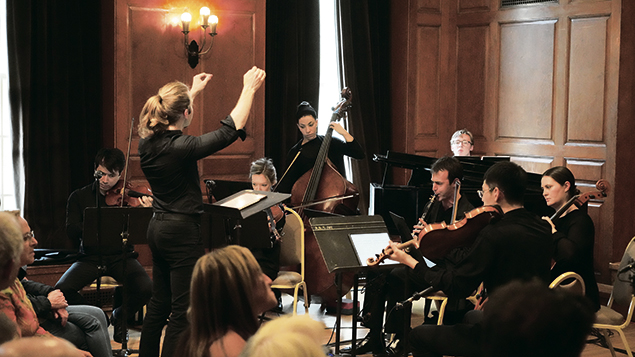
Composer Alex Weiser and librettist Ben Kaplan are starting a little more modestly than that. Their new work, “The Great Dictionary of the Yiddish Language,” had its world debut as a chamber opera on Thursday, September 18, and will be repeated on Sunday, September 21, at 1 and then again at 7, at the YIVO Institute for Jewish Research at 15 West 16th Street in Manhattan. (The first two performances are sold out; the third, which was added, still has tickets available, at least as of this writing.)

So how did “The Great Dictionary of the Yiddish Language” — basically words and music about words — come to be written?
“It’s an opera about our relationship to language,” Mr. Weiser — who is also YIVO’s director of public programs, and whose debut album, “and all the days were purple,” was a finalist for a Pulitzer in 2020 — said. “And it’s about language’s relationship to grief.”
Fighting about grammar, both because of its inherent pull and because of what this particular grammar, Yiddish grammar, evokes, “brings up so many other conflicts and feelings, and so it becomes an argument about Jewish culture,” he continued. “And about salvaging what’s left of a culture after horrific genocide.”
“We started thinking about this opera because early in the time both of us worked at YIVO, each of us about a decade, we heard about the story behind it as a kind of joke,” Mr. Kaplan said. He is now YIVO’s education director, where he is in charge of programs including the institute’s summer program in Yiddish, and its winter program on Ashkenazi civilization.
“The story is that people at YIVO had tried to compile a dictionary,” Mr. Weiser said. “They worked on it for 25 years, and they couldn’t get past the letter aleph.” (It was more or less like “two Jews, three opinions,” on steroids.)
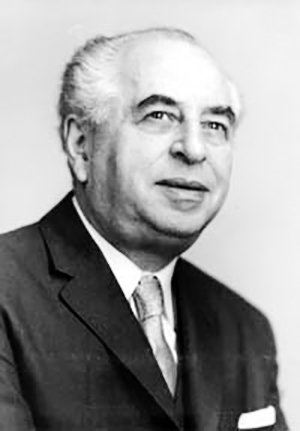
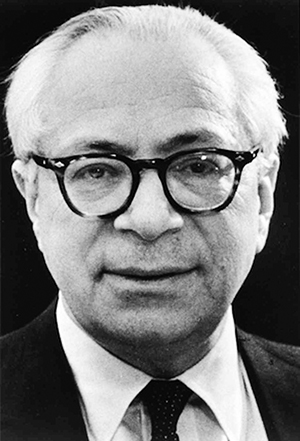
That story was more or less true. In real life, two groups headed by Yudel Mark and Max Weinrich — and in the five-singer opera, just the two men, Mark and Weinreich; “it’s sort of like the schools of Hillel and Shammai, represented by only Hillel and Shammai,” Mr. Weiser said — both desperately wanted the dictionary, but differed sharply on what they thought its underlying philosophy should be.
“It reflects the postwar mood, where Yiddish scholars were trying to use their work to revitalize this community, which had almost been destroyed in the Holocaust,” Mr. Weiser said. “All their disagreements, all their passionate discussions about spelling and about the scope of the dictionary became a metaphor for remembering and trying to revitalize this lost civilization.
“They even talked about it like that themselves. They said that this dictionary was a monument to the dead, and they approached the words in it with that kind of religious fervor.
“Words were like divine sparks.” The squabbles — no, the fury — expended on each letter brought to mind the image of Torah as black fire on white fire. All of it somehow holy fire.
These two men both were secular, Mr. Kaplan pointed out, but perhaps that was true only on the surface.
“And that connects with both of us,” he continued. “We are both secular, but we both feel so passionate about the work and the history. We both feel connected to it. That religious symbolism really captures some of the devotion we feel.
“And this work remains a race against time. It’s swimming against the current of history.
“So yes, it’s true. They only did get through aleph. But what they did was quite astonishing. What they were able to accomplish was Herculean, and the odds they were up against were massive.
“They didn’t have a nation-state to support Yiddish-speaking Jewry. The intent for YIVO was that it be a national academy, the language academy, but without the support of a state behind it, they were just basically a bunch of guys trying to accomplish this huge project on national scale, and doing it through the sheer force of will.
“That’s why it became so dramatic. That’s why the stakes feel so high. It’s because for them, every grammatical argument is a life-and-death argument, because of the many layers of meaning that all these language rules and linguistic efforts comprise.”
The effort to compile a Yiddish-language style guide started well before the Holocaust, and even then, it was an extraordinarily difficult job.
“YIVO tried, but Yiddish was even more unruly than many other languages, because it didn’t have the benefit of being taught in schools for generations or be in one country with a transnational language,” Mr. Weiser said. “After the war, YIVO tried to be that place, and that made these disagreements all the more charged.”
The basic disagreement was about rules. Max Weinreich wanted rules. “He hoped that universal spelling that everyone could follow would finally unite the Yiddish world, around the world, because everyone could follow everyone,” Mr. Weiser said. “There wouldn’t be dialects that would be impenetrable not only to the ear, but to the eye as well.” For shorthand, the school of Shammai. “But Yudel Mark was more interested in the depth and richness in the Yiddish world.” Clearly Hillel. “He didn’t want to conform to the rules. He felt that something would be lost by sticking to them.
“So it became a boiling hot argument. What do you do? Do you save everything you possibly can, so that everything you do would become slower and the task huger? Or are you merciless? Do you say that we must bring order out of chaos? Bring unity? Accept compromise and move forward?”
One of the reasons that this argument about how to compile a Yiddish dictionary is so compelling is because there is no one clear answer to the question; the question can apply to so many different fields with so much depth that it’s possible to get hopelessly lost in it.
For example, how do you judge what would be right? “You can be right in one way and wrong in another,” Mr. Kaplan said.
“Are you judging morally? Ethically? Spiritually? What if one side feels more moral but also is hopelessly impractical? What does that mean?
“You can’t do everything, one side says. You have to choose. That’s what it means to be a scholar. You have to curate. You have to make choices.
“And the other side says that it is unacceptable to do that. You have to look at everything you possibly can. You can’t rush. You can’t shortchange the flow of history.
“That’s the kind of dialectic of history that we think is interesting to think about, even outside a Yiddish context. Even outside a Jewish context. it’s true of so many things in life. How do you make choices?”
All this is fascinating. It would make for a good symposium; if you have good, smart friends, maybe a great topic for Shabbat dinner. But how does this become an opera?
Someone had written a dissertation about the misbegotten Yiddish dictionary, and “when I read it, it just jumped out to me as appropriate for an opera,” Mr. Weiser said.
“I think that opera really excels at bringing to life the subtext of things, and the things that are above and beyond the natural world,” Mr. Kaplan said. “And that’s what this project is teeming with.
“On the surface, it’s oh, they’re making a dictionary. They’re arguing about orthography and style. But above the surface, or below the surface, there’s the symbolism of life and death, of revitalization, of messianic aspiration. Of holiness. Of sanctity.
“Opera really excels at the elements, at adding them to the mundane. And that’s the juxtaposition that’s so striking in this story, and why I think it’s good fodder for operatic treatment. On the surface it’s so mundane, but the depths are about all the things that opera excels at bringing to life.”
The opera has not two characters, but five. The two men are Mark and Weinrich. The three women represent the three forms of the letter aleph — two spoken, one silent. “We made them the three divine messengers, played by three sopranos, who deliver the divine injunction that Yudel Mark has to save the language,” Mr. Weiser said.
And then there’s Yiddish itself, presented as not quite but almost the holy language, as the subject of divine injunctions. Mr. Weiser and Mr. Kaplan talked about a friend of theirs, a novelist, who told them that “what we’re doing is very subversive, because we’re elevating Yiddish to the language of heaven,” Mr. Kaplan said. That’s generally thought to be Hebrew, and perhaps also Aramaic.
“But in our opera, and for these guys, Yiddish was a sacred language, and we wanted to pay tribute to that,” Mr. Weiser said. “So it felt appropriate that Yiddish becomes the language of the heavenly realm, the language of prophecy, of divine visions.”
It also reinforces YIVO’s original idea, “giving Yiddish a dignified place to be studied, and to promote the language and the culture.
“They didn’t literally think that Yiddish was a holy language, but they elevated it to such a degree that it was as if it were holy.”
Learn more about “The Great Dictionary of the Yiddish Language,” and to get tickets for the final performance, go to yivo.org and click first on “Programs,” then on “Calendar of Events.”