

What really happened?
A Jersey Jew confronts a medieval massacre In Italy
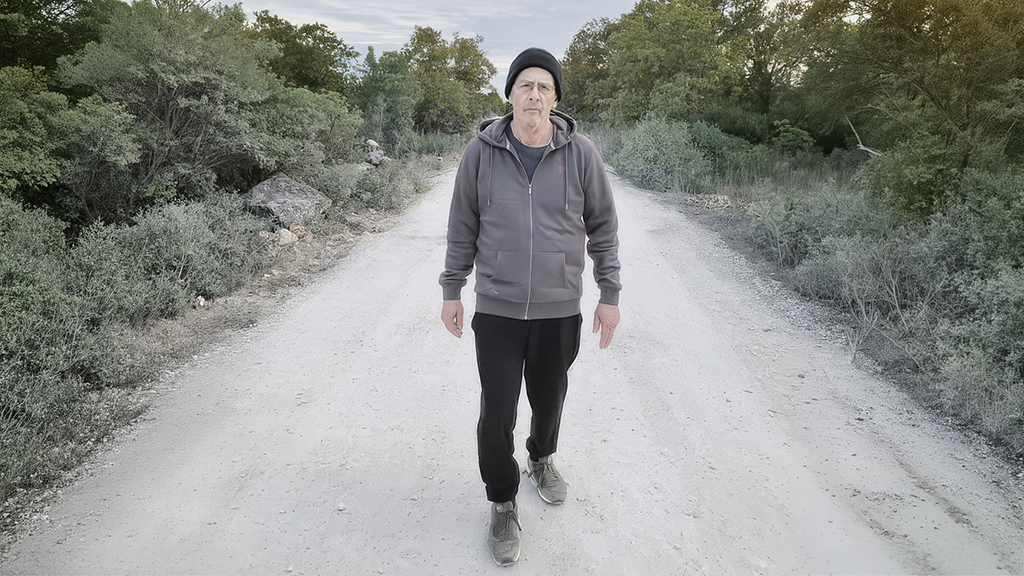
In July 2021, I moved from New York City to Southern Italy. I settled in Martina Franca, a town in the Puglia region with about 35,000 residents, joining my wife, son, daughter, granddaughter, and son-in-law there.
The transition delivered more than a few surprises. For starters, it jolted awake my sense of myself as a Jew, at age 69, more than anything else had in my life — more than my bar mitzvah, my son’s bris, the Hamas attack on Gaza, and the viral rebirth of antisemitism around the world.
Now that I was an American Jewish expat living in the Italian countryside, I began to explore the history of Jews in my new home. I was particularly interested in whether any other Jews now lived in Martina Franca. I was unable to find that out.
But this much I knew — the town had no synagogues, either active or abandoned. The place appeared to be all but Jewless. I felt vastly outnumbered and vaguely threatened. I also felt desolate and disconnected, jarred by a sense of displacement. Nothing in life is ever much more likely to make a Jew feel like a Jew than realizing you’re the only Jew in the room.
My research soon yielded a discovery that cut me even more to the quick. It appeared that in 1495, the entire Jewish population of Martina Franca — some 1,000 people, about one-third of its residents — was massacred.
The claim of this carnage in my new home came from Wikipedia. It was phrased casually, almost as a by-the-way: “Also in 1495, the Jews of Martina Franca were massacred.”
Further study compounded my shock. The Wikipedia entry had taken on a life of its own. Similar descriptions, often verbatim, showed up on Martina Franca’s own unofficial Facebook page as well as on other websites, including Jewishheritageitaly.com.
I’d grown up in the United States with the perception that the mass slaughter of Jews was a horror that happened “over there,” meaning in Europe, far from home. I’d lived among Jews my whole life. First, I lived in the Bronx, in the 1950s, when about half of its residents were Jewish. (It’s now about 3 percent.)
I’d come of age in Fair Lawn, a Bergen County suburb traditionally about one-third Jewish. I’d then lived for 46 years among the million or so Jews in nearby New York City, where my grandparents belonged to the Park Avenue Synagogue in Manhattan. I spent almost all those years in Forest Hills, Queens, a neighborhood of 75,000 residents that once was about two-thirds Jewish and today still is about one-third Jewish.
No Jews had ever been massacred in Fair Lawn or Forest Hills.
But now I was living here, a Jersey boy in 21st-century Italy, far apart from other Jews for the first time in my life. An atrocity against Jews had evidently taken place more than 500 years earlier at my very doorstep. And it sent a chill of anguish shuddering down my spine.
Then again, the claim had come from Wikipedia. The online encyclopedia, as scholarly research sources go, may be regarded as generally reliable, but it’s all too often admittedly less than the holy truth. So maybe I had spotted a loophole in this news.

I had to find out whether the reputed massacre in Martina Franca had, in fact, ever occurred. And, moreover, if it had, how had it come about, what exactly had happened, and most important, why.
Or maybe nothing of the sort had taken place. Maybe the Wikipedia entry would prove bogus, either a mistake or a willfully misleading falsehood.
So began a five-year investigation. I went burrowing a rabbit hole, zigzagging from false leads and dead ends to reversals and close calls. It was as if I had slipped through the looking glass and was unable to distinguish between illusion and reality.
To start my mission, I enlisted a 2020 graduate of Yeshiva University who had studied Italian history, spoke Italian, and was training to be a rabbi, to lend me a hand as a research volunteer. In short order, he told me he had interviewed Fabrizio Lelli, a professor at the University of Rome, director of the Jewish Museum in Lecce, and a specialist in Jewish life in the Middle Ages and the Renaissance.
Lelli verified that yes, all the Jews in Martina Franca apparently had been exterminated in 1495, my volunteer informed me.
But Lelli was only one source, hardly equivalent to a consensus. So I sought fresh answers on my own. I identified the person Wikipedia credited with posting the reference to the massacre in the first place. It was Raffaele Carbotti, a lawyer whose LinkedIn profile described him as a town official, namely “head of administration,” for Martina Franca.
I reached out to Carbotti — first via email, then Facebook, and eventually LinkedIn — to ask him how he knew what he said he knew about the massacre and whether he could document any of it. Despite efforts to contact him over several weeks, I received no response.
Within a few months, I hit another roadblock. Without a word of warning, much less any explanation, my research volunteer, who had promised to conduct further interviews, dropped out of the project.
I had no idea why. Was he worried about the implications from his association with my project? Was he anticipating reprisals from Italian academic or governmental authorities? Concerned that exposure about his involvement in the undertaking would somehow undermine his bid to be a rabbi?
I still had so many other, bigger questions. How could I learn with any degree of certainty whether the Jews of Martina Franca had been decimated in 1495? Did any documents or artifacts attesting to the episode exist?
My questions led to still more questions. How had Jews lived in Martina Franca before the massacre, peacefully or persecuted? What specific events had incited the slaughter? Who exactly perpetrated it? Where had it happened? And by what barbaric means was it carried out? Were Jewish children also slain?
My questions kept cascading into new questions. How had the non-Jews of Martina Franca reacted before, during, and after the massacre? Who, if anyone, had resisted it or even tried to prevent it? Did the town’s Jewish community ever re-emerge, if only temporarily? Were its current residents aware of any massacre? Had the town ever officially acknowledged it? Would I find any commemorative plaques, statues or landmarks anywhere? Had the bloodbath cast even the faintest shadow?
For weeks, I suffered nightmares imagining medieval Jews fleeing in terror from murderous mobs. My search for answers swelled into obsession. I had to know, and I had to find out for myself, if for no reason other than to honor my grandparents, Russian and Austrian Jews who had lost family in the Holocaust. I would try to corroborate the original research findings independently, minus a research volunteer fluent in Italian.
In due course, I was rewarded with a surprising revelation. The plot thickened.
I now had reason to believe that no massacre of Jews had ever happened in Martina Franca. Suddenly it was easy to explain the lack of evidence. There was none.
So I learned, first from Francesca Bregoli, associate professor of history at Queens College and director of the Center for Jewish Studies at the Graduate Center at CUNY. “This seems suspiciously apocryphal,“ she told me about the Wikipedia entry. “I’ve never heard elsewhere that the Jews of Martina Franca were massacred.”
Professor Bregoli recommended I contact Vincenzo Selleri, the coordinator of the Italian studies program at SUNY Farmingdale State College on Long Island. He had published research about Jews in 15th-century Italy — his Ph.D. thesis examined the Jews of Puglia in particular — and had, suitably enough, grown up about 15 miles from Martina Franca. He could confirm or clarify or contradict Dr. Bregoli’s conclusion.
Dr. Selleri reinforced Dr. Bregoli’s suspicion that the Wikipedia entry was inaccurate. “The claim in Wikipedia is incorrect,” he told me. “It’s fake history. There is no data or documentation about a massacre of Jews in Martina Franca in 1495.”
So now the vote denying the massacre was two to one. And would soon grow to three to one because I also interviewed Giovanni Liuzzi, a professor of philosophy and history who was born in Martina Franca. Professor Liuzzi confirmed that the massacre of Jews in Martina Franca, cited so definitively in Wikipedia, most likely never happened.
A consensus legitimizing my doubts was building.
Meantime, to widen my dragnet, I recruited a lawyer I knew in Martina Franca to reach out to Raffaele Carbotti on my behalf and ask him about his Wikipedia claim. Carbotti never replied to the query.
But, as luck would have it, Carbotti indicated, no doubt inadvertently, that he must have received my LinkedIn query. How did I know? Simple. LinkedIn typically performs a particular service for its members: it notifies you, by name, that someone has checked out your LinkedIn profile. And Carbotti had checked out mine. He obviously sought to learn about who was persisting in trying to track him down.
I slogged along on the case for another year. My quest started to feel more than a little crazy to me. Why, would I, a Jewish American expat, go snuffling around in Italian soil to unearth the ugly truth about a monstrous crime that reputedly took place more than half a millennium ago? Why would I risk the stamp of stigma, ostracism, and worse for myself and my family? Why take the chance of reprisals from fellow residents of my adoptive home who might learn of my quietly disruptive enterprise?
My dread that I was committing a colossal folly mounted. In bed at night, struggling to sleep, I would envision angry villagers stalking me through the woods bearing torches and calling for my head. I dithered about my dilemma for months. Should I keep going in my pursuit, I asked myself, or should I play it safe and cease and desist?
I felt compelled to push on. And two years later, my tale took yet another twist.
The twist established once and for all that no one had massacred Jews in Martina Franca. The Wikipedia entry was no fabrication – it was simply incorrect, an error of geography. A massacre of Jews had likely occurred in another town, Lecce, about 50 miles away.
“There indeed was an attack against the Jews of Lecce in 1495,” Francesca Bregoli of Queens College and CUNY told me. She cited the following entry about Lecce from the Jewish Encyclopedia:
“On March 21, 1495, a mob invaded and set fire to the ghetto, and killed a great number of Jews; the few that saved their lives scattered throughout the kingdom. The synagogue was demolished and a church erected on its site. The Jews probably never returned to Lecce, as they were expelled from the whole Neapolitan kingdom in 1540.”
Vincenzo Selleri of St. John’s University offered a more explicitly nuanced response.
“All the Jews of the Kingdom of Naples suffered terribly in 1495 following the descent into Italy of the French Charles VIII, who laid claim to the crown of Naples,” he explained. “But massacre is a charged word. For sure, ‘judeche’ (a historic Jewish quarter or neighborhod) were looted. People might have died, but universities and individuals were more interested in confiscating money and goods than in outright genocide.
“Jews in Martina Franca at the time might have been harassed, but we do not have hard evidence of this,” Professor Selleri continued. “In February 1495 (around February 26), Jews in Lecce left their homes and took refuge in the castle. Their homes and the synagogue were looted. For sure Jews lived six difficult months from late December 1494 to July 7th, 1495, when Ferdinando II regained control of Naples, but documents speak of depredation, theft, vandalism, not massacres.”
At last, too, I heard back from Fabrizio Lelli of the University of Rome, whom my research volunteer told me had told him that Jews were massacred in Martina Franca. Lelli, apprised of the emerging hypothesis that a massacre might have happened in Lecce instead, said, “This is an excellent theory. The pogrom that took place in Lecce in 1495, following the French invasion of the kingdom of Naples, is rather well documented. There is no information related to a massacre in Martina Franca.”
Yet that Wikipedia entry took on a life of its own and metastasized.
I suspect a larger lesson is to be learned here. It has to do with the never-ending and ever-growing epidemic of misinformation now infesting our culture thanks largely to the presence of the internet. If the rumor of a massacre in Martina Franca is to serve as a case in point for anything, it’s that falsehoods about Jewish history have prevailed for millennia. And prevail still, only now are more widespread, and more pernicious than ever, unless or until we take steps to correct the record.
As it happens, our family moved from Martina Franca in 2023, but for reasons unrelated to my muckraking. We relocated about 180 miles north, to Guardia Sanframondi in the Campania region, a town with only about 4,700 residents.
The move proved even more beneficial than I ever could have expected. I soon found out two other Jews lived there, a brother and sister, both painters and visual artists from Iran. They occupy a studio just around the corner from our new house.
I introduced myself at the first opportunity. And, happy to report, we’re now friends. This Jersey guy is Jewless in Italy no more.