

What is going on with autism today?
Dr. Lisa Shulman, expert in the field, explains in Teaneck
Autism has been much in the news recently.
The reasons for that are political. President Donald J. Trump’s secretary of health and human services, Robert F. Kennedy Jr., has politicized the scientifically disproven link between autism and childhood vaccinations for years, and has increased that focus since he took office about a year ago.
In September, Mr. Trump claimed, with no evidence, that when pregnant women take Tylenol, they increase the risk that their fetus will develop autism.
So doctors, therapists, teachers, and other professionals who work with people with autism and their families have been deluged with questions from everyone. The impetus might have been political, but the work that those professionals do is not. Nor are the answers they give.
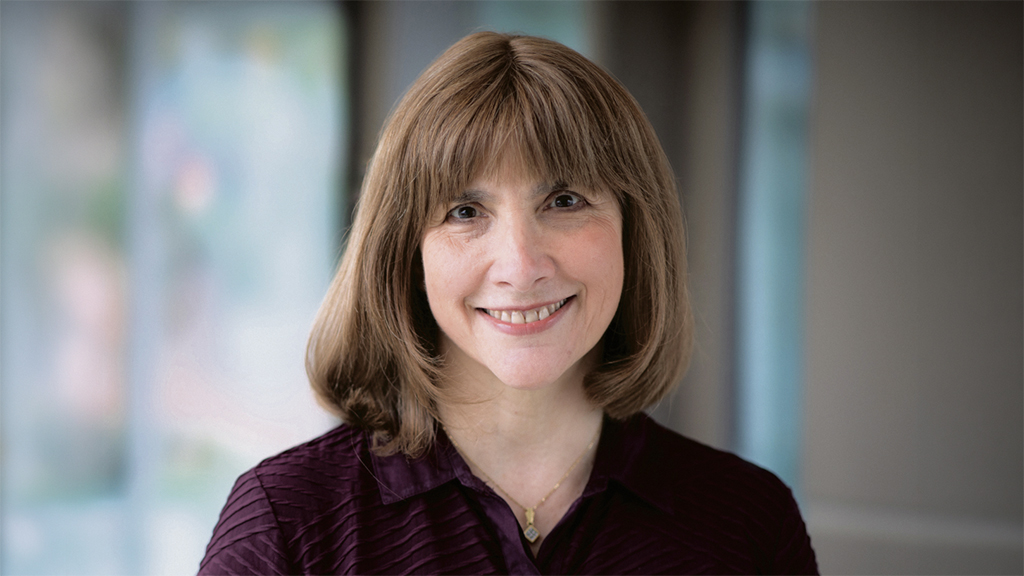
February is Jewish Disability Awareness and Inclusion Month. To mark the month, Congregation Beth Sholom’s inclusion committee will host Lisa Shulman, who is a member of the Teaneck shul. (See below.) Dr. Shulman is a neurodevelopmental pediatrician, a professor of pediatrics at the Albert Einstein College of Medicine in the Bronx, and the director of autism services at the Rose F. Kennedy Children’s Evaluation & Rehabilitation Center at Montefiore, also in the Bronx.
She’s going to talk about what she’s learned about people with autism, and how to help them. She does not plan on talking about politics, she said.
Dr. Shulman’s been interested in autism, people with disabilities, and children who for some reason or other just are different for most of her life, she said. She remembers that when she was a ninth-grader in Metuchen High School, her first term paper was on two books, “Dibs in Search of Self,” about a boy with autism, and “I Never Promised You a Rose Garden,” about a girl with schizophrenia.
“I gave bar and bat mitzvah lessons at Neve Shalom,” Metuchen’s Conservative shul, “and I was the person who would work with students who needed some special attention,” Dr. Shulman said. She also was used to physical disabilities. “My grandmother lived with us until I was 5; she had multiple sclerosis and was in a wheelchair,” she said. “My father was an amputee. And I had a friend in childhood whose sister had cerebral palsy. She was very smart, but she wasn’t allowed to go to our school.”
For the last 30 or so years, Dr. Shulman has worked at the center in Montefiore. “It’s very large,” she said. “We see 9,000 individuals with developmental disabilities every year; there are 40,000 annual visits.
“When I graduated in 1992, I was the director of our early intervention program. We would see very young children with a diagnostic eye in an era in which autism couldn’t be diagnosed until they were 3. You could see it when they were 14, 15, 16 months old.” A study soon showed that children could be diagnosed before they turn 2.
“After they are diagnosed, we connect them with services, and we follow them forever,” Dr. Shulman said. “I have been doing this for 35 years. I have patients from the infant preschool team who are 35 years old. I get to see the individuals and their families on their journeys.”
Autism comes with a range of related issues. It’s different for each person, so the wide-ranging experience and specialized training of the team that works with each patient matters.
The multidisciplinary team at Montefiore includes practitioners of 15 disciplines, including developmental pediatricians, psychiatrists, audiologists, special-care dentistry specialists, nutritionists, psychologists, occupational therapists, physical therapists, and social workers. “The idea is to meet the families, give them appropriate diagnoses, and connect them with entitlement programs,” the help that the government gives them,” she said.
“Children with autism are at increased risk of seizure; they may have other problems, like anxiety, and they may benefit from therapies that they can’t get from other systems, like augmentative communication devices. They might have highly restricted eating habits that lead to poor weight gain.
Some people with autism may need special education. Others may not; with support, “they can be integrated into the mainstream academically,” Dr. Shulman said.
Dr. Shulman is on the national autism subcommittee of the American Academy of Pediatrics, a position that gives her an overview of the field.
There used to be less of an awareness of autism, she said. Doctors used to have to explain this seemingly rare condition to families. But now “the spectrum has changed,” she said. “It has enlarged.” Part of it is the media’s emphasis on the condition.
“It used to be that families were referred to us when a child had delays,” she said. “We would do a diagnostic evaluation. About 20 percent of the time, we would diagnose autism. That was in the ’90s; the children often had significant delays and might not have any language at all.
“Over time, the definition of autism broadened. It went from being just autism to also Asperberger’s disorder.” That was in the 1990s; the definition came from the authoritative mental health resource, the Diagnostic and Statistical Manual of Mental Disorders. “That was in the DVSM-4,” Dr. Shulman said. “That captured the diagnosis of a child who was different.” And then, “In 2013, in the DVSM-5, everything was included in the definition of autism.” Asperger’s was no longer an available diagnosis. “The idea was that the DVSM-5 defined milder symptoms, but everybody had to meet them. Everybody had to have social and communications deficits, trouble with peer interactions, restricted and repetitive interests and rigidities, and sensory sensitivities.”
That definiton covers a lot of ground.
There also is the genetic component; “we can pick up some genetic mutations now because genetic testing has become so much more sophisticated,” Dr. Shulman said.
People with autism now are diagnosed at support level 1, 2, or 3,” she continued. “Level 1 is people in the mainstream, who may need some support. Level 3 means 24/7 support.
“Support level 1 has gotten the spotlight with the neurodiversity movement. It’s like Sheldon on the ‘Big Bang Theory.’ No one ever says that he has autism, but it clearly portrays it. Characters like him — high functioning, smart, quirky — took away a lot of the stigma from the diagnosis.
“There are self-diagnosis checklists for autism on Instagram and other social media. They overlap with things like being an introvert. I know of a young adult living in a household with other young adults who had come across a checklist, and they all thought that they had autism and wanted to know how to get an official diagnosis.
“That’s not unusual. We get two to three calls a week from young adults — sometimes even from older adults — and they’re disappointed when they’re not diagnosed with autism.”
Last Shabbat, Dr. Shulman said, she gave the d’var Torah at Beth Sholom. It was Parashat Mishpatim, the verses that include the famous lines “You shall not oppress a stranger for you know the feelings of a stranger, having yourselves been a stranger in the land of Egypt.”
At base, part of being diagnosed with autism is feeling profoundly other. We as Jews are obligated to see others, even when they are different from us. That is of course very easy to say and remarkably hard to do, but that does not take away from the urgency of the mission.
All this means that people diagnosed with autism and support level 1 generally have access to a wide range of services. But that leaves out people at the other end of the spectrum. “It feels like they don’t have a voice,” Dr. Shulman said; to be clear, that voice would be more likely to come from family or support providers than from the principals.
“That led to the creation of the category of profound autism in 2013,” Dr. Shulman said. “That captures individuals who will be 24/7 support through their lives. Their needs are very distinct from the highly vocal members of Support Group 1.
“There’s a famous quote from a parents of a child with profound autism,” she continued. “My kid isn’t going to be entering the dating pool.”
The question of how to define and categorize autism is politically loaded; the Trump administration’s emphasis on discarding DEI, based on the belief that moves toward Diversity, Equity, and Inclusion somehow are harmful, have gotten tangled in the diagnosis and treatment of people with autism.
That brings us back to Jewish Disability Awareness, Acceptance, and Inclusion month. It’s about awareness, acceptance ,and inclusion, Dr. Shulman said. It’s about removing the cloak of invisibility from people with autism, and understanding that just like anyone else, they want to be accepted.
“I advocate that we want to go beyond awareness, acceptance, and inclusion to truly caring, empathizing, and facilitating belonging,” Dr. Shulman said in her d’var Torah. She quoted Rabbi Shai Held: “One of the Torah’s central projects is to turn memory into empathy and moral responsiblity,” he said.
Who: Dr. Lisa Shulman, professor of pediatrics at Albert Einstein School of Medicine and director of autism services at the Rose F. Kennedy Children’s Evaluation and Rehabilitation Center at Montefiore.
What: Will talk about “Autism 2026 — What In the World is Going on These Days?”
When: On Sunday, February 22, at 7:30 p.m.
Where: At Congregation Beth Sholom in Teaneck.
To learn more: Go to cbsteaneck.org