

Growing up in Radburn
What Facebook recently told me about antisemitism in my hometown
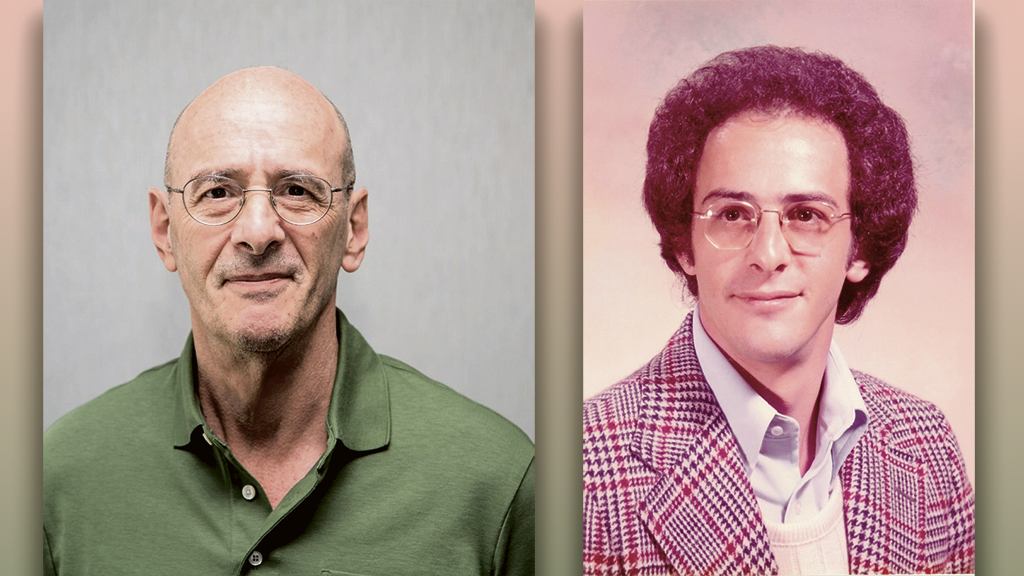
I contributed an investigative essay to the April 11 issue of this newspaper about the history of antisemitism in the Radburn section of my home town, Fair Lawn.
The piece revealed how Radburn had systematically prevented most Jewish families from buying homes there from its opening in 1929 until the early 1950s.
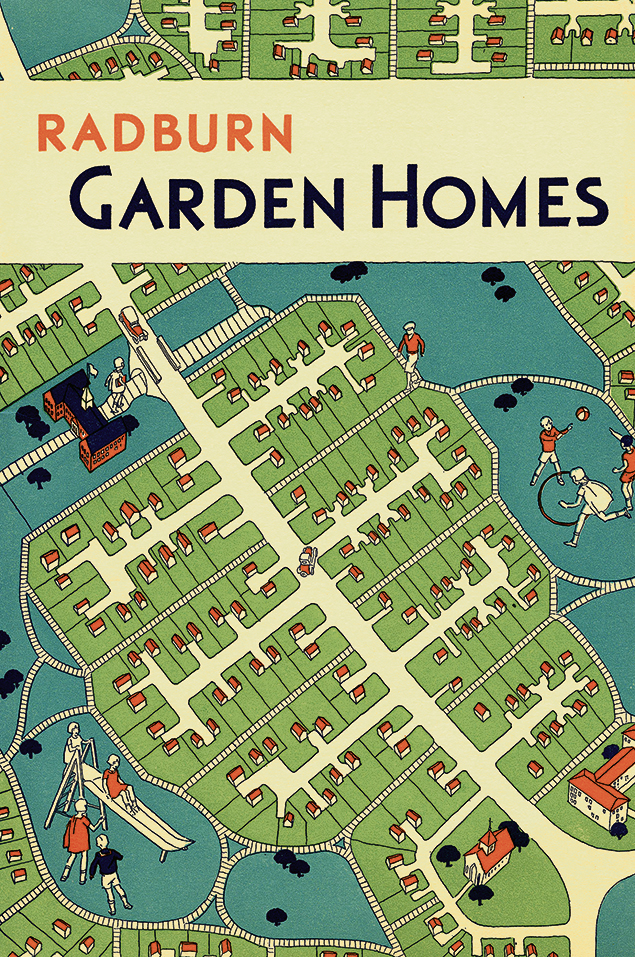
Radburn is internationally renowned, a 149-acre enclave of some 3,500 residents, designed with an innovative infrastructure as a utopian planned community and designated a National Historic Landmark District.
To make my case, I cited evidence based on interviews with two Fair Lawn rabbis, a civil liberties lawyer, a historian of Jewish life in the United States, the current and a former mayor of Fair Lawn, current and former Radburn residents, and friends from my 1970 Fair Lawn High School graduating class.
I then posted my essay on Facebook. That decision set off an outpouring that widely exceeded my expectations. In all my 18 years on Facebook, I’ve never received such an overwhelming response from a single post – more than 1,000 likes, 400 comments, and 200 shares. What readers there let loose all but took my breath away.
Some of the voices in that chorus belonged to residents of Fair Lawn, but many more comments flooded in from elsewhere. I heard from readers throughout New Jersey, not only in Bergen County — Teaneck, Ridgewood, Englewood, Glen Rock, Tenafly, and Bergenfield — but also Wayne, Hasbrouck Heights, Ventnor, and Plainfield.
“Tragically, many other towns in New Jersey practiced the same antisemitism,” Lynn Taylor said.
Observations and opinions also came in from other cites — Boston, Baltimore, San Diego, Chicago, Philadelphia, Seattle, Washington — and from other states —Minnesota, Maryland, Ohio, Virginia. And a few trickled in from Canada, too.
“I grew up in Orange County, California from 1957 until 1970,” Howie Gilbert said. “I found out in third grade that I killed Christ.”
Al Chackman grew up in northern Philadelphia. “As a Jewish kid growing up, I never let my guard down,” he said. “I know we were hated. But I kicked ass and took names later. I am 76 now and proud of my heritage and will never back down.”
“Sadly, this experience of exclusion, harassment and prejudice happens throughout our country, even in my liberal state of Massachusetts,” Lisa Adler said. “As Jews, we were excluded from certain neighborhoods, country clubs, golf courses, social clubs, and other places where people gathered.”
“My parents bought our first home when I was a child in 1958, in California,” Susan Wolfe Rocha said. “Shortly after, the neighbors sent around a petition to ‘get the Jews out.’ I’m 75 and it still hurts.”
More important than geographic origins, though, was how readers reacted. The comments spanned the spectrum from the sympathetic and compassionate and “I-never-knew-that” to the defiant, outraged, and scolding.
Washington Post reporter Mary Ellen Deily thanked me for my reporting and called my account “terribly unsettling.” Former Newsday reporter Jamie Talan called my piece “beautiful and sad research and writing.”
On the flip side, a Jonathan Kates saw fit to remark – obnoxiously, by my lights — “So? Are you asking for reparations?” Someone named Miranda Amador chimed in that “people dislike Jews.”
At least two dozen others took the opportunity to recount similar instances of redlining and housing discrimination in other locations and also prejudice against Jews encountered in law firms, universities, country clubs, and restaurants.
Some respondents either downplayed or denied or outright dismissed my claims about undercurrents of antisemitism in Radburn as untrue, exaggerated, ancient history, or all of the above.
More than a few readers offered deeply personal stories.
Mira Jacobson Wiener lived in Fair Lawn with her family from 1968 to 1978. “The only antisemitism we experienced was a backyard neighbor who threatened injury to our and neighborhood Jewish children playing in our backyard,” she contended.
Paul Moses, a Fair Lawn High School graduate who went on to practice law and lives in California today, adamantly took issue with my central finding.
“My Jewish grandfather, who lived in Radburn from the late 1920s, was the original realtor for the City Housing Corporation and later ran the Goldburgh Realty office, where my father worked for 50 years,” Mr. Moses told me. “I never heard either my father or my grandfather, or anyone else in that office, refer to steering Jews away from Radburn. I hung around the office enough to know that buyers were just shown what was on the market without filtering.”
Mr. Moses disputed my reporting on the existence of “an unstated ban on Jews in Radburn at any time.” He also said he never doubted “there were antisemitic people in town,” but believed “that was on an individual basis rather than systemic.”
“I believe Radburn was always open to Jews, and I have always been pleased, proud, and unembarrassed to have grown up there,” he concluded.
But he was substantially outnumbered by respondents who observed otherwise. They recalled episodes of antisemitism that they either experienced personally or learned about secondhand.
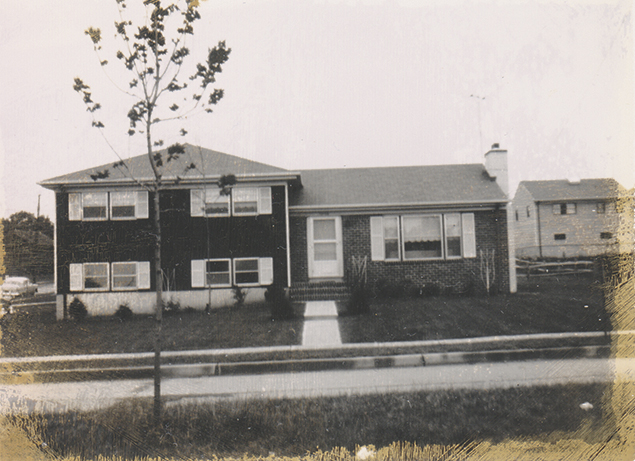
Geraldine Schwed, a 1965 Fair Lawn High School graduate who relocated to Dallas, grew up, like me, on Radburn Road. She recalled seeing a sign at the entrance to Radburn that said “Radburn: A Restricted Community.” She also recalled that soon after her family moved into Fair Lawn, the sign was taken down.
Sheryl Magram Cashin told a similarly disturbing story. “My parents built a new house in Fair Lawn and we moved in during the summer of 1960,” she said. “Other neighbors from the Bronx followed. But a long-time neighbor on the block started a petition to stop the Jews from moving in.”
Debra Grossman, who grew up in Fair Lawn from 1954 to 1977 and is co-president of programs at the Jewish Historical Society of North Jersey, told me she “never experienced any direct issues with being Jewish.” But she recalled hearing rumors that parents of students in local schools were being warned that “we had horns on our heads…. So I was invited to speak to the parents of the incoming eighth grade students at St. Anne’s parochial school at an evening devoted to helping them explain the differences between parochial school and public school.”
Jay Lazerowitz, who grew up in Fair Lawn and later would practice law, was a third-generation Fair Lawn resident. “My grandfather, Morris Blender, was a Jewish dairy farmer in Fair Lawn, a very unusual situation,” he told me. But the incident he described revolved around his mother as a young girl.
“My mother had to attend Radburn Elementary School, in Radburn, in the 1930s,” Mr. Lazerowitz said. “She had to eat matzah on Passover in the principal’s office because the teachers and the students had never seen matzah before and thought that my mother was strange.”
Another commenter said, “My neighbor was a wonderful kind man who made a statement I never thought I would hear coming from him. He once told me that I’d better get some Christmas decorations up or people would think we were Jewish. You should have seen the look on his face when I told him that we are Jewish.”
“I grew up in a non-Jewish section of my own, with only two other Jewish families on my block,” Stuart J. Schoenberger said. “When I sold our house, I discovered the racial covenant.”
All in all, the thunderous feedback I got — and, in some cases, the blowback — turned out to be a real civics lesson. It qualified as a telling snapshot about attitudes toward Jews. The viewpoints expressed amounted to a cross-section of Jew and non-Jew alike, revealing that our culture, though occasionally in harmony, is still all too often at odds.
In the end, my essay got a conversation going among readers. Or, rather, extended a debate that began millennia ago and remains unlikely ever to end – an argument about the role Jews play, or should play, in our daily lives and throughout civilization at large. At issue in this dialogue is whether we can learn to live together and how we propose to go about doing so.