

More Jedi than Jews
‘Kid Sister’ Simone Nathan describes the New Zealand take on things
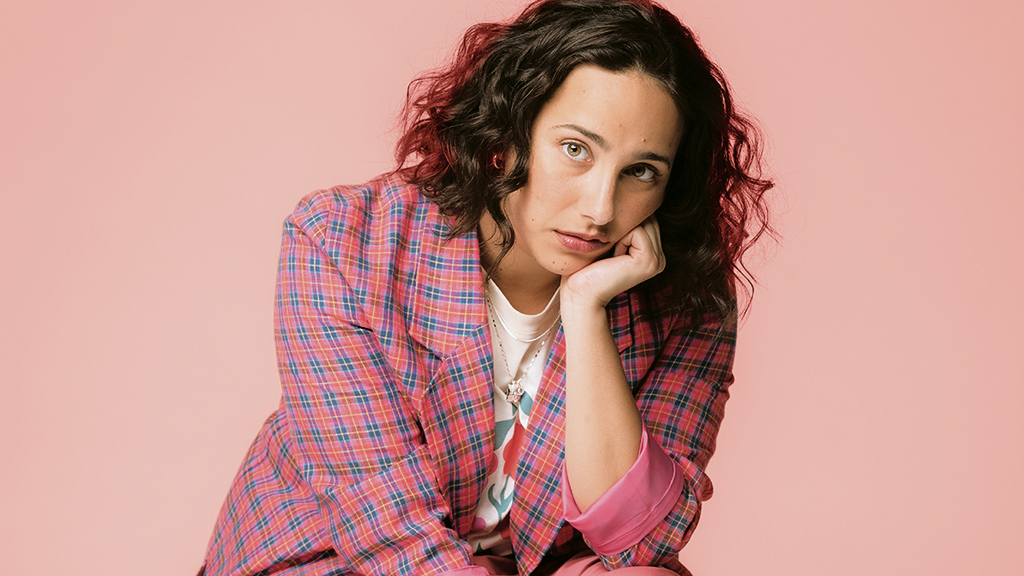
“Kid Sister,” one of the world’s great Jew-ey sitcoms, has just arrived at ChaiFlicks.
That, of course, by itself is unsurprising, since ChaiFlicks is the Jewish Netflix.
What is surprising is where this funny, warm-hearted show comes from: New Zealand. There are only 5,000 Jews in New Zealand, and according to “Kid Sister” star/creator/writer Simone Nathan, in the country’s last census, more than 5,000 people there identified as Jedi.
“I think they were being a little bit facetious,” Ms. Nathan, 34, said during a Zoom call. “I would hope so. Otherwise, I’m kind of scared of the uprising of the dark side.”
Still, a nation with more Jedis than Jews offers a limited pool for young Jews who want to find religiously appropriate mates. That’s the dilemma facing Lulu (Ms. Nathan) in the first five-episode season of “Kid Sister.” She “solves” it by dating goyboy Ollie (Paul Williams) and largely keeping him away from her observant family. That works well, until she discovers during a doctor’s visit that it isn’t a UTI that’s bothering her. No. She’s pregnant.
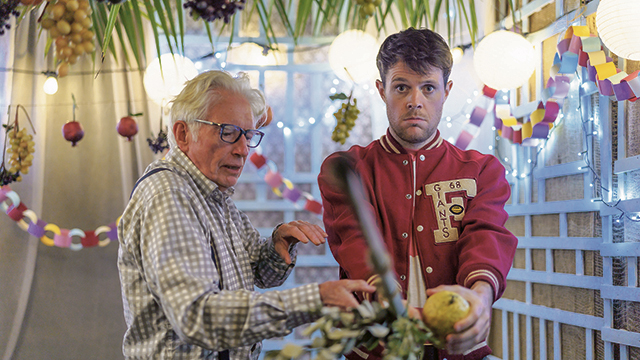
The show is really sweet, especially in its depiction of Jewish life: the blessing of the children at Shabbat, the holiday meal in a sukkah. It is also frequently laugh-out-loud funny in a way that doesn’t easily translate into prose. (Though having an elderly grandfather infecting every woman in his nursing home with chlamydia is kind of funny, even in print.)
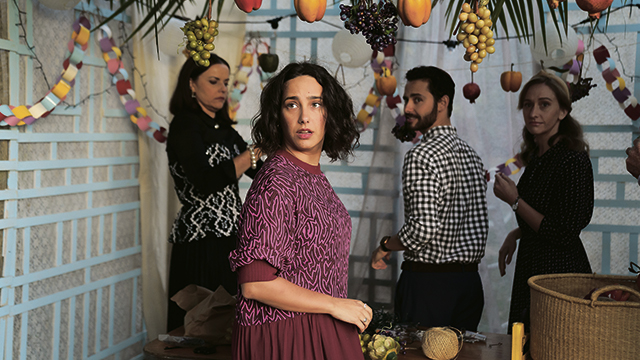
Perhaps because it originated down under, the casting process was slightly upside down. Both Ms. Nathan and her real-life boyfriend, Paul Williams, had to audition to play themselves. “We’d already been dating for like maybe a year or two, and then we auditioned to play ourselves in the show,” she said. “And not just that. We had to audition against other actors, so I had to do scenes with people who could potentially play my boyfriend instead of my boyfriend, and he had to do scenes against other women who could play me instead of me.”
How much of the show is based on real events? “It’s a real mix,” Ms. Nathan said. “I would say it’s largely reimagined for the purposes of the show. But there’s a lot of truth in the characters and a lot of the dialogue and my family.
“My mom is really a larger-than-life South African, and my dad is really like the sort of hilarious, slightly severe but loving father. And I was dating Paul in real life, quietly, behind the scenes, until eventually he started coming to synagogue and being interested in converting. Then I felt more comfortable introducing him to my family.”
Spoiler alert: in the second season and in real life Ollie/Paul converts to Judaism. But even before then, the Nathans thought highly of him.
“He’s so sweet,” Ms. Nathan said. “It’s really hard not to like him. So I think that as much as they would have liked to have met him and said, ‘No. No. No. This guy’s a stand-up comedian. He’s no good. Find someone one who can make a buck.’ But they just fell in love with him, like I did. And so they had to pretend that they were keeping him at arm’s length.
“I think he made his way into their hearts pretty fast. And in terms of the Jewish thing, as long as he’s converting, we’re good.”
Ms. Nathan’s parents had a similarly positive attitude about their portrayal in the series. “They’re really unusually supportive parents with that kind of thing,” she said. “I don’t think everybody would be happy sort of having the mickey taken out of them” — being teased — “in that way. But luckily, they’re kind of interested in TV and movies and the arts and were kind of excited to see themselves depicted.
“There were moments where they were like ‘I hope people think that was the character and not me.’ But for the most part, I often came to my house and found my mum in front of the TV watching the show and laughing. So I think it went down pretty well.”
The show went over well even with people who weren’t mispoche. Ratings were excellent. “I was amazed at the engagement that the show got in New Zealand,” Ms. Nathan said.
I asked her how Jews are perceived in New Zealand. “I don’t know if they’re really perceived at all,” she said. “I think the show was the first time a lot of people became aware that there even are Jews there.”
There is irony in that, of course, since “we’ve had a few Jewish prime ministers and mayors and high court judges and big business families. So people aren’t necessarily aware that Jews have had quite a contribution to the secular world here — unless we point it out, which we love to do.”
Ms. Nathan grew up in a modern Orthodox family that occasionally “feels a little more Reform. I would say that everybody pretends that they’re not driving to synagogue, but they are. And everybody kind of pretends to eat kosher and then goes home and gets McDonald’s.
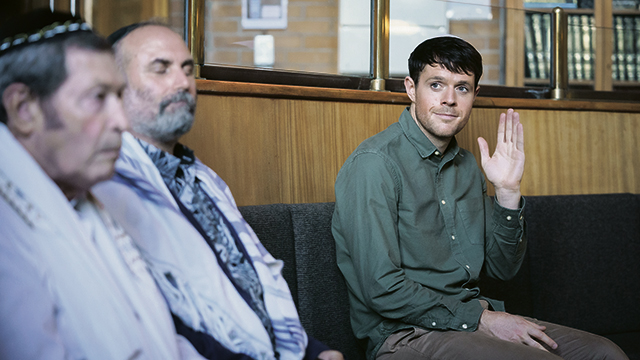
“No, no. It’s not quite like that. There is an amazing Jewish community, centered primarily in Wellington and Auckland. I grew up quite religious in our own way. I was with the Bnei Akiva youth movement and came up through that. I spend a year in Israel with them.”
Ms. Nathan’s parents — dad was a business executive and mom a flutist who played with the New Zealand Symphony— now are retired. “So the two of them spend all day annoying each other.”
Ms. Nathan went on to study at NYU and worked briefly in New York. The move caused a major cultural shift. “Oh my gosh,” Ms., Nathan said. “Everything changes. Because the unusual part of you becomes the New Zealand part, not the Jewish one. So, in New Zealand the interesting and novel thing about you is that you’re Jewish. Then you go to New York and it’s like, well, of course you’re Jewish. What else?
“And then, ‘Oh, you’re from New Zealand. I’ve got to go there.’ I’d never naturally made friends with Jewish people in my neighborhood or at school. You had to go so far out of your way to have Jewish mates. But then I started attending NYU and made a bunch of friends and they were like, ‘By the way, we’re all Jewish.’ I had never experienced that or seen it coming.
“Not only that. They are every different type of Jew. Some of them had never set foot in a synagogue, which was really unusual for me. I didn’t even know that was an option. There was just such a greater variety of how you identify with your Judaism and Yiddishkeit.
“Also, the food is so accessible. There’s only one Jewish deli in New Zealand, whereas you have endless options in New York, which is quite overwhelming.”
Ms. Nathan seems doubtful that there will be a third season of “Kid Sister.” “Now that it’s coming out in America and having sort of a second life, it makes me want to make more. But it’s been a long time. A lot has happened, since, you know, we have our first baby. So it feels like my life is catching up to the show now.”