

A picture at an exhibition
How my mother escaped Germany
I was talking to a colleague about the Holocaust Memorial in Yerushalayim — Yad Vashem —and I told him that my parents; my wife, Shelly, and I went to Israel to celebrate Passover in 1973.
On one of the days of chol hamoed, we went to visit Yad Vashem.
My parents both survived Hitler. Mom was born and raised in Baden-Baden, Germany, and lived there for more than four years after Hitler was elected. My dad lived in Vienna, was arrested by the Nazis, and escaped.
When you go to Yad Vashem, you walk into the memorial and immediately turn to the right.
The exhibits are overwhelming, and before we got to the wall, mom started to scream. Her body was racked, a torrent of tears flowed down her cheeks, and her screams didn’t subside.
She was standing stock still, staring at a picture on the end wall, a picture of a synagogue on fire.
My dad held her as Shelly and I walked over to the picture. The caption below the picture read: Burning synagogue in Baden-Baden, 1938.
Mom was screaming because she remembered that synagogue and she knew about that fire. It was because of that fire that she and her family escaped Germany. This is her story.
On the morning of November 10, 1938, the day after the beginning of Kristallnacht, members of the SS knocked on the door of my maternal grandparents’ home in Baden-Baden.
“Where are your sons?” they demanded. “You’ll never find our sons,” my grandmother, who was called Ma, replied. “They’re in America.” She was lying.
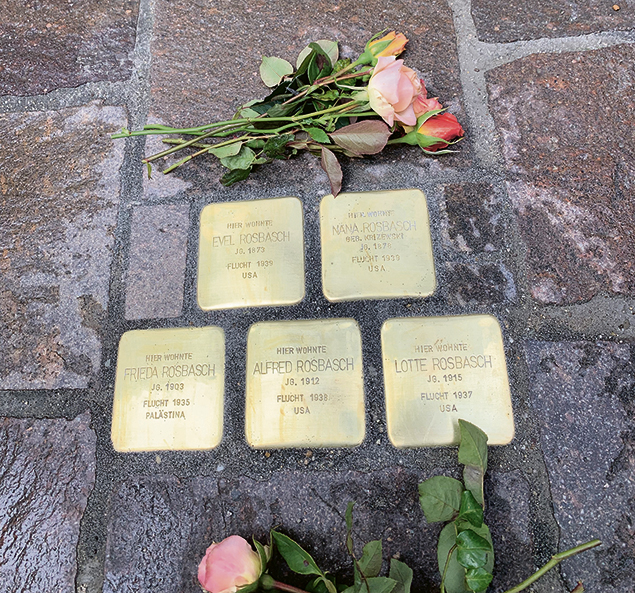
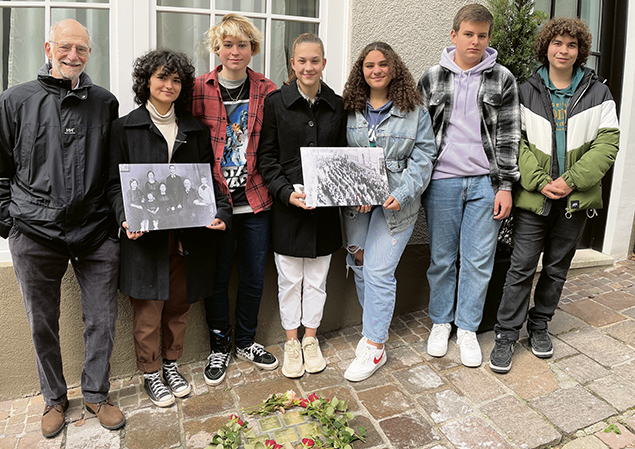
Gustave, her older son, was a physician, married with two daughters, in Heidelberg. Their other son, Alfred, who was the chazan in a Conservative synagogue in Breslau, actually had left for the States a few months before Kristallnacht.
The Nazis looked at my grandfather, who was called Pa. “Komm mit uns,” they said. “Come with us.”
Ma asked them to wait so that she could pack something up for him to take, and surprisingly they did.
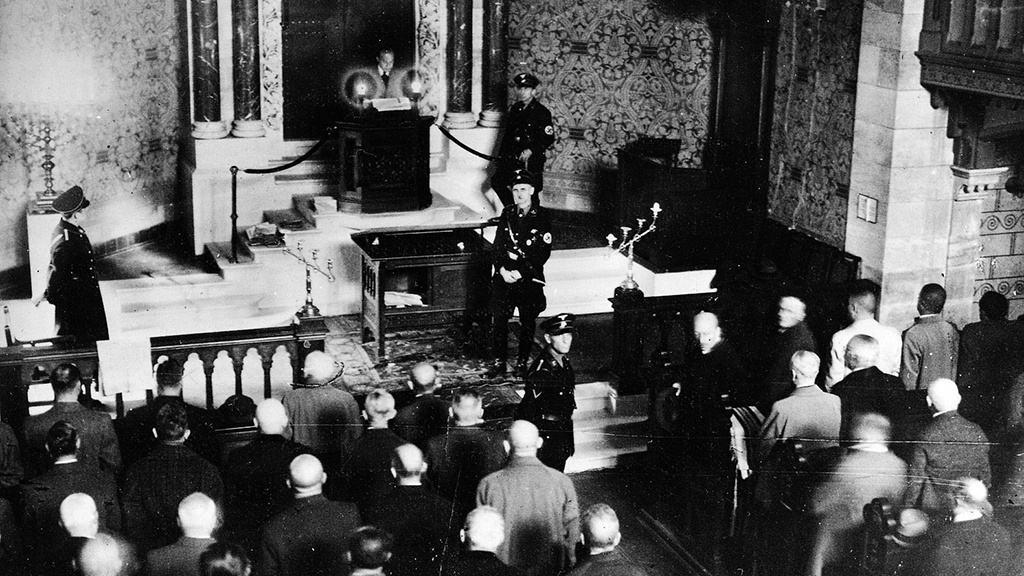
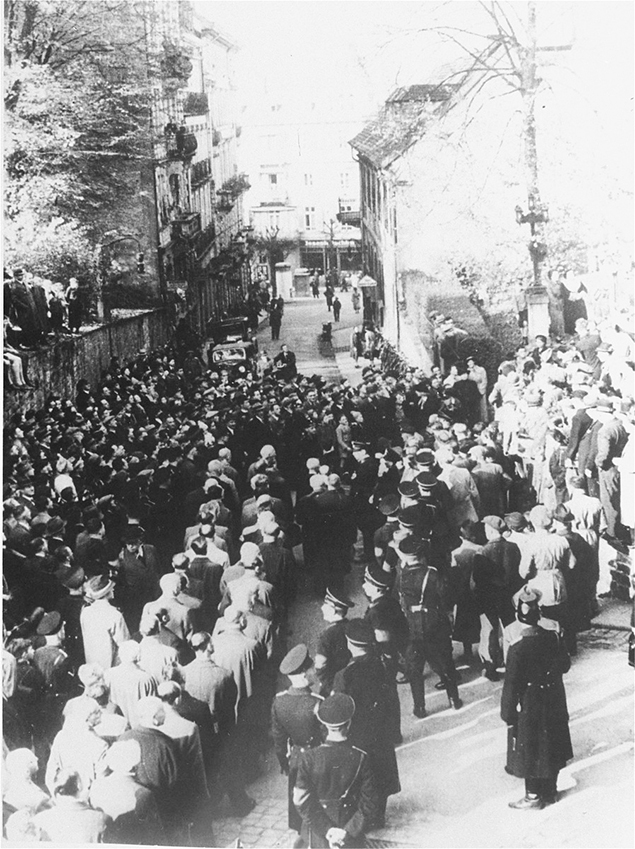
There were probably fewer than 100 Jewish men who were forced to march through the center of the city, from the police headquarters to the city’s synagogue. Crowds gathered along the streets to watch the march, hurling insults, spitting at the marchers. Some were actually dragged out of the line and beaten.
When they got to the synagogue, a Jewish professor was forced to stand at the lectern on the bimah to read passages from Hitler’s Mein Kampf while SS men stood all around the bimah. Some of the men were taken to the Jewish Hotel Central, and some fled as the synagogue itself was set on fire and destroyed; Pa, along with other Jewish men, ran. Luckily, he got home.
He told Ma that the Nazis were going to kill all the Jews in Germany and we had to run. Ma protested: “We’re Germans. Why would they want to kill us?”
“We’re Jews, they will never consider us to be Germans” was his reply. “They will kill all of us,” and he talked to their three daughters — Frieda, Mathilde, and my mom, Lotte — begging them to run. Luckily they all escaped.
It must have been 45 years later when the mayor of Baden-Baden asked Mom to come back to Baden-Baden and speak to the students about her experiences under Hitler. She took her sister Mathilde and her niece Nescha and went. Her talks with the high school kids went incredibly well, but when they walked through the streets of Baden-Baden, she looked at the face of every person who looked to be about her age and thought to herself: “What did you do during the war?”
Shelly and I flew to Athens about 15 years ago, and we had to change planes in Frankfurt. It was the first time I had been in Germany, and whenever I heard anyone speaking German there, I looked at them and asked, albeit under my breath, “What did you do during the war?”
Cantor/Rabbi Lenny Mandel of West Orange is the spiritual leader of Congregation B’nai Israel in Emerson.