

Teach NJ aims for parity
OU-supported group scores dollars for nonpublic schools in tough budget year
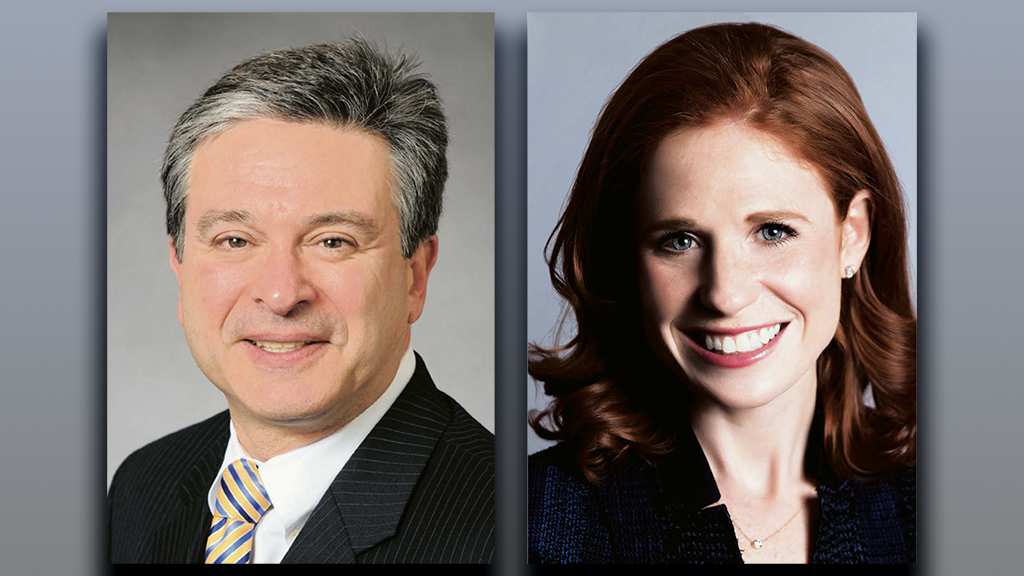
When Governor Mikie Sherrill warned that New Jersey faced one of its toughest budget seasons in years, Jewish day school leaders were concerned that programs supporting nonpublic schools might be scaled back.
Instead, the final state budget included a $2 million increase in nonpublic school security funding, bringing the total to $32.55 million. This fully funded $1.5 million for STEM — science, technology, engineering, and math — and continued support for school nurses, technology, textbooks, transportation, and special education services that benefit more than 100,000 students.
Much of the credit for this accomplishment goes to Teach NJ, a member of the Orthodox Union’s Teach Coalition that works across seven states to help secure billions of dollars in government funding. While the overall goal is to make Jewish day school tuition more affordable, Teach NJ’s advocacy benefits all nonpublic schools, including Catholic, Christian, and Muslim institutions.
This year, more than $152 million in state tax dollars were invested in nonpublic school students, a 70 percent increase in annual funding since Teach NJ was established in 2015. But there’s much more to be done, according to Teach NJ’s chairman, Dr. Eric Fremed of Teaneck.
“Currently, New Jersey state aid for every public-school student is approximately $8,000, and only $950 for every nonpublic school student,” Dr. Fremed said. “That’s a ninefold difference. My goal can be stated in one word: parity.”
Dr. Fremed, working with Sam Moed of Englewood and Nathan Lindenbaum of Teaneck, began the initiative in the face of rapidly rising day-school costs. Today, Jewish grade-school fees in Bergen County range from approximately $16,000 to $25,000 per child, depending on grade level.
“In one of the wealthiest counties in the state, if not the country, even dual-income couples simply cannot afford day school tuition,” Dr. Fremed said.
He had served as president of Yavneh Academy of Paramus, the alma mater of his four now grown children, and saw firsthand the severe financial difficulties borne by parents. “It’s not contestable that Jewish education is the one link in the chain that’s going to keep us going,” he said. “I had to figure out how to make this work.”
But with parents tapped out, where could he find a significant source of funding to ease the burden?
“I’m a physician; I pay an outrageous amount of state taxes, and I never really understood where the money went,” he said. “I started looking into it and found out that they’re giving money away you just —have to ask for it. And the Jewish community never figured this out.
“We come from a long tradition of separation of church and state, so when we sent our kids to yeshiva, we never felt entitled to government help. But that’s crazy. We are entitled to it.
“The premise is simple: The state is responsible for the education, in a safe and healthy environment, of every child in the state, regardless of where they go to school. Nonpublic schools provide a substantial public good, educating 10 percent of K-12 students, and the state should support their work accordingly.”
Lacking any political experience, Dr. Fremed turned to the OU, which founded the Teach Coalition in 2013 to pursue the type of parity that he sought for New Jersey. The coalition had started in New York and Florida and achieved great success. “In New York, the state provides $85 million per year in funding for nonpublic school STEM teachers,” Dr. Fremed said. “In Florida, every nonpublic school student gets an $8,500 grant. If these states did it, we can do it in New Jersey.”
The OU got the Teach NJ chapter organized and connected with a professional lobbyist.
“It takes money to get money,” Dr. Fremed said. “We spent time and money to make it happen. You don’t just knock on the Speaker of the Assembly’s door; you’ve got to go with a lobbyist. We did educational days in Trenton, where we sent busloads of grade-school students to meet with their elected officials.
“Now we are a recognized name, and we’re getting things done. When we were seven years in, Governor Murphy agreed to be the keynote speaker at our annual dinner. It went from zero to 60 in seven years.”
He emphasized that one of Teach NJ’s biggest obstacles is an erroneous and “irrational belief that every dollar coming to nonpublic-school students comes out of the public-school budget. That simply is not true. We are simply trying to increase allocations for everybody.”
Additionally, Teach NJ Executive Director Katie Katz noted that according to Teach Coalition’s Research Institute, New Jersey’s nonpublic schools generated an estimated $2.92 billion in savings to public school districts during the 2022–2023 school year alone.
“About 160,000 children attend nonpublic schools across the state,” Ms. Katz said. “In doing so, they help ease enrollment pressures on public school systems and reduce education costs borne by local districts and taxpayers. That $2.92 billion contribution is equivalent to roughly 7.2 percent of what public districts currently spend statewide, and the figure doesn’t account for facilities, administration, or the long-term infrastructure costs borne by the public system.”
She said that this year’s state budget allocation for nonpublic schools “reflects years of building relationships, engaging in dialogue, and showing up consistently. We still have a lot more work to do, but one of the biggest changes we’ve seen is that advocacy is no longer the work of a small group of people. Parents understand that if we want Jewish education to remain affordable, secure, and strong, we all have a role to play.”
According to Ms. Katz, participation in Teach NJ’s advocacy efforts has doubled over the past six years, signaling increased understanding among parents, rabbis, school leaders, donors, and volunteers that advocacy is as essential to strengthening Jewish education as philanthropy and community service.
As a result, Teach NJ has forged stronger relationships with lawmakers and elevated nonpublic education as a priority in Trenton. Lawmakers especially supportive of these efforts for this year’s budget, she said, include Senator Paul Sarlo, Assemblywoman Lisa Swain, Senator Joe Lagana, Assemblyman Rob Karabinchak, and Assemblyman Gary Schaer.
But it’s not a one and done.
“You can get your ask approved and put in the budget, but the budget is annual,” Dr. Fremed said. “You have to start at square one each year,” fighting the same battles. “Even with a lobbyist, you need grassroots parents who are seething about the cost of yeshiva education to respond to action alerts, write to elected officials, and show up at rallies.”
Bergen County Commissioner Tracy Zur, who is Jewish, underlined that point. “Democracy isn’t a spectator sport,” she told parents at Teach NJ’s annual summer barbecue. “We need you to run for office, for school board. We need you to show up at local Republican and Democratic club meetings. We have to be present and engaged. We need to collaborate to make sure we are in every room where decisions are being made.”
David Callen, a member of Teach NJ’s Leadership Circle, said he got involved after noticing that one of his children’s schools had received funding from the state and asking what made it happen. “People started telling me about Teach NJ and the great work they were doing,” he said. “I look at it as an investment — a small investment that makes a huge impact for the people of New Jersey. It was an easy decision.”
Indeed, said Dr. Fremed, the efforts of Teach NJ benefit many others.
“It’s not just Jewish day schools, and this is one of the beautiful, positive things that has come out of this experience. The Catholic school system spans the entire nation, and they’re in the same boat. There are Christian schools and Muslim schools, too. Teach NJ Executive Director Katie Katz and her predecessors cold-called the leaders of those communities for their buy-in, and they said, ‘We all want the same things you want. Sure, we’re on board.’
“That increased our clout. We’ve made strong alliances across religious lines, which is good for everybody.”
All these schools have additional security aid at the top of their wish list.
Writing in NJBiz, Ms. Katz, who lives in Teaneck, said that “public schools receive more than $307 per pupil in state security funding while nonpublic schools receive $205 per pupil, a gap that has widened even as threats against faith communities have intensified. Antisemitic incidents in New Jersey have surged, and average security costs at Jewish schools have more than doubled from $175,000 to over $400,000 annually. The [recent] deadly attack at the Islamic Center of San Diego, home to a school and mosque, underscored the urgency of these threats.”
Another major campaign for Teach NJ is encouraging New Jersey to opt into the new federal scholarship tax credit program. Dr. Fremed estimates this program could bring tens of millions of additional dollars to help families afford Jewish day school tuition without requiring new state spending.
It doesn’t cost anything for states to participate. However, the program is part of the so-called Big Beautiful Bill, the controversial Republican tax-cutting measure that Democrats opposed, and heavily Democratic states such as New Jersey are hesitant to support it for that reason.
“All that money is sitting on the table because states can’t get it unless the governor opts in,” Dr. Fremed said. “The red states all opted in. The blue states are salivating to get this money, but nobody wants to go first. The Teach Coalition nationally is trying to get all the governors to opt in. The individual state Teach Coalition members such as Teach NJ are making this a priority.”
Despite gains yet to be made, Teach NJ’s efforts have led to expanded funding for special services, school nurses, classroom technology, kosher meals, transportation, and more. Another example is New Jersey’s STEM reimbursement program, a first-in-the-nation public-private partnership that expands nonpublic school access to certified STEM teachers. This program helps ease teacher shortages, offers public school teachers additional compensation opportunities, and educates thousands of students at a fraction of what the state would otherwise spend.
Dr. Fremed and his wife, Nancy, still have skin in the game; they have grandchildren at Moriah in Englewood, Golda Och Academy in West Orange, and Solomon Schechter Day School in New Milford.
“It blows my mind that we thought we had to do this on our own,” he said. “We really don’t. The government is here to help us.”