

Learning from the past
Hod family donates to Teaneck Holocaust Memorial
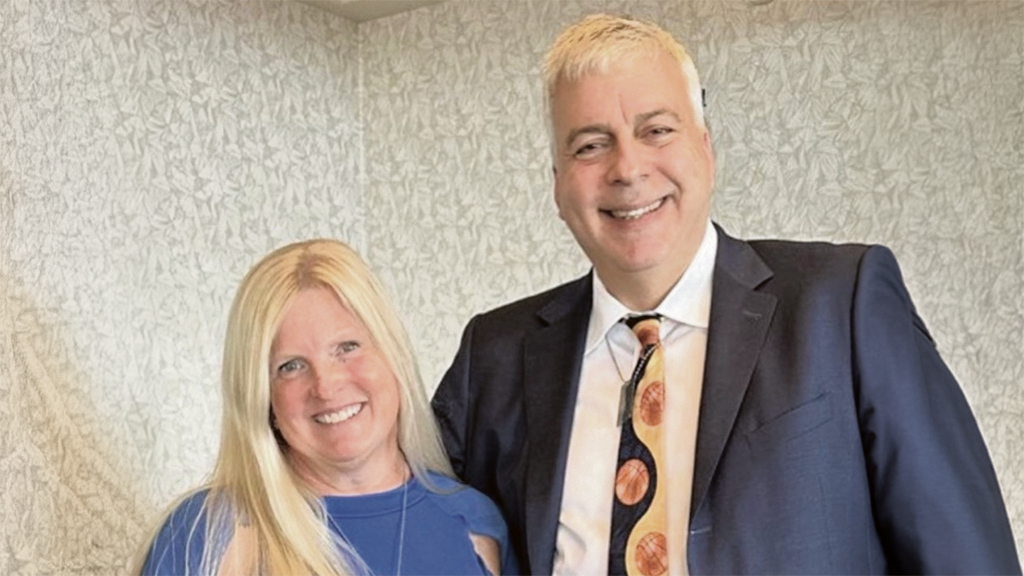
Commemorating the Holocaust is “not just about remembering what happened,” Janet Hod said. “It’s also about learning from the past and passing those lessons along to future generations so that we are never in that situation again.”
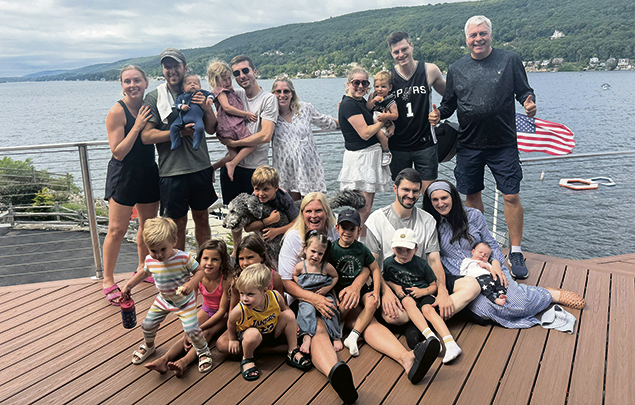
Last month, Ms. Hod, her husband, Lior Hod, and their children and grandchildren made a $100,000 gift to the Northern New Jersey Holocaust Memorial & Education Center. Longtime Teaneck residents, the Hods are “very strong believers that it’s important to start tzedaka locally” and feel that this project is “so important, especially today,” Ms. Hod said.
“As parents and grandparents, we feel a sacred obligation to ensure that the stories of those who perished, and those who survived, continue to be told with truth and dignity for generations to come,” she continued. The family also feels a “duty to teach future generations, of both Jews and non-Jews, that if we all had better understanding and more respect for differences, the world would be a much more peaceful place.”
The couple sees the North Jersey memorial as a great opportunity to impart that message in the present and to future generations.

The memorial and education center, slated to be built on the Teaneck Municipal Green, is being planned as an interactive memorial that will use “augmented reality to make the history of the Holocaust come alive,” Steve Fox, who chairs the committee of local residents working to build the project, said. This gift is “our largest donation to date and will help us see the project to fruition.”
Mr. Fox, also a longtime Teaneck resident, hopes the contribution will “inspire others to come forward and donate.” Community members have the opportunity to honor a loved one by including their name, along with photos or a short video, on one of the memorial columns, he said.
The Hods made the gift in memory of Dov Hod z”l and Matel Joszef z”l , and in honor of Alexander Kostantyn.
Dov Hod was Ms. Hod’s father-in-law, but because the family prefers the term “in-love” to “in-law,” she refers to him as her “father-in-love.” Dov’s father was taken by the Russian army and never seen again, Ms. Hod said. “They never found out what happened to him.” Dov later was forced into the Pesht ghetto in Budapest with his mother, Leah, and his older brother, Moshe. “He was a young boy, and he used to climb over the wall, hoping not to get caught, in order to get food for his family,” she said.
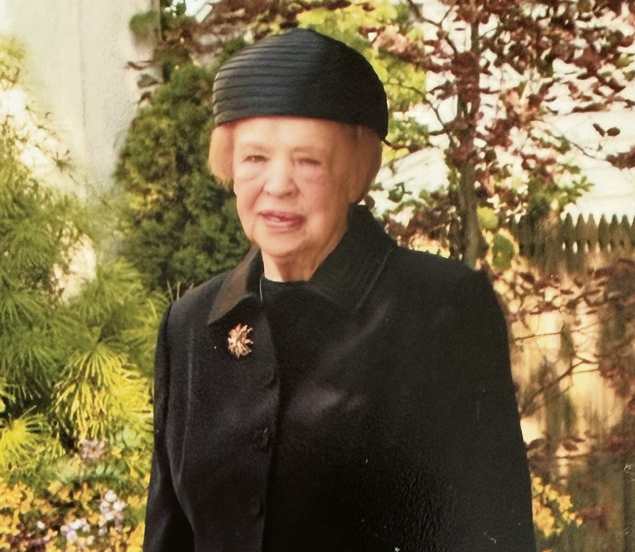
The three survived and eventually immigrated to Israel where the brothers married and raised families. “They had a very hard life in Israel,” Ms. Hod said. “Dov immediately started working; he had to take care of his mother. He never had any sort of education.”
Dov later moved to the United States, and he lived with Janet and Lior in Teaneck for the last 20 years of his life. “He was always happy and he had a great sense of humor,” Ms. Hod said. “But he was definitely a victim of his childhood. He was a victim of living in the ghetto, of the brutality, of having to get food for his family to survive.”
When her father-in-law lived with the family in Teaneck, “he used to go to some of the programs at the JCC on the Palisades,” Ms. Hod continued. “We had no problem financially, but he would hoard food at the JCC and bring it home and hide it in his room. That’s the mentality he always carried with him.
“There are some survivors who really rose above and became hugely successful. My father-in-law was the opposite. He really was a victim of surviving in the ghetto.”

Matel Steinberg Joszef was a close family friend who survived Auschwitz with her sister. “She went before Mengele many times,” Ms. Hod said. “She was a beautiful girl and she would always step in front of her younger sister to protect her. She always wanted Mengele to choose her over her sister.” Ms. Hod also recalled hearing stories about Matel “stealing potatoes to give to her bunk” and about her surviving the death march.
After the war, Ms. Joszef came to New York and raised a family. “She was so kind to us,” Ms. Hod said. When Ms. Hod and her husband were newly married, they didn’t have relatives living nearby, so Ms. Joszef invited them for the Passover seders. “She always treated us with kindness like that,” Ms. Hod said. “She was always giving, always cooking, always making sure people had.”
Ms. Hod’s daughter Samantha was in Auschwitz on a group program when Ms. Joszef died. Samantha (then Hod, now Locke) knew the number of the bunk Ms. Joszef had been in, and she found it.
“It was such a powerful moment for everybody,” Ms. Hod said. “We kept thinking she was going to die before she did, and it was almost like she waited until somebody was back in the place that tried to exterminate her to say ‘I survived, and look what I created.’ It was a real miracle that my daughter happened to be there on the day of the funeral.”
Alexander Konstantyn, the grandfather of Ms. Hod’s daughter-in-law Avital Rosen Hod, was born in Poland, near Bialystok. “When the Nazis moved into the region, the family fled into the countryside,” Ms. Hod said. “Alex was a very young boy at the time. A family friend was hiding them but then felt it was too dangerous. So instead of having them leave, he poisoned a blueberry pie.”
Alex’s father, Baruch, ate the pie first. He died instantly, in front of Alex and his mother, Hanna. Hanna then grabbed Alex and fled. She found another farmer who was willing to help. He hid the two in an underground bunker under a barn for about two years.
After the war, Alex and his mother moved to Israel, where he served in the IDF. Later, the two moved to the United States. “He went to JTS and became a teacher,” Ms. Hod said. Mr. Konstantyn lives in Florida now. “He is an amazing person.” He used to speak about his experience at schools and has told his story as part of a number of oral testimony projects.
Mr. Fox described the gift from the Hod and Locke families as a “blessing.” The goal of the memorial and education center is “to teach the history of the Holocaust interactively and to offer community members a place to pay tribute to family members and friends who survived or were killed during the war,” he said. “In today’s environment of rising antisemitism,” he sees the project as “more important than ever before.
“We expect thousands of visitors annually to pass through its gates and learn the history and lessons of the Shoah, and we are profoundly grateful to the Hod and Locke family for this tremendous boost,” he said. “It brings us so much closer to making this a reality.”
Learn more at the Northern New Jersey Holocaust Memorial & Educational Center.