

Camp and joy
What the NJY Camps mean to the Jewish community

This summer, there weren’t any new or unexpected threats to summer camps.
It wasn’t like the summer of 2019, say, when the mental health crisis that had been preying particularly on kids and young adults, as the effects of unrestrained social media became clear. It wasn’t like the summer of 2020, when covid relegated campers to their own individual Zoom windows, or the summer of 2021, when they went back so very gingerly that almost no move could be unmediated.
It certainly wasn’t like the summer of 2024, when the shock of the October 7 massacre still reverberated, or last year, when Hamas still held Israeli prisoners.
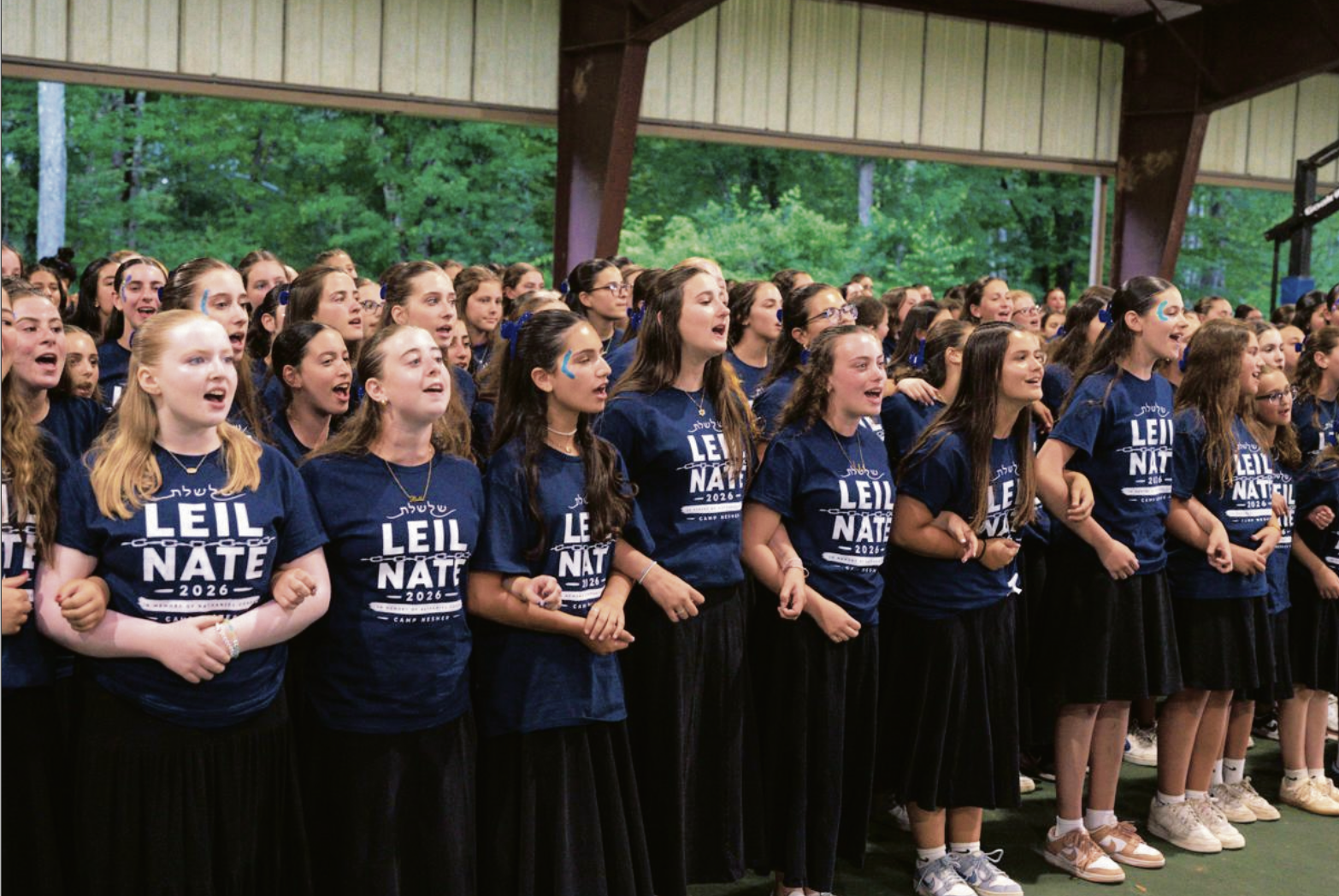
But it still isn’t easy being a kid in 2026, and it’s even less easy being a Jewish kid right now.
The good news is that what Jewish summer camps offer hasn’t changed. Yes, as a result of the dangers the outside world poses, security around the camps has gotten much more serious. And yes, camp administrators provide the most up-to-date technology its staff needs, and everyone, from social workers through counselors, knows to look for signs of trouble, and how to help the child suffering with them.
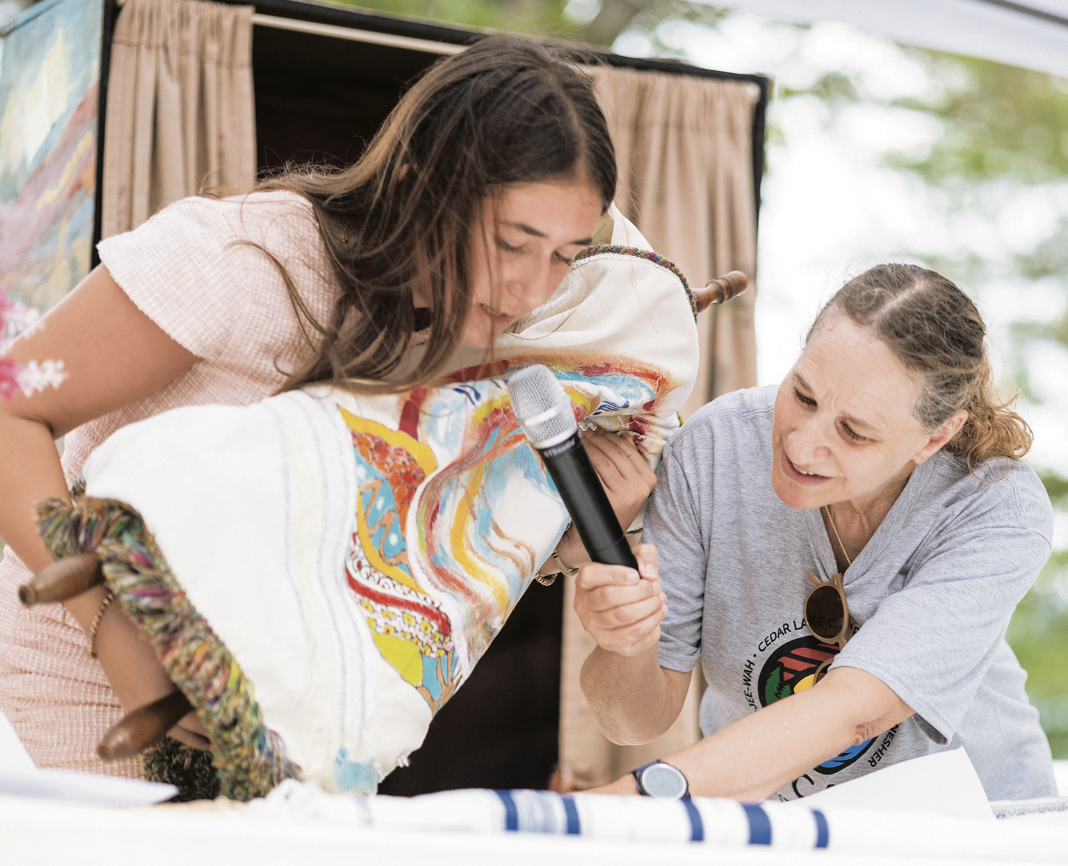
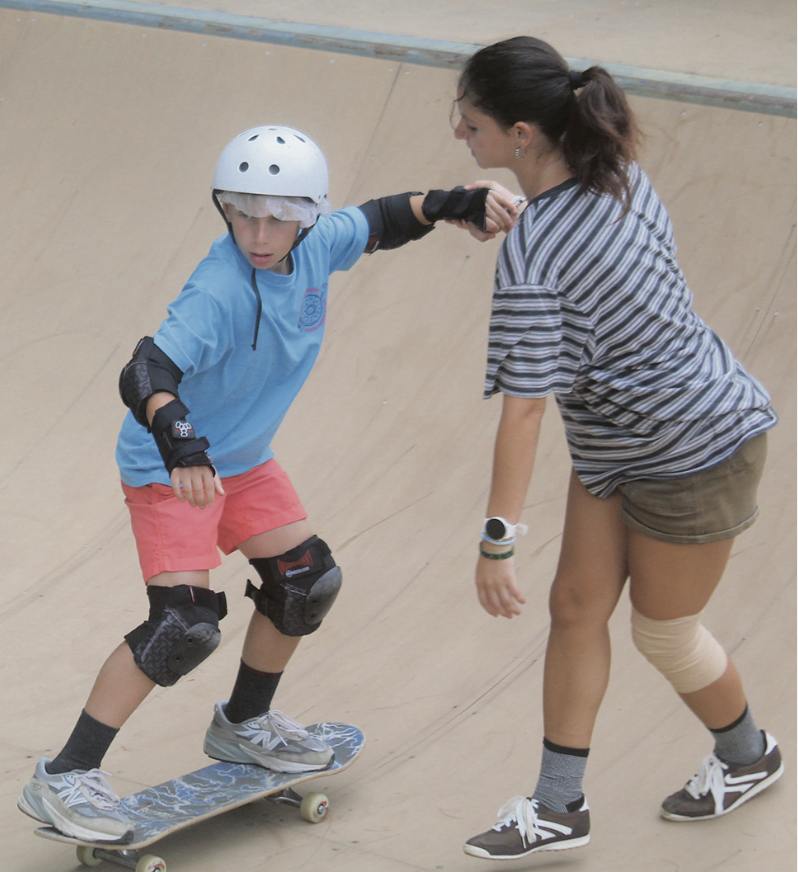
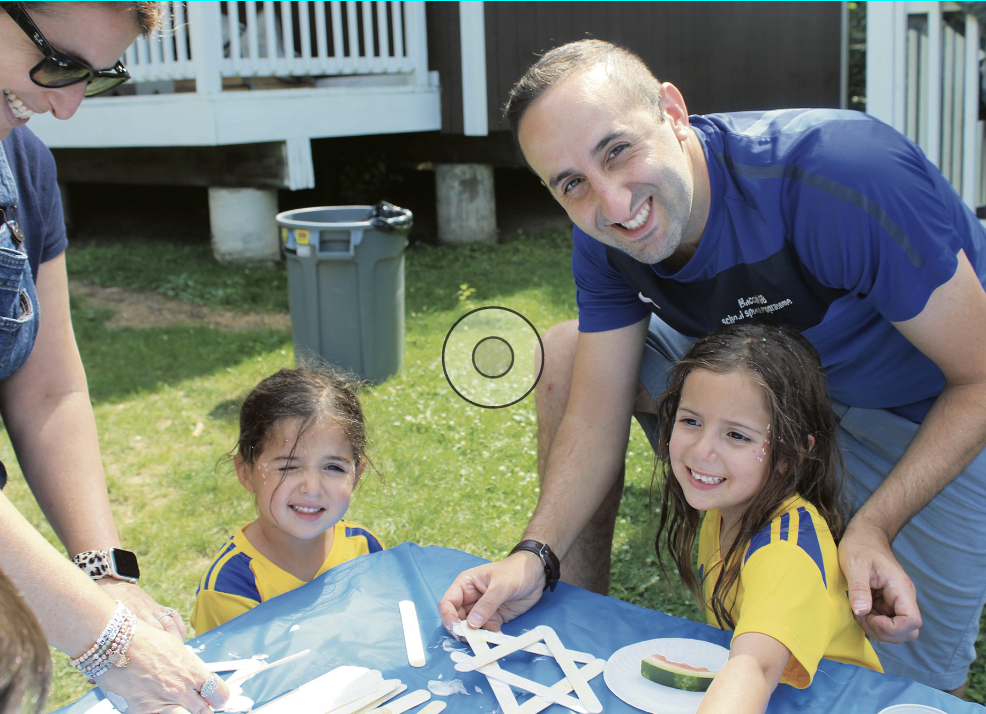
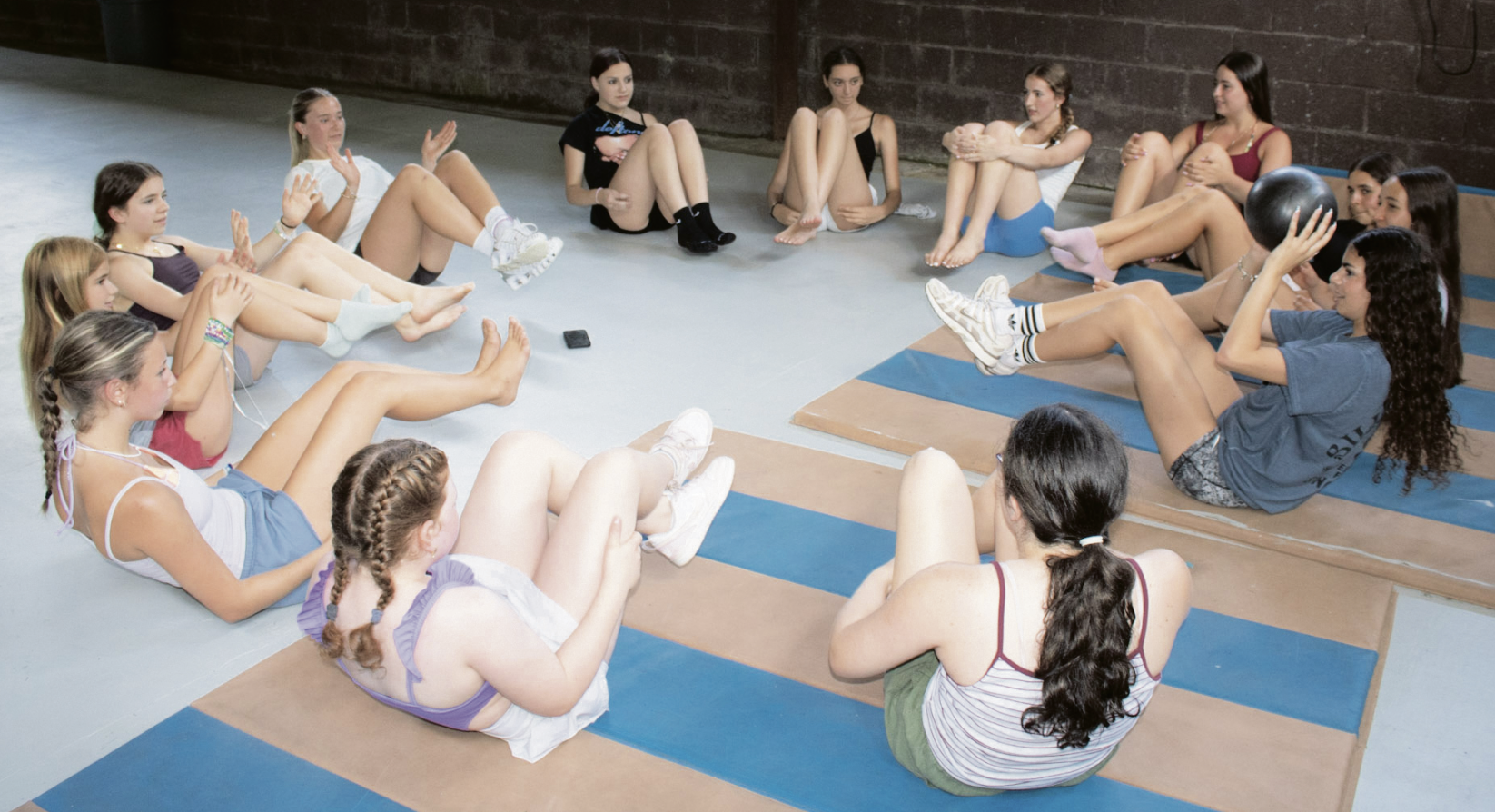
But inside the boundaries of camp, kids and teens and the young adults who work there are safe, free, and able to have fun, laugh, sing, swim, do dumb-but-safe things, learn — sometimes a little bit about planned subjects but far more often about life — and make intense, often lifelong friendships.
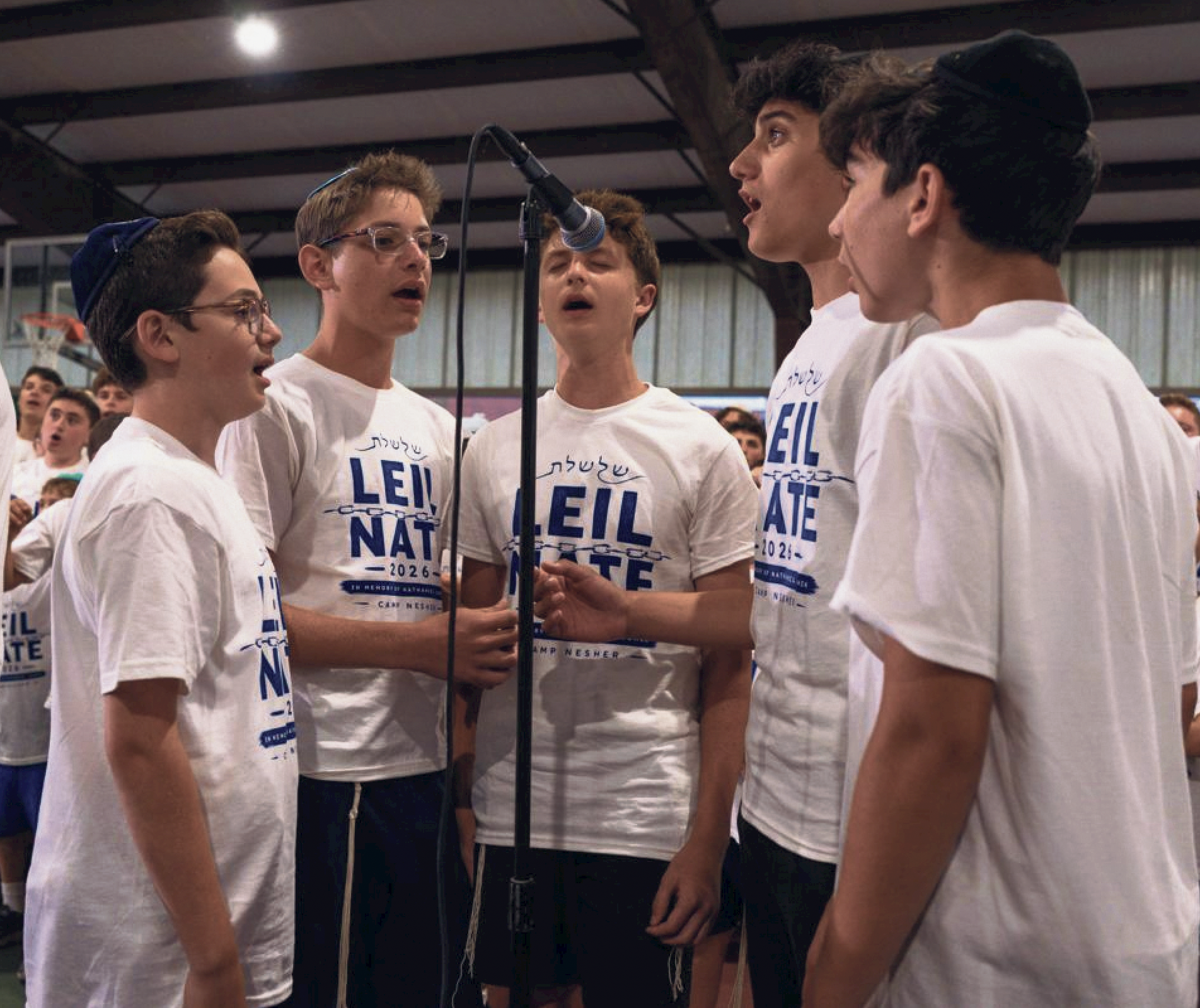
The New Jersey Y camps — Nah-Jee-Wah for the youngest kids, Cedar Lake for middle-schoolers, Teen Camp for — wait for it! — teenagers, Nesher for Orthodox children, and Round Lake Inclusion for campers with a range of special needs — have been providing summers full of fun, hope, and joy for Jewish children for just about a century now. Because when people — and remember, kids are short people — are given the chance to breathe, relax, play, and grow, they do.
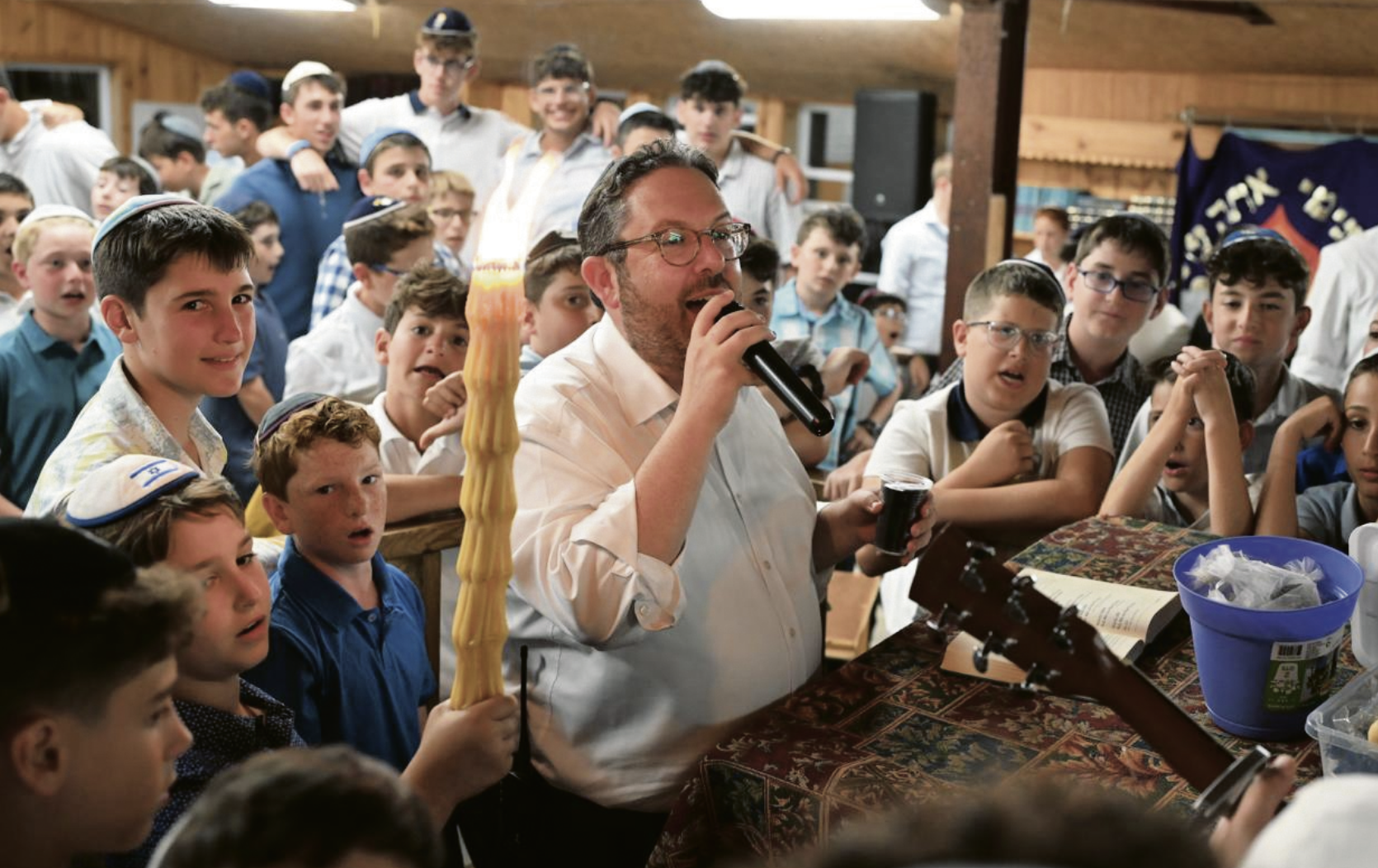
Recently, the NJY Camp’s two top leaders — Carrie Darsky, the new CEO, and Sam Aboudara, the COO — sat in their summer office on the Milford, Pennsylvania, campus to talk about camp, the summer, and how they got to camp this summer.
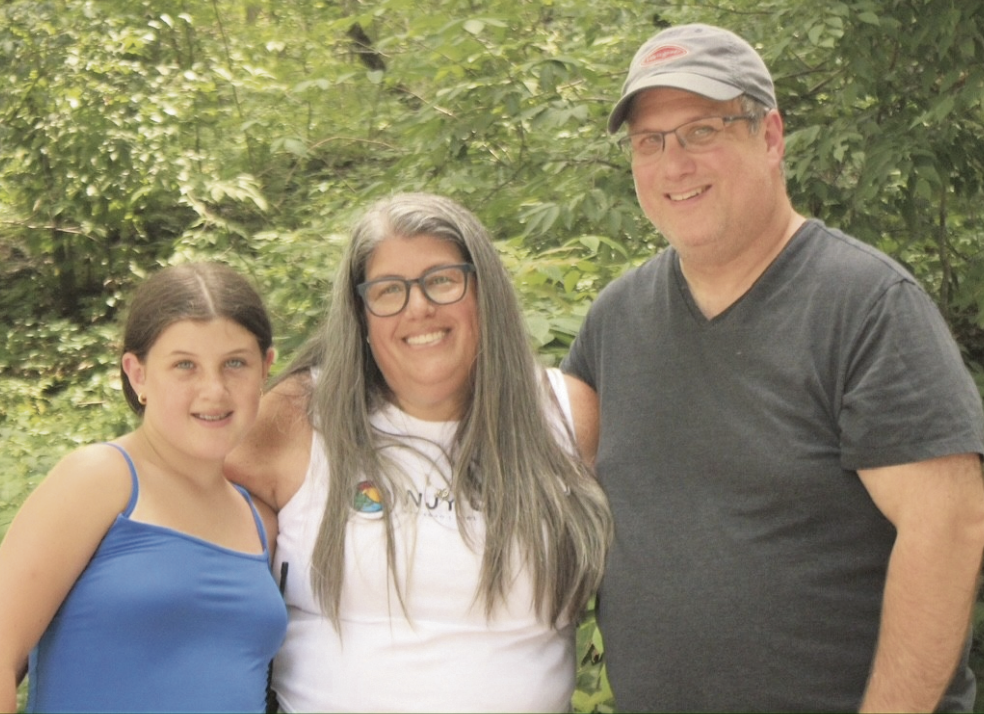
“One of the reasons I was attracted to the camps is the beauty of the environment, and how kids can come here and they get to be proudly Jewish. Our staff, whether they’re Jewish or not” — most are, some aren’t, and although this isn’t the point of camp, sometimes staffers are so moved by what they see that they choose to become Jewish, as someone is doing this summer — “create that environment.
“And I was attracted by the pluralism that exists here, regardless of where you sit on the denominational spectrum. Whether you’re just Jewish, or maybe a little bit Jewish, or you have one Jewish parent, or no Jewish parents but Jewish grandparents. You can develop a Jewish self-confidence and a Jewish identity here that feels totally accessible.”
It’s also a haven for young staffers. “For our college-age kids, coming to camp post-October 7, they don’t have to be defensive about being Jewish. They can just be Jewish. They can proudly wear their magen David, or their chamsa, and feel proud.
“There’s a reprieve and a relief that comes from just stepping into camp and knowing that no one is going to challenge your identity here. No one is going to ask you to defend a posture, when it comes to Jewish life or Israel or anything else. That doesn’t exist for any of us in our world right now. Anywhere I go outside camp — in the supermarket, in a synagogue — I could be challenged. But that doesn’t happen in our camp bubble.
“Being Jewish is part of camp, whether you fully take it or you leave it. It’s here, and it’s infused into your heart.”
Ms. Darsky is a natural in camp — she’s a trained social worker with decades of experience in Jewish nonprofits, and she’s a pure Jersey girl. Her mother’s parents were Holocaust survivors who came to the United States from Poland and Romania, and moved first to Elizabeth and then to Union; her father grew up in Newark.
“I grew up in Springfield, and I was a member of Temple Beth Ahm Yisrael there,” she said. “I was actively involved in USY; I was a chapter president and involved on a regional level. I worked at day camps throughout New Jersey.” Her first sleepaway camp was Harlam, the URJ camp in Pennsylvania; that means that she was exposed to both the Conservative world, through her shul and youth group, and to the Reform movement, through camp.

She went to college at the University of Massachusetts and then earned an MSW at Yeshiva University’s Wurzweiler School of Social Work. Her jobs at Jewish nonprofits were not social work positions, but that approach to people — listening to them, taking them seriously, helping them deal with problems, connecting them to specialists if necessary — has undergirded her career ever since. “I didn’t realize how much I would tap my social work skills when I came to work here at camp,” she said. “It’s been many years that I’ve been in direct service work, but it’s a skill that I use every day.”
She went to work at the 92nd Street Y, directing a day camp during the summer and working with middle schoolers the rest of the year. That was her introduction to the NJY Camps; she took groups of city kids to Milford, on what hilariously was called an exchange program. “They were city kids, so coming out to the country was new to them,” she said. She left the Y to work for the JCC of Palm Beach — although the Y has stayed close to her heart, and she maintains relationships there — and moved to Florida for that group. Because the JCCs in Florida don’t have sleepaway camps, she brought some local kids from West Palm Beach, where she worked, to the NJY Camps — she knew it was a wonderful place, and “if they’re going to have to get on a plane, they can go anywhere, so why not here?” — and some of them kept going to the camp, year after year, until finally they aged out.
She ran many programs in Florida — “day camping, early childhood, after school, teen programming, family engagement programming” — and learned a great deal. Some of it was the kind of lessons you’d expect to learn from such work, but some of it was because the Bernie Madoff scandal hit when she was there, and it affected the JCCs.
“The lessons that I learned then, I can say as a CEO now, are about what donor relationships look like, about what protocols need to be in place. I got really good exposure into what not to do, and into how something like what happened can crumble a community. There were real lessons to be learned there.”
Next, it was back to Jersey to work at the JCC in Deal. There was a JCC there already but most of the Jews who used it were Ashkenazi, and the famously tight-knit Sephardi community there wanted their own institution. Its leaders hired Ms. Darsky as the new center’s first executive director.

“I can’t tell you all the things I had stacked against me,” she said. “I was a woman. I was single. I was in my 30s. I had a master’s degree. There were millions of reasons why I wouldn’t be successful there — but I was, and it was beautiful. We built a beautiful program. We had hundreds of kids involved in sports leagues. We opened a Sunday morning day camp program, so parents could drop their kids off for a number of hours. We did beautiful work, and they are now a thriving center. They built a multimillion-dollar facility, called the Deal Sephardic Network.”
Then, feeling that her work there was done, Ms. Darsky moved to Columbia/Barnard Hillel, where she was assistant director for eight years.
Like every place she’s worked except for Deal, “it was pluralistic,” she said. “I really believe in Jews accessing Jewish life, however they come to it, and creating a space for them to get engaged more deeply, if that’s their choice.
“Columbia was beyond meaningful as an experience, working with the university, navigating. It was before October 7, so it was nothing like what it must have felt like after that. But even when I started there, in 2008, we were dealing with the far right and the far left when it came to Israel politics on campus, the university’s stance, and engaging the community.”
She saw firsthand how difficult identity politics could be. Students often had to figure out how — or if — to show up for causes in which they believed wearing pro-Israel T-shirts. It was complicated. “There were layers of identity,” she said.
While she was at Columbia, Ms. Darsky met her husband, got married, and had the first two of her three children, who range in age from almost 4 to 12.
And then it was time for her to leave; it was too hard to be a mother of young children and keep the hours Hillel needs its leaders to keep. So she and her family moved to Springfield, she sent her children to the preschool at Beth Ahm, and she worked for Hillel remotely, leading what the group calls talent development. Then she went back to the JCCA, as the chief talent officer.
“As part of my role at JCC Association, I helped boards and search committees prepare for executive transitions by helping them identify search firms, writing job descriptions, and ensuring the role they were hiring for matched the work they intend for someone to perform,” she said. “NJY Camps was in executive transition, and I provided the JCC Association support to help ready them for the transition. Almost eight weeks later, I decided to throw my hat in for the role myself.
“There were hundreds of applicants, a rigorous interview process, and finally after almost five months – I was identified as the selection.”
The board members offered her the job. She accepted.
That brings us up to this June.
Ms. Darsky was coming into a healthy organization, she said; the leadership before her had stabilized the camps after covid. “I was looking at an agency that I could help bring into its next chapter,” she said. “What will it look like in 10 or 15 or 20 years? What will it need?
“It was operating in a great way, had a strong reputation, was attracting great families and campers, has an incredible legacy.
“From the moment I said yes to the position and we made it public, everywhere I met someone new or saw somebody I’d known for a long time, they were an alum. Our alunni are walking the streets of New Jersey in every corner. Every pocket. I walked into the butcher shop to pick up meat, and the old butcher sent both of his boys there, and the new butcher, who’s taking over for him, is an alum.” (It’s Maple Kosher, she added.)
Why is camp so wonderful?
“Everybody will have a different answer,” Ms. Darsky said. “Mine is that kids here are out of their very strict, typical environments. Wake up, brush your teeth, go to school, spend all day in a classroom, get on your device at home. Maybe you’re in a sports program that’s really intense. Here, there’s a schedule, there’s routine, but it’s all play. What’s better than kids playing? And by the way, what’s better than staff playing?

“It’s the most beautiful thing to watch. Where do you get to wake up every day for seven weeks and go out on a kayak, play basketball with a bunch of your friends? We produce that, and also it manifests on its own. Friendships are made here every day.
“Sam and I both feel very strongly that the most successful measure of a kid’s summer is whether they made a friend, because that just doesn’t happen naturally in the same way anymore. And you’re making a friend with somebody who probably has similar values to yours but might come from a totally different city or town or place. And you find so much in common with them by being in this experience together.”
The Sam Ms. Darsky just mentioned is Mr. Aboudara, whose background is nothing like Ms. Darsky’s. To begin with, he is not a Jersey boy, except of the self-made kind. He’s from Northwest London, as his accent makes clear. And second, most of his adulthood has been spent at camp.
“His life had been shaped by this camp,” Ms. Darsky said. His friendships are shaped by this place. He knows it inside out. He knows what’s great about it. He knows what’s happening in it. He is an amazing partner.
“I’m the product of a very typical U.K. English upbringing,” Mr. Aboudara said. “I was brought up within the United Synagogue system” — that’s the official Orthodox organization, headed by the chief rabbi — “and I attended Jewish schools from the age of 2 to 18. I went to the largest Jewish school in Europe, JFS” — originally called the Jews’ Free School, founded in 1732 — “which has been around longer than the United States of America.
“Like most Jewish kids, I got involved in a Jewish youth movement. That’s where a lot of my Jewish identity came from.” The most important of those groups for him was Maccabi GB. “There was an abundance of opportunities for me to spend my summer and do stuff during the year, whether that was leading a tour in Israel or being an international madrich — a counselor — at the Maccabiah Games, the European Maccabi Games, or the JCC Maccabi Games in America.
“When I was 18, they said, ‘We have this relationship for the last couple of years with an American summer camp, called NJY Camps. We send them qualified soccer coaches every summer.’
“They obviously would have called them football coaches,” Mr. Aboudara said parenthetically.
He went, “and I just fell in love with the place. It was my first exposure to a much more pluralistic form of Jewish practice. I’d never seen Shabbat services the way we have them in the amphitheater, with everyone wearing white. It was familiar enough to me from a practice standpoint. But my days of observing Shabbat fully and walking to shul every Saturday were behind me.” And then he saw Shabbat at camp, and it moved him deeply.
That summer also was important to him “because I’d never been away from home for more than a week at that point,” he said.
But then, when it came to going to university, in 2006, he didn’t do what most of his friends did — stay close to home or “go to one of the big city universities around the country that have big, vibrant Jewish life on campus.” He chose to go to Loughborough University, where he studied sport and exercise science. “I wanted to work with professional athletes,” he said. “It’s not a school or a subject that most good Jewish boys chose. My friends were going to study medicine or law, I was following my passion.” And being at NJY Camp had “got me comfortable with the idea of leaving home and studying somewhere where I knew no one,” he said.
It takes three years to get a university degree in the U.K.; by the time he graduated, he’d spent all those summers at camp, and he’d changed his career plans “because I realized that I want to work with kids, and I want to work within the Jewish community.” He worked for Maccabi GB for a few years, became a freelance professional, working mainly in informal Jewish education, then he worked for a Jewish human resources firm, and then he was asked to work at NJY Camps, the place he loved, the place that showed him who he really was and who he really wanted to be.
Mr. Aboudara is married to an American; he and his wife have two children. This summer is his fifth at camp as COO.
Yes, there are challenges. Both Ms. Darsky and Mr. Aboudara acknowledge them. But they are far outweighed by the joy.
There is something that both of them want to stress.
They want the Jewish community to know that despite camps having been in the headlines over the last few months because of the very public financial difficulties that two brothers, Michael and David Shabsels, have faced because they owned about 30 sleepaway camps, overextended themselves, and might have to close the camps, all those camps are for-profit institutions. The brothers are Jewish, and so are many of the campers at most of their camps.
The NJY Camps, like the other Jewish camps represented by the Federation for Jewish Camp, are nonprofit. They are entirely unaffected by the Shabsels’ problems. No parent need worry that these camps will close. It’s a sad story, but not at all the NJY Camps’ story.
And they want to remind the community about the joy and freedom and beauty that come from Jewish summer camp.
Parents, remember — even if you don’t have a child in a NJY Camp this summer, there’s always next summer.