

A summer at Camp Daveed
The director talks about comedy in ‘The Floaters’
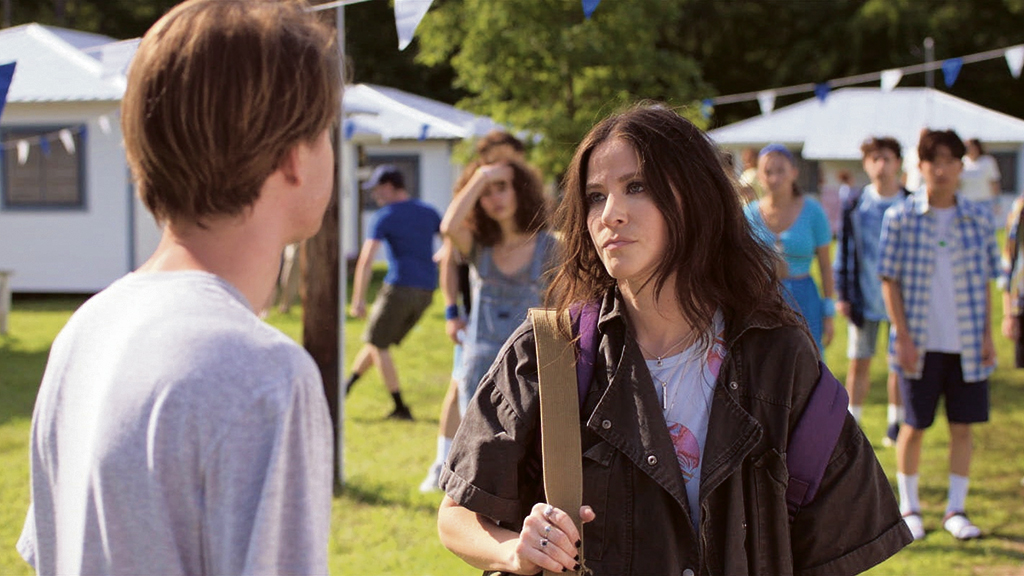
“The Floaters,” which opens at the Teaneck Cinemas July 24, is a lot like the movie “Meat Balls” — if the meatballs were kosher.
Both are centered on misfits at a summer camp. The camps in both films have a heated rivalry with a nearby facility for wealthier kids. And in both films, the camps enter an Olympic-style competition to determine supremacy.
One differences between the two films is that “The Floaters” takes place in Camp Daveed, a Jewish camp, which automatically means that this film generates far more schmaltz.
Nomi (Jackie Tohn), who had been the lead singer of a rock trio until five minutes ago, is canned by a unanimous vote of her two bandmates just before the group is scheduled to start a European tour. So she calls her best friend Mara (Sarah Podemski), now the director of the camp where they met years earlier.
Mara convinces Nomi to go to Daveed as a counselor and assigns her to the titular floaters, the kids who don’t want to be there so don’t sign up for any activities. Nomi bonds these outsiders together and convinces them to write and perform in a play as part of the Maccabiah Games against the ritzy camp run by Daniel (Seth Green).
The movie was filmed at Camp Tel Yehudah in Barryville, N.Y. For three of the producers — siblings Becky, Lily and Shai Korman — the place has special significance. Their parents met there, they went to camp there, and their kids are there now.
Ironically, the film’s director, Rachel Israel, never went to summer camp, Jewish or otherwise. In a Zoom interview from her home in Vermont, Ms. Israel, 46, explains: “I was home schooled. Every home school family does it differently. For my family, the summer was just a normal period. There wasn’t a break in studies.”
Ms. Israel originally was from the Princeton area. Her family made aliyah when she was 6 and stayed in Israel for a year before returning to the States and settling in Florida.
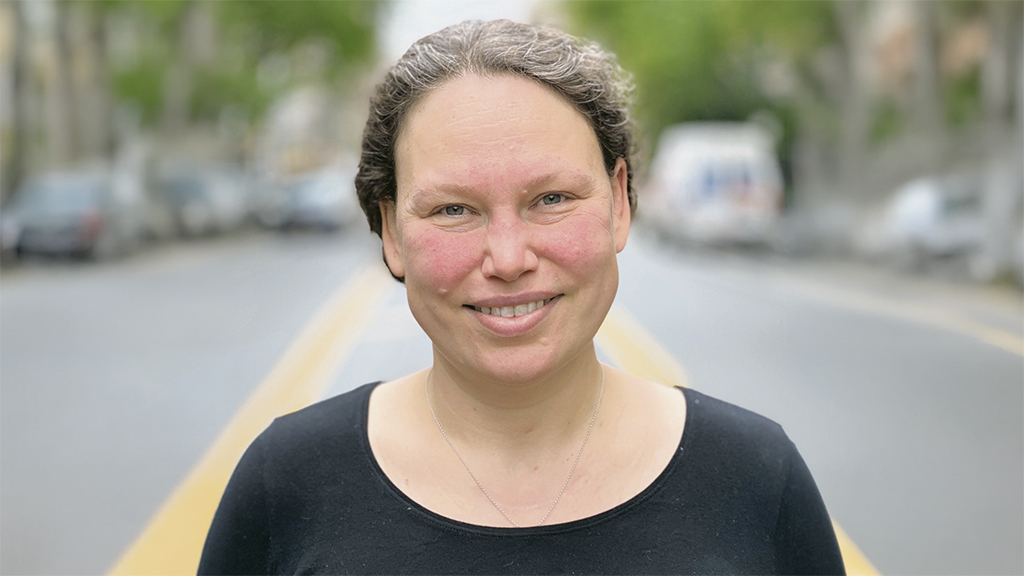
She calls that year a “formative experience and connection. And then I grew up and had more observant periods and less observant patches. Now that I have children, raising them with a Jewish education is very important to me and my husband. So we’re quite involved in our Jewish community here.”
One of the advantages of home schooling is “that I grew up with a lot of freedom and free time to do what I wanted with, which for me was making art. I was destined to be a painter.”
Ms. Israel’s work, “representational painting, a lot of figure painting” — yes I asked; that meant nudes — earned her a scholarship to the prestigious Rhode Island School of Design (RISD).
“I came in on a scholarship with a painting portfolio,” she said. “But there were 17 majors [at the time] and such a buffet of things to try. It was wonderful. In my first semester, a teacher encouraged me to experiment with filmmaking. I did. I took a first exploratory class and decided to major in it.
“Stories — reading novels and watching films — had informed me a lot growing up. Being home schooled, I didn’t have a wide set of peers to relate to. I got a lot of that from films, so it was very exciting for me to be able to work on the other side of it. That you could actually, like, major in films blew my mind.”
She went on to graduate school for directing at Columbia, and what started as a thesis project became her first theatrical release. She describes the film, “Keep the Change,” as an autism romcom, initially based on a friend’s experience with his first romance. Although there were many differences between the thesis film and the theatrical release, the film’s theme remained unchanged, and it included a number of actors from the autistic community.
Ms. Israel set the story at the Manhattan JCC, where she worked part time filming events. Like many show biz aspirants, Ms. Israel had a number of part-time jobs, including at Starbucks; she never made it to barista but was limited to staffing “the cash register — and I could warm you a wonderful muffin.”
But that pretty much ended when “Keep the Change” was released. The film won both best narrative feature and best director at the Tribeca Film Festival, received wide critical acclaim, and eventually led to “The Floaters.”
The producers “connected” to “Keep the Change,” and “I loved the ‘Floaters’ script,” Ms. Israel said. “I saw the kind of movie we could make here would be authentic and present a really Jewish world within the framework of a summer movie.”
“The Floaters” “has been around for a bit,” she continued. “I know that; I first saw it probably more than a year ago, but didn’t write about it then because it had no distribution. But since then a lot has changed, and I wondered if Ms. Israel was concerned about the film’s reception in today’s toxic political environment.
“We shot this film before October 7 and everything that’s unfolded in the world since then,” Ms. Israel replied. “We deliberately did not want to make a political film, and that desire has persisted. It’s not an easy time to be a Jew, no matter how you hunger for seeing Jewish joy and positive Jewish representation. So I think there’s a real appetite for positive Jewish representation.
“I hope people walk away with a good feeling, one that inspires joy and hope,” she concluded. “One of the themes of the film is coming together across division. I want people to feel that is possible.”