Touro sets up first antisemitism institute
University pulls together resources from across its system to help teachers fight hate
Antisemitism probably isn’t the world’s oldest hatred. It seems likely, given human nature, that as soon as hominids turned into people, they created in-groups and out-groups, as competition most likely turned to loathing. (“Did you see that guy’s loincloth? It looks so stupid! And what a big nose he has! I hate him!”)
But antisemitism does seem to be among the world’s oldest, most firmly held hatreds — part of its success likely is because of how the Jewish people have refused to give up, refused to give in, refused to die.
We’re still here, and they still hate us.
Of course, the nature of the hatred, and the words used to describe it, morph over time and space. Sometimes it’s a religious hatred, sometimes ethnic, sometimes sociological. And the ways in which it’s spread change too.
Now, with World War II and the Holocaust almost out of living memory, antisemitism seems less socially unacceptable, and the ubiquity and speed of social media spread it with lightning quickness and terrifying reach.
In acknowledgment of that fact, and with the goals of learning how to fight back and teaching those methods, Touro University is launching the Touro University Antisemitism Institute.
“We’ve had a number of people here working on opposing antisemitism for years, across a variety of disciplines,” Dr. Alan Kadish of Teaneck, Touro’s president, said. “So we decided to put them together, in the structure of an institute.” The institute will be the first of its kind. And although most universities compete with each other, this institute’s goal is to support other schools, because the fight against antisemitism is so basic, and so necessary, that it trumps any more parochial concerns.
The institute will focus primarily on three things, Dr. Kadish said. The first is the summer fellowship — formally the Touro University Teaching Fellowship to Combat Campus Antisemitism — which will bring faculty members from other institutions to Touro’s main campus in Manhattan, where they will learn “about antisemitism and law, antisemitism and culture, and how they can bring what they learn to their own institutions.
“It will focus on lawfare.”
Participating fellows aren’t necessarily Jewish, although most likely most of them will be; they’ll go back to their own institutions with “the tools and the knowledge that will allow them to set up training courses at their own institutions.”
Touro will pay the fellows’ expenses, provide them with a small stipend, and house them in the school’s Times Square dorms. “We hope to have about 10 people this first year,” Dr. Kadish said.
The second area is education. Touro has developed courses on antisemitism, which had been part of the school’s DEI curriculum until DEI was banned. Now it’s considered to be “cultural competence, which includes antisemitism,” Dr. Kadish said.
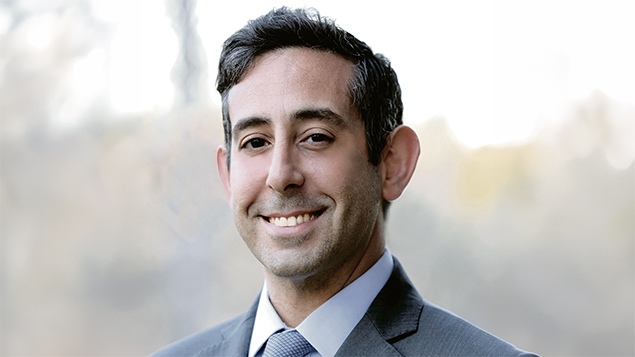
“The third area is research, primarily on antisemitism in social media, and how to combat it. That’s being done primarily by two groups in Berlin, one in the school’s psychology department and the other in its Holocaust Institute.”
Touro has had a campus in Berlin for decades, Dr. Kadish said. (The university system has 38 schools, of various sizes, around the world.) “It’s small and diverse. The majority of the students there are not Jewish, but it has three programs.” The Holocaust Institute has done work on antisemitism.
“That work has been funded by the German government, the U.S. embassy, and some private grants,” he said. “They’ve done some controlled studies.” That’s unusual; it’s hard to set up controlled studies for hatred. “They have created a number of social media posts at different levels, with antisemitism, racism, and Islamophobia, and they’ve exposed students to these posts to see the impact is has on them.
“It was devastating.”
Different groups reacted slightly differently, but the overall result, although not surprising, was sobering, Dr. Kadish said.
“The next step is to work on mitigation,” he continued. “There’s been some work done, and it shows that gentle engagement online, productive conversations, potentially could impact a small minority of people. It’s not a lot, but it’s not zero.
“It shows that there is a lot of work to be done.” One thing the research already has shown is that “while you don’t agree with them online, don’t disagree with them violently.”
Touro also has some faculty members who have been doing advocacy work to fight antisemitism for some time, Dr. Kalish said. One of them is the novelist, lawyer, professor, and activist Thane Rosenbaum; another is the lawyer, professor, and activist Anne Bayefsky.
Dr. Mark Goldfeder — again to be formal, that’s Rabbi Mark Goldfeder, Esq., because he’s a rabbi and a lawyer too — is the CEO and director of the National Jewish Advocacy Center. He’s on Touro’s faculty, and he will lead the summer fellowship.
The fellowship, he explained, begins before the intensive week and continues long after it ends. Fellows are expected to build a course about some aspect of antisemitism that they can teach at least twice. “We also expect that they’re going to end up developing a cohort of supportive faculty. We hope that there’ll be a listserv that will last forever for people who are connecting into a network of people.”
His organization, the NJAC (and please note that for once, the NJ in these initials does not stand for New Jersey. It’s National Jewish) will work with Touro on the summer institute.
Dr. Goldfeder told a story about how U.S. law can be used to support American Jews. “One of the things we do at NJAC is pioneering new strategies to protect the Jewish community,” he said. “In June of 2024, there was a pogrom outside Adas Torah synagogue in Los Angeles, on Wilshire in Pico-Robertson,” he said.

Community members tried to have a program offering real estate in Israel. Anti-Israel protestors attacked the Jews trying to get into the shul. It was violent. “Everyone from the president to the mayor of Los Angeles said all the right things — that it was horrible and antisemitic, but nobody did anything,” Dr. Goldfeder said.
“So we pulled out a law from the 1990s, the FACE act, which is about the freedom of access to abortion clinic entrances. There’s a paragraph that nobody reads that says it also protects houses of religious worship during an act of religious worship. So we said okay, these useful idiots, they block the synagogue, and they tape themselves blocking a synagogue, and then they brag about blocking the synagogue. It’s $5,000 per violation. We have now created a $2 million deterrent. Don’t ever do it again.”
But there was a problem. “In court, they said that there was no act of religious worship happening, because this was a real estate event. An aliyah event.
“And we said that not only is aliyah an event that the Talmud would consider equal to all the other commandments in the Torah, according to the Rishonim, and we showed that even preparing to make aliyah is part of the fulfillment of that commandment.” In other words, even considering making aliyah is a kind of worship.
“The judge essentially said, ‘I don’t want to touch this with a 10-foot pole,’” Dr. Goldfeder added. So now aliyah is protected under the FACE act.” As a result, local groups put together their own FACE act teams, and brought them to other aliyah programs.
“Fast forward to December of 2025,” Dr. Goldfeder said. “There’s an aliyah event again in Los Angeles, on Wilshire Boulevard. The DOJ investigates, and they arrest a woman who’s part of a group called the Turtle Island Collective.
“Turns out that the woman and her friends were planning multiple terror attacks for New Year’s Eve 2026. So in a very real and straight and direct line, that prevented several terrorist attacks.”
Dr. Goldfeder directs the law clinic that’s part of Touro’s antisemitism institute. “It’s the nation’s first antisemitism law clinic,” he said. “Until now, there has been no one place where a young Jewish student or ally of the Jewish people could go to learn systematically how to protect Jewish people and advance Jewish civil rights.
“Touro decided, post October 7, that we were going to go ahead and build it together. So we did, and now we’re heading into its third semester.
“Our students have worked on cases across the spectrum of civil rights law. They’ve met with people at the White House and the Department of Justice. They’ve done training with the FBI. They’ve been in the field and out of the field. They’ve gone to congressional hearing and Senate hearings. They’ve really seen what it takes to try to protect the Jewish community at the forefront of civil rights, and they put a stake in the ground.
“If you want to learn to do this, come to Touro, and we’ll teach you.
“One of the most important things you can do when you’re fighting antisemitism is to draw a baseline. And you need a backstop. The backstop is that we’re not going to let anybody hurt you. The law clinic provides the framework and the backstop for everything else that the institute hopes to do.”
Dr. Goldfeder talked about the work that he did at his alma mater, Emory University, when he returned to teach at its law school. “I ran the religious freedom clinic there for four years, and of the 40 or so students who passed through it, I think that more than half are still doing First Amendment religious freedom work.
“But it’s also important to realize that we are seeding the field in many other ways. We do a ton of cases in a ton of interesting areas, and we also need good pro bono counsel to have some sense of the kind of work we’re doing.
“A couple of years ago, my partner Ben Schlager and I were working on a case that involved Iranian ghost ships, that fly false flags to get oil for Hezbollah. We needed a maritime attorney. I found a maritime attorney who said, ‘Oh my God, I’m so happy. I never in my life thought that I could use maritime law to help the Jewish people.’
“We don’t expect all our students to go into First Amendment religious freedom law, but we know that in the future, God willing, if we need partners in fields like maritime law, we have people we can turn to, who know where we’re coming from, and who will be eager and willing and well-trained to help.”
Malka Fleischmann, who grew up in Teaneck, is the director of the antisemitism institute.
“I’m very motivated,” she said. Prominent Jews have been saying that the community’s money is better spent on Jewish education and forward-looking projects than on defensive work. “It’s not that I don’t think that dollars should be spent on Jewish thriving, and that the Jewish community shouldn’t turn inward to fortify,” she said. “I think that really good antisemitism education and programming and intervention isn’t about turning inward. It’s about educating the apathetic majority.
“Touro is well positioned with the research that it’s doing and the number of people we have working on the same problem at once. We’re well positioned for interventions.”
Ms. Fleischmann talked about some of the research work on antisemitism online that’s coming out of Germany. “They’re also delving into the use of AI. If there are all these bots and AI, and it’s working, then how can we use AI on our side to better educate people about what they’re seeing and absorbing online?” she said.
“They’re studying the nature of antisemitism online, how it lives and breathes online, how it proliferates, and how, from a psychological standpoint, people are internalizing it.
“They’re also looking at social media users’ difficulties in recognizing and responding to antisemitism on social media, and on interventions.
“That research is largely concentrated on our Berlin campus right now, but as the research deepens, we’ll be figuring out ways to utilize it programmatically over here.”
Ms. Fleishmann talks about the antisemitism institute with great animation. “I’m proud of the way that Touro approaches this,” she said. “That’s because it’s the kind of subtle but very concrete interventionist work that needs to happen if you really want to shift the culture.”
Learn more about the institute at antisemitism.touro.edu.