The path to Jewish advocacy
New JCRC head David Barkey talks about the challenges
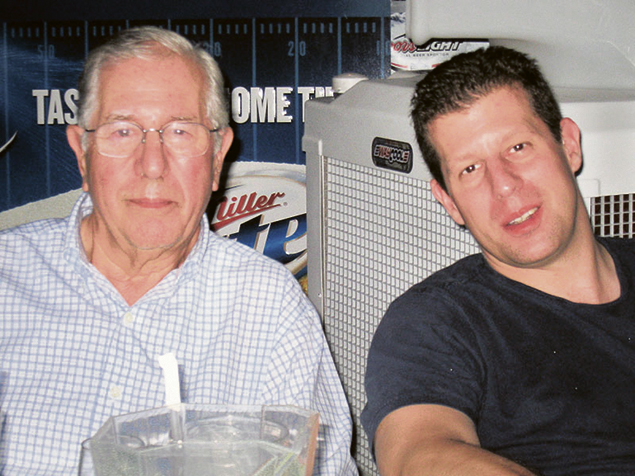
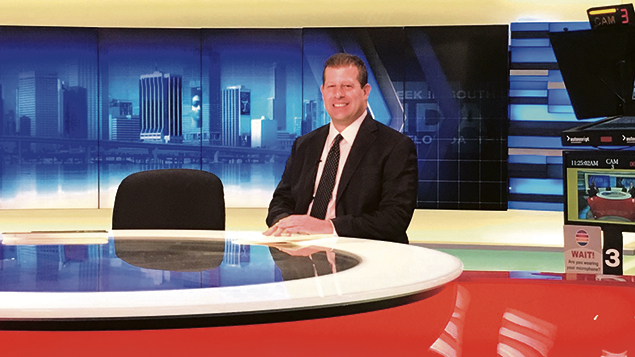
David Barkey heads the Jewish Federation of Northern New Jersey’s Jewish Community Relations Council.
That’s always an important if generally unglamorous job; usually the JCRC works mainly with interfaith relations, ensuring that the Jewish community gets along well with other local faith groups and that any threats to the Jewish community — usually minor and accidental — are removed.
But these are not normal times.
The Jewish community is feeling slightly unsafe and not quite at home in ways that feel deeply unfamiliar to most of us.
That’s why Mr. Barkey, a lawyer who spent two decades as a Florida-based leader at the Anti-Defamation League’s southern region and now lives in Essex County, is perfect for the new challenges of his new job.
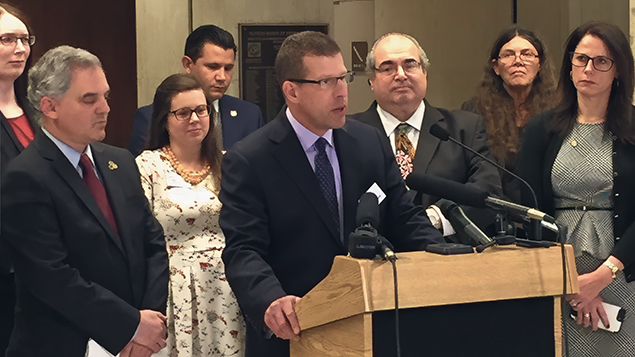
“The reason I do this work is because of who I am,” Mr. Barkey said. “I am a first-generation American.”
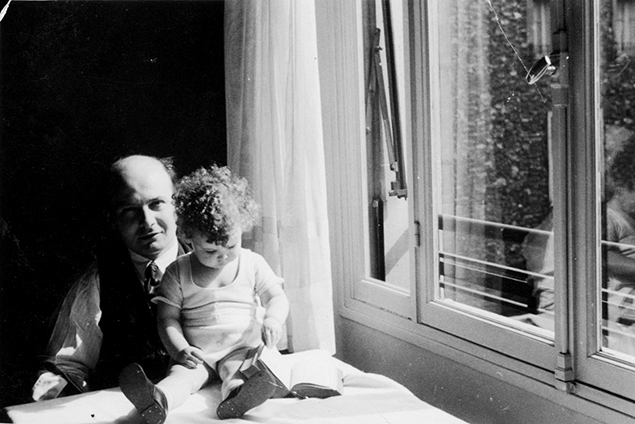
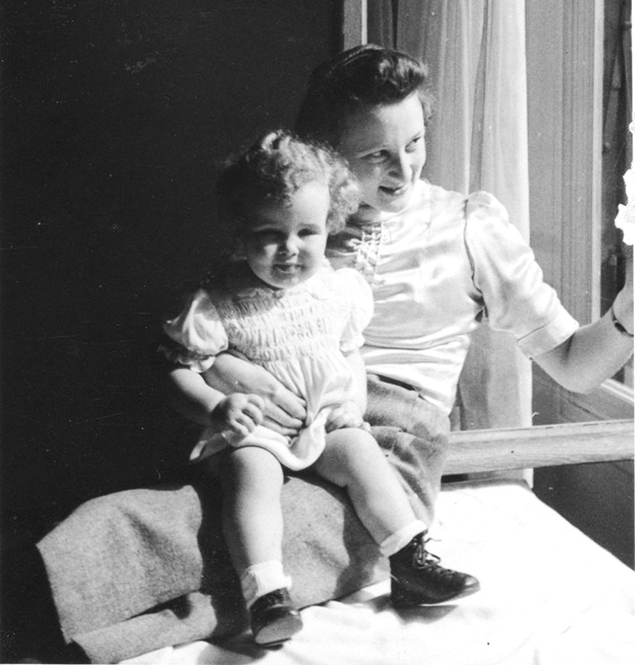
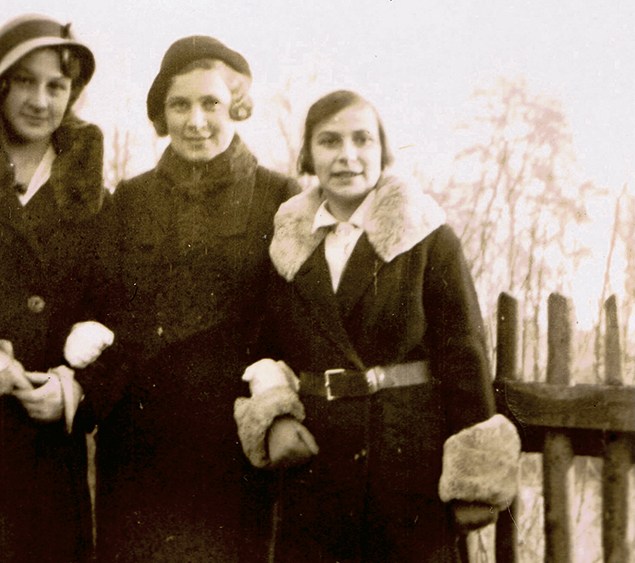
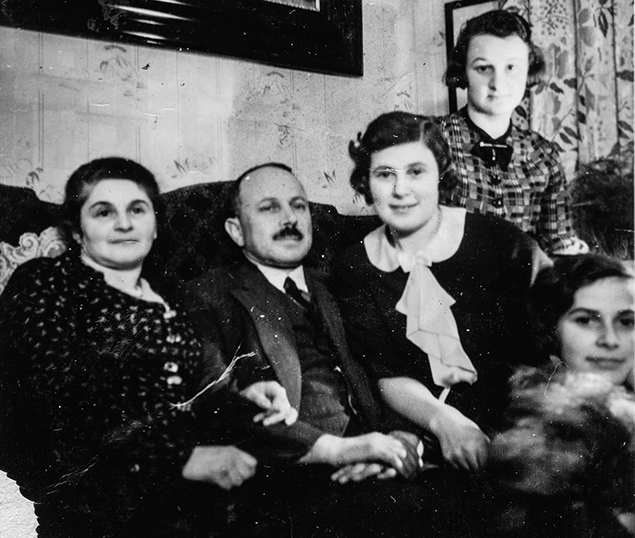
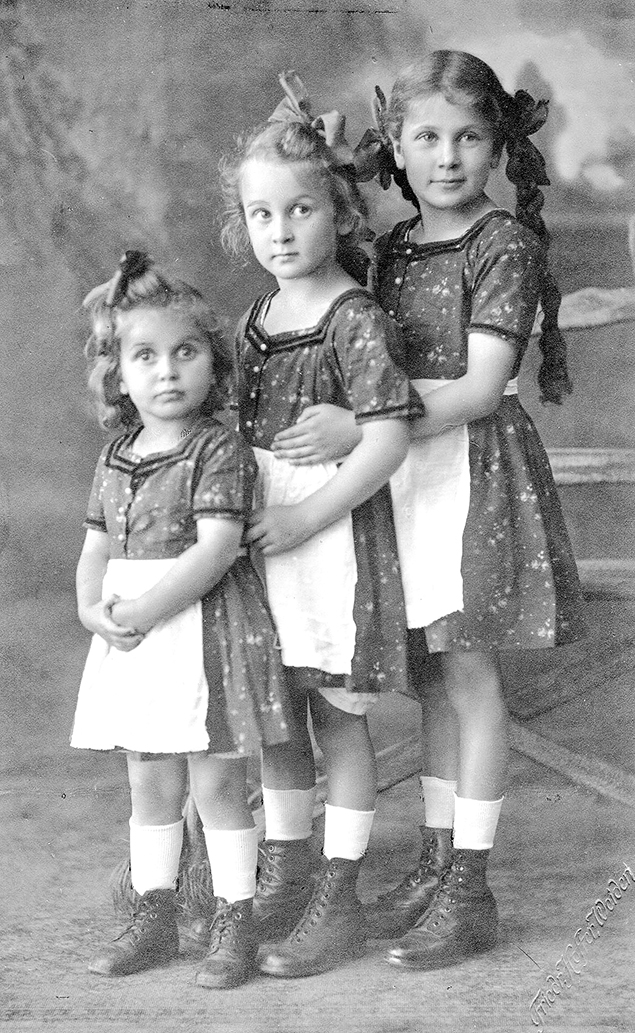
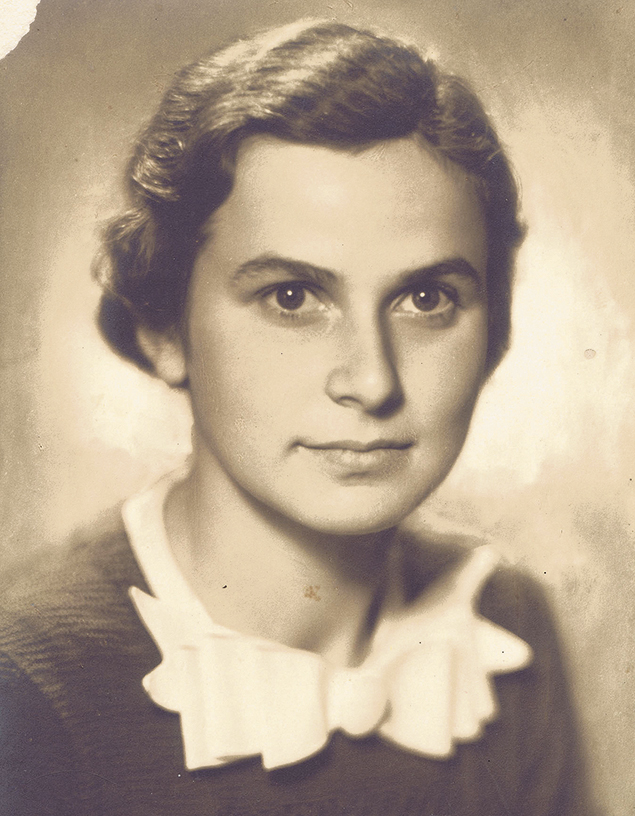
Mr. Barkey is just in his mid-50s, but his mother, Henriette Schloss — later Anglicized to Henrietta — was born in Paris in 1937. Her parents, Max Schloss and Johanna Sterzelbach Schloss, and her great-grandparents were from Bavaria; her father, Max Schloss, was in a business that involved iron and diamonds. When the war started, Johanna and Henrietta moved to the south of France, and Max joined the French Foreign Legion. Many of the men in the family had served in the German army during World War I; a cousin had been a fighter pilot, and another earned an Iron Cross — but died from his exposure to mustard gas. “They were proud Germans,” Mr. Barkey said.
His family lived in a town called Weiden; “there were maybe 20,000 people in the town, and 123 of them were Jews,” he said. They owned “the town general store. The warehouse was on the second floor, and they lived on the third floor. Their property was Aryanized in 1939; the Nazis put my great-grandfather, Leo, and all the rest of the men in Dachau.”
It was early in the war then. “They kept them in Dachau until they gave up their property, and then they let them leave.”
As soon as he was free, once he returned home, Leo; his wife, Mr. Barkey’s great-grandmother Elizabeth; and their two daughters all went to England. One of those two daughters was Henriette’s mother, Johanna.
“My father’s side of the family were Turkish,” Mr. Barkey continued. “I don’t know how many generations back they went in Turkey, but they all spoke Ladino.”
Turkey was neutral, so the Barkeys were safe, although “my father, who lived in Istanbul, said that he’d go by the German embassy as he walked to school every day, and he’d see the Nazi flag. He also said that sometimes they could hear artillery in Greece.” When the end of the war was very close, and who would win was obvious, “there was serious patriotic music on the radio” as the government announced its declaration of war on the Axis forces.
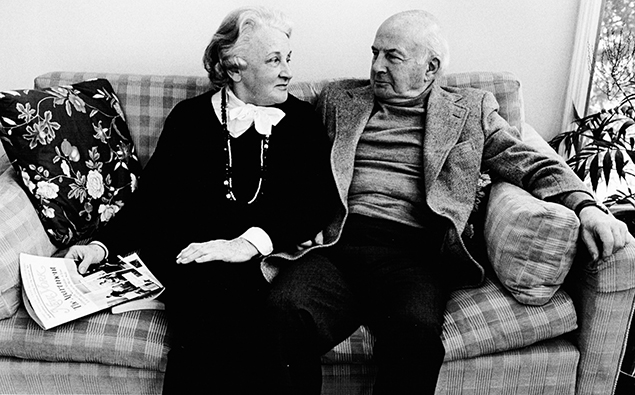
David Barkey’s father, Allen, was the son of Isaac Barkey, who was one of three brothers. Jack and John had moved to the United States at the turn of the 20th century and set up an import business. Eventually Allen Barkey inherited it. “My parents were in the import/export business, importing food products from Turkey and Spain and later from Chile, things like fig paste, raisins, sundried tomatoes. Dad took over the business in ’65 and ran it until he died in 2011. He never retired. My mom sold the rights to the company just before she died.”
The Barkeys — Allen, Henrietta, Jonathan, and David — moved to New Rochelle, where the boys grew up. They went to public elementary school, Rye Country Day School, and then David matriculated at Hamilton College in upstate New York and then transferred to Northwestern University in Evanston, just outside Chicago. He majored in political science.
“I developed my awareness of my Jewish identity and my Zionism in my senior year of college,” Mr. Barkey said. “I took a course in public speaking, and I did a lot of my speeches about Israel-related stuff. And I took a course on nationalism taught by someone who had been involved in the PLO’s political wing. I got into it with him, dealing with Zionism and nationalism.
“I remember that when we started talking about Zionism, I raised my hand and he said, ‘We have an expert here.’ He was very condescending. But he never said anything overtly antisemitic.”
After college, Mr. Barkey worked at two internships on Capitol Hill. One was for a Democrat, Rep. Joseph Kennedy II of Massachusetts, and the other was for a Republican senator, New York’s Alfonse D’Amato. “Then I had a hard time finding a job in D.C., so I moved home and worked in public relations, and then I went to Brooklyn Law School,” he said. After about two years at a management-side law firm, Jackson Lewis — “I wanted to do plaintiff-side law, but it was hard to find” — Mr. Barkey “became a trial lawyer at the United States Equal Employment Opportunity Commission. It was a great litigation job, but after about three years, I realized that I like doing civil rights work, but litigation wasn’t my thing. I didn’t want to spend my life fighting over papers in discovery.
“By happenstance, I got a job at the Anti-Defamation League’s Chicago office. That’s when I started my work in Jewish advocacy. I had an informational interview in New York with the ADL, and my interviewer — Steve Freeman, who heads the ADL archives now, and was my boss for over 20 years — said, ‘You know, we don’t have any jobs here, but we do have an opening in Chicago.” So he moved back to Chicago in March of 2001.
After a short stint in Chicago and then back in Brooklyn, all for the ADL, Mr. Barkey and his family— by then his now ex-wife and two daughters, now 21 and 16 years old — moved to South Florida.
During his 20 years with the ADL, Mr. Barkey held a number of titles as he moved up in the organization. He worked in 10 states — “all over the South” — and “the focus was on hate crimes, discrimination, antisemitism, religious freedom, separation of church and state, and related issues.” His job continued to grow.
“I also did a lot of work monitoring domestic extremism, and I did a lot of work with law enforcement,” he added.
He’s also had some hair-raising but educational experiences, and not all of them have been in the Deep South.
“I’ve been to a cross- and swastika-burning,” he said, almost casually. You’ve WHAT? “It was in Indiana,” he elaborated. The second coming of the Klan.” As in the Ku Klux Klan. “I was on the property next door, videotaping it. It was an Indiana Knights of the KKK’s White Christmas party.
“It was dumb of me — I know that now — but what I didn’t know I didn’t know.”
After 20 years, however, health issues mandated that Mr. Barkey step down from his demanding job. When he was ready to get back to work, the pull of home — the Northeast, the tristate area — was strong. So was the reality that while there are many jobs in the south for Jewish development professionals, there aren’t nearly as many for Jewish advocacy work. And Mr. Barkey wasn’t interested in going back to a conventional law firm.
So he was thrilled to become the head of the Jewish Federation of Northern New Jersey’s JCRC. He began that work in late May.
He finds the local Jewish world fascinating. “This is a very diverse community from a Jewish perspective,” he said. “It’s very diverse in terms of level of observance and political viewpoints.”
His job, like the federation itself, is broadly apolitical, though it does advocate for positions that are important to the local Jewish community.
“One of the first things I’m doing is reestablishing the JCRC to be functional,” Mr. Barkey said. “Covid had a big impact on its functioning,” he added.
“We are putting together a JCRC composed of representatives of the diversity of religious observance, of political viewpoints, of geography within our catchment area.
“The purpose is to find consensus and move forward with advocacy when there is consensus. It’s in countering antisemitism to safeguarding the Jewish community in obtaining institutional security funding, as well as working on other issues.
“The federation is a social service provider,” he continued. “There is a Jewish issue in the reconciliation bill” — that is the so-called One Big Beautiful Bill that the Republicans passed, at President Trump’s urging, despite Democratic attempts to stop it. “I prefer to call it the reconciliation bill,” Mr. Barkey said; it did have to go through the House and then Senate and then reconciliation back in the House. “That is the neutral term.
“We have concerns that the potential loss of Medicaid funding in the reconciliation bill will cause a hole that will have to be plugged in Trenton, and that may cause social service funding to be cut, and that will affect our partners.
“Many of our social service partners are Jewish agencies that serve all of the community” — both Jews and non-Jews. “There is potential that there are going to be cuts in the level of funding because of the impact of the reconciliation bill on state budgets.
“Part of the reason that I was brought into the JCRC was because I have a strong background in government relations and legal advocacy. The nature of the JCRC has changed. It is focusing more on state and local government advocacy. I have somebody I’m supervising who is focusing on community engagement, but a big part of what we’re doing is government relations advocacy. Before now, most of the focus had been on interreligious work. We no longer have the luxury of doing that.
“Also, the Jewish Federations of New Jersey, which is an affiliation of the five largest federations in the state, all work together in advocacy in Trenton.”
Now, with antisemitism on the rise from both the right and the left, both in the country and around the world, “our biggest issue is to push for the passage of the IHRA bill,” Mr. Barkey said. “In the post-October-7th world, antisemitism is at a record level.”
The IHRA is the International Holocaust Remembrance Alliance. Many Jewish groups, including the Jewish Federations of New Jersey, have worked hard to get the state to accept that group’s definition of antisemitism. The definition is controversial, and so is the bill in New Jersey. Pro-Palestinian and anti-Israeli groups say that it defines criticism of Israel as antisemitic and is an assault on their free speech rights — and so far it’s passed committees in the state Assembly and Senate but hasn’t faced either full chamber.
“I don’t think that there will be any movement on the issue until after the election in November,” Mr. Barkey said.
On the issue of antisemitism on the national level, “on the one hand, this administration is ratcheting up work on countering it,” he continued. “But on the other hand, they’re cutting funding to the Department of Education and the Office of Civil Rights. The DOE enforces Title Six,” which prohibits discrimination on the basis of race, color, or national origin in any organization that is to receive federal funds.
“So you have a focus on antisemitism, but you need a fully funded OCR to investigate Title Six complaints based on antisemitism. So whether it’s going to be an issue or not, we don’t know yet.” But it might be, he added.
Other issues include funding for such programs as Kosher Meals on Wheels. “We’ve secured $300,000 for that program, and I believe $1 million for institutional funding. So if the reconciliation bill has an impact on social service funding on the state level, that could jeopardize at least some of the funding.
“Another big issue is advocacy on the local level against antisemitism in K-12 schools. A big challenge in New Jersey is that there’s something like 70 municipalities in Bergen County, and 77 school districts. It’s very Balkanized. You have to deal with many different superintendents.
“In Florida, there’s one school board and one superintendent per county. There’s more centralization. Of course, that poses its own challenges.”
His job, Mr. Barkey said, involves “a lot of relationship building and working with our constituency to help develop relationships with administrators. That way, there are ongoing relationships in place. When something happens, they know who to reach out to.” The staff and volunteers have built up the trust and respect that underlie good working relationships. If they have not, and there’s a crisis, the responder, who hasn’t had experience with this situation and doesn’t know how to respond with both sensitivity and effectiveness, has “to meet somebody for the first time.”
The JCRC works with other Jewish NGOs, Mr. Barkey said. “There’s just too much work for one organization, and working in coalition is always more productive than working alone.
The best way to build relationships is the “old-school way,” Mr. Barkey said. “You pick up the phone. You meet with people. You work in good faith. You assume the best about people. Sometimes issues that present themselves as antisemitism really are just coming out of absolute ignorance. People don’t understand the complexity of the Israeli-Palestinian conflict or the different incarnations of antisemitism. Those are all issues that are on the table.”
Without giving any specifics, Mr. Barkey said that “there can be circumstances where a teacher, for whatever reason, say in a history class, wants to teach about the conflict, but the resources they unknowingly use are biased. People who present themselves as experts sometimes are not. They are very biased.”
It’s not always easy for someone not schooled in the memes, vocabulary, and thought patterns of antisemitism to see it. And antisemitism on the right and the left present differently. “Right-wing antisemitism is more easily understood than left-wing antisemitism,” Mr. Barkey said. When people sling the traditional insults at us, we understand them. But “the challenge is people not being sensitive to understanding how anti-Zionism is a proxy for antisemitism. People, including Jews, criticize Israel all the time.” That’s not necessarily antisemitism. “But when Israelis are held to a different standard, and when Jews are held responsible for Israel’s actions, that is antisemitism.
“Often, people who are not familiar with the Jewish community don’t understand that, and it is our job to educate about it.”
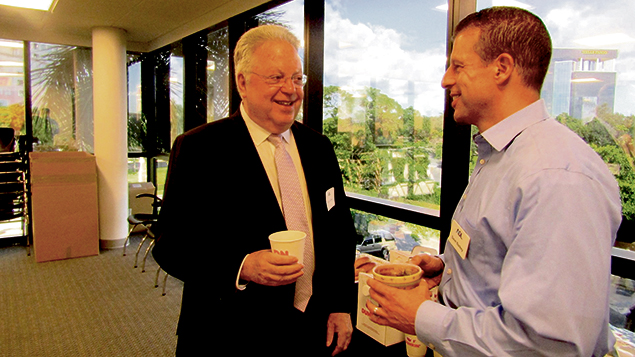
The federation in general, and the JCRC in particular, educates, but “we don’t create curricula,” Mr. Barkey said. “We use our partners’ curricula. We are convenors. We are relationship builders. The content is created by others. What is important about the federation is we serve our universe — Bergen and Hudson and part of Passaic counties — and our strength is that we have 125,000 Jews in the community, and we have strong leadership that allows us to be a conduit to all sorts of resources, both inside and outside the Jewish community.”
So, Mr. Barkey, given all your experience, what do you see here? What is this community that now envelops you, and that you lead?
“I have been a Jewish professional since 2001,” he answered. “I have been in a lot of communities, both inside and outside the Jewish world, and that has given me a certain understanding of the diversity of the community, not only in terms of religious observance but also geography.
“Being a Jew in the Deep South is very different from being a Jew in the Northeast, or in the Midwest. And having been a Jew in all those places has maybe given me some unusual perspective.”
That’s a perspective that he will use at the helm of the Jewish Federation of North Jersey’s Jewish Community Relations Council.