Remembering the Rav
Rabbi Tzvee Zahavy writes two graphic novels about his teacher
As a student in Rabbi Joseph B. Soloveitchik’s Talmud shiur at Yeshiva University some 50 years ago, Tzvee Zahavy never imagined that one day he would portray his teacher in comic book panels.
Rabbi Soloveitchik, often referred to in the Modern Orthodox community simply as the Rav, “was an awe-inspiring force of nature,” Rabbi Zahavy said. “To watch him dissect a passage in the Rambam was to witness pure intellectual lightning.”
Rabbi Zahavy, who lives in Teaneck and has taught Jewish studies and Talmud at major research universities and seminaries, spent a lot of time with his teacher and mentor. He studied in the Rav’s shiur from 1969 to 1973. The Rav lived in Boston; he would teach at YU during the week and fly back to Boston on Thursday afternoons.
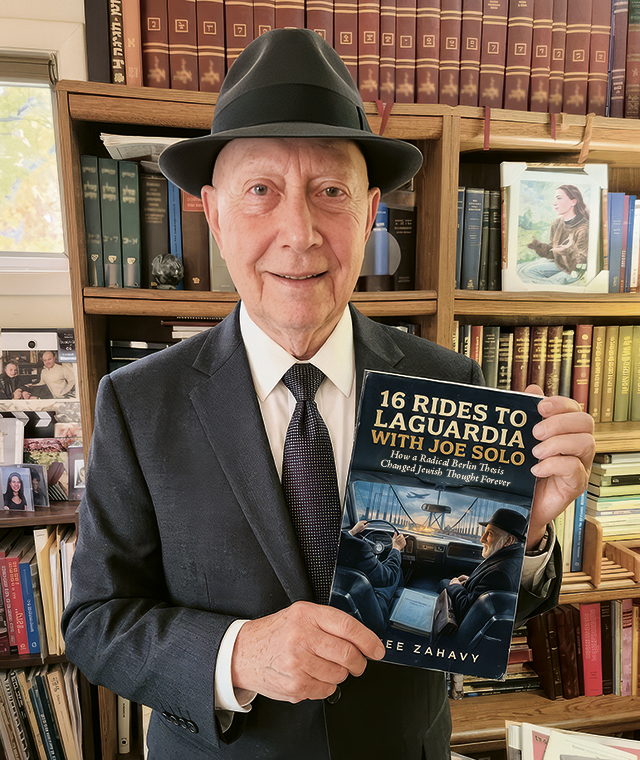
Tzvee drove the Rav to the airport on a regular basis during those years.
“We talked about many things” during those car rides, Rabbi Zahavy said. “When you’re driving the Rav in your car, you have some moments where you really have sustained attention.”
Rabbi Zahavy recently published two books on the Rav — “The Amazing Rav” and “16 Rides to La Guardia with Joe Solo: How a Radical Berlin Thesis Changed Jewish Thought Forever.”
“The Amazing Rav” is a graphic novel. Rabbi Zahavy chose the medium because it allowed him to “show, rather than merely explain” aspects of the Rav’s life and personality. The book vividly captures a wide range of time periods and events, including both “the fearless young rabbi in Depression-era Boston confronting corrupt kosher poultry racketeers who preyed on the poor” and an older Rav, unable to sleep after the loss of his wife, Dr. Tonya Soloveitchik.
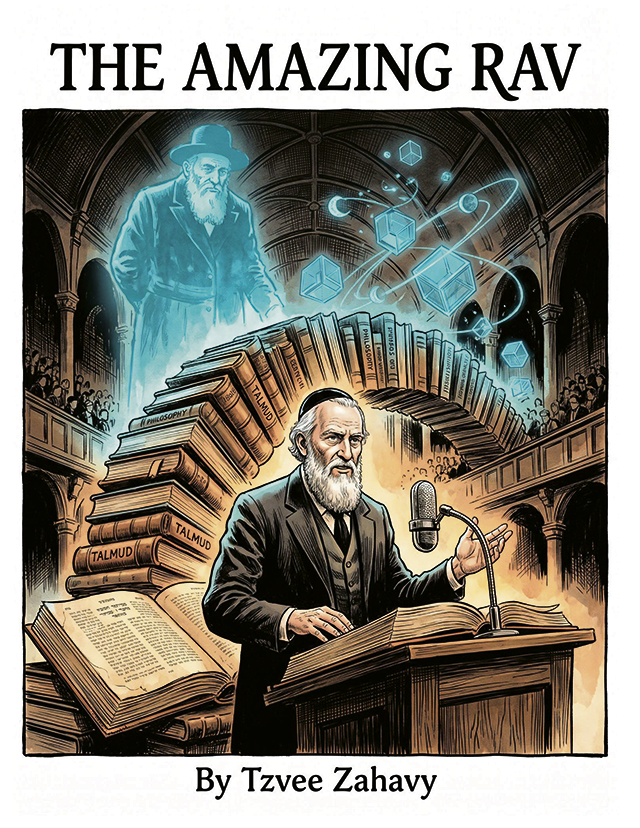
“I wanted to capture both his towering intellectual genius and his profound human vulnerability in a medium that speaks to a new generation.”
He also wanted to convey that the Rav was a hero. “He was a hero of the Torah, a hero of standing for Jewish values, and a hero of great intellect,” Rabbi Zahavy said. Graphic novels tend to be about a superman, “so if you’re going to use the genre, you want to create a multidimensional character, but still, someone who ends up being a heroic figure in many ways. Maybe he struggles to be heroic — Superman had to fight great enemies — but comes out as a great hero.
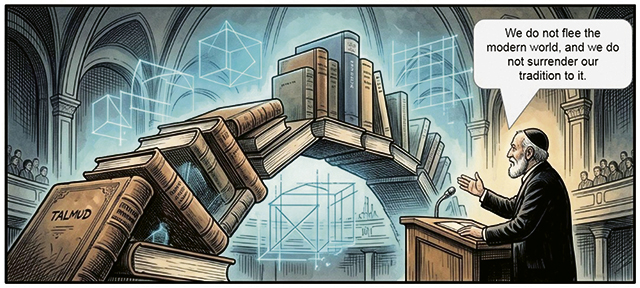
“There’s no question the life of the Rav was a very tough one; starting in Eastern Europe, studying in Western Europe, coming to America at a time when it was very hard to create Orthodox institutions.”
Rabbi Zahavy stressed that the book is a novel, not a biography. He described it as “a work of historical dramatization inspired by the life, teachings, and enduring folklore surrounding Rabbi Soloveitchik,” and noted that he created “certain composite characters, compressed timelines, and dramatized dialogues for narrative and artistic purposes.
“If you’re tempted to put this up against real historical facts as they actually were, you’re going to have a big chasm to jump over because that’s not the intention,” Rabbi Zahavy continued. “When there’s a great man like the Rav, there’s an aura of folklore, and the fact is connected to the folklore.”
He sees the format as “a fun way to look at a difficult, dry, subject,” and an approach that is likely to reach a wider audience than a more standard book could. He hopes that the book will both “entertain and enlighten” and perhaps serve as “a stepping stone to exploring more about the Rav.”
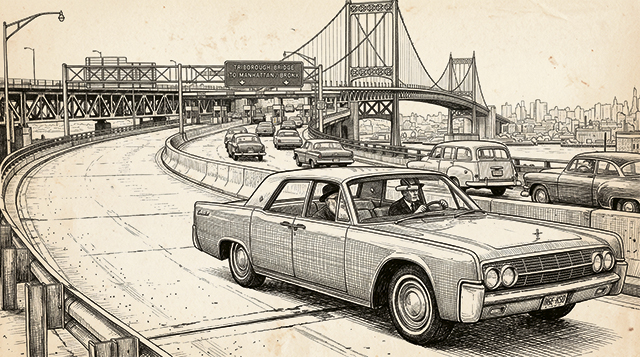
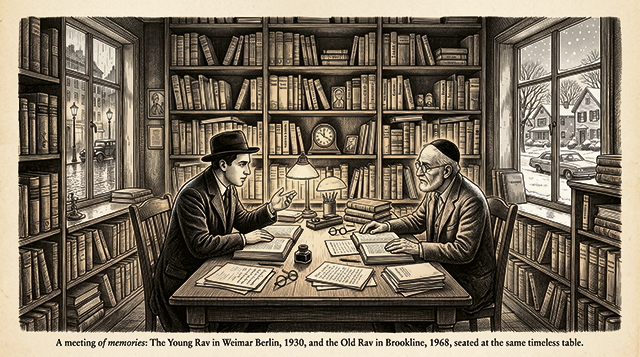
“16 Rides to La Guardia” is a different type of book. Rabbi Soloveitchik earned a Ph.D. in philosophy from the University of Berlin and the book is about his doctoral dissertation. The dissertation is “a very philosophical work, and I was trying for years to figure out how to bring this to an audience that’s not thoroughly philosophical,” Rabbi Zahavy said. Inspired by the somewhat “daring” genre of “The Amazing Rav,” Rabbi Zahavy decided that he did not have to present “just dry philosophy.” Instead, he imagined Rabbi Soloveitchik “sitting on the seat next to me, and we’re driving to LaGuardia Airport, and he and I are talking about his dissertation.” He presented the material through that lens.
During the many actual car trips the two shared, “we talked about many things, including on occasion the doctoral dissertation, but not in the systematic way that I present in the book,” Rabbi Zahavy continued. “16 Rides” “is a kind of narrative fictionalization that contains all the philosophy within a readable structure.
“Imagine 16 pristine car rides where we have the ability to discuss and analyze each chapter of his dissertation and many of the aspects of how the dissertation relates to his larger life’s work,” he said. The book creates a narrative structure in which Rabbi Soloveitchik “would talk to me and explain it. He was a great oral teacher, and I wanted to capture that.” The work “transforms his doctoral dissertation into a series of conversations.”
The book’s title is also somewhat lighter than the underlying material. “Rabbi Soloveitchik had shown me on occasion his boarding pass, his ticket for the shuttle to Boston,” Rabbi Zahavy said. It did not say Joseph B. Soloveitchik. “Those days you could write down shortened names. He wrote down Joe Solo. And he smiled, he laughed, he said, ‘See, I’m Joe Solo.’ And I took that as permission to use that in my dramatization.”
Rabbi Zahavy sees the work as filling a real need. “A tremendous amount of writing has taken place since the Rav passed away in 1993,” he said. “There have been many publications, articles and books. People are very interested in his work. And the one that was most impenetrable was the dissertation, because it is in German.
“The Rav was such a rich thinker, and such an influential rabbi and theologian, that it’s very important that this part of his writing, his dissertation, also be understood by the larger community.”
Rabbi Zahavy hopes that the creative approaches the two new books take to “the Rav’s serious, complex life and thought” will make the material more readable and “broaden access to the mind of a great man.”