Opening the ‘Bag Man’
The head of Coach tells how he asked for a demotion and thrived on it
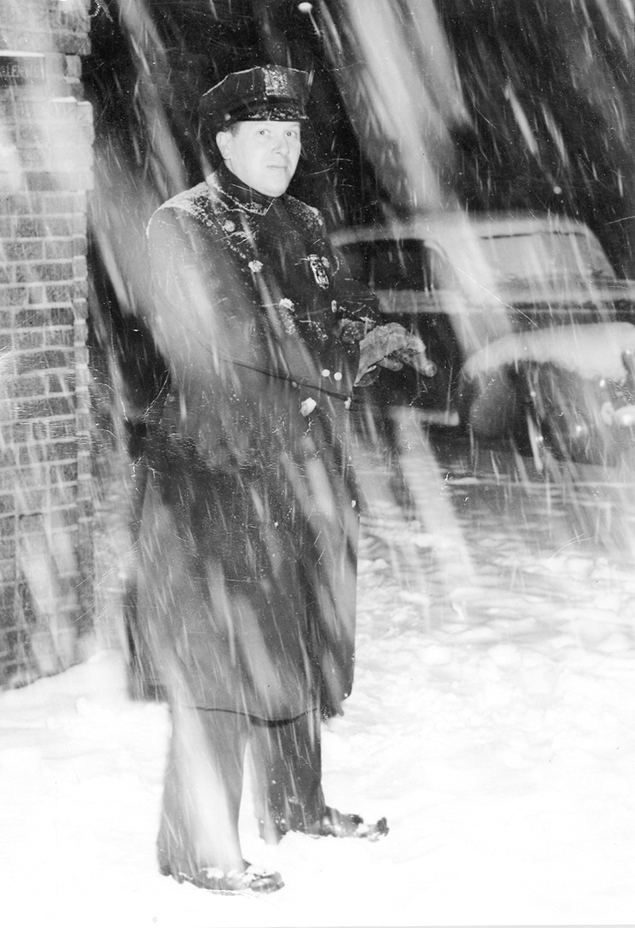
Growing up in the Bronx, Lew Frankfort, who is 80 now, remembers thinking he might become a cop like his dad, Abraham.
“It was terrific when I was a kid,” he recalled during a Zoom interview. “A handful of times my father would drive his police car from Harlem to the Bronx because he forgot his glasses or needed something.
“Every time he did that, I was eager to meet him at a convenient corner, like University and Burnside, and hand him his reading glasses. And my friends would be with me, and I would be so proud.”
Ultimately, though, Mr. Frankfort took a different career path. He became CEO of Coach and led the company’s growth from a $6 million handbag business into a $5 billion fashion brand. That journey is the subject of his memoir, “Bag Man: The Story Behind the Improbable Rise of Coach.”
In a large sense, Mr. Frankfort owes this success to his mom, Anne, who refused to give up on him. “I came from a small family that was very focused on education and wanting my sister and myself to lead a better life than they did,” Mr. Frankfort said.
“My mother was a very strong advocate for me in my early years when I had speech development problems. It was recommended to my mother that I go to a special school for the speaking-impaired. My mother said, ‘My son is staying mainstream.’ I outgrew my speech defect, although I still have issues with certain words and I’m mindful of them.
“My mother also encouraged me to really focus on college. When my guidance counselor in the ninth grade suggested I go to trade school because I wasn’t college material, she stood up and broke up the meeting. I was embarrassed. I thought maybe he was right, that I wasn’t college material. My mother said I was. I sheepishly followed her out of the office.”
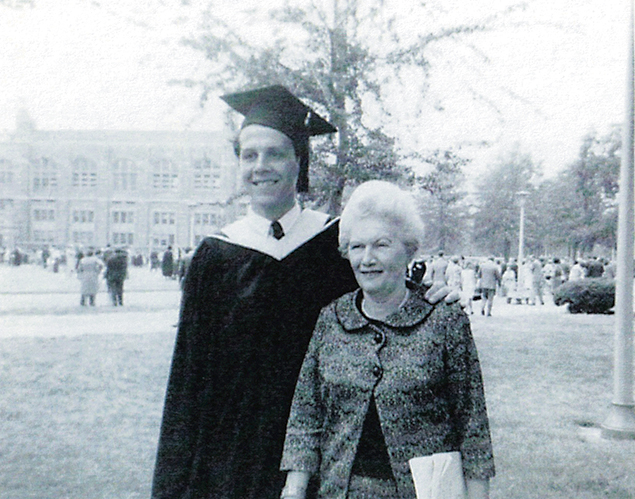
And eventually he did go to college, first to Hunter in the Bronx, and then grad school at Columbia University. After a brief stint in finance, he went to work for New York City, taking an entry-level job but rising over the next decade to a position as first deputy commissioner, a position he took in 1976.
That year, he was charged with the unenviable task of cutting 25 percent of the already strained budget of the programs that funded Head Start and day care for children from low-income families. He said he planned to do so based on the numbers and merit.
Shortly thereafter, Ed Koch, then a member of Congress, approached him and asked him to keep open a facility that he thought should be closed. He did not think it was good enough to stay open, given the situation. He did not kowtow to Mr. Koch.
Unfortunately for Mr. Frankfort, the next year Mr. Koch became New York’s mayor. That soured him on city service, and he left in 1979.
“There were multiple reasons that I left city government,” Mr. Frankfort said. “The catalyst was Ed Koch passing me over for a position I was more qualified for than the person he put into it, saying I was ‘too principled.’
“I decided that if I couldn’t do what I needed to do in government, I’d move to the private sector.”
Fortunately, that’s when a friend suggested that he work at Coach. The company’s co-founder, Miles Cahn, was 60, didn’t think any of his children wanted to replace him, and was looking for a protege.
It wasn’t a perfect fit, but Mr. Frankfort was hired and threw himself into the task. In 1985, when Mr. Cahn decided to sell the company to conglomerate Sara Lee, he recommended Mr. Frankfort as his replacement.
The timing was perfect. Several years earlier, at a singles event in Woodstock, Mr. Frankfort met Roberta Rosenberg of Englewood, an assistant professor at Brooklyn College. They married, had children, and were ready to move to the suburbs. The bonus Mr. Frankfort received from the proceeds of the Coach sale enabled the family to buy a house in Tenafly, where they settled.
And that promotion, too, gave Mr. Frankfort authority to continue his efforts to expand Coach’s sales. When he first joined the company, its distribution was primarily wholesale — to department stores and specialty shops — rather than directly to consumers. Mr. Frankfort spearheaded efforts to expand the market, first to mailorder catalogues, then to a passel of retail outlets and online stores.
His success was noted by his Sara Lee superiors, who promoted him to group vice president of Sara Lee Accessories, in charge of several divisions including Champion USA and Europe, Aris Isotoner, and others. It was a giant step up the corporate ladder — but it was not for him.
“I had a portfolio of companies that had a few billion dollars of revenue when at the time Coach had only $500 million,” he said. “But I was not really enjoying being a group officer. I wasn’t particularly successful in that environment because the people I worked with met their plans and therefore were not receptive to taking levels of risk, or to travel to places where I thought we would have opportunities that would outweigh any risk.”
His new role wasn’t working out for anyone, including him. So he did something few executives — for that matter, few people — would do. He asked for a demotion, and returned to Coach.
In a Zoom interview, Susan Hong, who was an HR executive for Coach, said, “I think what this says is that Lew never lets ego or pride get in the way to a great outcome for the people depending upon him.”
So Mr. Frankfort returned to Coach full time, but then he did something else extremely unusual. In his book, he writes about his deep-seated fear of failure, a fear that occasionally give him nightmares. He used executive coaches “to help me become a more effective leader,” and was introduced to therapy through them, he said.
Ms. Hong noted that “most successful senior executives oftentimes don’t take the time to look at themselves in the mirror and say, ‘Gee, I was a jerk’ or ‘I’m difficult’ or, you know, ‘I’ve got some issues.’
“I think one of the things that Lew is incredible at is recognizing when he needs help. Also, I think for a long time, especially in Lew’s generation, any kind of therapy carried a real stigma.”
All of which made his going public with it even more remarkable. “I decided to be open in my memoir about my ups and downs, which included depressive episodes and strategies to get out of them, because I wanted to help people understand that the world is gray, not black and white,” Mr. Frankfort said.
It is a compassion he may have learned at the Burnside Jewish Center, where he went to Hebrew school growing up and was a bar mitzvah.
“My father became Orthodox after his mother passed away when I was 10 years old,” Mr. Frankfort said. “He put tefillin on daily as I came of age through high school and college. Eventually, I became a more secular Jew, still respecting and being proud of my Jewish tradition.”
When he and Bobbie, as his wife is known, moved to Tenafly in 1982, they joined Temple Sinai, where their three children attended school and became bar and bat mitzvah. They lived there for about 20 years, until they became empty nesters, and moved across the Hudson to Manhattan.